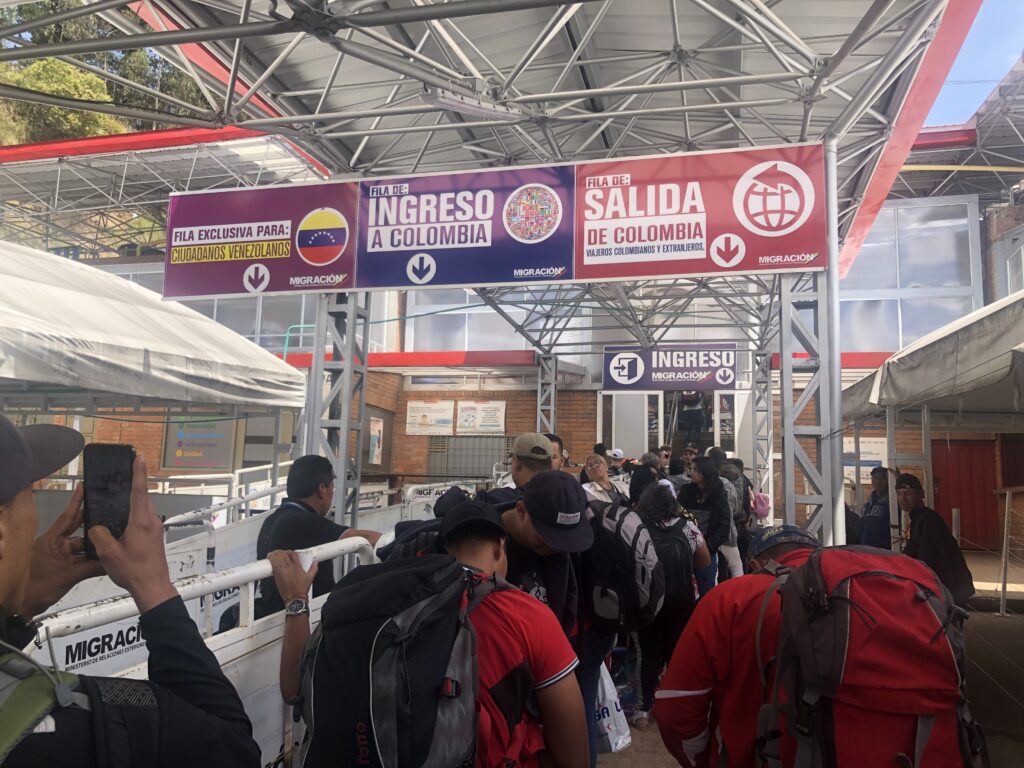
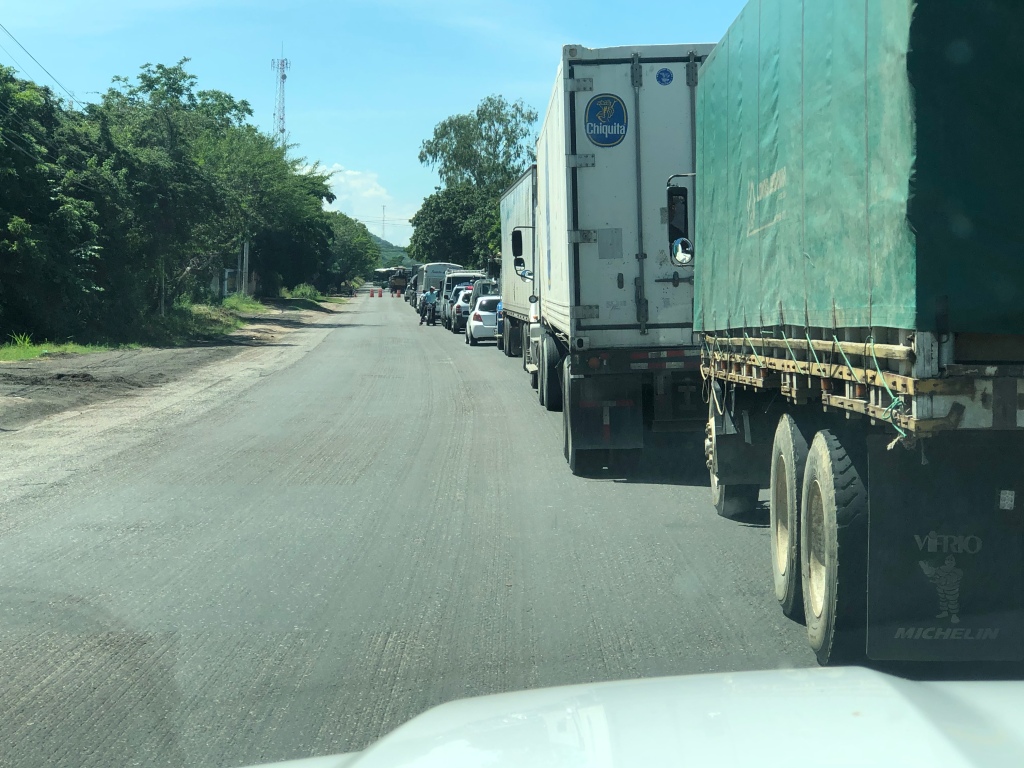
Crossing from Colombia to Ecuador proved reasonably trouble-free and in the space of two and half hours we were stamped out of Colombia, stamped into Ecuador, and had the requisite TIP ( temporary import permit ) for the truck. While somewhat crowded the border was notable for the abscence of the many parasitic “helpers” that besiege travellers at all the Central American crossings. It’s one of the busiest crossings in the area and the UN ( UNICEF ) fortunately have staff there to assist with the many refugees from Venezuela. There are at times so many that they have a dedicated line at the border just for processing Venezuelans.
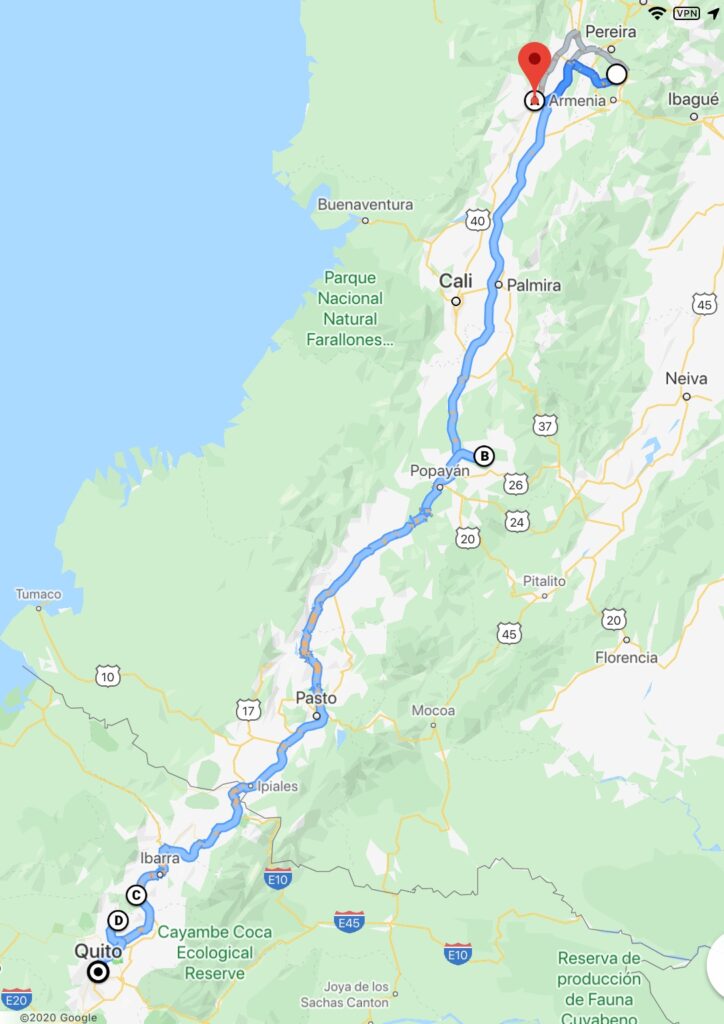
Route through southern Colombia and northern EcuadorColombia/Ecuador border
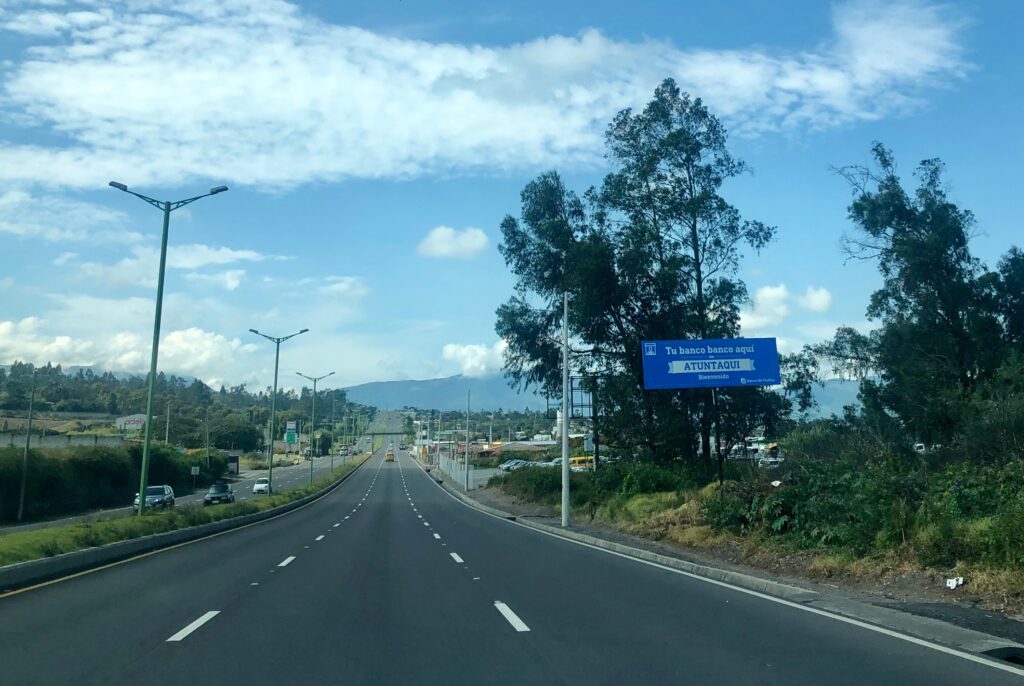
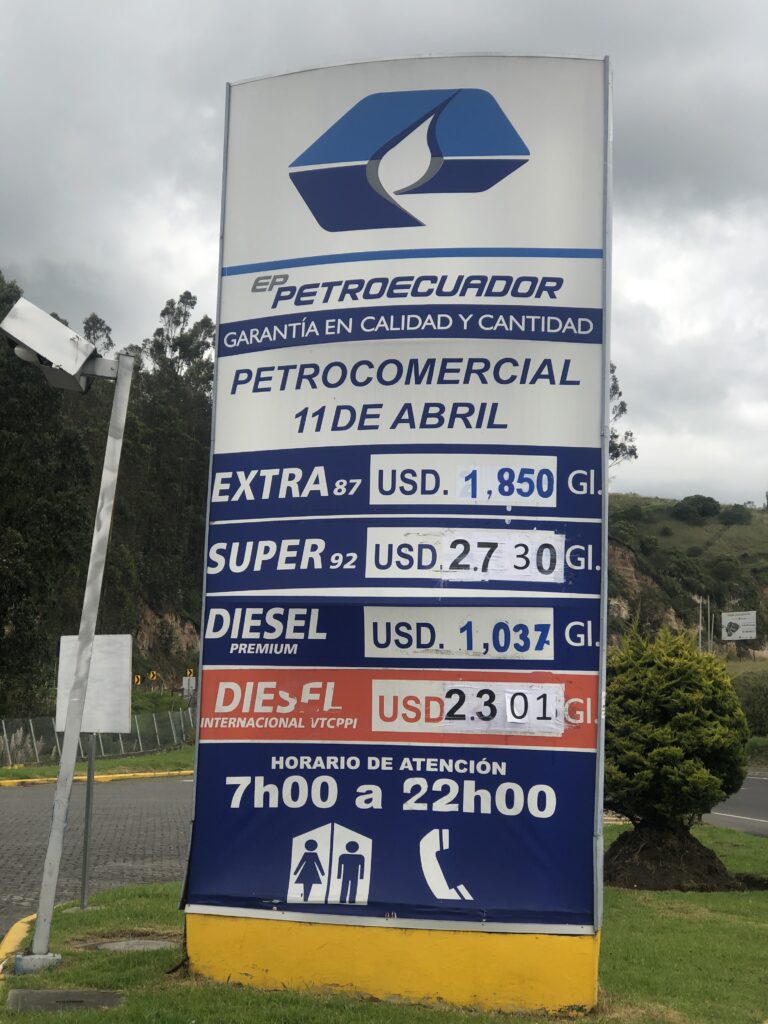
Two things immediately impress when one drives into Ecuador – the amazingly good roads ( far improved from 17 years ago and better than those in Colombia ), and how cheap fuel is. Since ours is a fairly heavy vehicle with a thirsty 5.3 litre V8 the saving is immediately noticeable. Very happy to pay $1. 85 US per gallon ( about 64 cents Canadian a litre ) – mind you we were envious of our diesel powered fellow travellers getting an even bigger break; just $1.04 a gallon ! Sadly, Ecuador is not that big – too bad fuel is not quite as affordable in Chile and Argentina where distances are far greater.
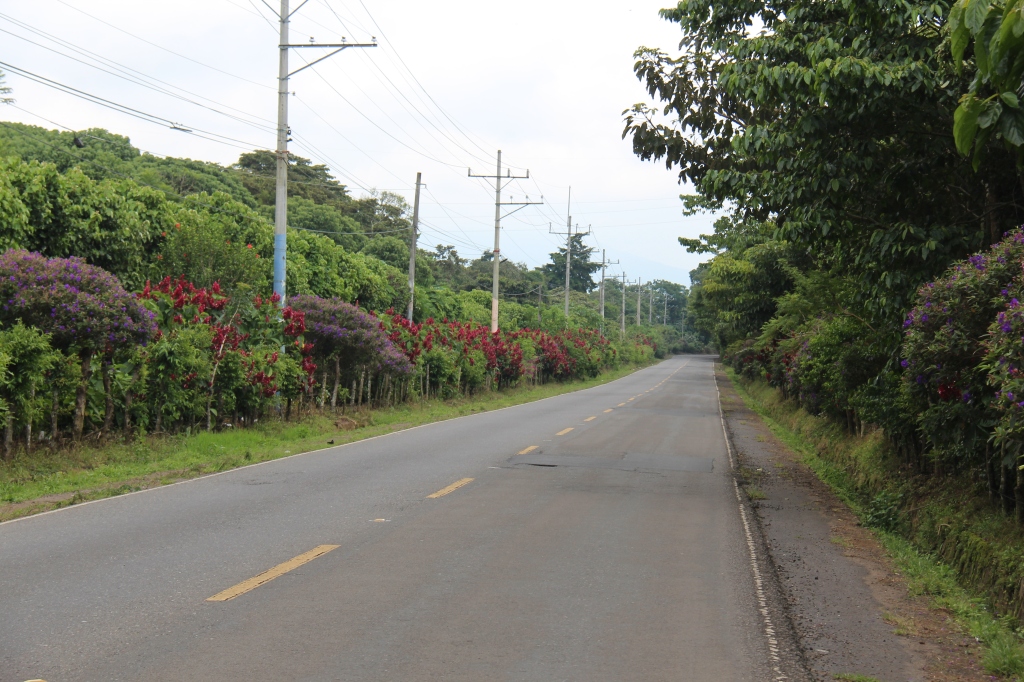
Typical of the high quality roads in Ecuador – very different than we remembered, this one near OtavaloEcuador – cheapest fuel in South America !
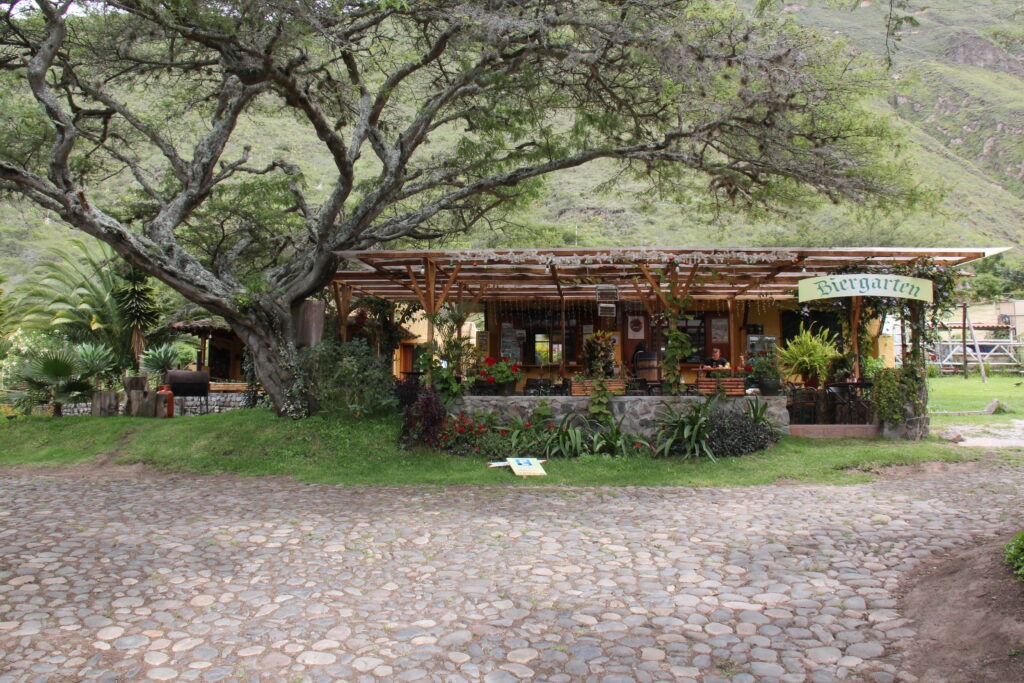
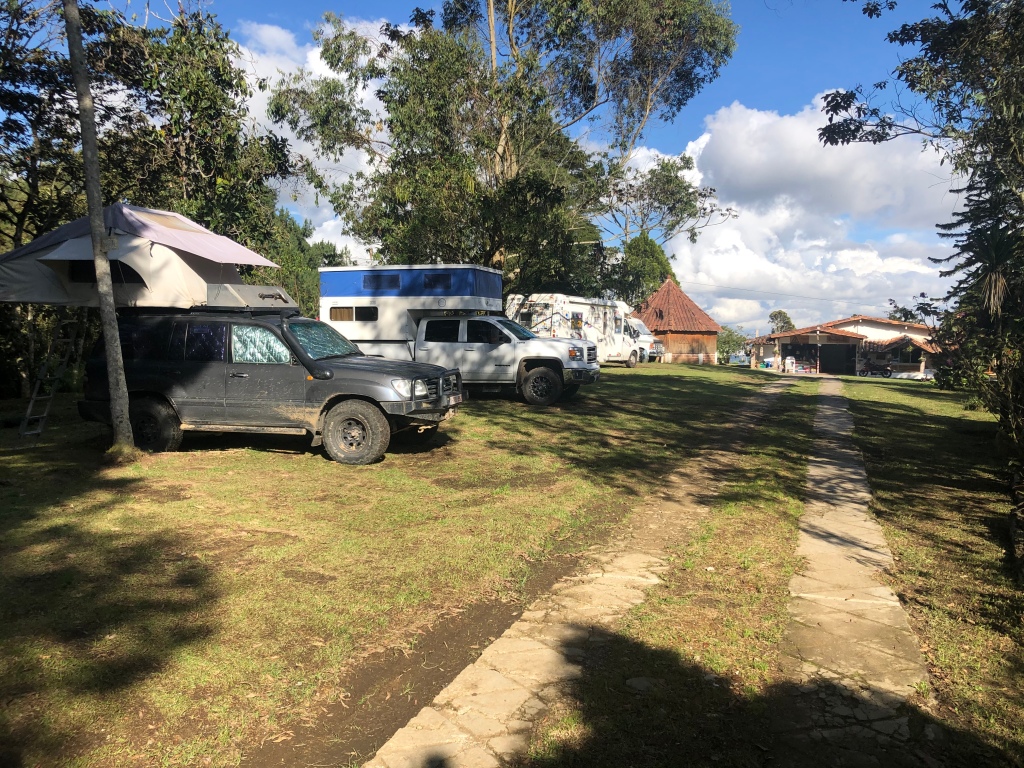
This area of South America seems to be a very popular part of the world for expats to come and set up campgrounds, with 3 of the last 4 visited being foreign owned. Hardly surprising – a wonderful climate, low cost of living and very laid back lifestyle all being attractions. As with La Bonanza, we’d heard much about Finca Sommerwind in Ibarra, owned by the very affable Hans, from Germany. A delightful hillside setting, by a lake, with a wide selection of excellent German beers, meals and bread – as a result, a real crossroads for all overlanders on the PanAmerican Highway.
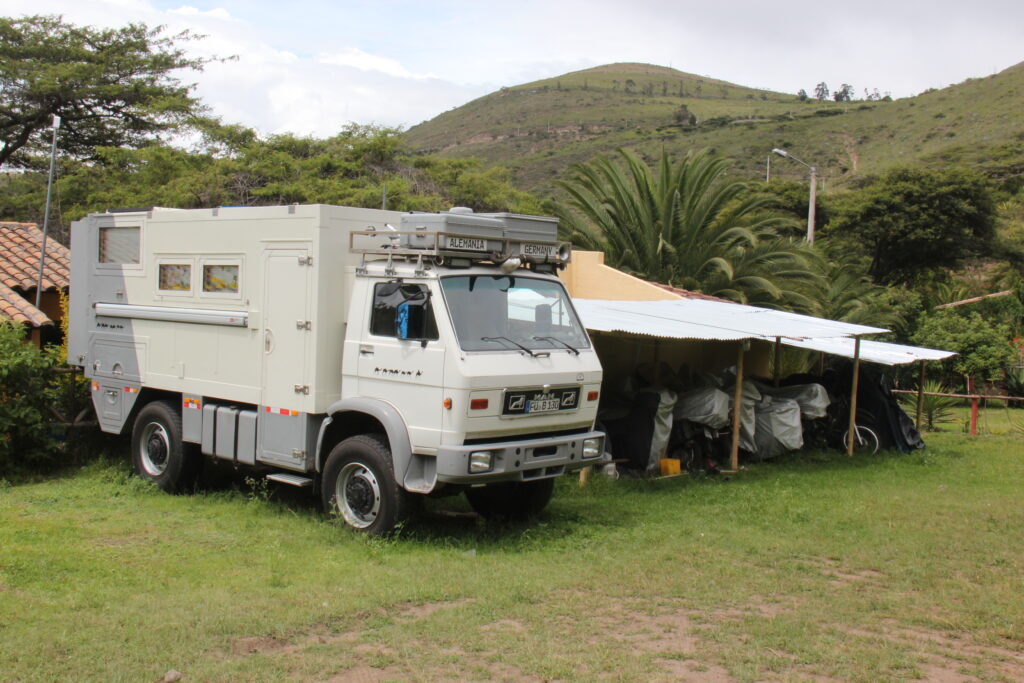
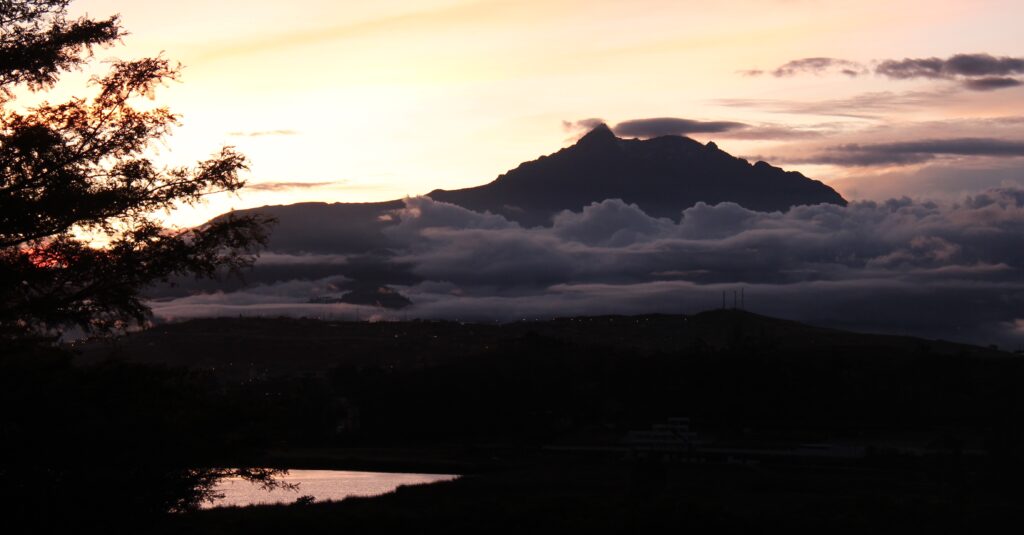
Finca Sommerwind, IbarraHans also stores overland vehicles, both bikes and trucks. Here, a custom built MAN overland truck favoured by many GermansImpressive setting overlooking the lake and mountains, Finca Sommerwind here at sunset
While at Finca Sommerwind the decision was made to visit the Galápagos Islands – we may not be back in South America for some time and since we’d never get closer ( the islands are Ecuadoran ), it seemed like as good a time as any. Many overlanders we had met coming north provided great tips and with airfares from Quito being very reasonable, we booked – so, Wednesday we are off !
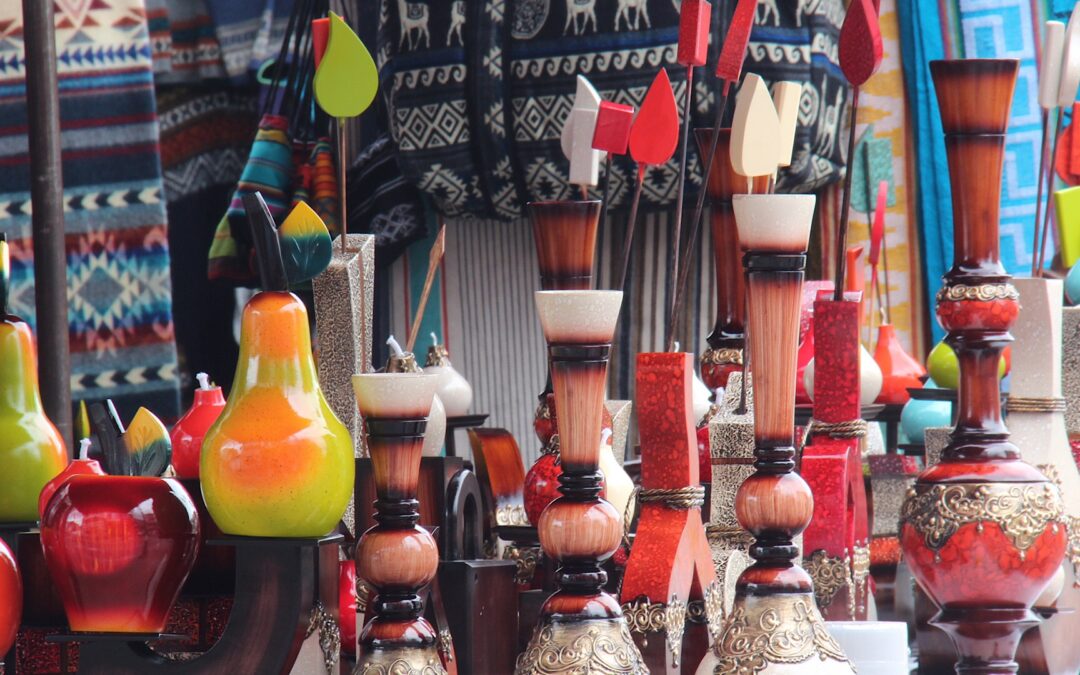
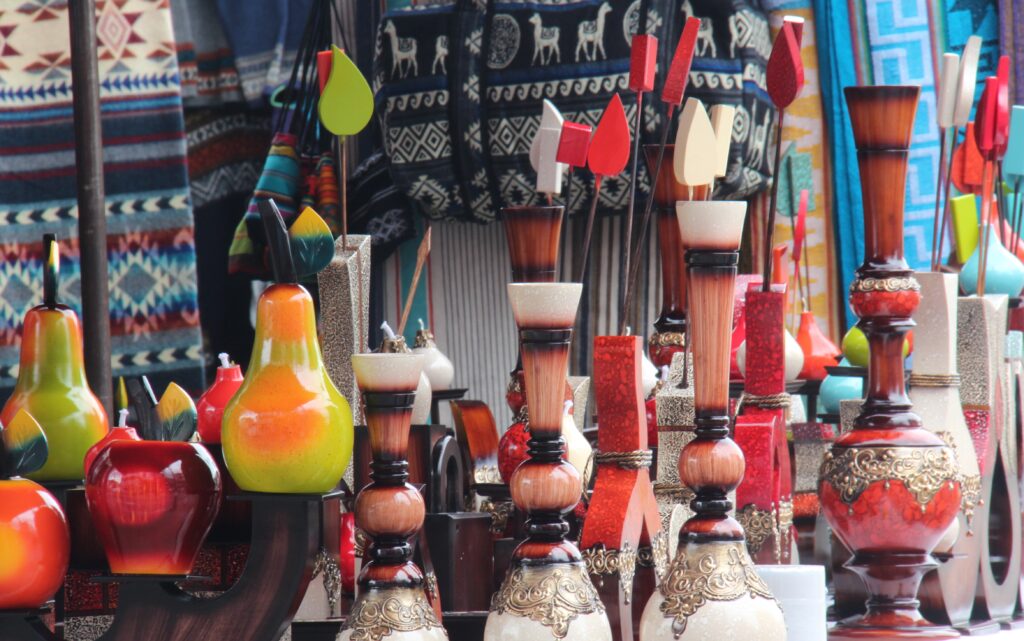
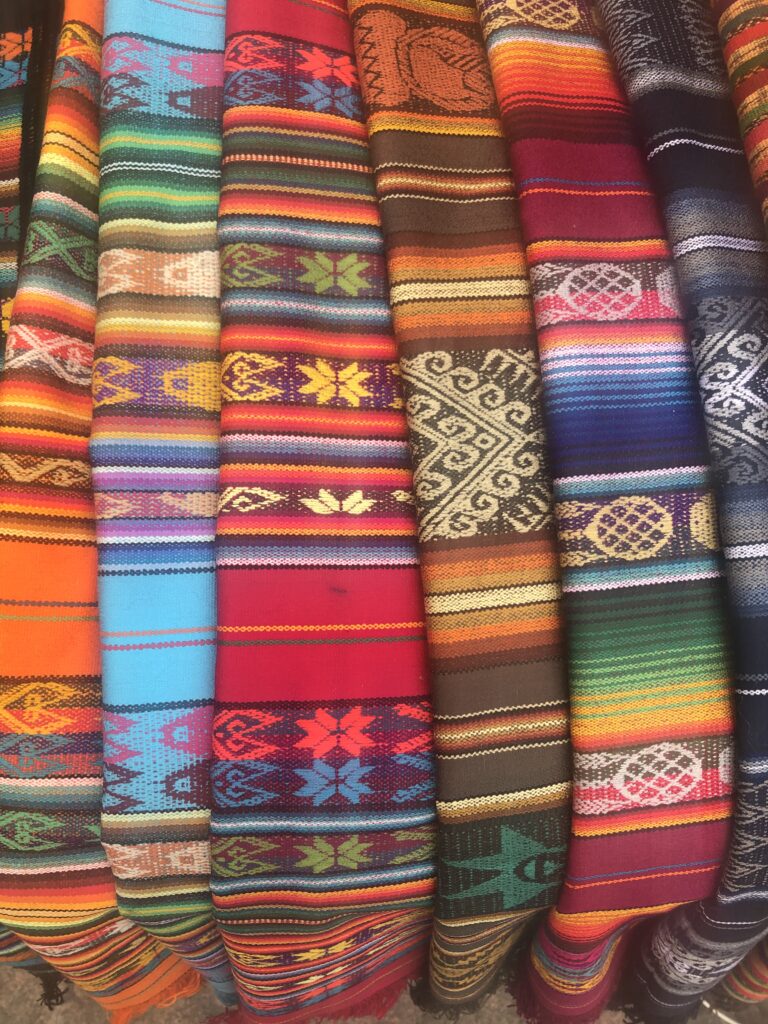
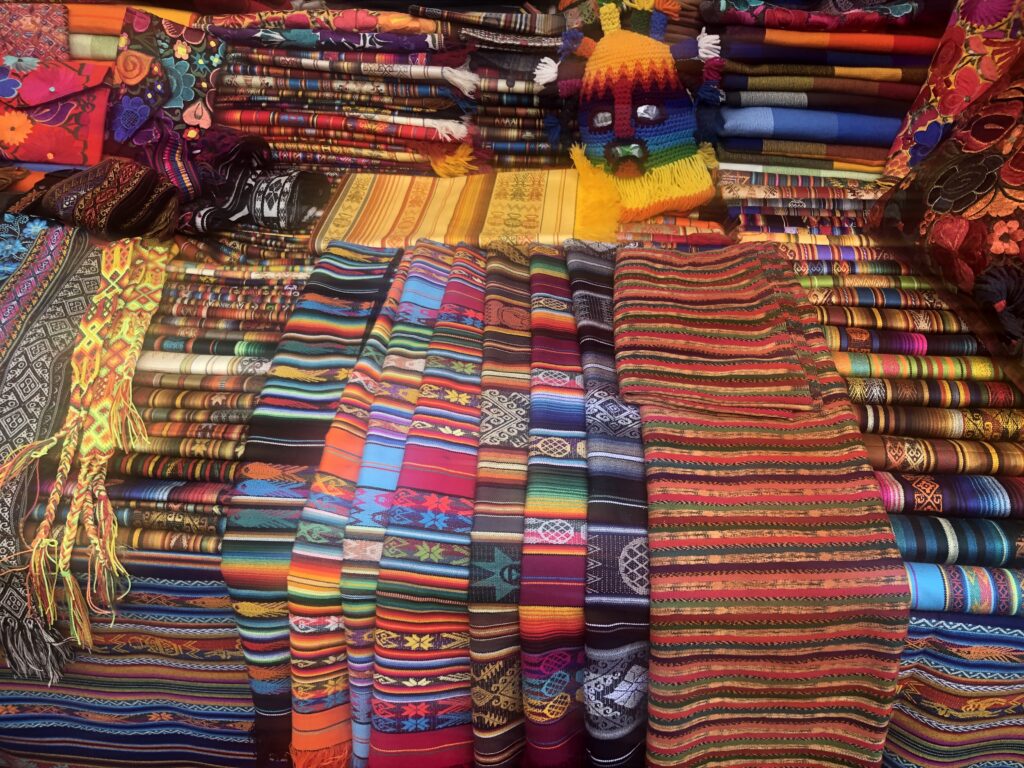
Between Ibarra and Quito was the famous Ecuadoran market town of Otavalo and with a bit of time on our hands now we revisited this most colorful of markets – much as we recalled it and still an easy place to enjoy an afternoon.
Artisan products for sale, Otavalo marketFabric colours at Otavalo market More bright colours, here some fabrics on display at Otavalo market
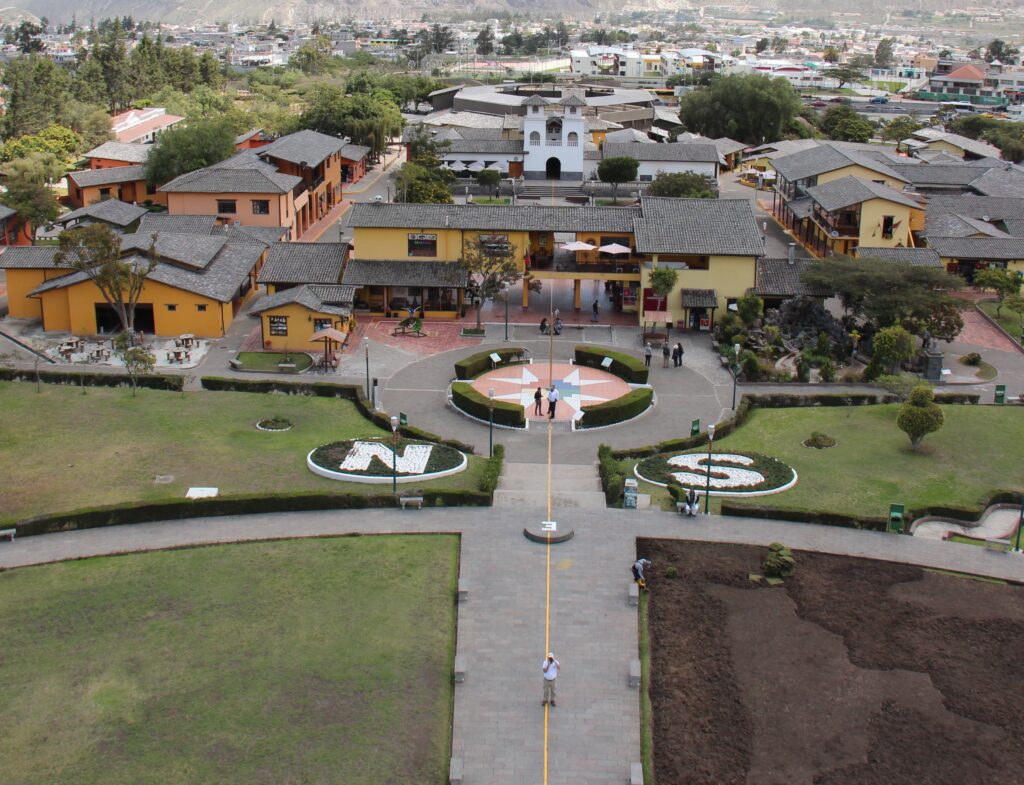
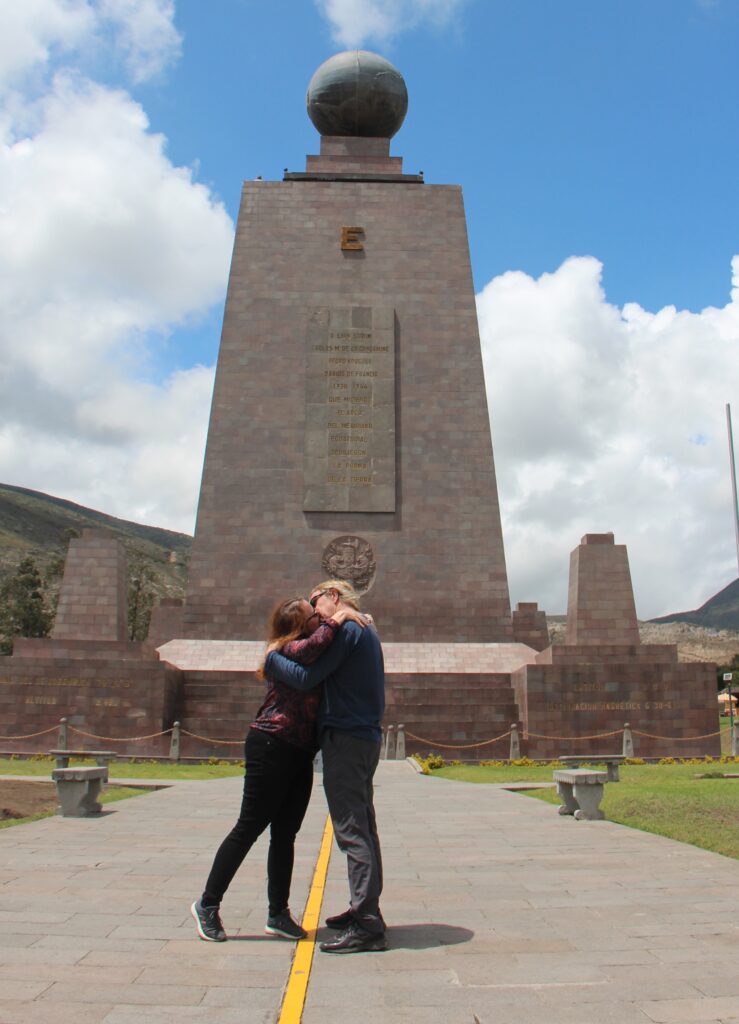
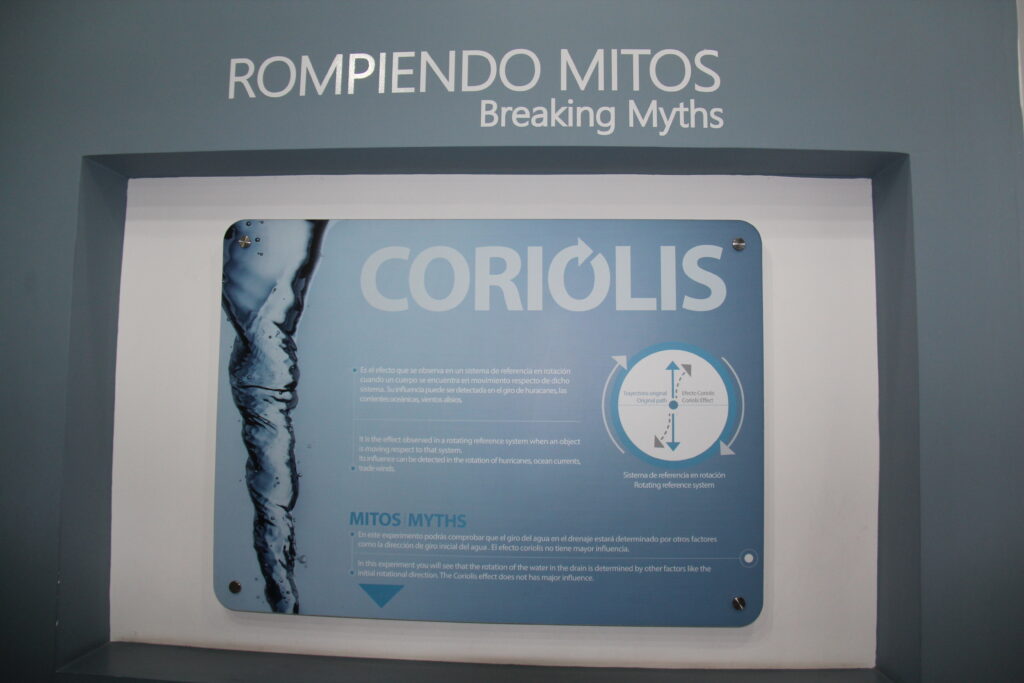
Just north of Quito, our jumping off point for the Galapagos, lies the somewhat kitschy village of Mitad Del Mundo ( literally, “Middle of the World” ), providing an unmistakable reminder that you are now right on the equator. In addition to its geographic significance, scientific relevance ( the Corolius effect and all that stuff ! ) and obvious appeal to all travellers, given the number of foreign visitors to the site the Ecuadorans use it to promote all things Ecuadoran – coffee, chocolate, the Amazon, the Andes, indigenous peoples and on and on. Apart from the sensory overload it was a very worthwhile pit stop before Quito.
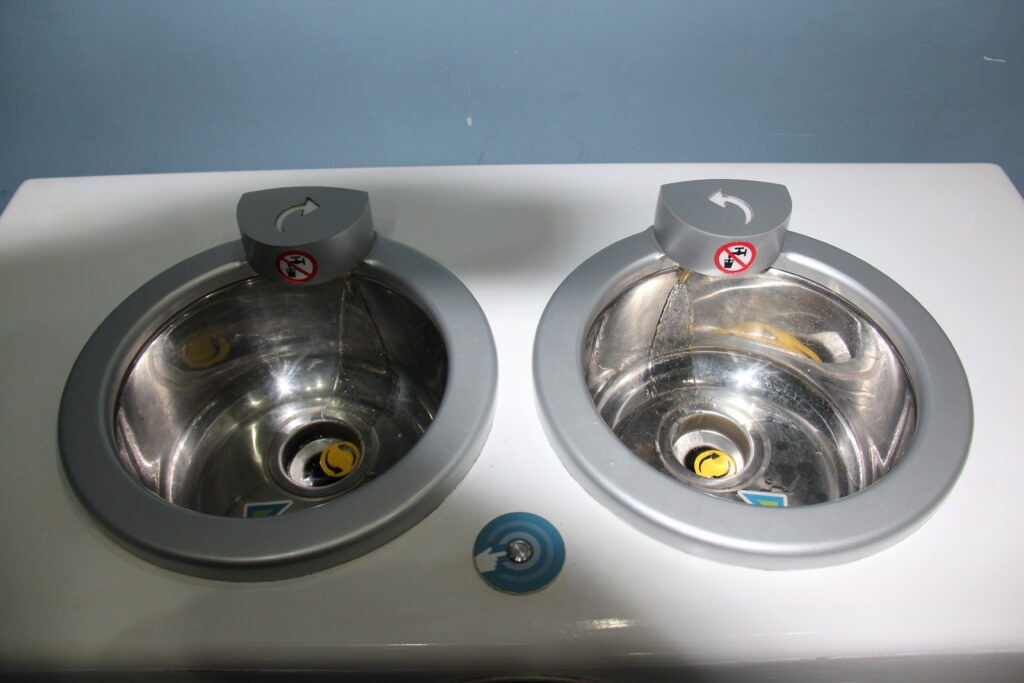
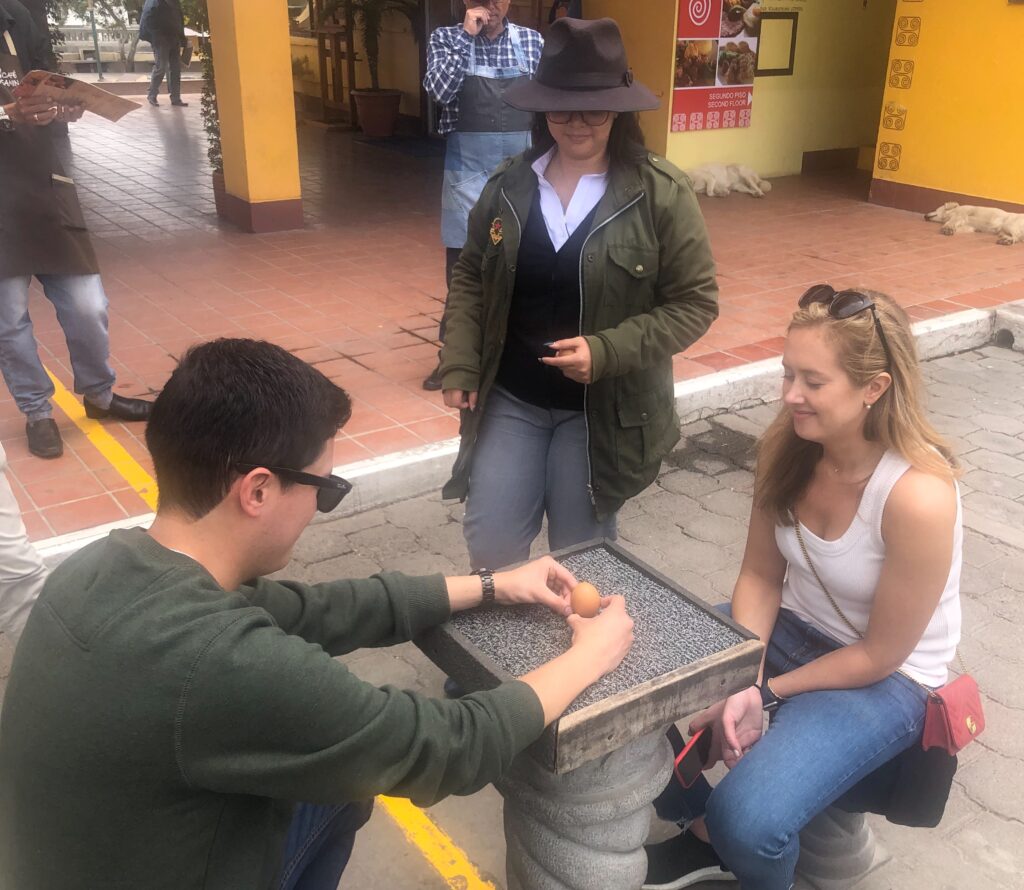
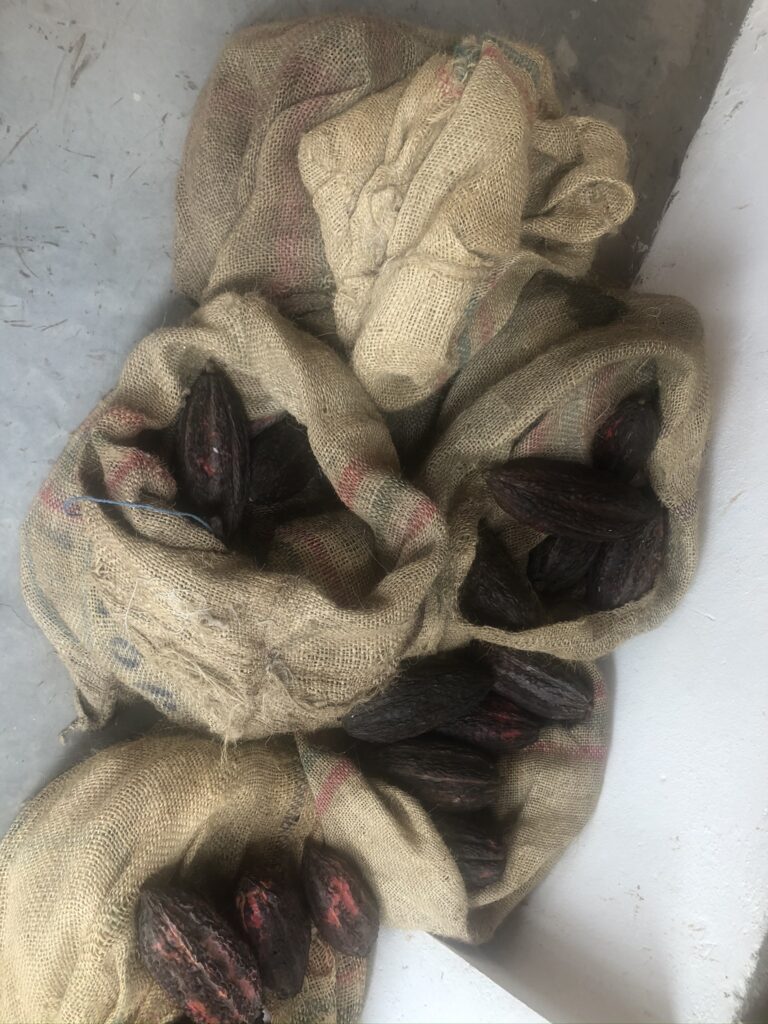
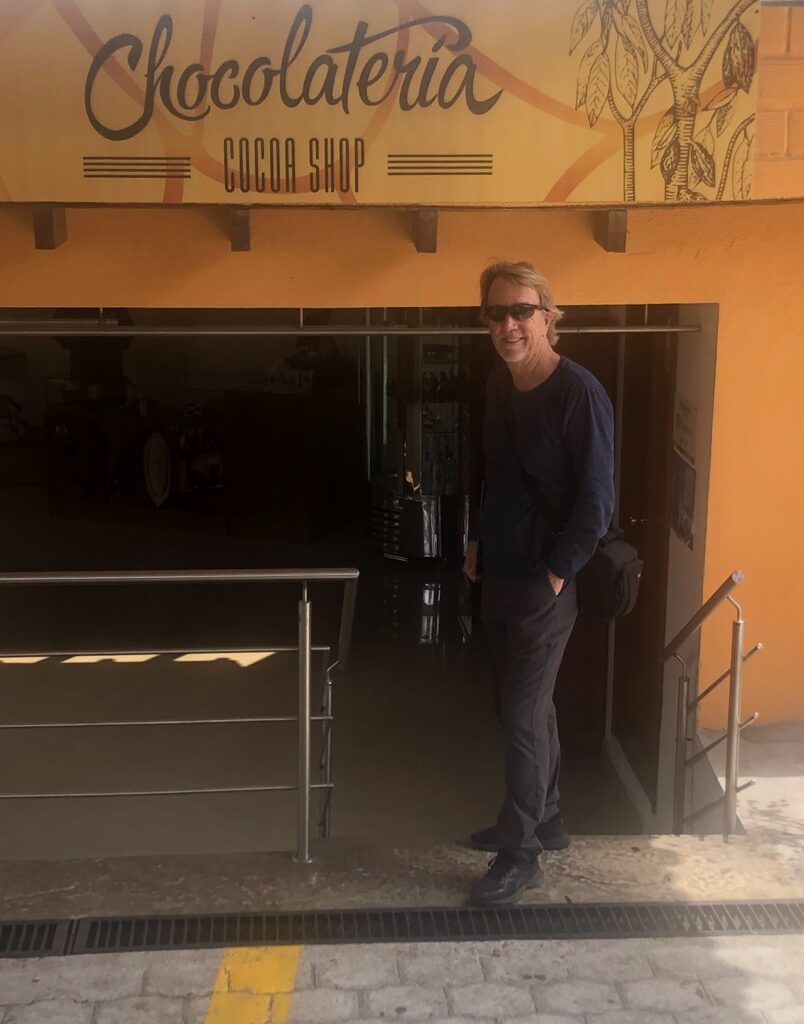
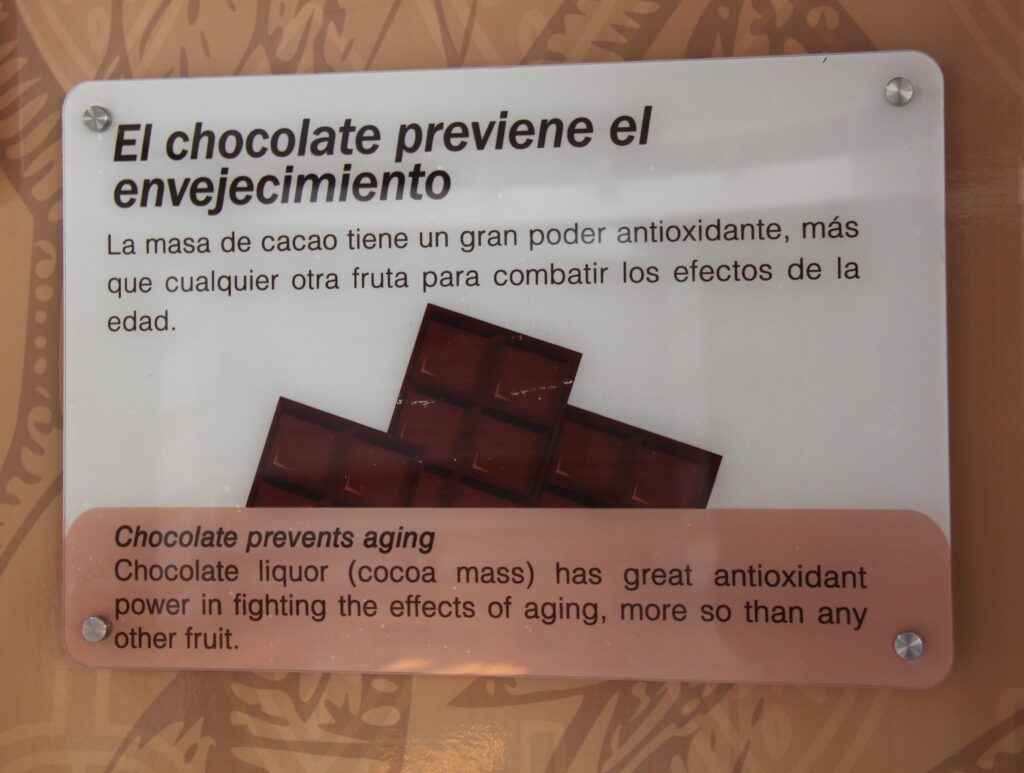
The view from up high at Mitad Del Mundo, looking east – the yellow line marks the equatorEveryone else had “a foot in both the northern and southern hemispheres”, but we thought being able to kiss from “one side of the world to the other” was also pretty cool.One could see the “Corolius effect” first hand at the equator…..…..and water going down a sink really does change direction right at the equator ( I’d always wondered ! ) While balancing an egg on end on the equator is theoretically possible, no one seemed to be able to do it !Cacao beans, from which chocolate is derived. Ecuador is a huge exporter of the product This could be dangerous…!While the science may be a tad self-serving, apparently, it’s a fact – eat chocolate, live longer !
Quito provided us yet another foreign-run campground, this time by another Dutchman. Arie made us feel right at home and after 25 years in Ecuador was a veritable fount of information on Quito and the many other attractions that lay ahead on our route south. Realized as a result there is a bit more to Ecuador than we had expected.
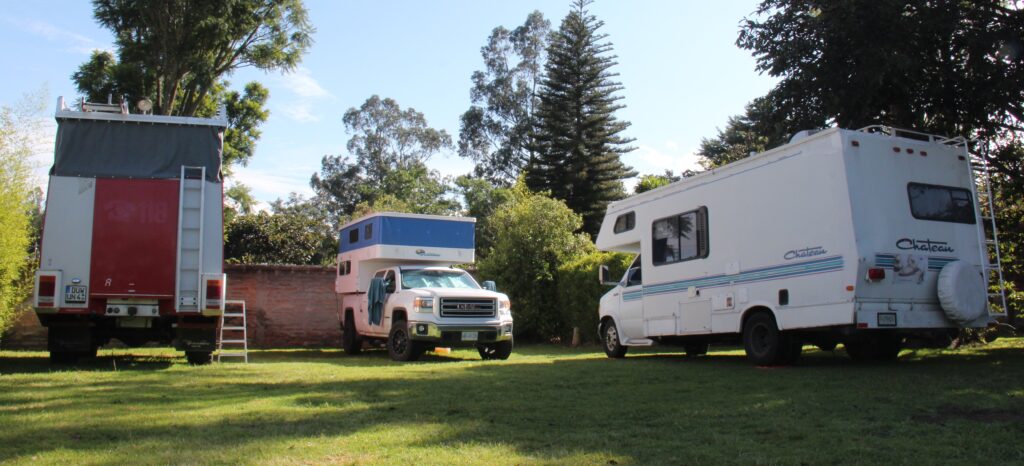
Aries campground in Quito. A family of Germans in a converted Swiss fire truck on the left and a Chilean/Guatemalan family on our right
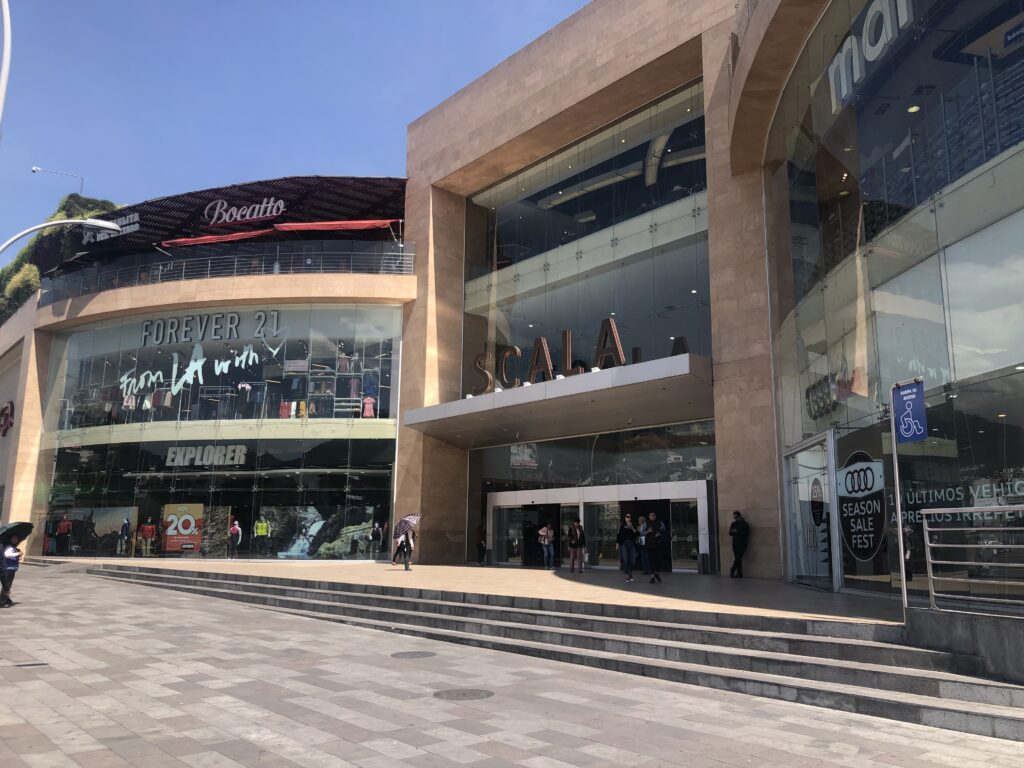
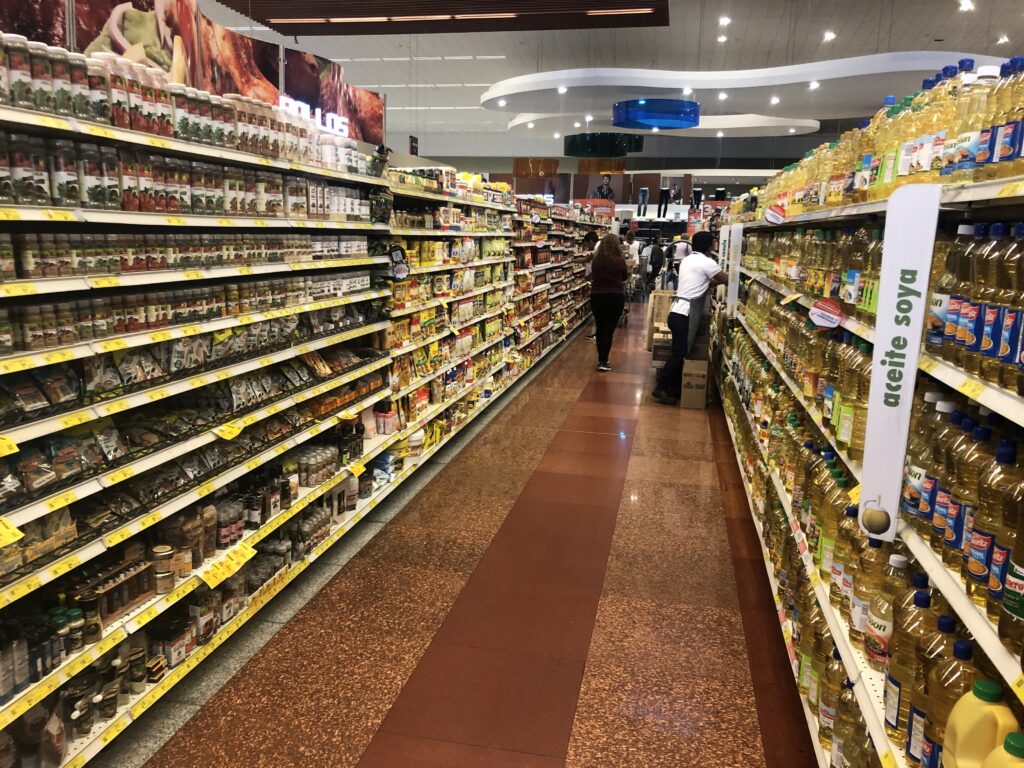
Our last days of the week had us doing a little routine maintenance work on the vehicle, and exploring some of the shopping centers in the area – goggles, snorkels and fins were the order of the day in preparation for our visit to the Galapagos. While that search went in vain we did discover some other great shopping – very impressed with the Scala mall in Quito; it will be a great place to re-stock the camper when we get back.
Scala mall, QuitoThe supermarket had everything – “just like home”
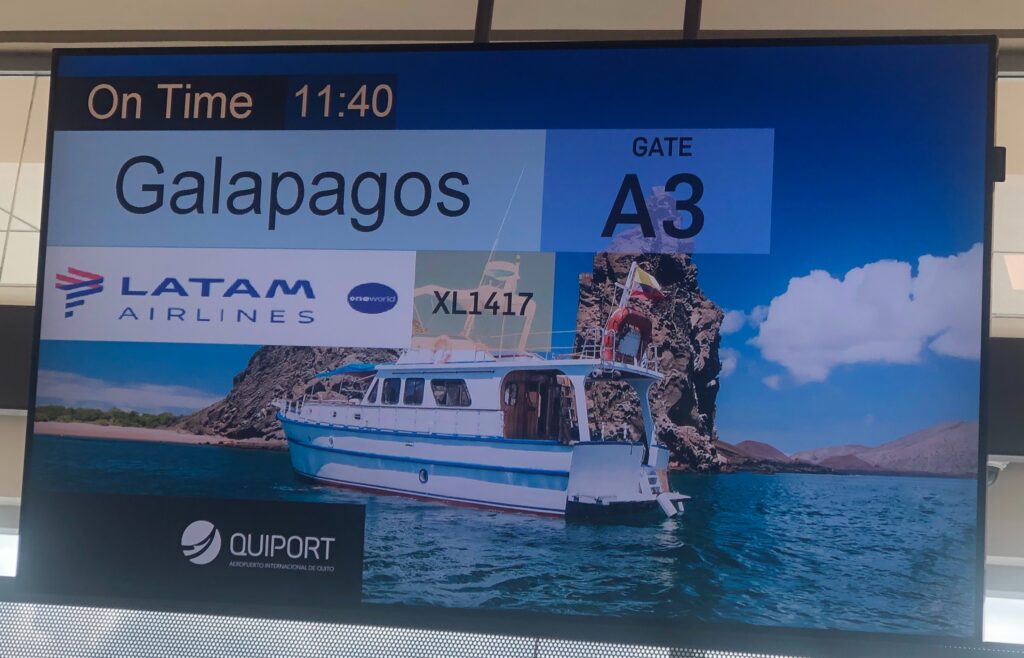
Arie kindly delivered us to Quito’s very impressive new airport and our departure for the Galapagos went off smoothly – seldom do we get excited by the name of the destination city plastered above the departure gate at the airport, but hey, it’s not everyday one gets to go somewhere as unique as the Galapagos.
All aboard for the Galapagos
Full Galapagos report on our next blog – stay tuned ……!
Sometimes it’s the places you visit and sometimes it’s the people you meet. While this past week did not take us through particularly notable places, it did bring us into contact with some incredibly interesting people – always one of the great delights of travel.
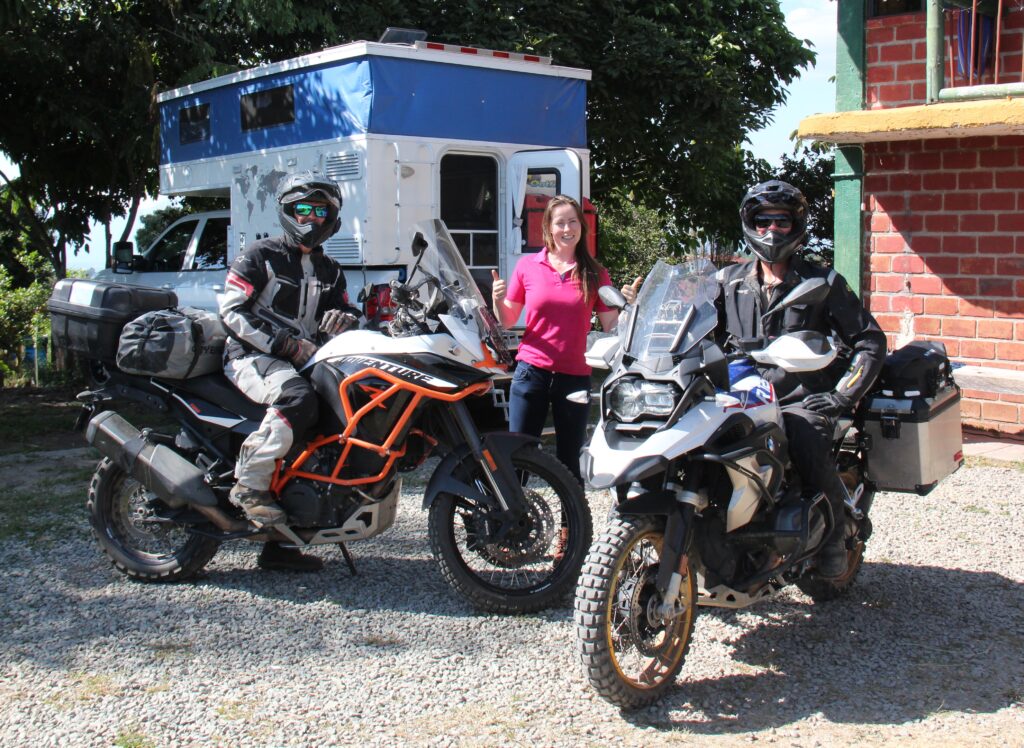
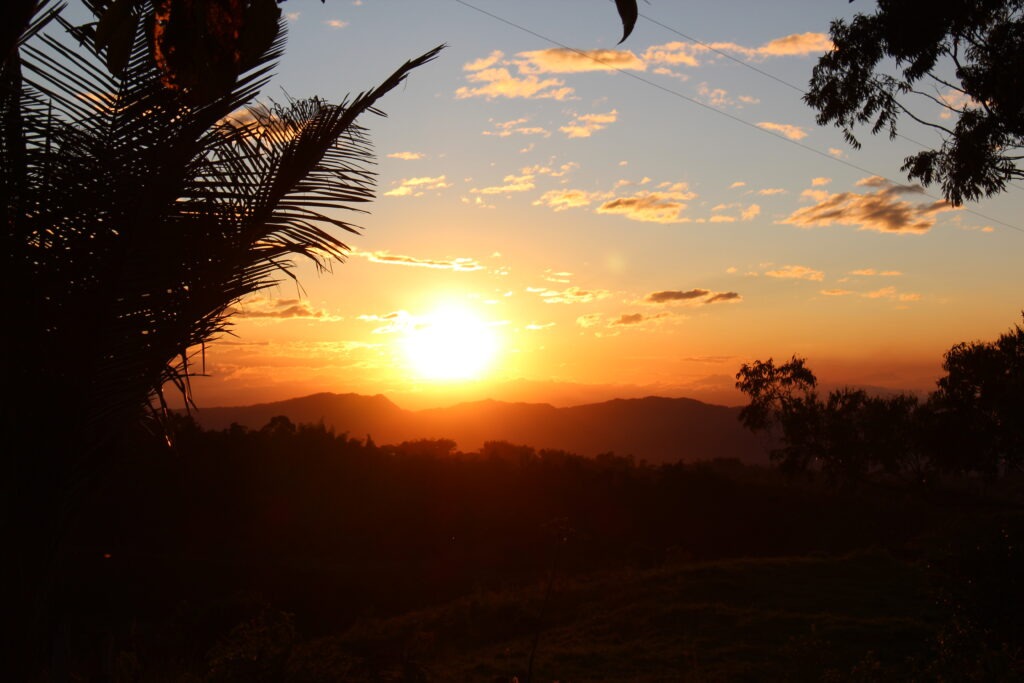
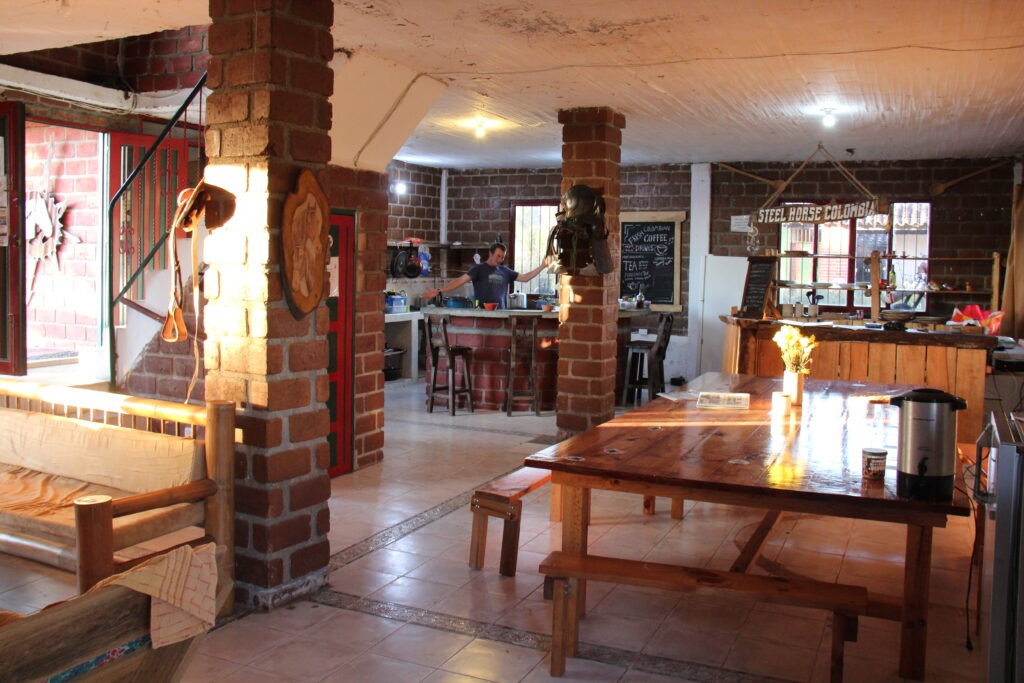
Allen ( Canada ) and Rik ( Holland ) who we met in Filandia. Both, like us, en route to Ushuaia, ArgentinaOur last sunset at FilandiaA farewell to Paul/Yvette – we would miss their amazing cooking at Finca Steel Horse !
At Finca Steel Horse we had met Felix and Tina, a Swiss couple who were 3 years into their global overland trip. She, a retired teacher and he a semi-retired “computer guy” still doing consulting one day a week from the road – in fact, that has been a bit of a pattern we have noticed. Quite a few overlanders are still keeping their hand in at something. For some it is simply because their craft lends itself to working on-line and remaining mobile, and for others it’s personal interest or to supplement the cost of their travels.
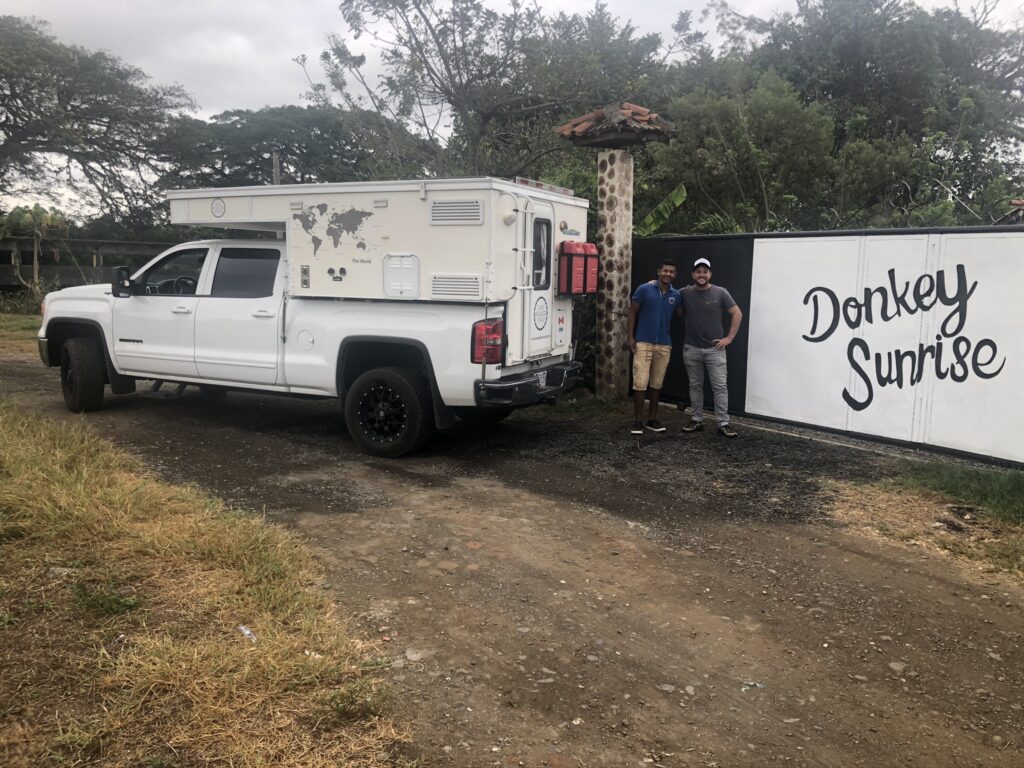
Tim and Jon at Donkey Sunrise, La Union
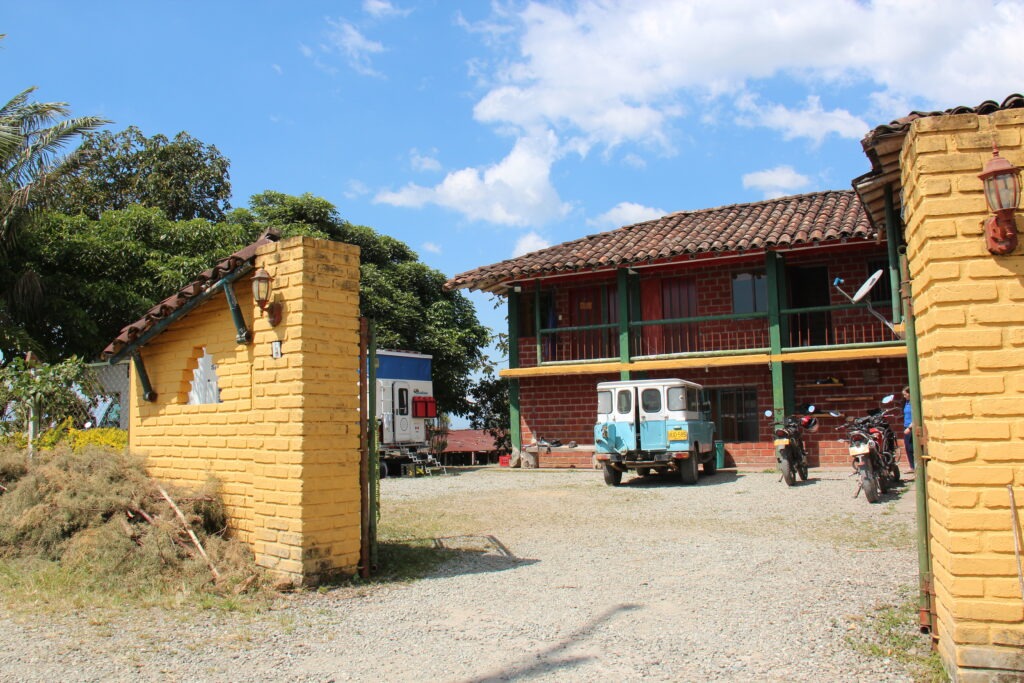
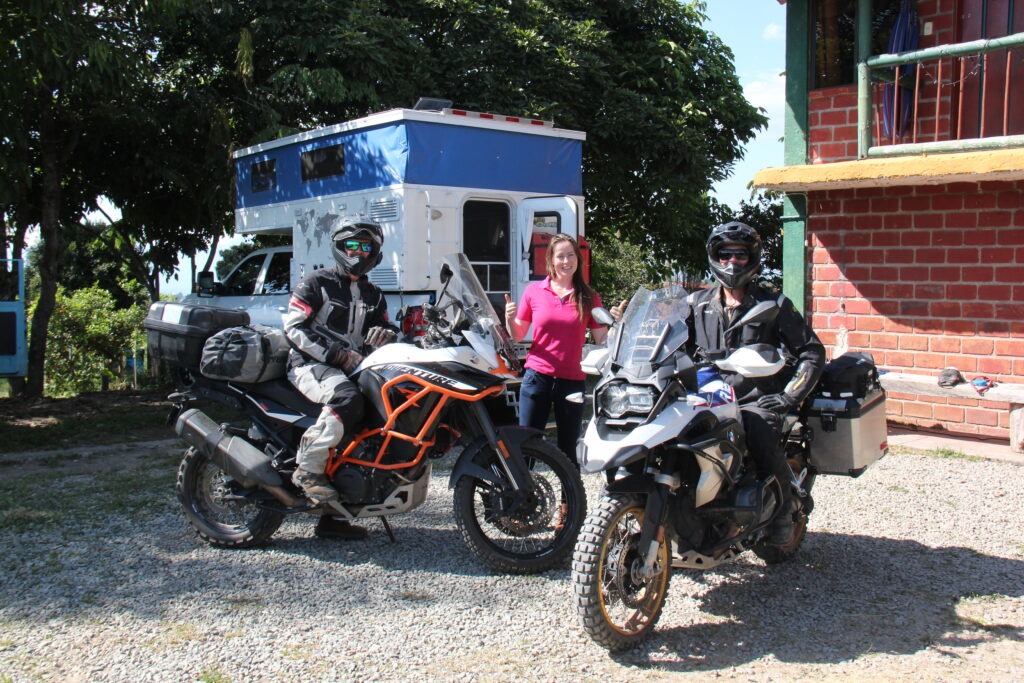
Leaving Filandia took us down from the mountains to the valley that more or less runs the length of Colombia ( north to south ). On the advice of our Steel Horse host, Paul, we took the scenic route to the small town of La Union where a young Dutch fellow, Tim ( as gregarious a character as you are ever likely to meet ) was the perfect overlander host at his new “adventure campground” – Donkey Sunrise. Focused primarily on motorcyclists, Tim nonetheless offers a very warm welcome to all overlandanders regardless of their means of transportation.
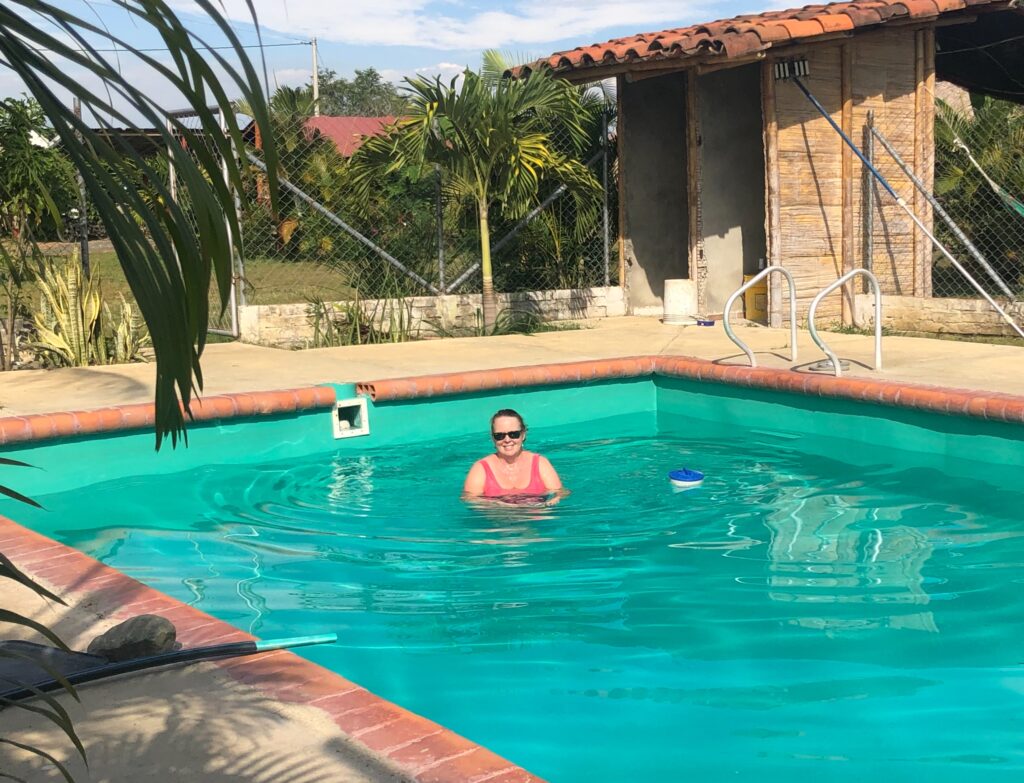
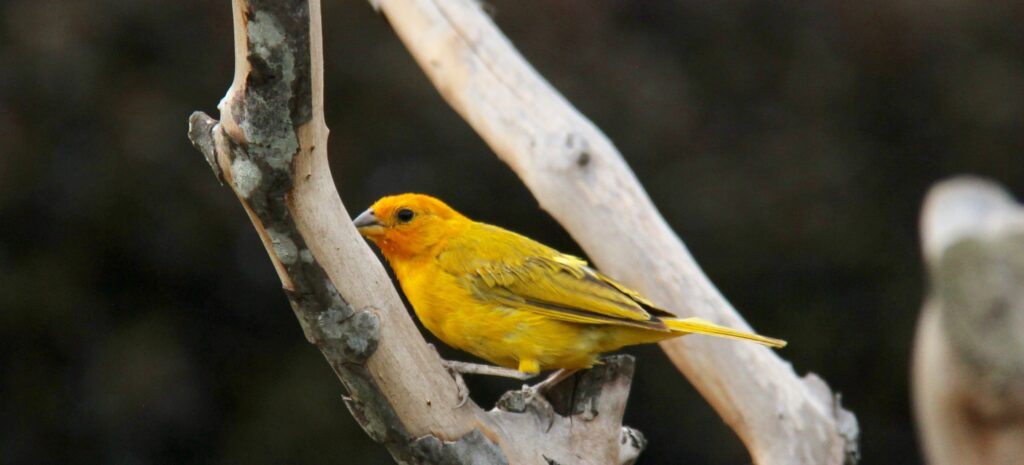
Lois enjoying the pool at Donkey Sunrise – it was 35 degrees thereEven the birds are brightly colored – one here at La Union
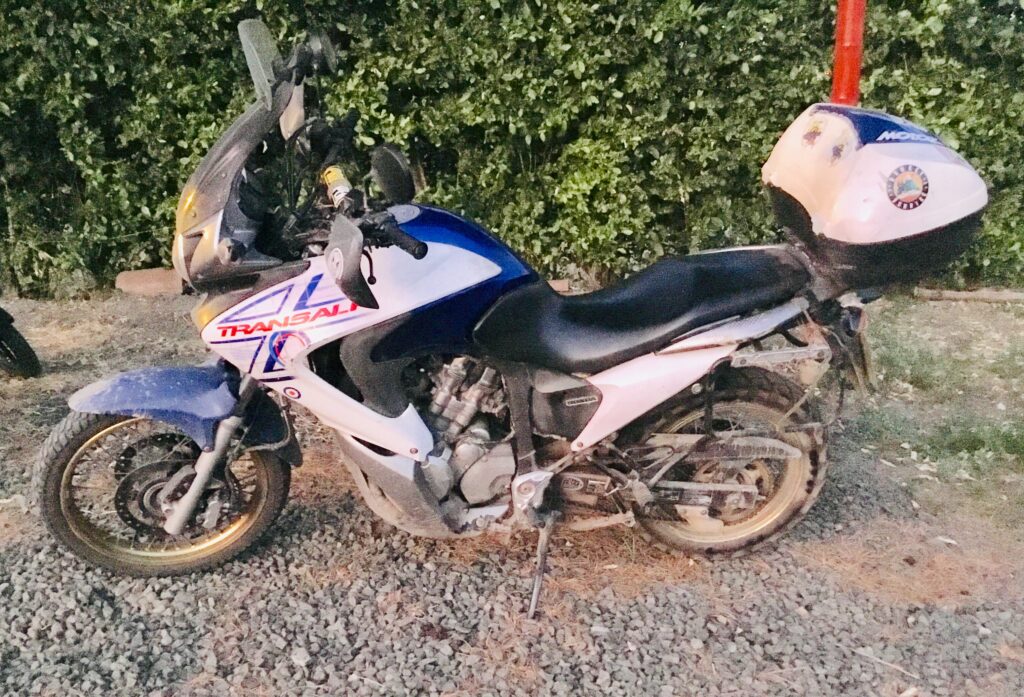
Among Tim’s guests was Freddy, a younger British guy who hopped on his Honda Transalp motorcycle for a one month ride from the UK to Morocco and ended up riding the whole west coast of Africa – all the way to Cape Town.. ! Not just is that a hell of a long ride but the west coast of Africa is considered one of the world’s toughest overlanding routes (95% of people who overland Africa go up or down the east coast – much easier, and with more well known attractions to see ). Once he got to the bottom of Africa he shipped his bike to Montevideo ( Uruguay ) and has now substantially completed a route around South America. Sort of the reverse of our own plans.
Freddy’s African and South American overland bike, a Honda Transalp
From La Union we were now headed straight south towards Ecuador and had heard much about an amazing campground just north of Popayan, near the famous indigenous market town of Silvia. People had raved about it and iOverlander was full of very favourable reviews. With the GPS set for “Camping La Bonanza” we headed south. A nice relief to be driving on longer, straighter, mostly four-lane highways in the valley of central Colombia as opposed to the tortuously winding mountain roads we had been travelling on recently. An easy 4 hour drive later and we were at the La Bonanza gate.
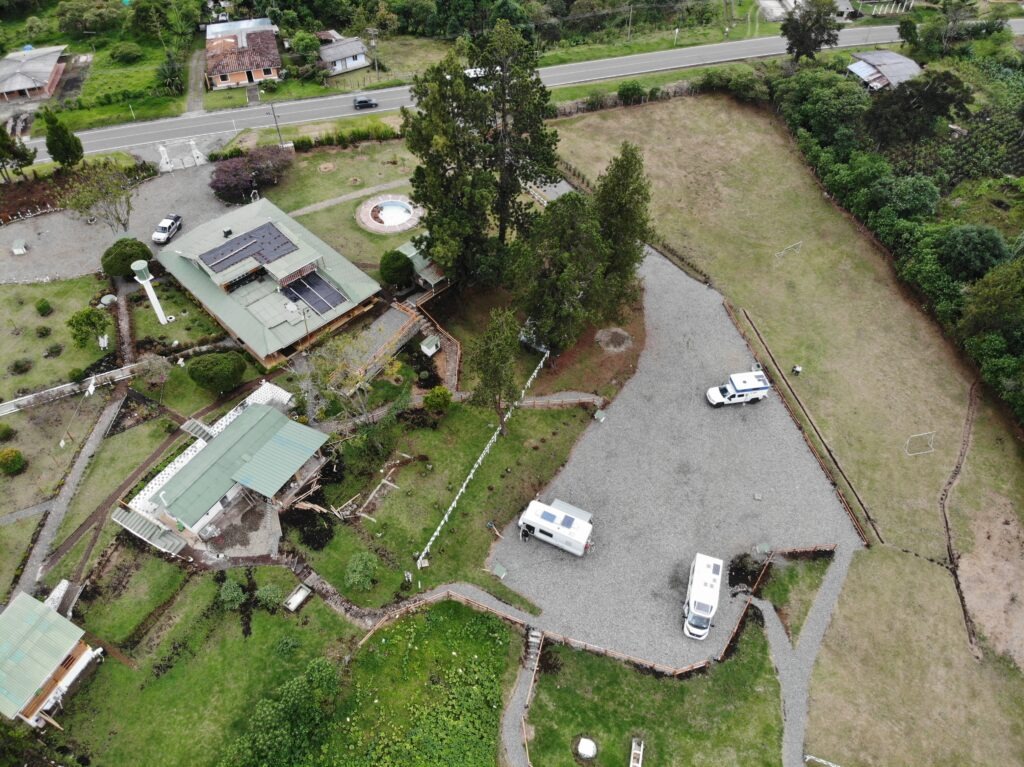
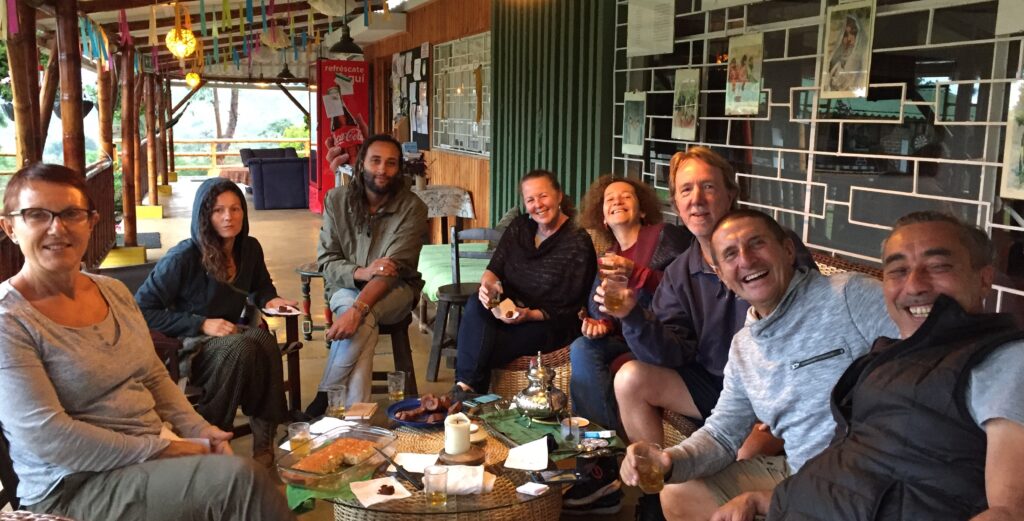
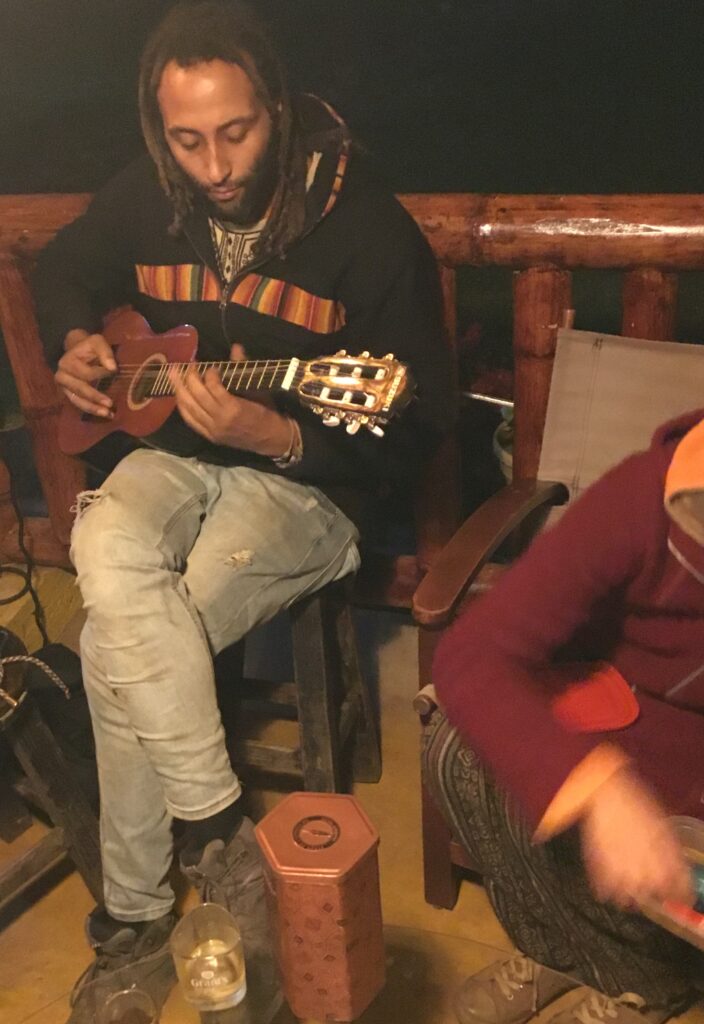
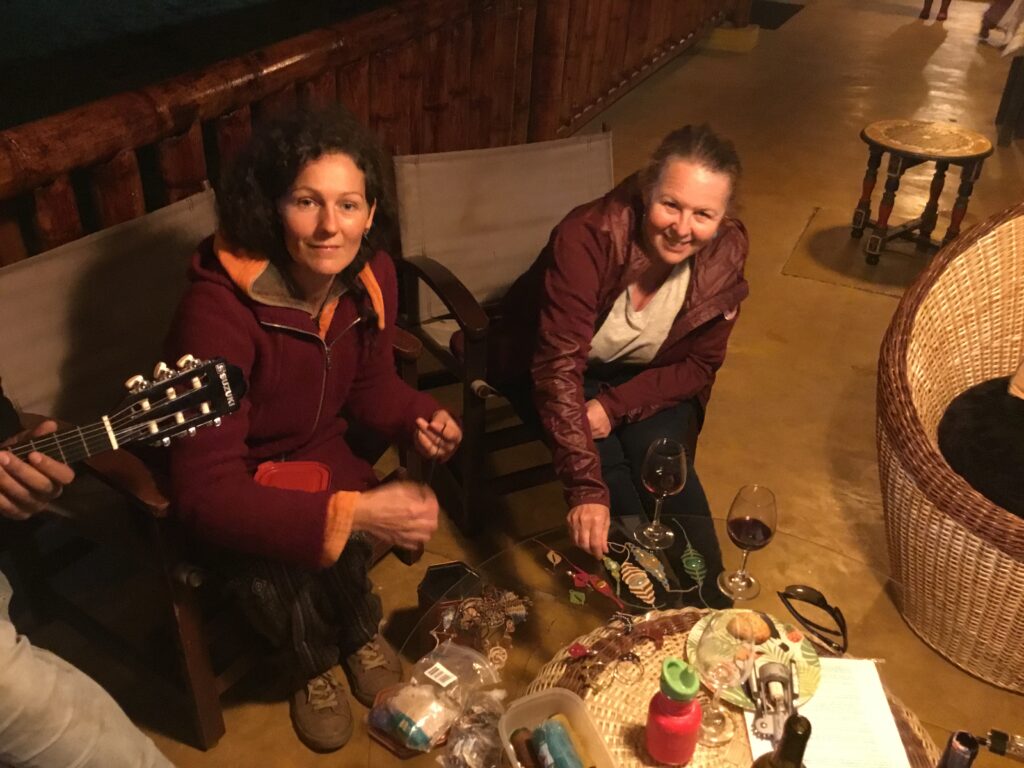
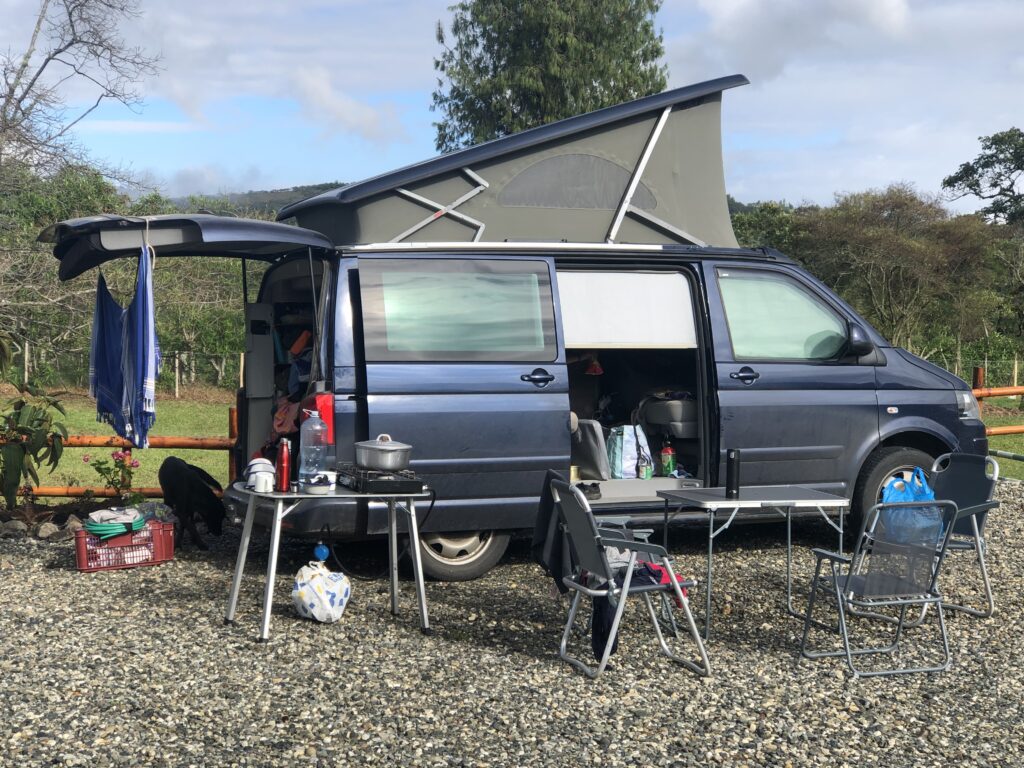
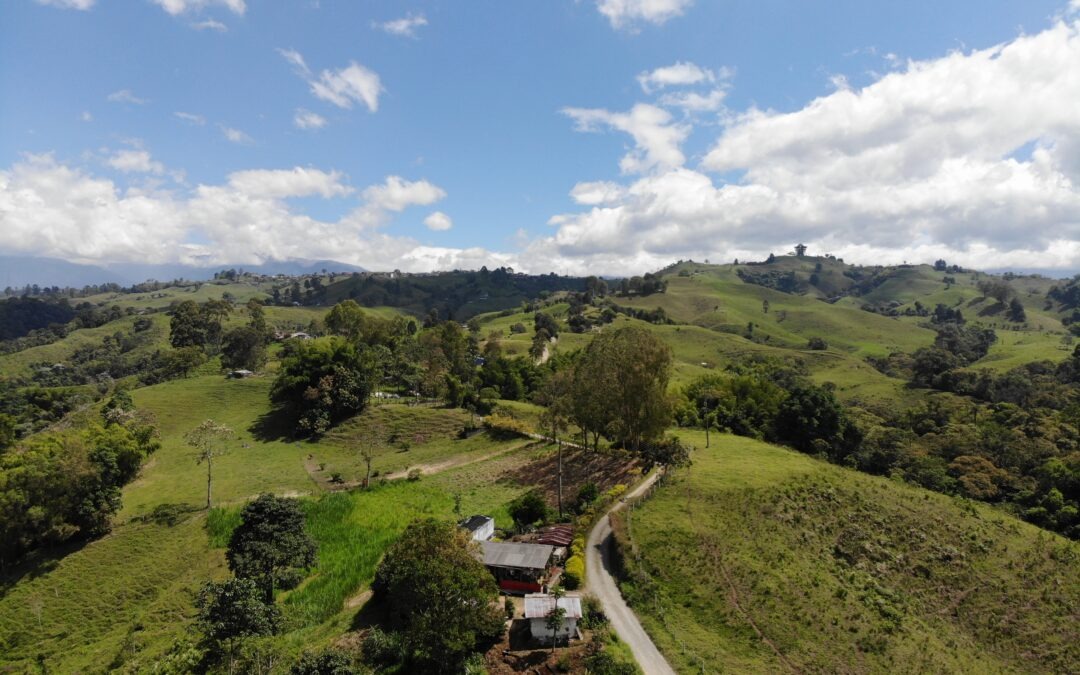
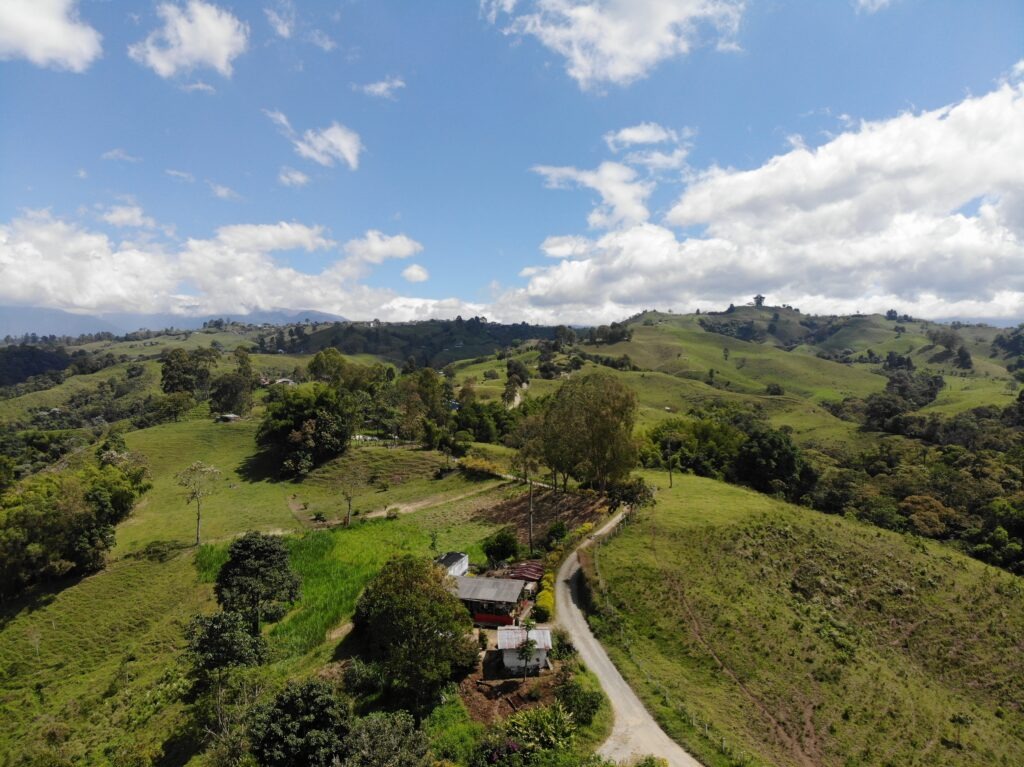
Drone shot of La Bonanza campgroundAfternoon drinks at La Bonanza – our hosts ( from Morocco), a French couple heading north, a German couple heading south and ourselvesMehdi, originally from Morocco, playing us some tunesMehdi’s wife, Nina showing Lois her handicrafts. They travel with two small childrenOccasionally our camper can seem small for two – at La Bonanza we met a French family of 4 ( two were teenagers ) travelling around the world in this small VW. Now THAT is cozy !
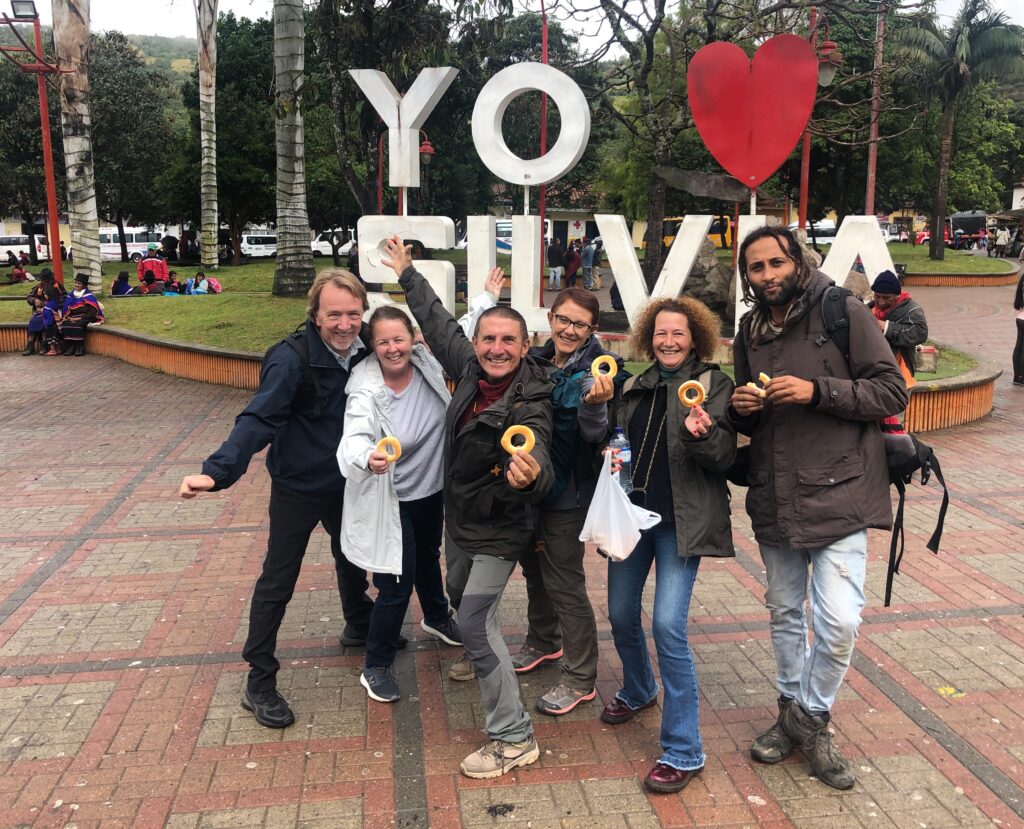
Travel in these parts certainly brings you into contact with those whose background story can be somewhat “exotic” and you would go a long way to find a more interesting story than that of Anouar and Kika, the Moroccan owners of La Bonanza. Passionate overlanders themselves, they had purchased a motorhome and packed up their life in Morocco along with their three young children and set off on a journey around South America. Falling in love with the continent and specifically Columbia, they decided to settle here and establish a small farm/retreat dedicated to accommodating overlanders. Read about their story here ( www.campinglabonanza.com ). Absolutely one of, if not THE, best campgrounds we have seen so far, They have not only thought of everything that an overlander needs, but they’ve topped it off with the type of legendary Morrocan hospitality that makes everyone feel very much at home. We, along with fellow guests from France and Germany had the most wonderful few days with them – arriving on Monday, there was an opportunity to experience Silvia on market day – Tuesday – an experience not to be missed. As recently as just a few years ago it was an area considered dangerous due to the presence of armed guerillas but that issue has been settled and the town is attracting tourists again. Very traditional, very colorful and very worthwhile.
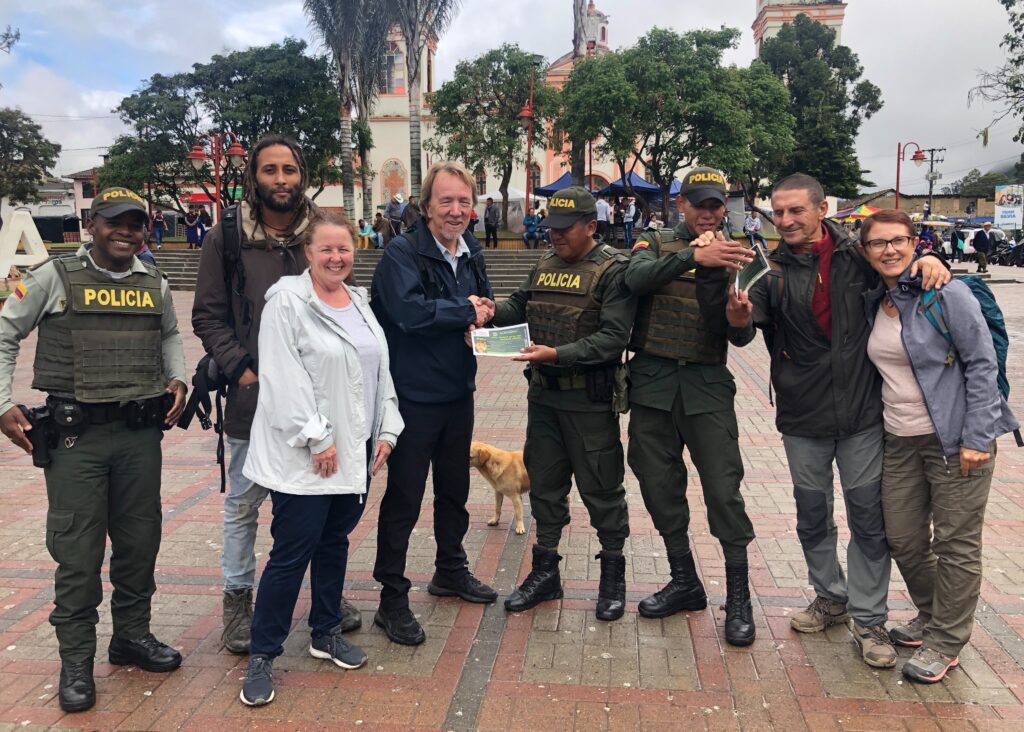
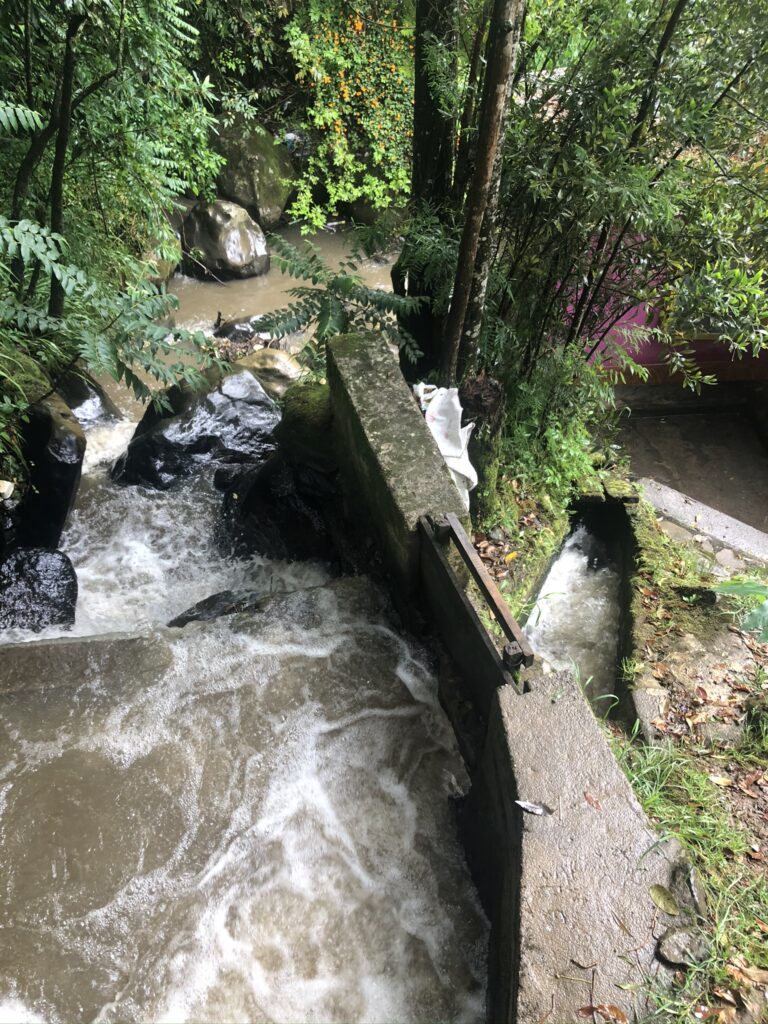
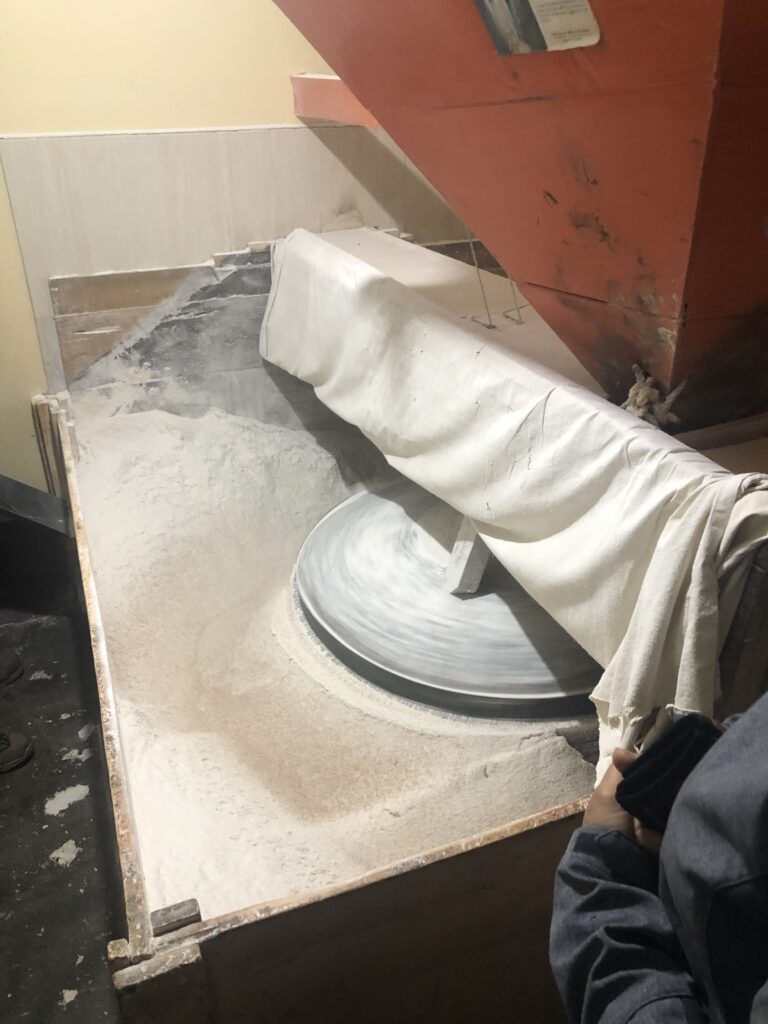
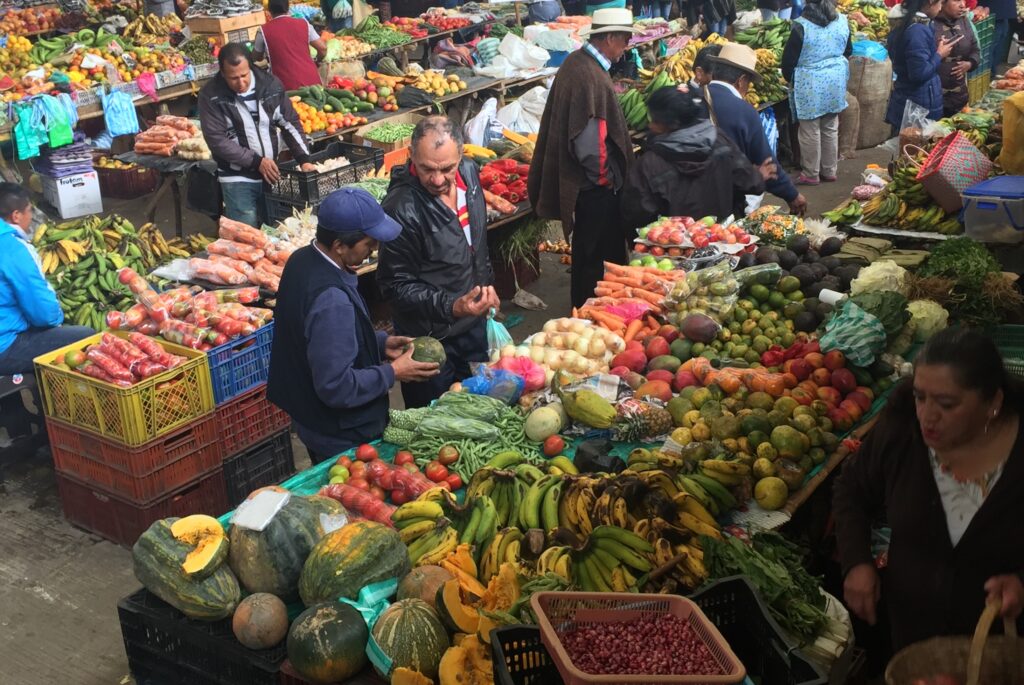
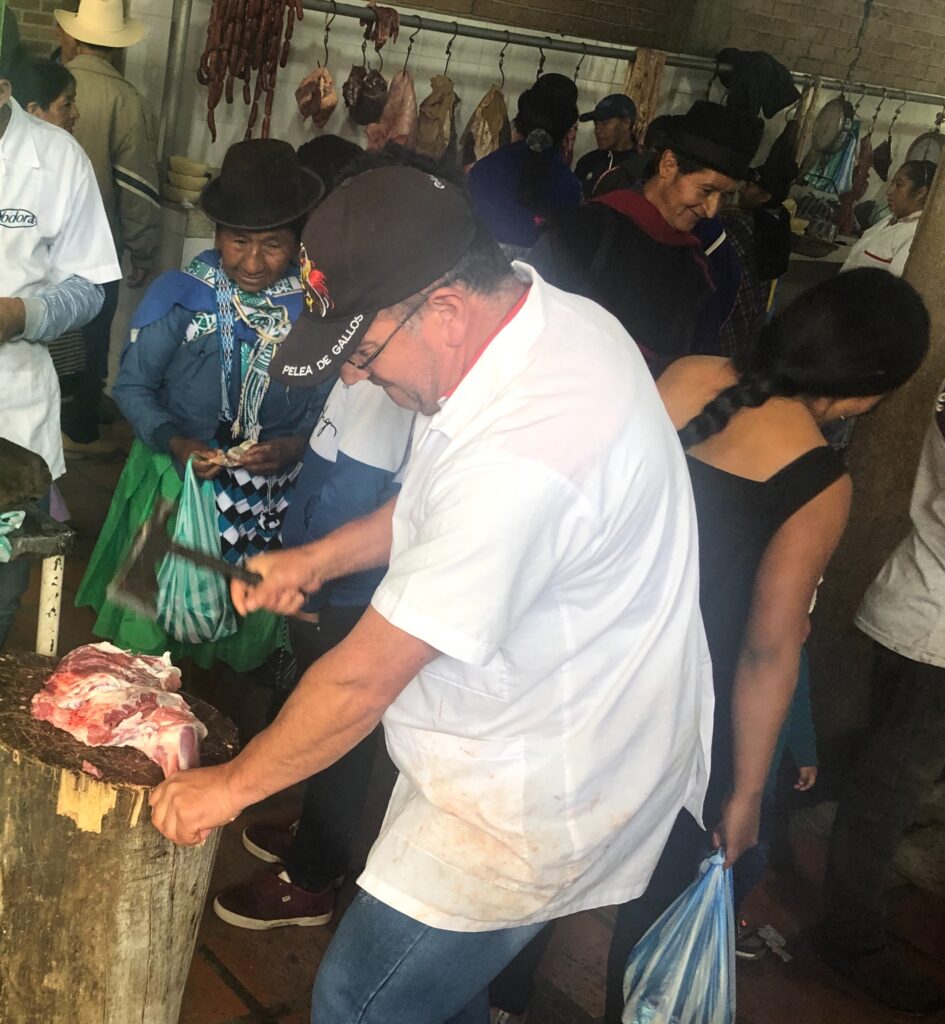
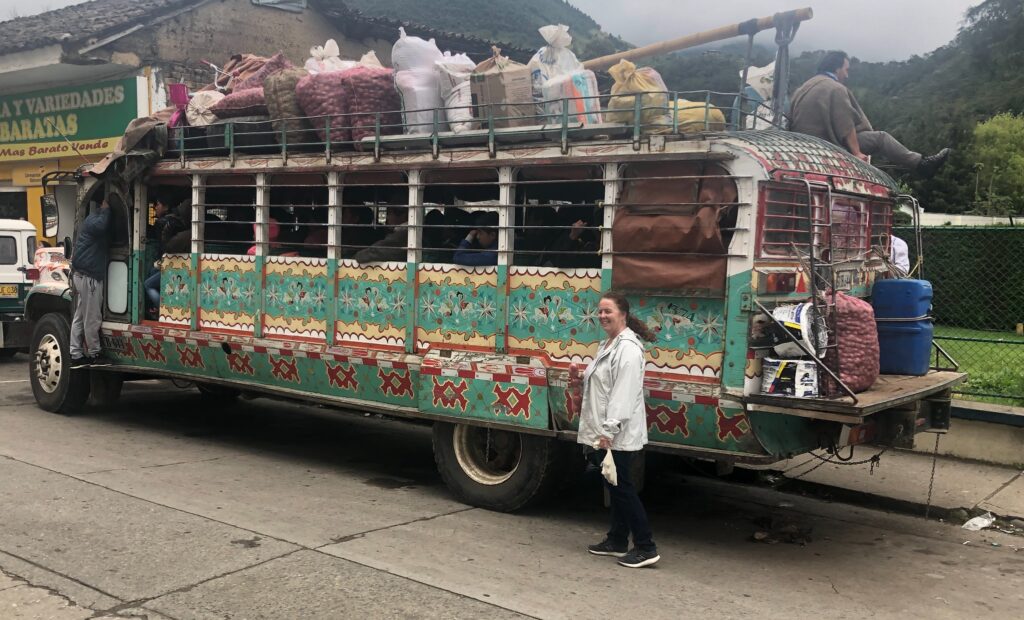
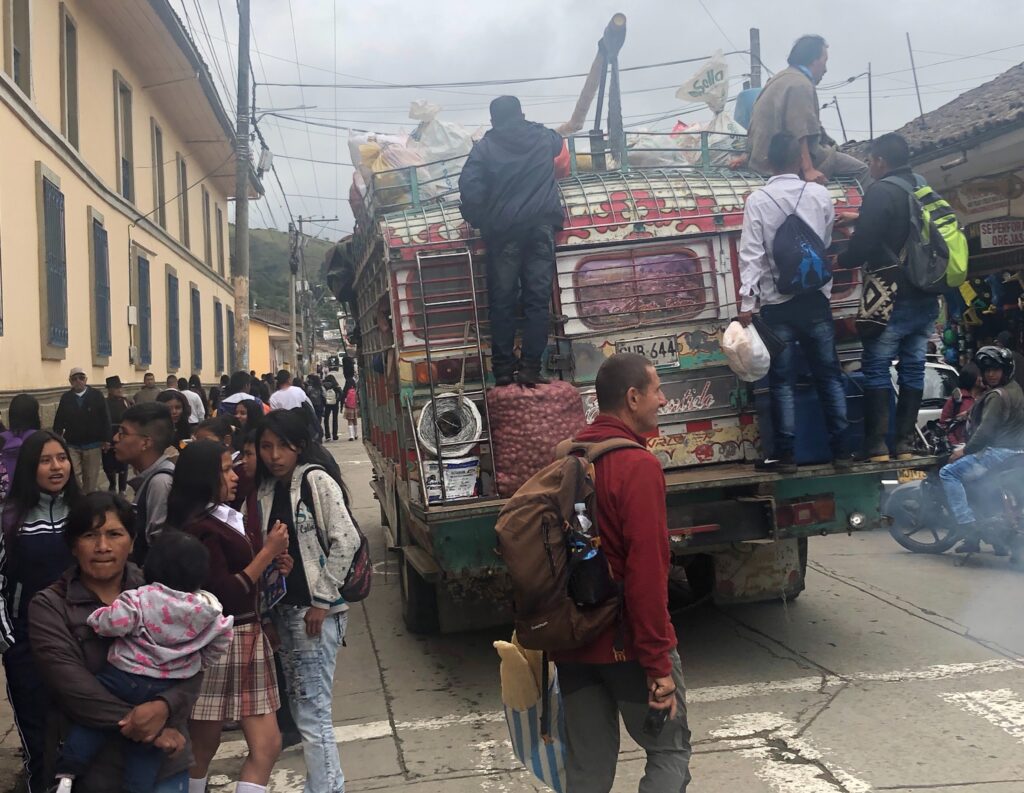
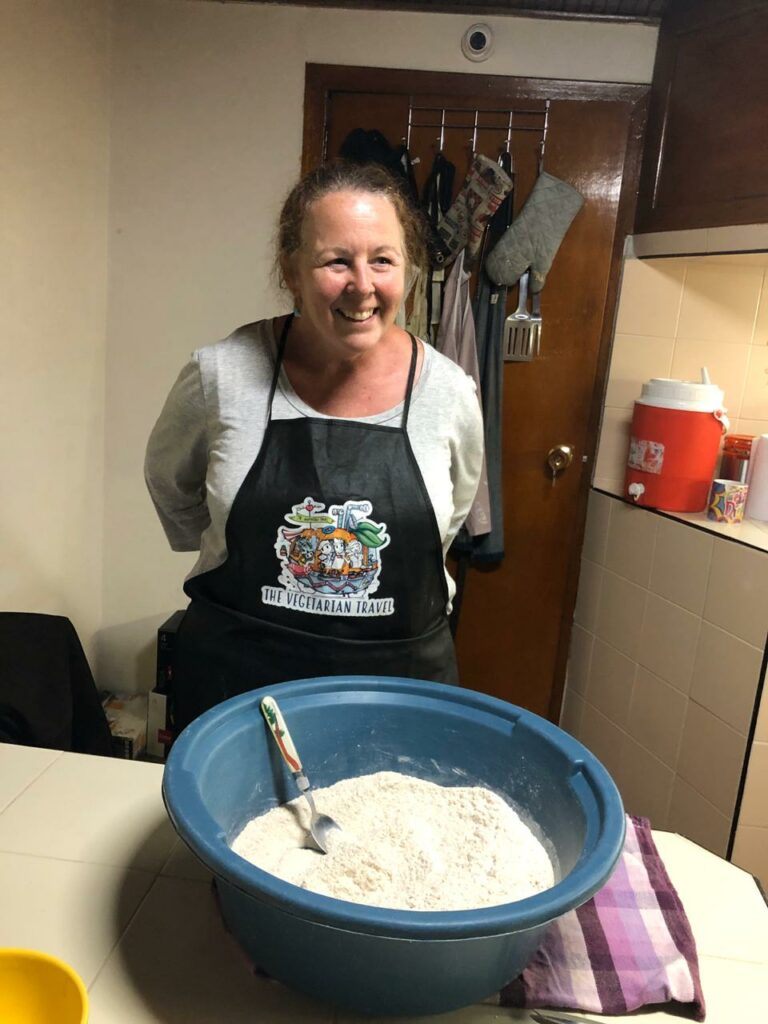
Arriving in SilviaThe local police saw us and wanted some pictures- we said yesThe flour mill at Silvia, still powered by falling water as in days gone by… …and produces excellent flourThe ever colorful Silvia market on Tuesday – we bought lots of veggies…..but passed on the meatA local “Chiva” bus, brightly colored and …..……always heavily overloaded, is a common means of transportation in the areaA typically colorful Silvia coffee shopThe coffee inside was as good as well. Resting up after market day, SilviaColorful building in Silvia Ditto Lois took bread-making lessons from Anouar at La Bonanza – she looks like a Master Chef contestant facing the judges ! Her bread was deliciousOur Morrocan hosts gave us a full family farewell from La Bonanza
Alas, all good things come to an end and mid week saw us leaving La Bonanza to continue down the central valley of Colombia towards Ecuador. A look at the map and the distances to Ecuador don’t seem great – however the dramatic elevation changes and windy, often narrow, roads (with regular construction delays) made progress slow. Gone was the four lane highway from further north !
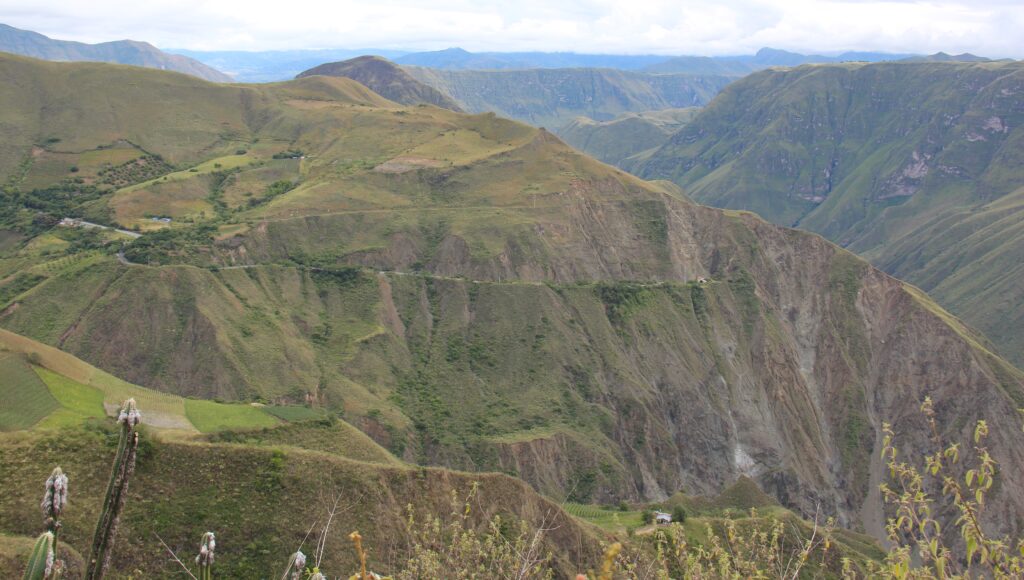
Typical terrain and roads in southern Colombia – here near Pasto
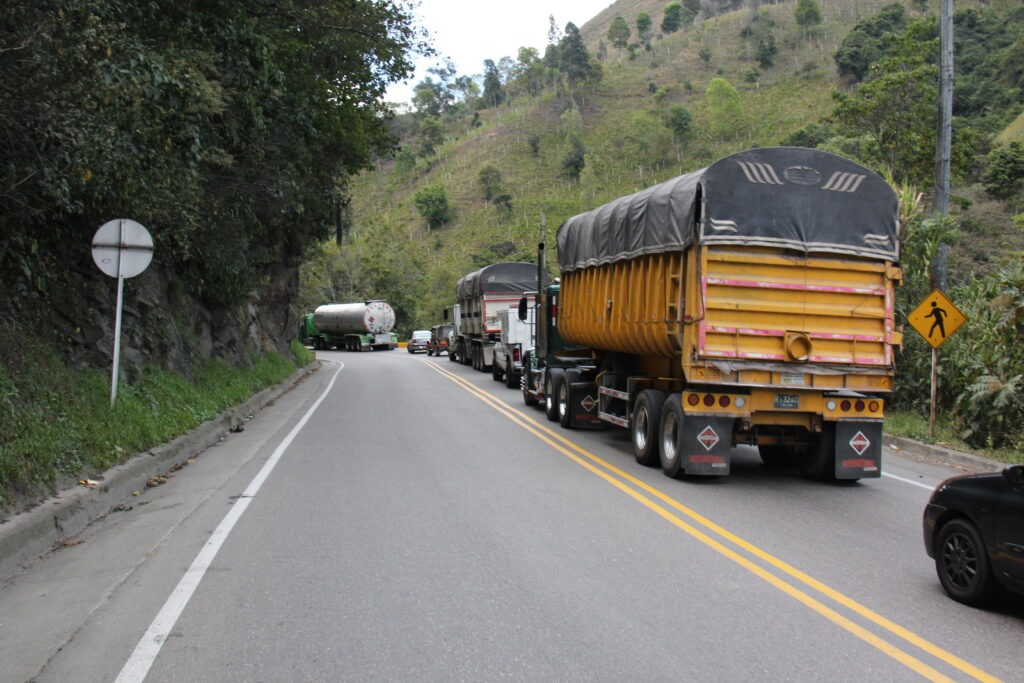
Over the next two days driving we passed Popayan, Pasto and numerous smaller villages, then finally made the border town of Ipiales, noting an increased roadside police presence the further south we got. During our visit to South America in 2003 this road was a no-go area due to rebel activity and we had to fly over it. Yet, it was safe back then to travel through Venezuela ( you wouldn’t now ! ) and we are glad we did. Fast forward to 2020, Venezuela is more or less a failed state, Colombia is safe and prospering with Venezuelan refugees flooding in here – we saw hundreds travelling down this very road with us today. A sad an very tragic irony.
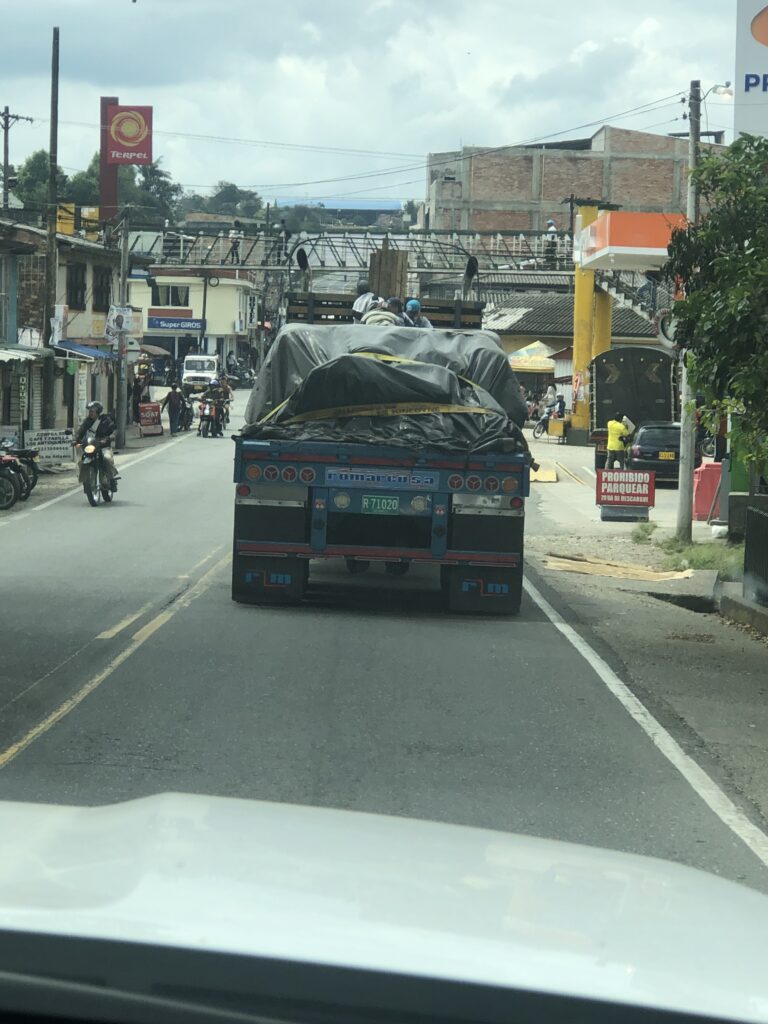
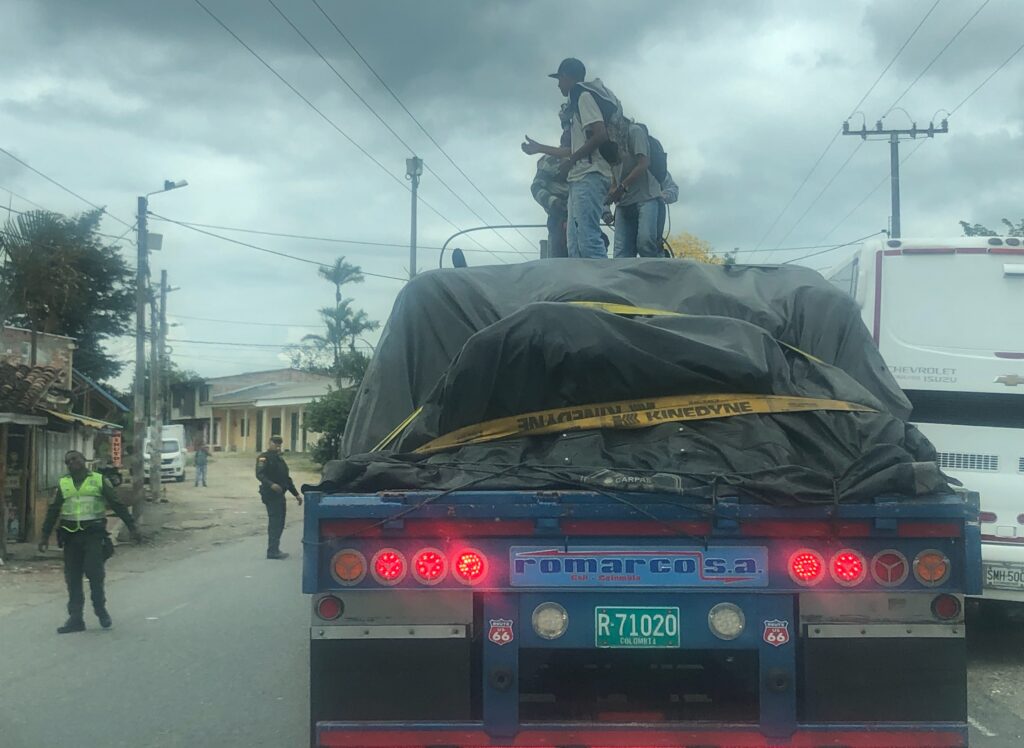
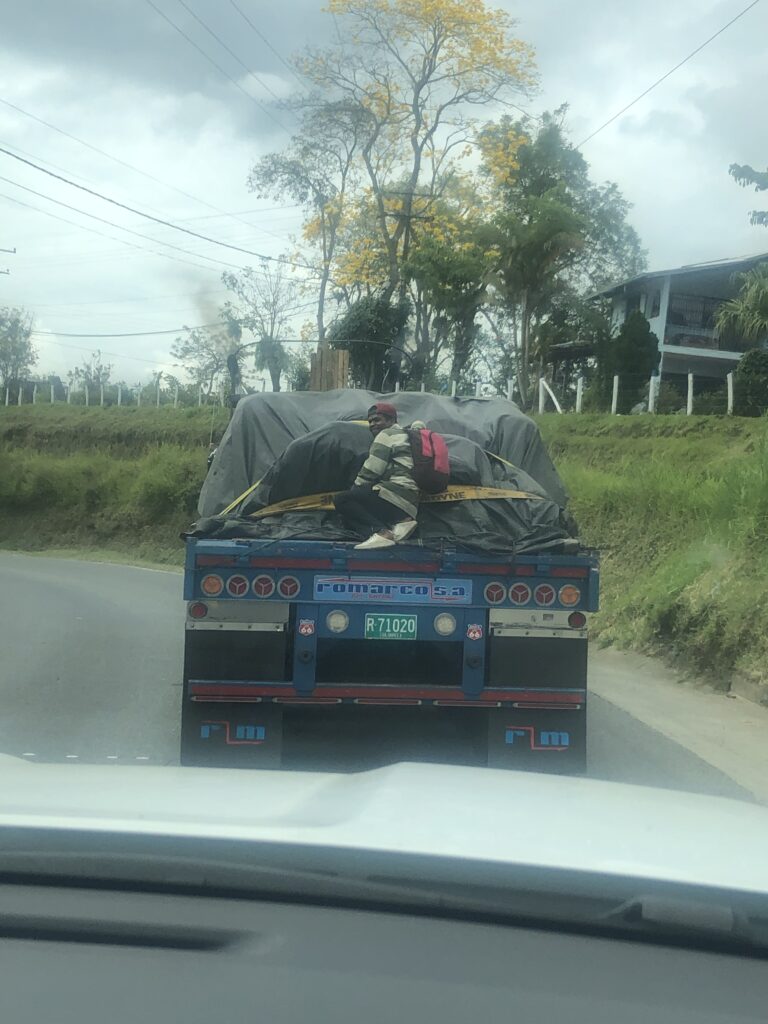
We noticed 4 young Venezuelan males “hitching” a ride on this truck ( they always stay in the middle so drivers can’t see them in their side mirrors ). A very common sight. All was going well for them until…..…a cop noticed them during a routine traffic inspection and signaled them to get off. Notice the one guy in a striped jersey on the leftAs the policeman looked away he jumped back on and smiled at his friends – who now had a long walk ahead to Ecuador
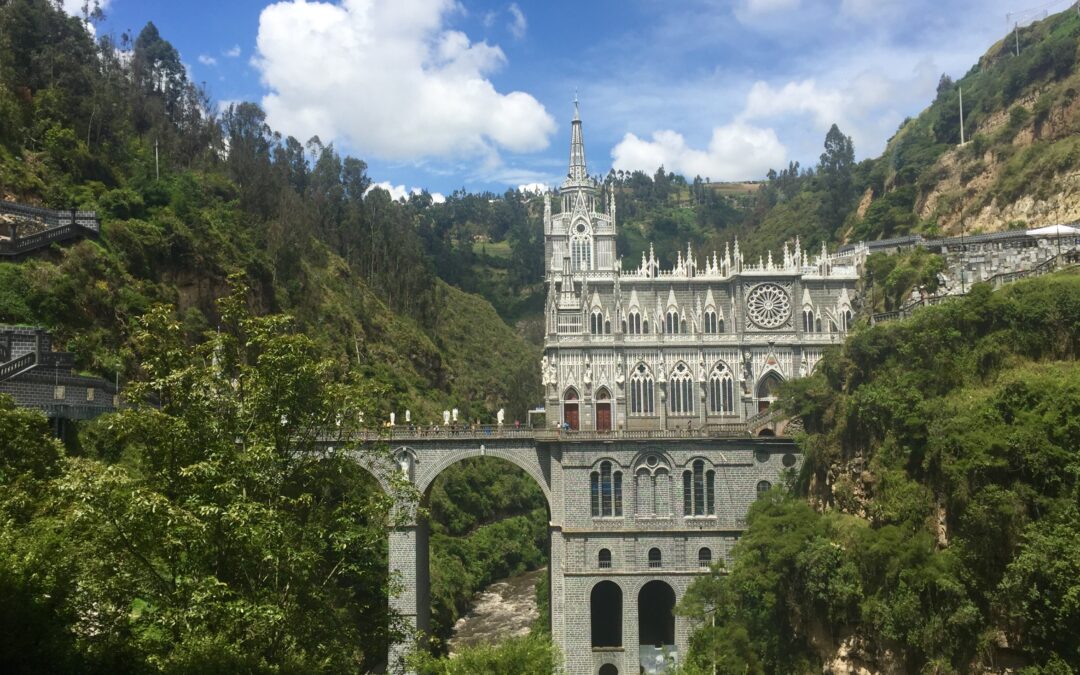
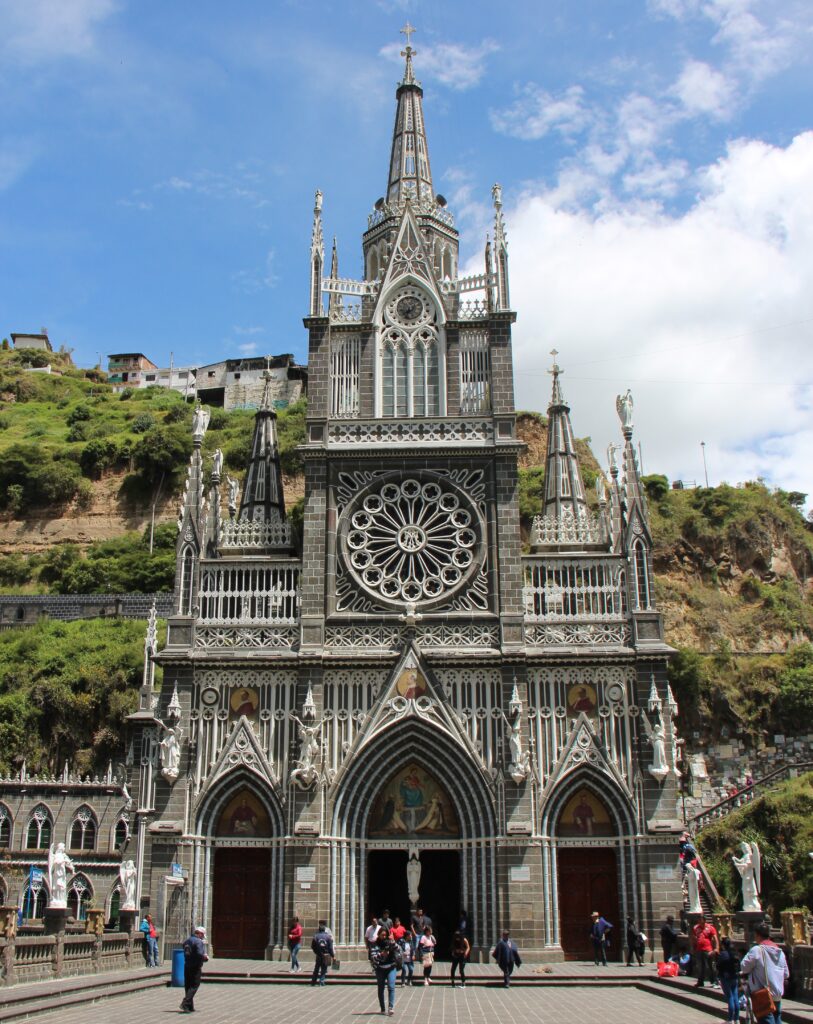
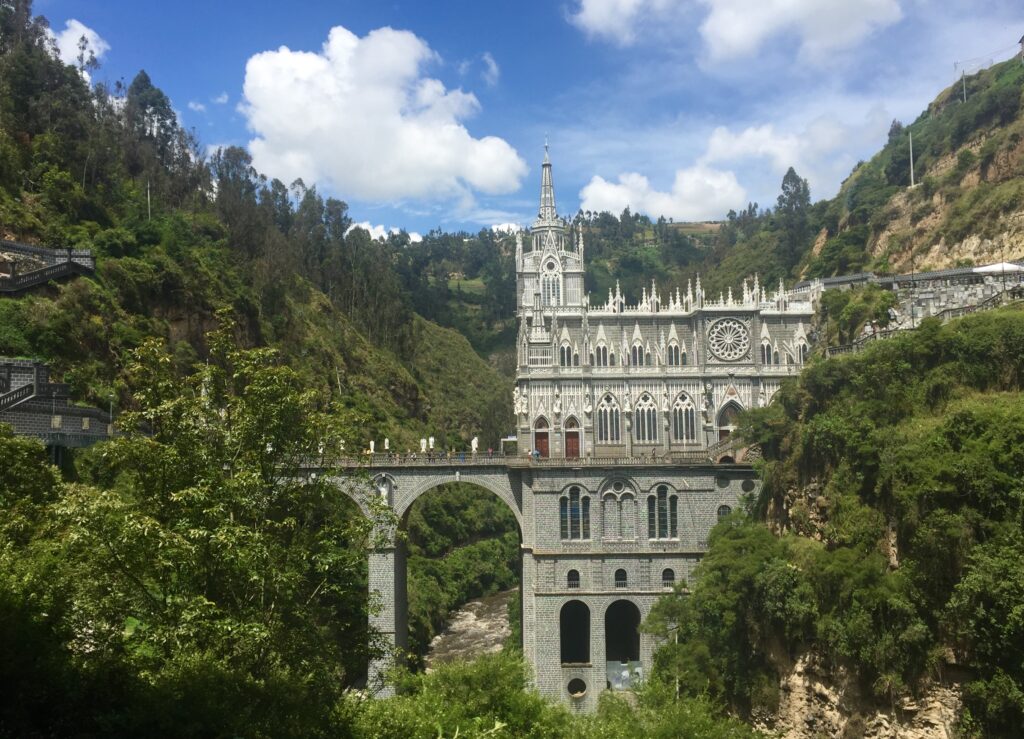
We could not leave Colombia without a visit to the famous Las Lajas Sanctuary, a stunningly located and beautiful basilica church just outside the border town of Ipiales. Simply put, an ornate church built on a bridge in the bottom of a valley. A steep walk down to get there and killer climb back up at such altitude, but well worth the effort – and thus, our feature image this week.
Las Lajas SanctuaryLas Lajas Sanctuary
Next week, we cross ( literally ) to the middle of the world – Ecuador !
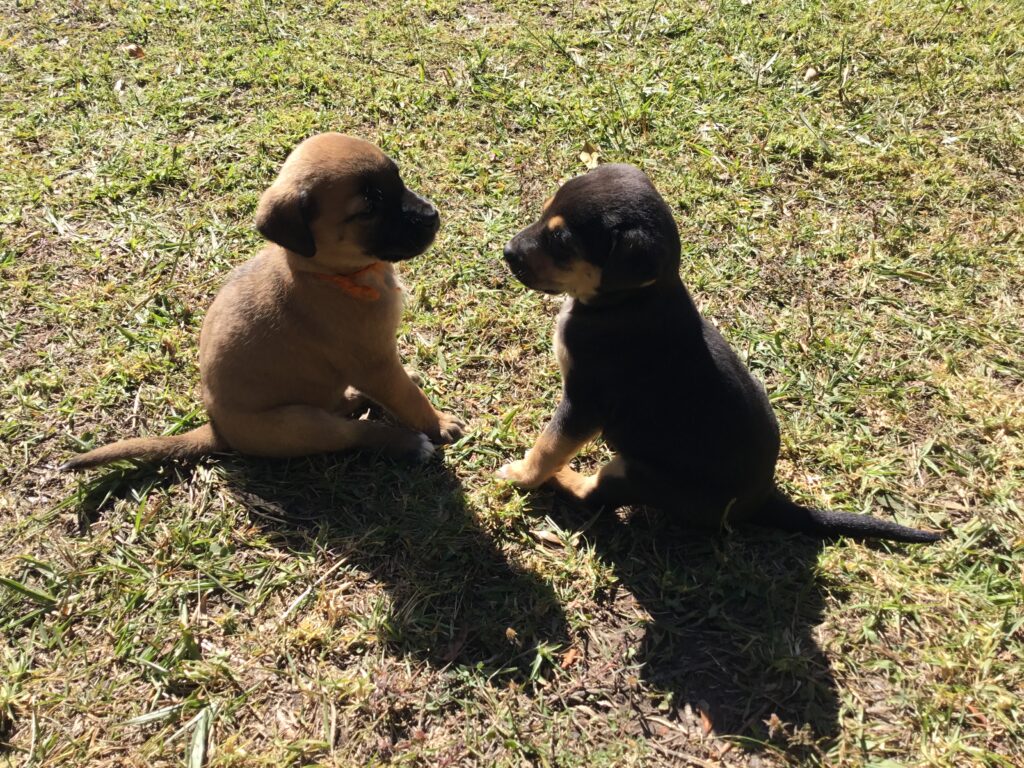
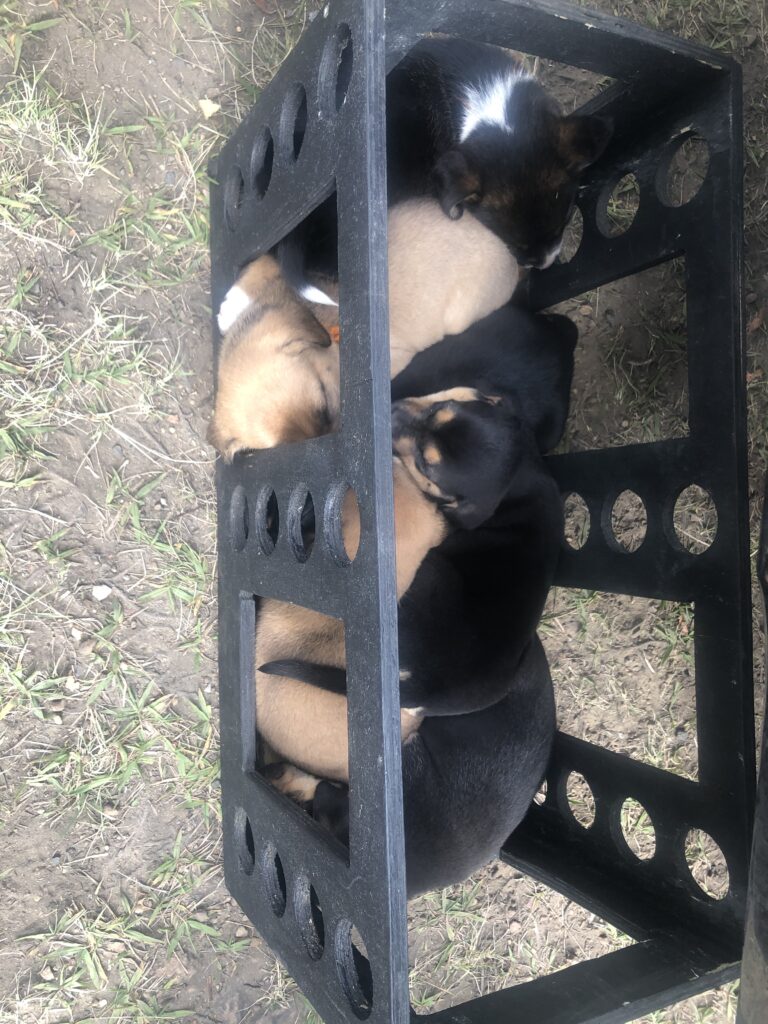
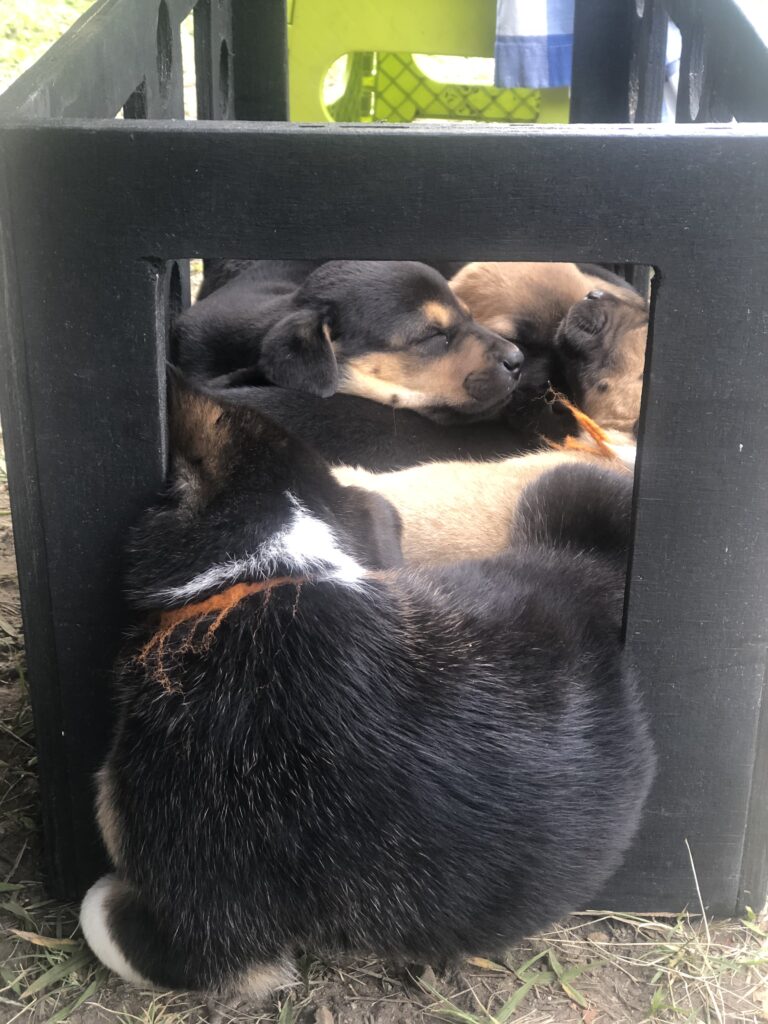
Just last week our departure from Canada was delayed ( twice ) due to sub zero and we were two days late into Colombia. This week the weather could not have been better and having made our way back up to charming Villa de Leyva, and picked up our vehicle, we eventually set off for Colombia’s famed “coffee triangle”. On our arrival back in Villa we discovered that a new litter of puppies had been born – ever so cute, they took a particular liking to our step box !
New arrivals at Villa de Leyva campgroundNew puppies ! They loved our steps boxThey just couldn’t all quite fit !
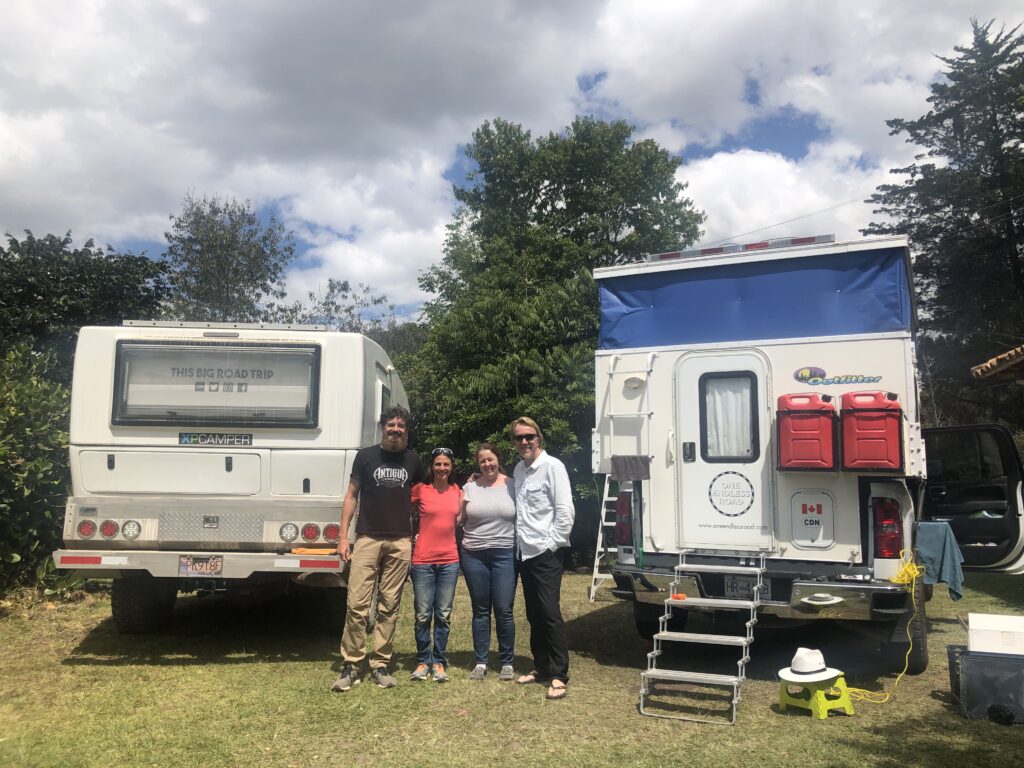
Just prior to leaving Villa de Leyva, however, we were in for an unexpected surprise. As I was finishing off a little repair and replacement work on the camper a familiar overland vehicle pulled into the Renacer campground. “Familiar” only in that we had seen pictures of it before and spoken with its owners via a Facebook overlander group – turns out it was James and Claire Young ( www.thisbigroadtrip.com ), fellow travellers from Kelowna and themselves well into their own journey to Tierra Del Fuego ( already 2 years on the road in fact ). While we each knew the others were in Colombia, we had yet not made specific plans to connect – simple serendipity brought us together. Talk about a small world ! An enjoyable evening of catching up followed and some note/tip sharing in the morning before we parted, along with a young Dutch fellow on a motorbike heading the same way – quite likely all to connect again at some point.
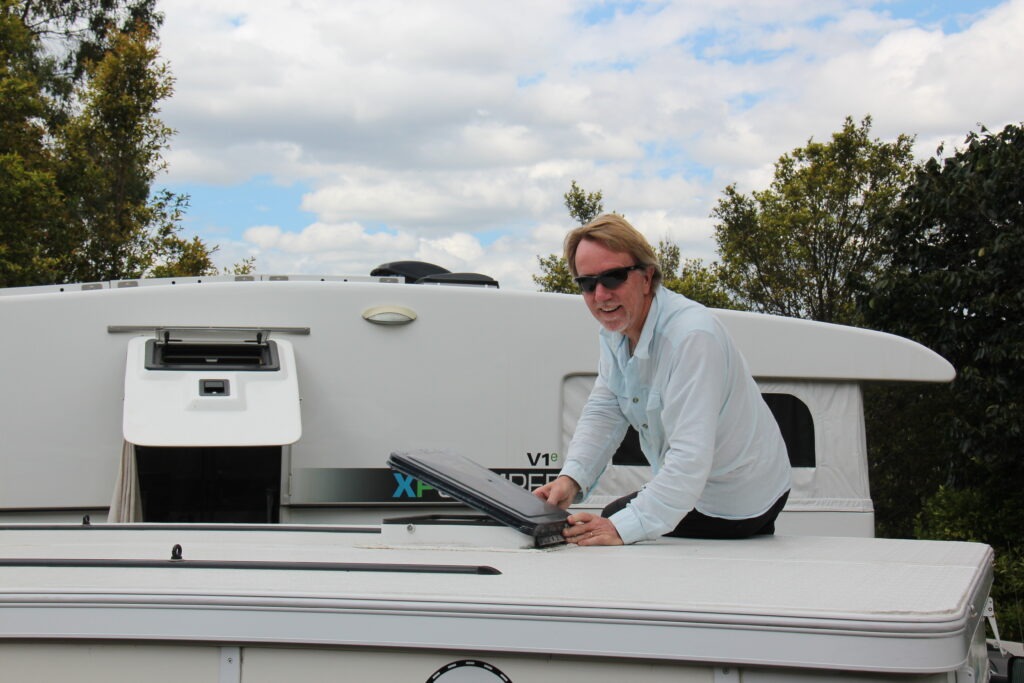
Two overlanding couples, both from Kelowna, both in Villa de Leyva. The Young’s are two years into their tripInstalling the replacement vent lid
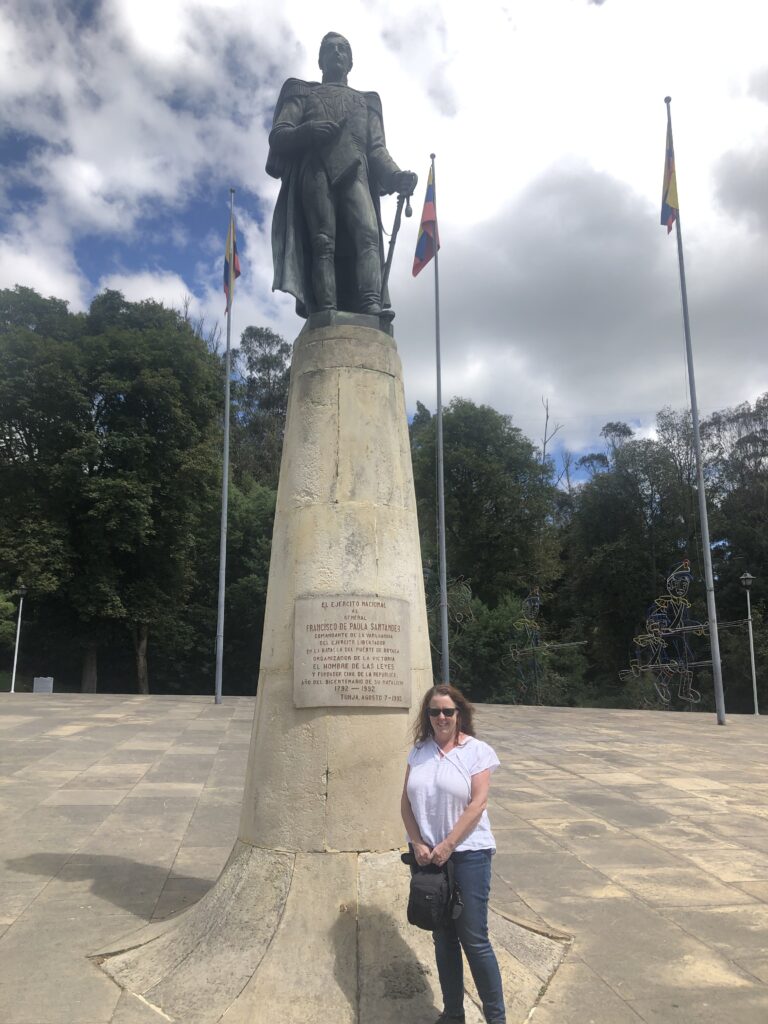
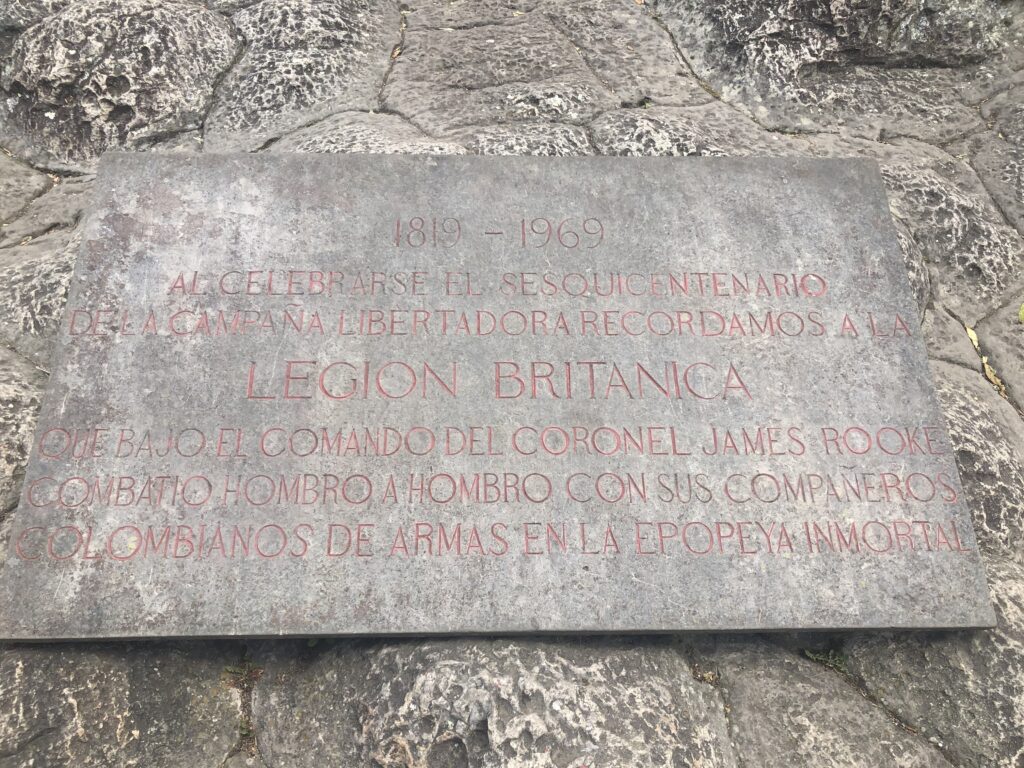
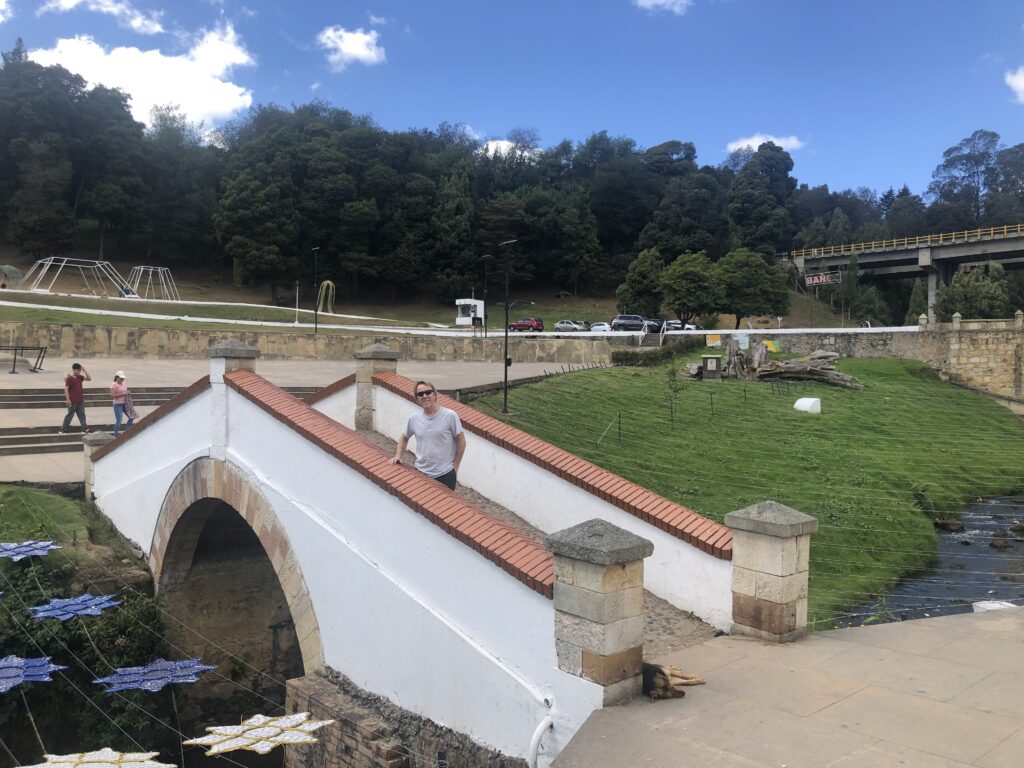
En route to the coffee triangle, one passes a famous Colombian landmark – Puente Boyaca ( Boyaca bridge ). Scene of a famous battle in 1819 that secured Colombia’s independence from Spain, we decided it was worth a stop being right on the highway. One unexpected discovery for us was the plaque commemorating the involvement of a band of British and other foreign mercenaries, the “Legion Britannica” who helped secure the victory. A little history lesson for us.
Puente BoyacaIn memory of the Legion BritannicaPuente Boyaca
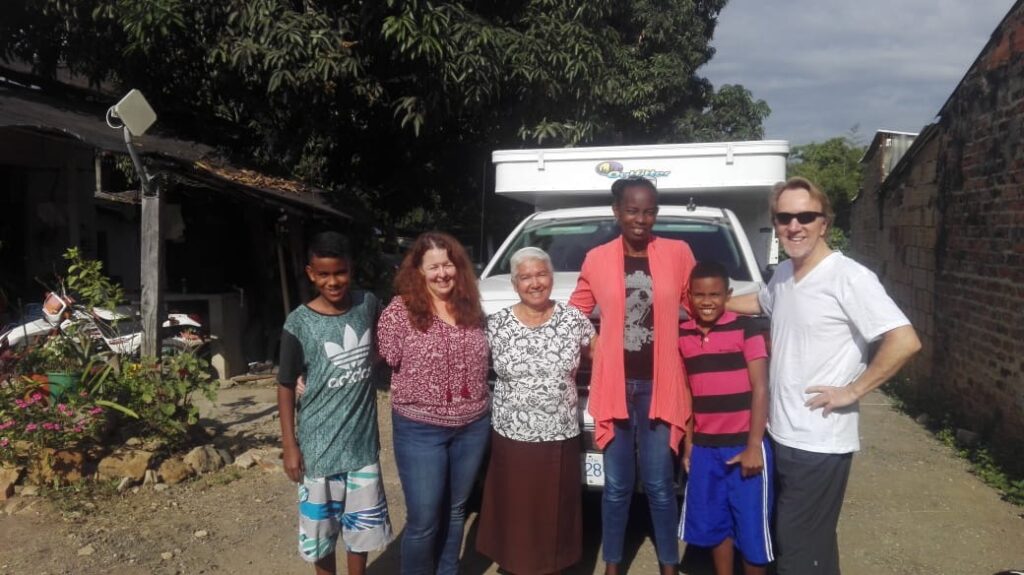
It would be an almost 15 hour drive to the coffee triangle ( the towns of Salento and Filandia to be more precise ) and while we expected the trip to be uneventful, while en route fate provided us one of the most memorable ( yet simultaneously heart-wrenching ) experiences of our trip to date. Traffic was brutal putting us well behind schedule – with darkness closing in we were forced to find a campsite in the small town of La Mesa. There being no campsites in La Mesa, in desperation we approached the owner of a “parqueo” ( parking station ) to ask if we could park overnight. While unusual, he agreed, and he ( Luis ) and his wife, Rosa, made us feel very much at home. Simply charming people. Turns out he was a minister and he and his wife had just accepted a family of refugees from Venezuela – the family had walked out of Venezuela ( as many were doing ) but had been robbed on the road, losing all their cash, documents and many possessions. Imagine – basically destitute, with two teenage kids and unable to work in Colombia and the kids unable to attend school. They had been there several months. The tales they shared were shocking. What was once the richest country in South America was now a failed state, an economic basket case, and 4 million Venezuelans were living outside Venezuela – many in Colombia.
Daicy and her two boys from Venezuela. Rosa’s husband Luis took the picture
As we left La Mesa, thinking how fortunate we were to be from safe, developed first world countries ( and counting our blessings ) we decided to “pay it forward”. The minister had bailed us out when we were stuck, so we made a donation to the Venezuelan family – happenstance had afforded us a the opportunity to do so. Daicy, the mother, was in tears and the younger son hugged Lois tightly as we left. It was not until a few hours later, when we got an email from Daicy, that we understood why – turns out they had no money for the next meal. I know we all donate to worthy causes ( as we should ) but it’s not often you get to do so in quite as direct a manner and to hear the personal story behind the situation. To say that this chance meeting, the awareness it gave us, and impact it had on someone in such desperate need, would be a cherished memory of our time on the road would be an understatement. It certainly made the things we often complain about seem pretty darn trivial.
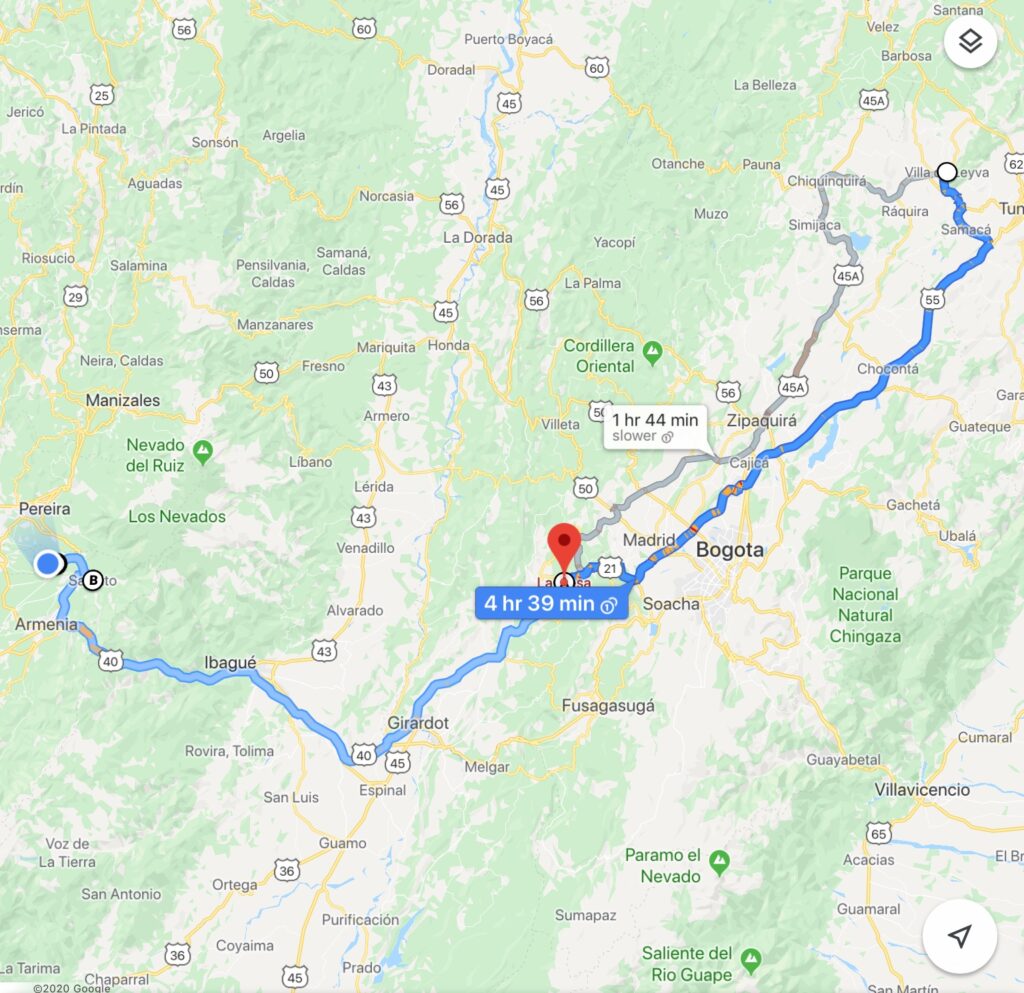
Our route this past week
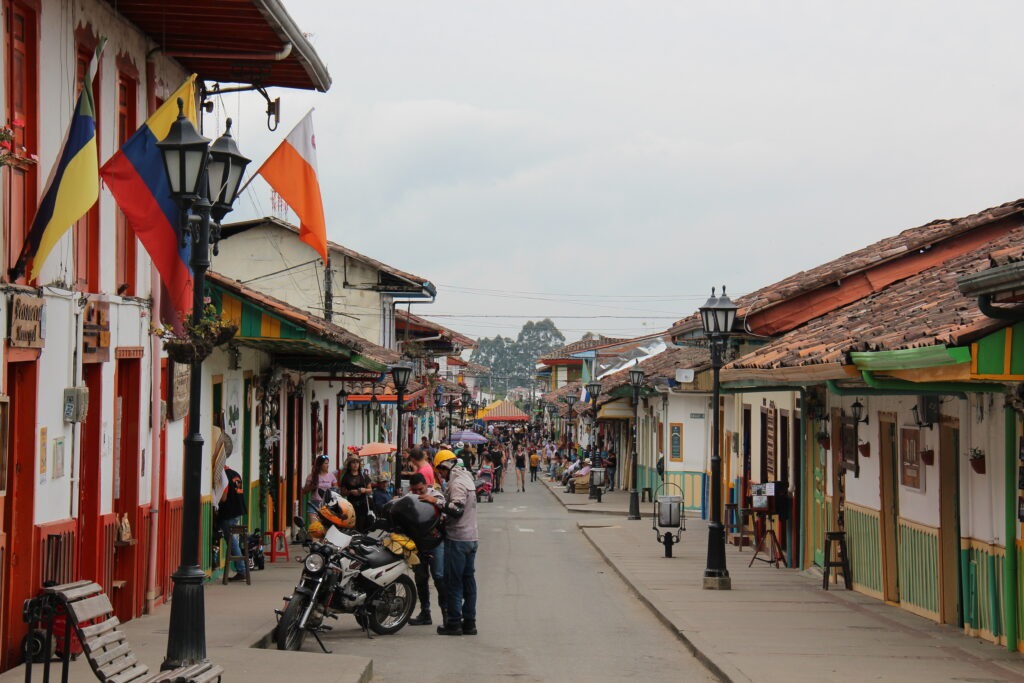
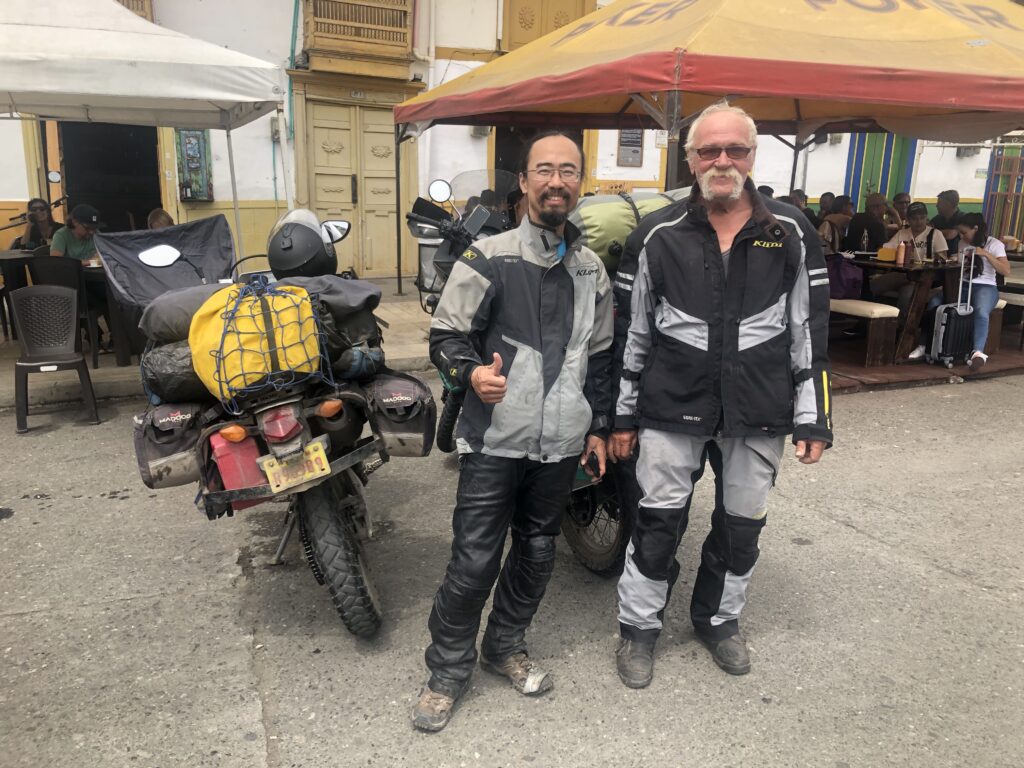
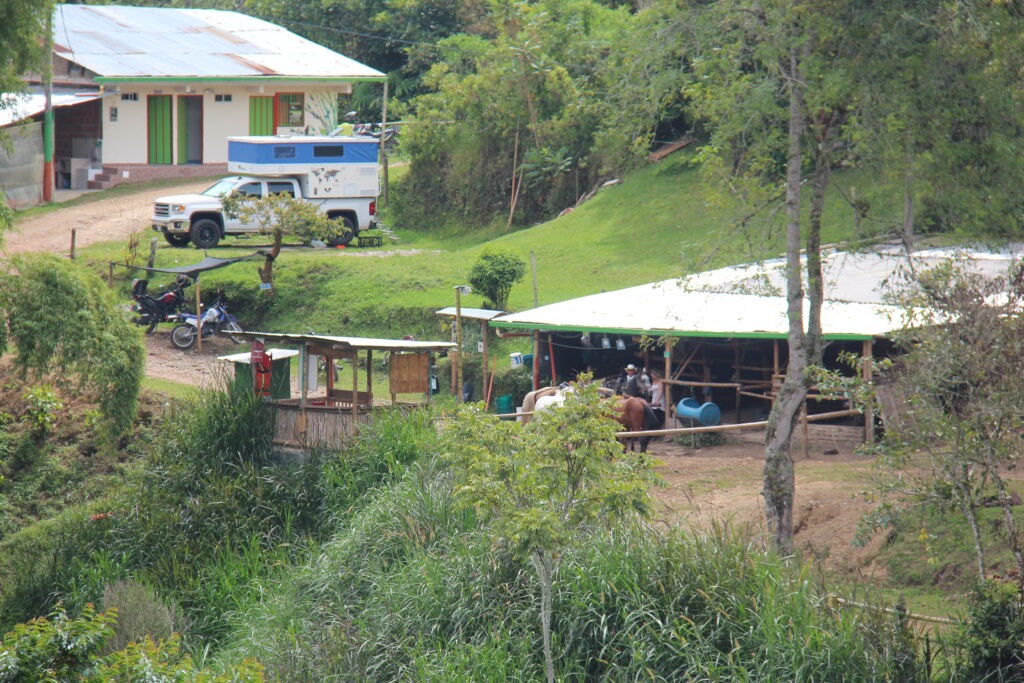
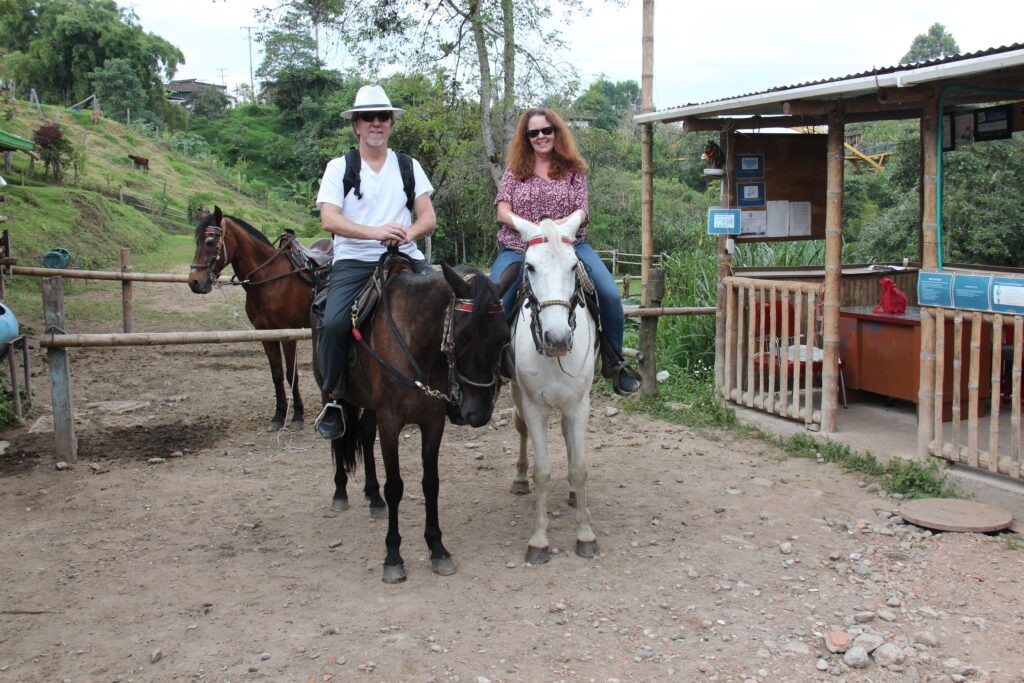
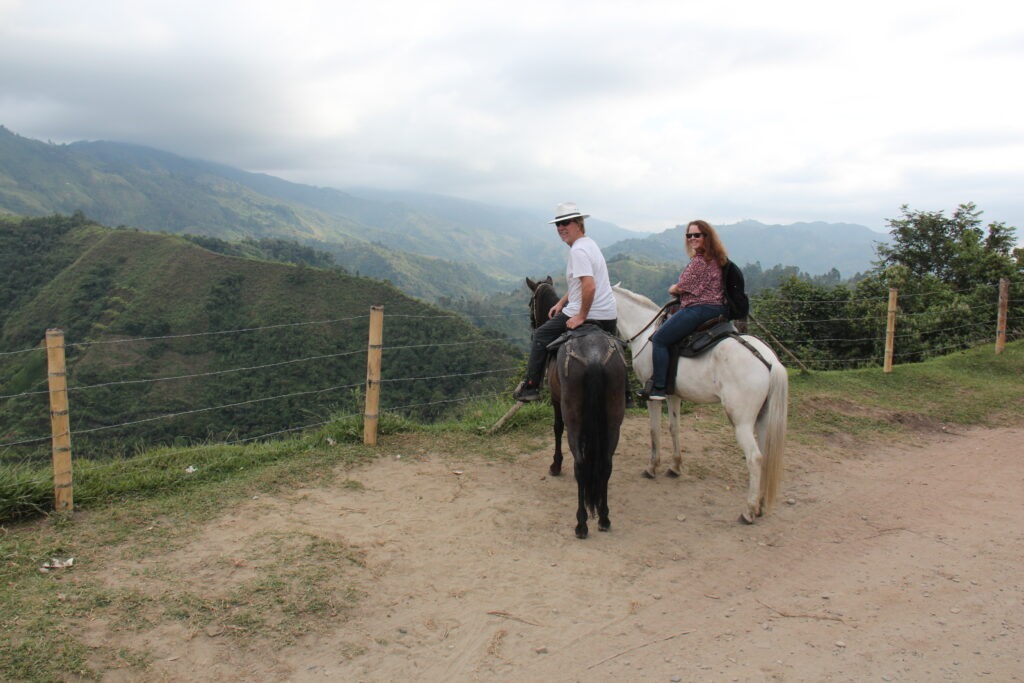
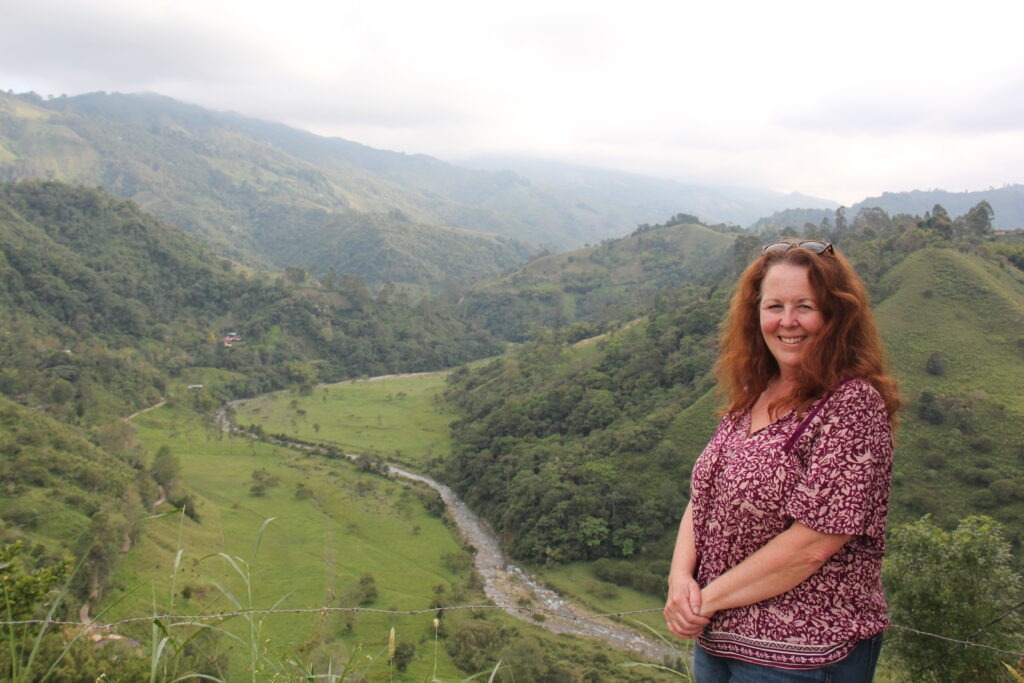
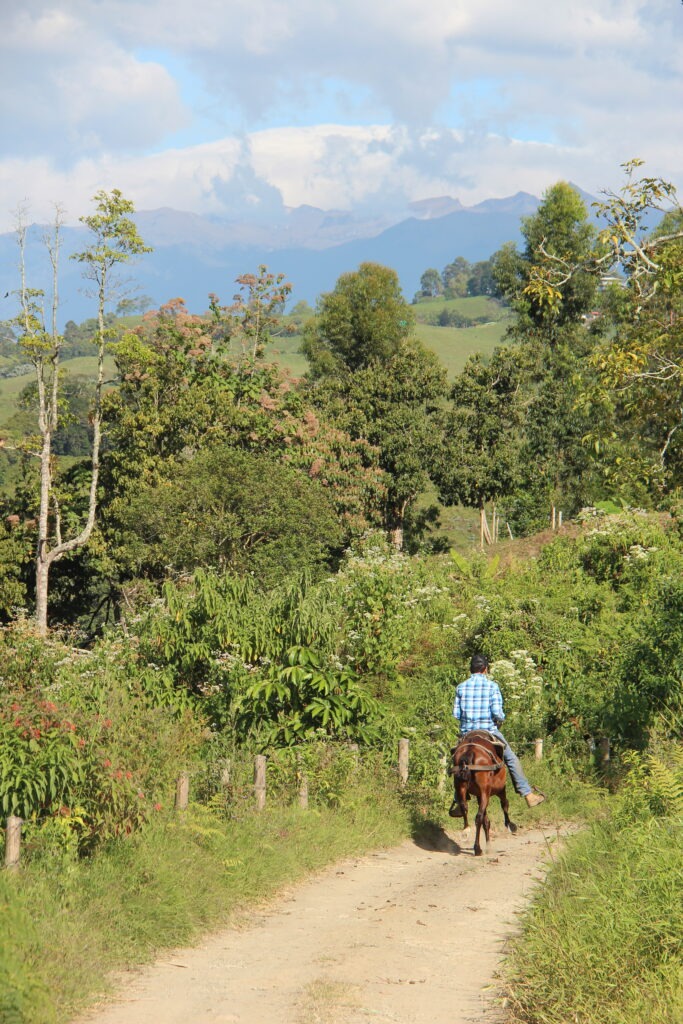
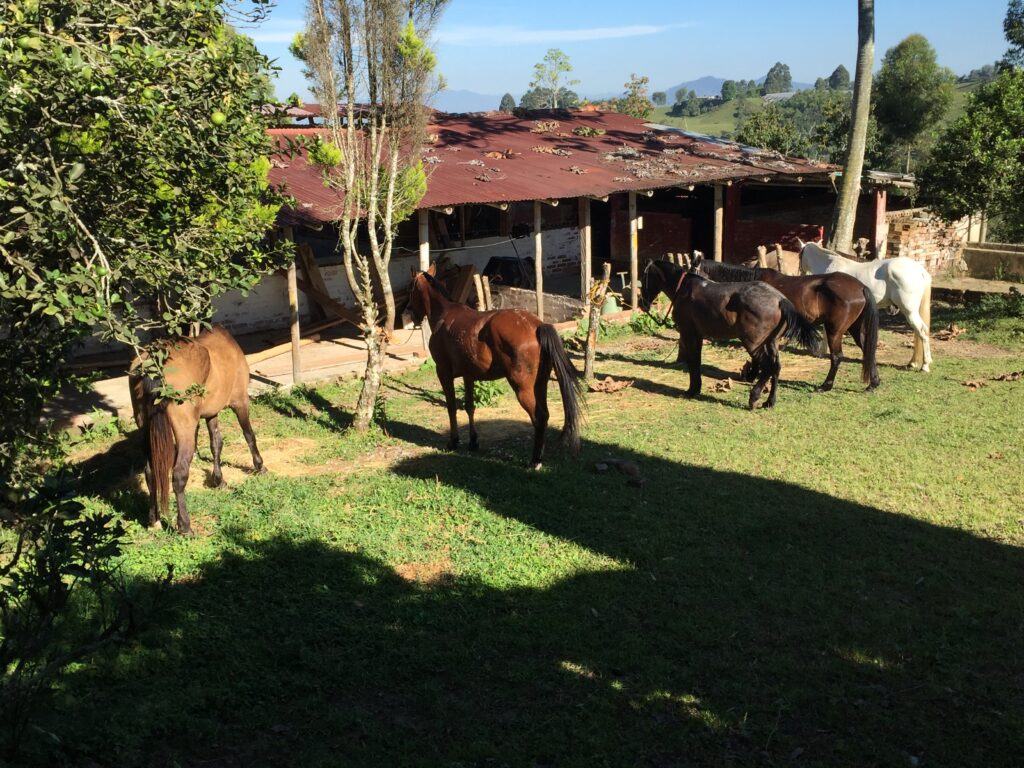
The second day’s drive, again, was tortuously long ( with windy, elevated roads heavily used by commercial trucks ). Just 239 kms took us 8 hours but did provide stunning scenery all the way to the town of Salento, right in the heart of Colombian coffee country. Salento is extremely colorful and reminded us of Guatape, near Medellin. Even tried our hand at horse-riding with the coffee farms making for a spectacular backdrop. Caught up with yet more motor cycling overlanders while there – this time a Pole and his friend from Vietnam, both headed the same way as us; destination Ushuaia. People definitely travel from all over the world to do the Pan American !
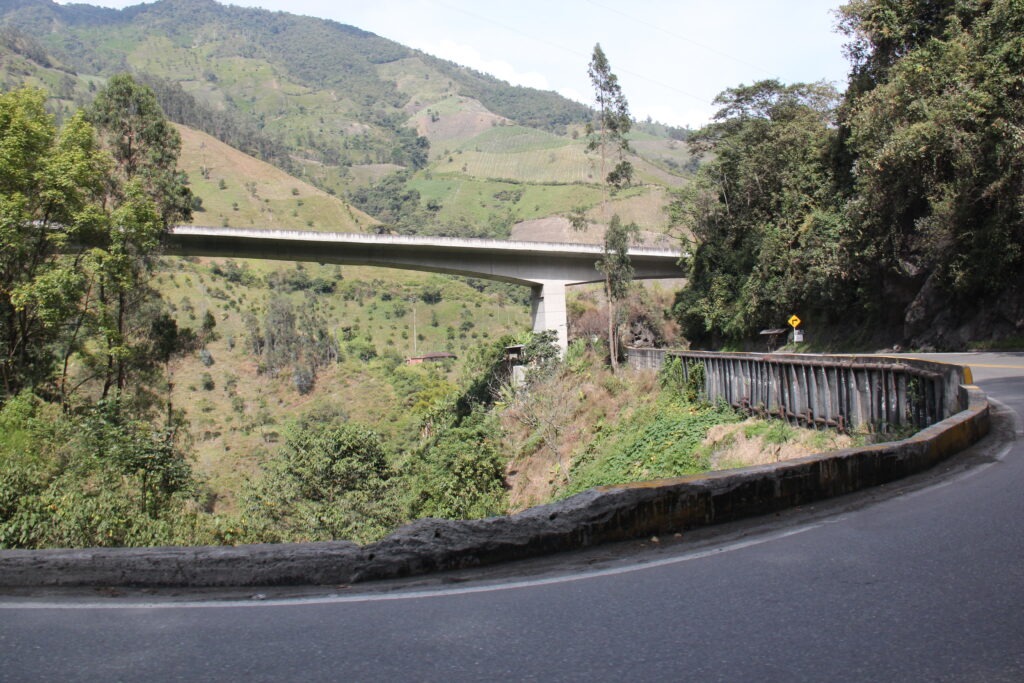
Old and new. Lots of hairpins now, but a new elevated highway coming – they need it !We endured lots of this…….Typical scenery on the road to SalentoTypical street in Salento -lots of colorWe met these two bikers in Salento, one from Vietnam and the other from Poland. They are on an 8 month trip from New York to UshuaiaGuaduales campground in Salento which is also a horse riding businessThe horse-riding was fun. First time for meView from the ridgeLois during a break from horse-ridingTime for a beer when we got to the half way mark !
Filandia was our next stop. Beautiful in its own right but also renowned for one of the most popular overlander camping spots in Colombia – Finca Steelehorse. Read the interesting background here ( www.steelhorsecolombia.com ) but suffice it to say a prettier natural setting would be hard to find anywhere. Run by a couple of ex-overlanding Brits it’s the kind of place you come to for a day and often stay a week – I’ll let the pictures tell the story:
Filandia town squareFilandia town squareFilandia town squareEntry to Finca Steel HorseRik, from Holland, and Allan, from Alberta, Canada crossed paths with us in Filandia. They hope to be in Ushuaia by March. Yvette, the British owner of Steel Horse, is in betweenA little vehicle maintenance – possible leaking air bag – ughh !Aerial view from above Finca Steel Horse to nearby farms – our drone is back in the air !View from Finca Steel HorseAerial view of Finca Steel HorseFinca Steel Horse – a great place to relaxNearby coffee farmsIt’s all about the horses !Filandia, a great place for horse rides and walks around the coffee farmsThe horses at Finca Steel Horse
There is some blogging to catch up on, some drone flying practice to be done and a whole bunch of other overlanders to share travel tips with. The weather is divine – we just might stay a while…….!
Happy New Year to all our readers ! Lois and I sincerely hope you enjoyed the Christmas season as much as we did.
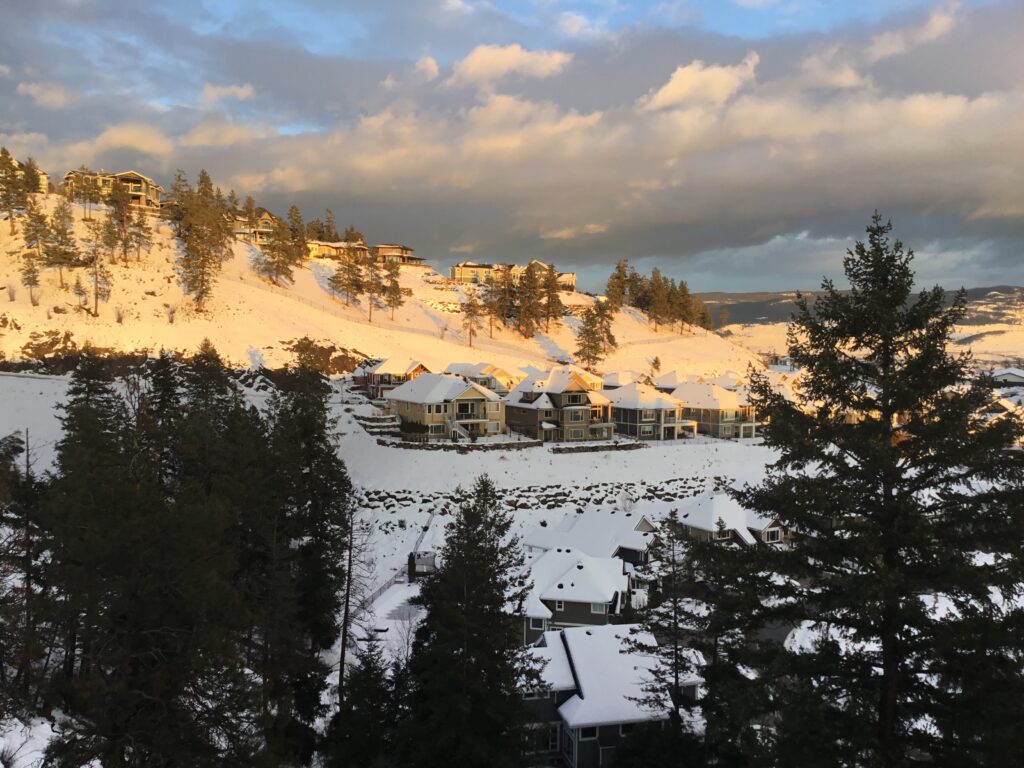
Christmas day view from our home
As of our last post we were leaving Bogota and preparing for a 4 week trip back to Canada to spend the holiday season with friends and family. The trip back to Canada, and our month spent there, could not have gone more smoothly; the return to Bogotá – well, more on that later. Let’s just say we would not wish the last few days on anyone !
Flights back went smoothly, all were on time and it was wonderful to see everyone, catch up on news at home and share a few of our own tales from the road. Almost 8 months into our Pan American adventure and comments from those we speak to are about evenly split – either “You must be nuts”, or “What a fantastic experience” ( with likely a good percentage of the latter group probably secretly thinking “They actually must be nuts” ! ). Hey, we get it….it’s not everyone’s cup of tea.
While the social side of our time away occupied most of our time, some time was spent shopping for essential new items (and a few replacement parts ) for the camper ( what did we do before Amazon ? ). I also had to get some further training on blogging ( readers may notice we upgraded the website ) and flying the drone ( nearly lost it last time I had it in the air ). Many thanks to Sue Ross, my amazing WordPress coach, and to Chris Woods who braved a freezing cold day to set me straight on the finer points of flying a Mavic Air !
While things have, touch wood, been going generally smoothly with the camper, we’ve managed to get a few holes in the gauze screens, worn out our toaster and lost a few special screws from our SMEV stove. In addition we had completely broken one of the two roof top vent lids ( message to self – don’t leave them wide open on really windy days ) and had to replace one of our two, 100 watt flexi solar panels. Procuring the latter two items in a size to fit the existing spaces proved quite challenging ( our camper now approaching 5 years old ) but we managed in the end ( Andy, thanks again for the custom trimming on the solar panel ).
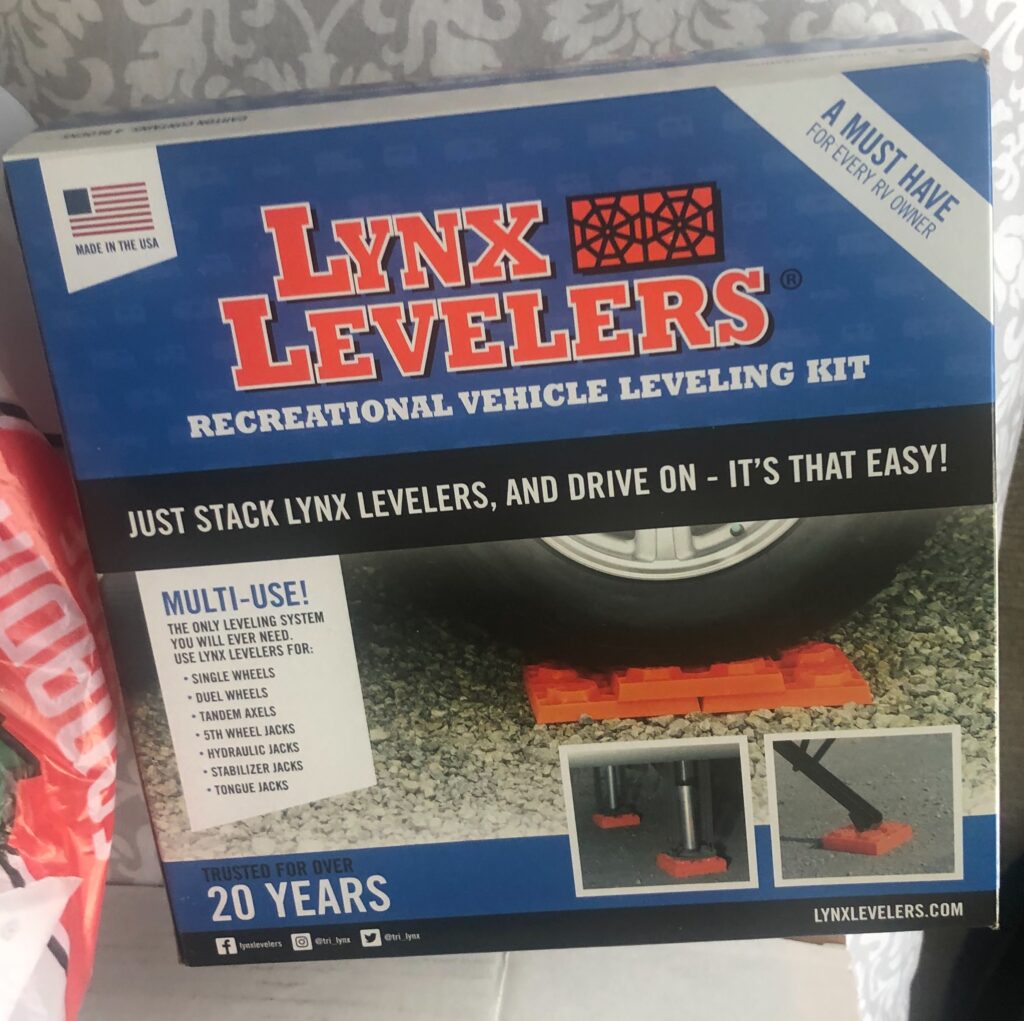
Extra parking levellers – we often forget them when we leave a campground !
In addition to replacement parts, we made a few additions. With almost 80,000 kms on the original brakes, much criss-crossing of the Andes ahead and our vehicle not exactly being ubiquitous in South America, a replacement set of brake pads seemed a prudent move. Power supply will also soon be an issue – once out of Ecuador ( our next stop ) the voltage changes from 110 ( with North American style plugs ) to 220 ( with different plugs ). To date, on the rare occasion we need to charge with shore power it has been a simple matter of plugging in to any standard outlet ( which are all just like home ). That luxury stops when we cross into Peru so, like any good Boy Scout, one best “be prepared”. Rather than a heavy, and expensive, step-down transfer, ( for something we will rarely need ) we opted for a lithium-compatible battery charger with the option of a 220v input ( the adaptors we have already ). This should ensure that on the rare days where we have no sunshine ( for the solar unit ) and the vehicle alternator charge is inadequate, we can still get a full charge into the battery. One must have one’s creature comforts !
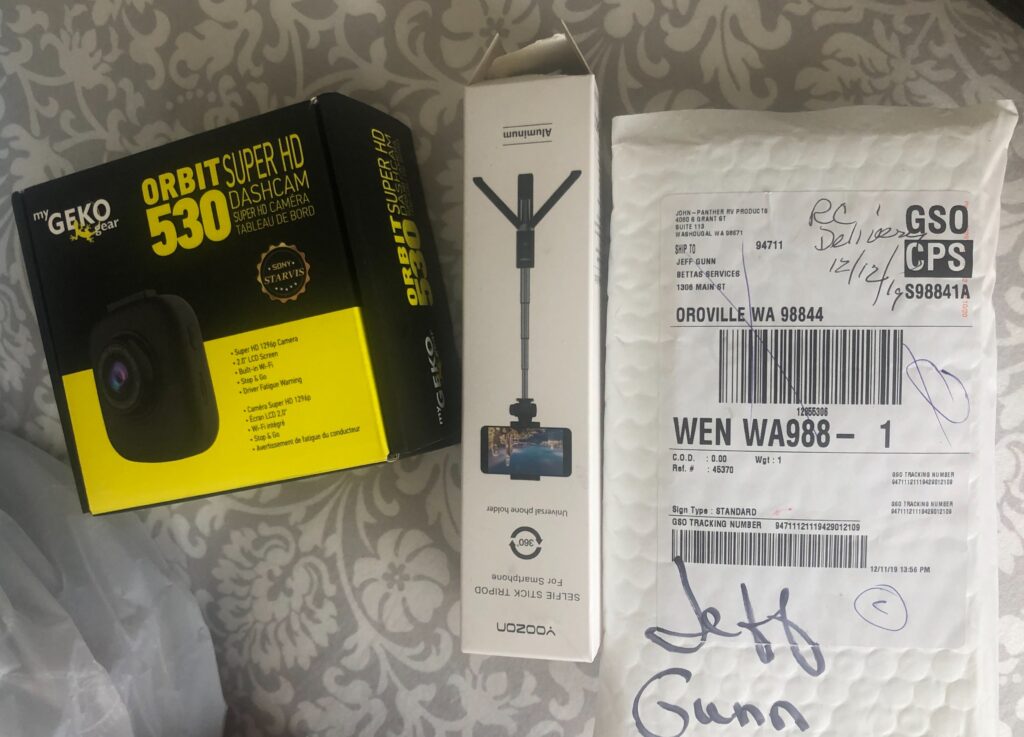
Dash cam, selfie stick, and stove parts
Thus equipped, and with 4 weeks having flown by, packing began for the return trip. While the weather had been unseasonably mild during our time in Kelowna ( generally in the mid single digits – positively balmy for Canada in December ! ), Monday delivered the leading edge of a cold snap, and a heavy snowfall that swept the country. That would be just the beginning. Our route back called for a stop in Calgary, overnighting and then an early connection to Toronto Tuesday morning and on to Bogotá arriving in Tuesday night.
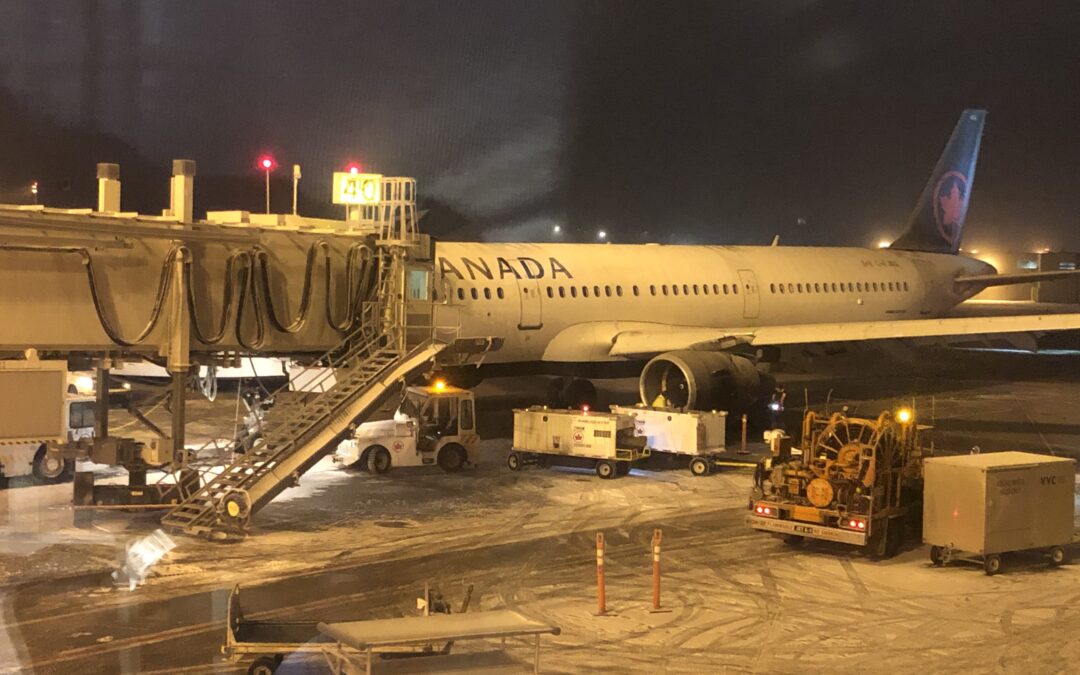
Turns out the small Dash 8 that took us to Calgary had a weight and balance issue – as luck would have it our three bags were included in those that got left in Kelowna. Air Canada would put us up in a hotel and our bags would meet us in Toronto or Bogotá. No such luck – “weather” it seems, is the escape clause airlines use to avoid comping passengers for a hotel, so we were on our own. Sadly, Tuesday was lost as a travel day too, since our bags could not get to Toronto in time for the flight to Bogotá – a day lost as a result.
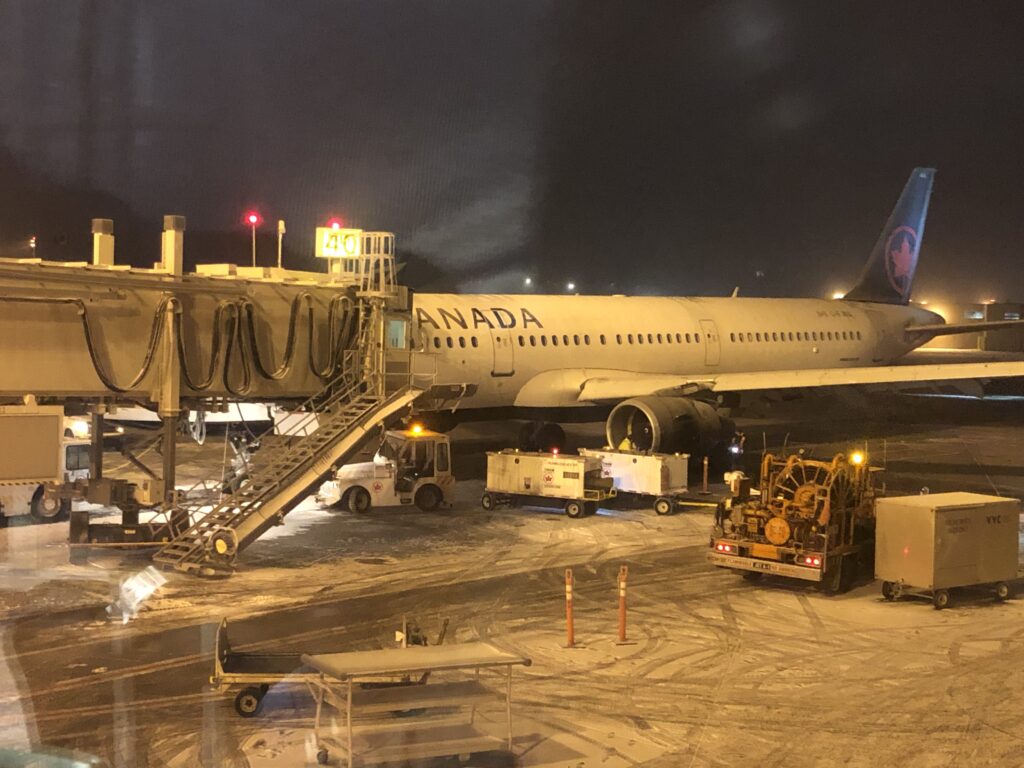
Our plane from Calgary to Toronto, stuck with frozen flaps
Wednesday looked great – all passengers boarded the plane and it appeared it would even depart early. Then the captain advised that we had an “unusual” problem and would all have to get off the plane. He advised that the captain who had parked our plane the night before had left the “flaps” down when they should have been up ( or was it vice versa ? ) and that, with all the ice in -10 degree weather they could not move them.
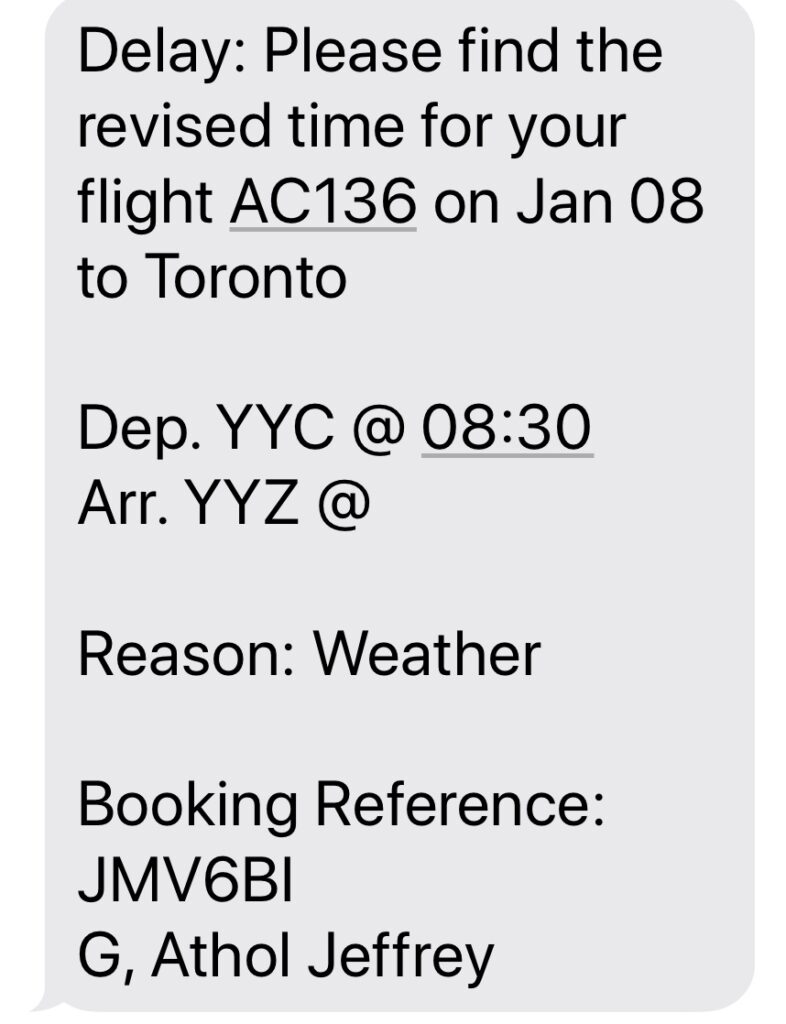
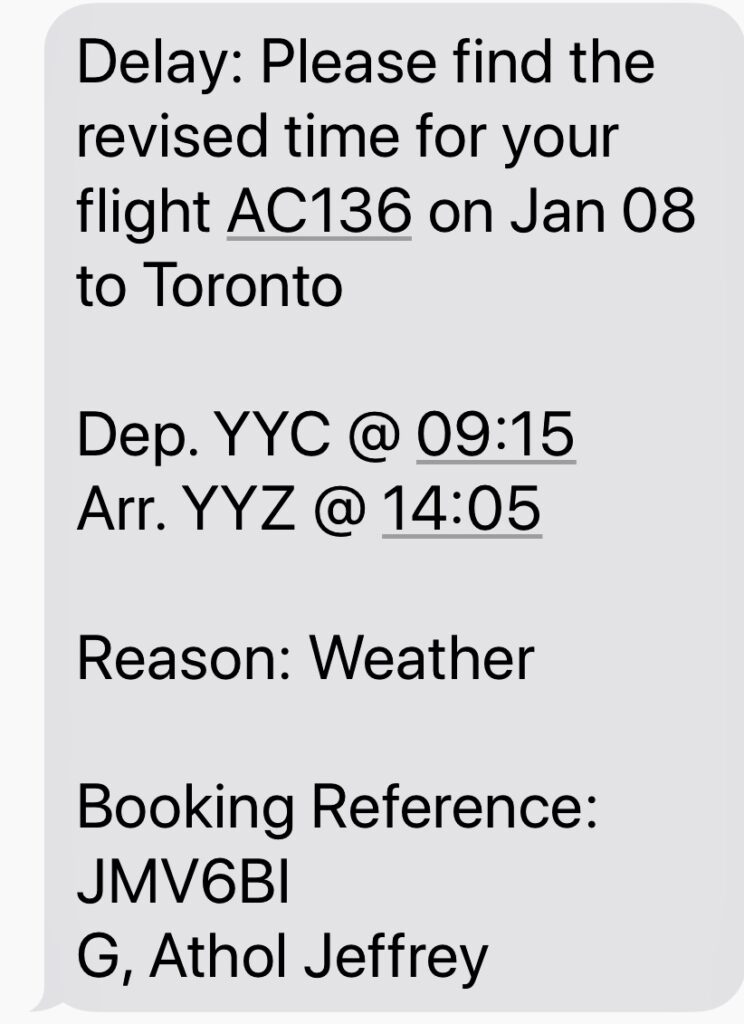
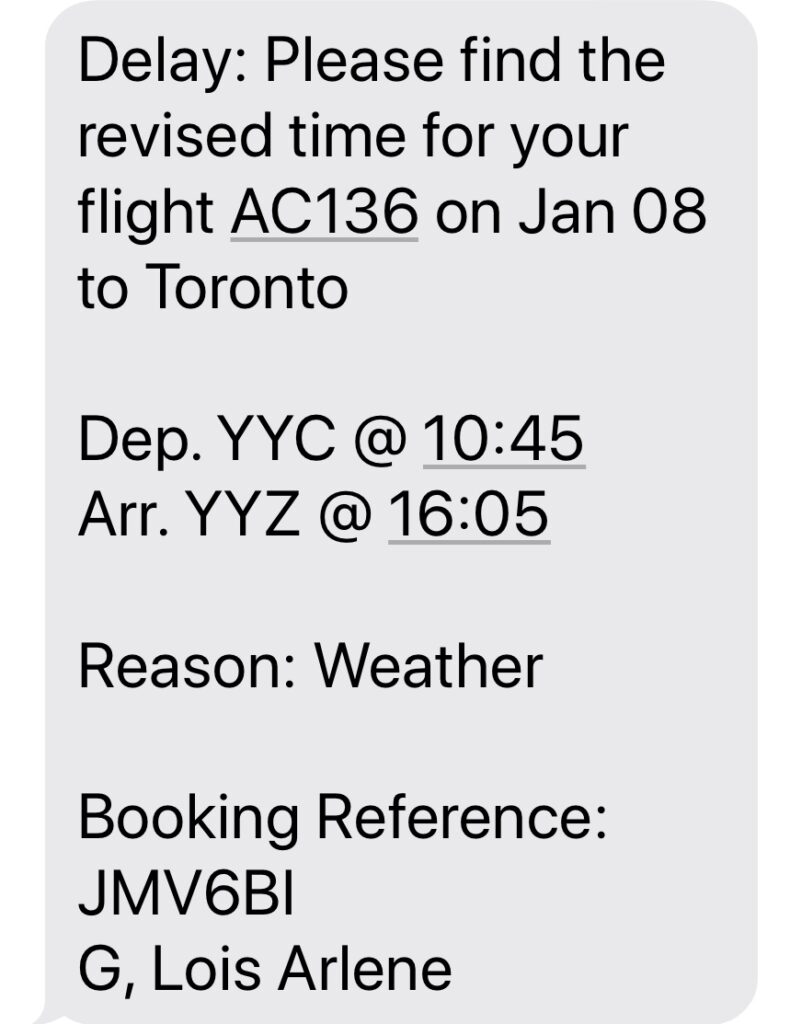
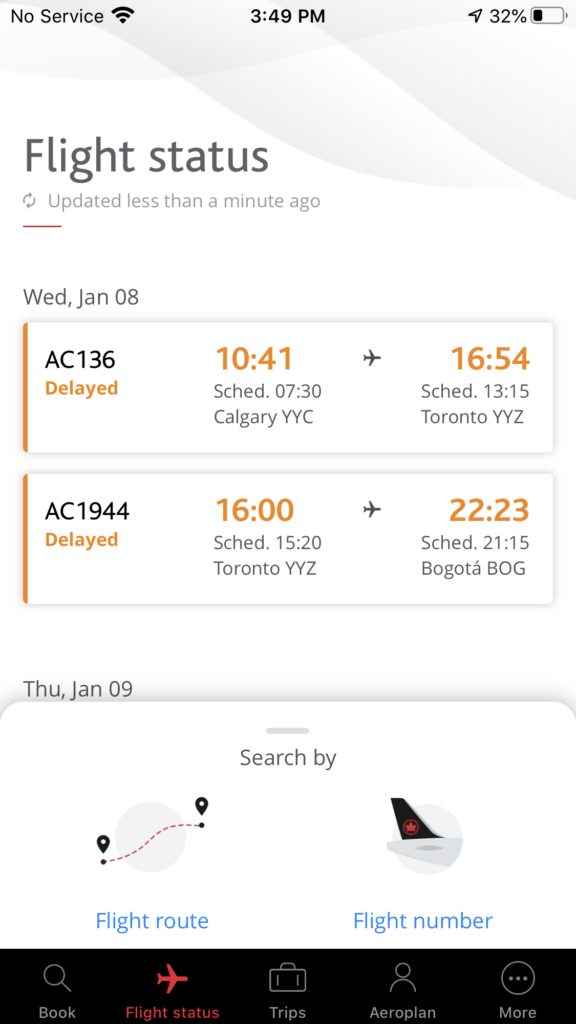
Long story short, our 07:30 flight left at 10:41 arriving in Toronto just in time for us to miss the connection to Bogotá. Ughh ! Another night in a hotel, and again, “on our own” since Air Canada also deemed it “weather related”. So, tired, and frustrated, we took another hotel and waited yet another day.
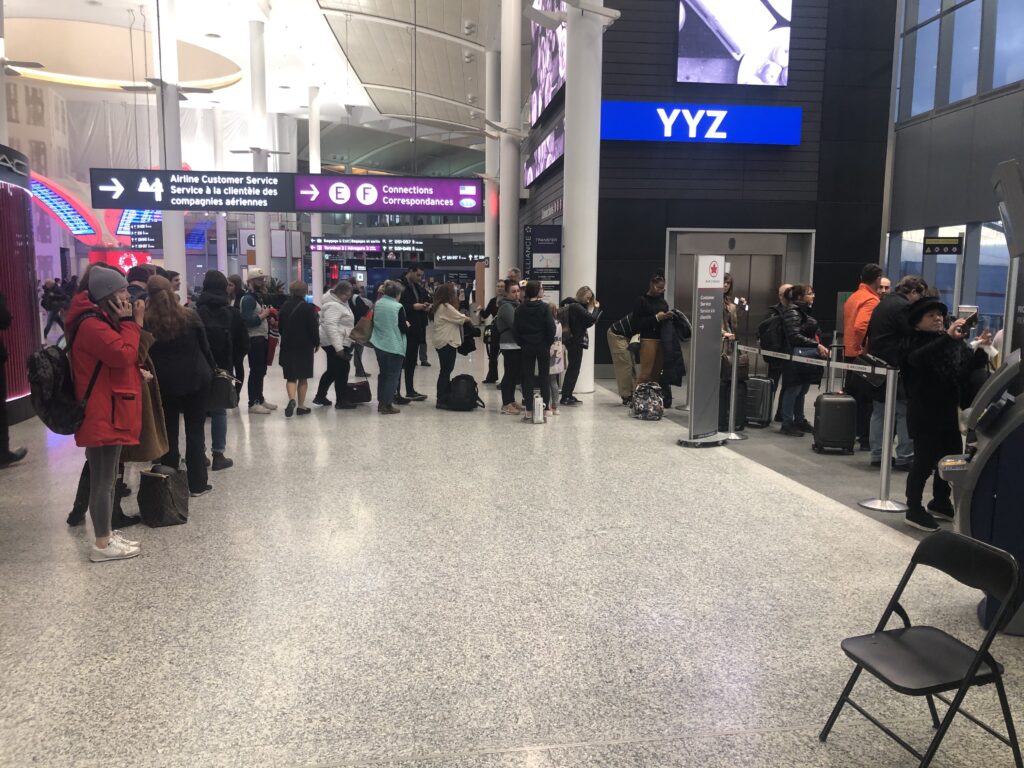
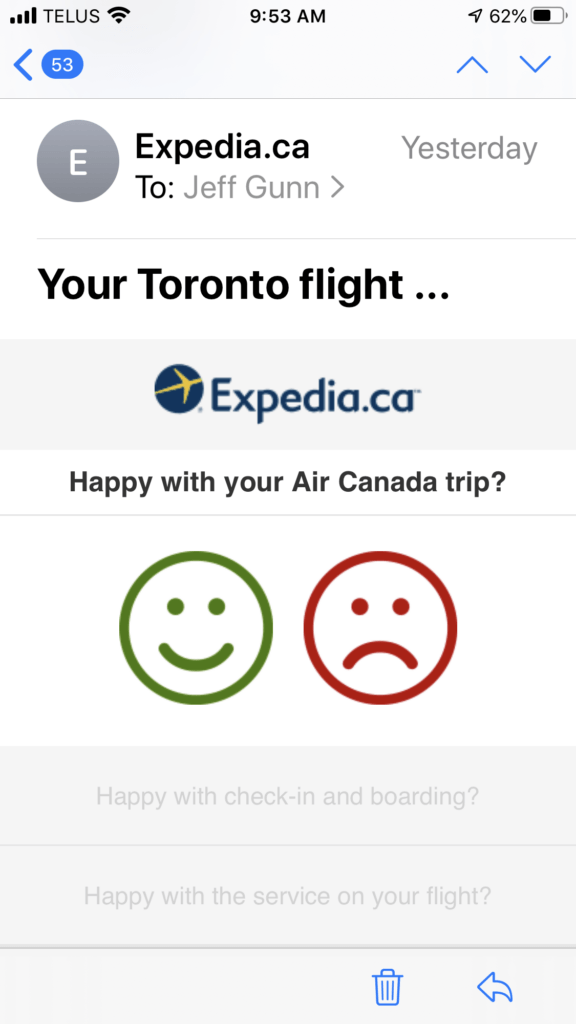
First text from Air Canada….Then this…..Then this…..And finally this !Which meant that we would miss our Bogota connection……Line up to complain ( to no avail ) at Pearson airport when we got to Toronto !At least we got to tell Expedia what we thought about the flight !
Things started turning up Thursday – we were assured our bags were indeed now in Toronto and re-tagged for the Bogotá flight. The flight left on time and this time actually arrived 12 minutes ahead of schedule ( a nice change ! ) – we were, finally, back in Bogotá. Twenty minutes later we had our bags, and solar panel in hand, shuttled to the hotel. Feeling a little sorry for ourselves after a long and tiring trip down we splurged on a Hilton – hey, there would be plenty of nights ahead in a truck camper !
The weather in Bogota was perfect – sunny and 25 degrees, which almost tempted us to stay another night but we were anxious to get back to Villa de Leyva, to our vehicle, so we could unpack, install our new parts, and generally get ready to hit the road again. The truck/camper was found just as we had left it, much to our relief.
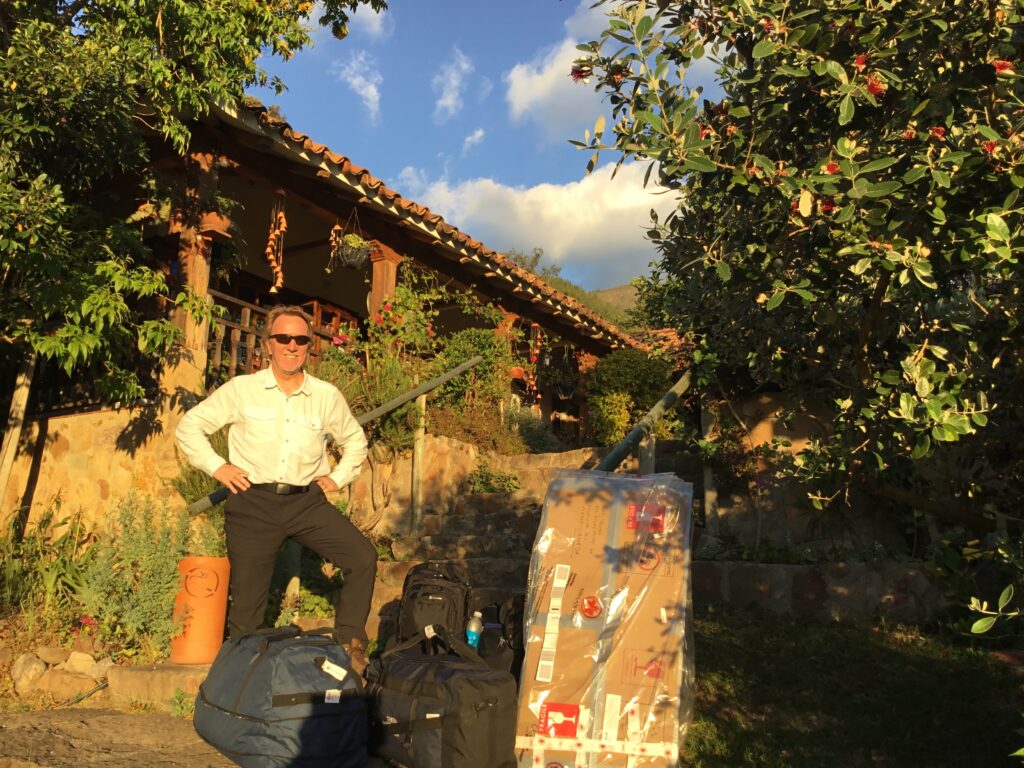
Back in Villa de Leyva – our fragile solar panel survived intact !
With a weekend ahead to get re-established in Villa de Leyva, get repacked and do some minor repairs, we would, with any luck be ready and very happy to finally get ( please excuse the Willie Nelson reference ) “on the road again” !
From Cartagena, Medellin was our next port of call in Colombia. As the crow flies, not a great distance at all but not too far north of Medellin we were already climbing hard and entering the northern edge of the Andes mountains. Add to the mix a steady stream of heavy trucks, slow buses, a period of torrential rain and you can see why just 670kms on the map translates to 15 hours of driving !
Our route to Medellin When it rains in Colombia, it rains hard – visibility near zero as we left Taraza en route to Medellin
In the ‘80’s and early ‘90’s the mere mention of the city of Medellin conjured images of drug and gang violence. It was at the time one of the most dangerous cities in the world. Definitely a ‘no go’ area. The death of Pablo Escobar in a shootout with police in 1993 was the beginning of a revival for Medellin. Indeed it is now held up as a model of how to combat gangs and drug violence. The problem, of course, has not completely disappeared but no longer do its citizens live in perpetual fear and it is considered one of the safest cities in Colombia these days. An impressive transformation we thought, and, a city now on every Colombian visitors list.
Once the rain stopped the scenery was wonderful
Our campground, El Bosque, was outside the city in the eastern highlands and one of the nicest places we have stayed on our trip so far. A beautiful setting, on the edge of a national park, with great amenities, nice and cool ( being a full kilometre higher than steamy Medellin ) and with super friendly staff. We were not alone, with a French couple and two Belgian couples also staying there – one of the Belgian couples had been on the road 12 years ! Definitely THE place to stay for Overlanders in Medellin but the drive to get there, through the heart of Medellin’s insane traffic during Friday rush hour was definitely stressful and not for the faint of heart.
Belgian, Canadian, Belgian and French Overlanders at El Bosque campground, outside Medellin
The shortest route to downtown Medellin from our place was by cable car – an excellent way to commute to the downtown since there was no way we were driving back there ! The views over the city were amazing as one drops a full kilometre to the downtown area passing over the very barrios that were once Escobar’s heartland. Medellin offered up a beautiful day and we spent our time exploring the downtown sights and wrapped up our day with a walk through the Botanical Gardens – worth it for the flora and fauna alone but an added benefit was the escape it offered, in the middle of the city, from Medellin’s relentless noise – not a place to go if you crave peace and quiet!
View of Medellin from lower down on the “MetroCable” ( cable car )View upwards over the barrios on the east side of Medellin View of Medellin from near the top of the cable carOne of Medellin’s more eclectic buildings“Adam and Eve” bronze sculptures by Medellin’s very own Botero, downtown MedellinPedestrian area, downtown MedellinThey make fine coffee ( unsurprisingly ) and an excellent hot chocolate !Some flora…….…and some fauna at Medellin’s Jardin Botanico
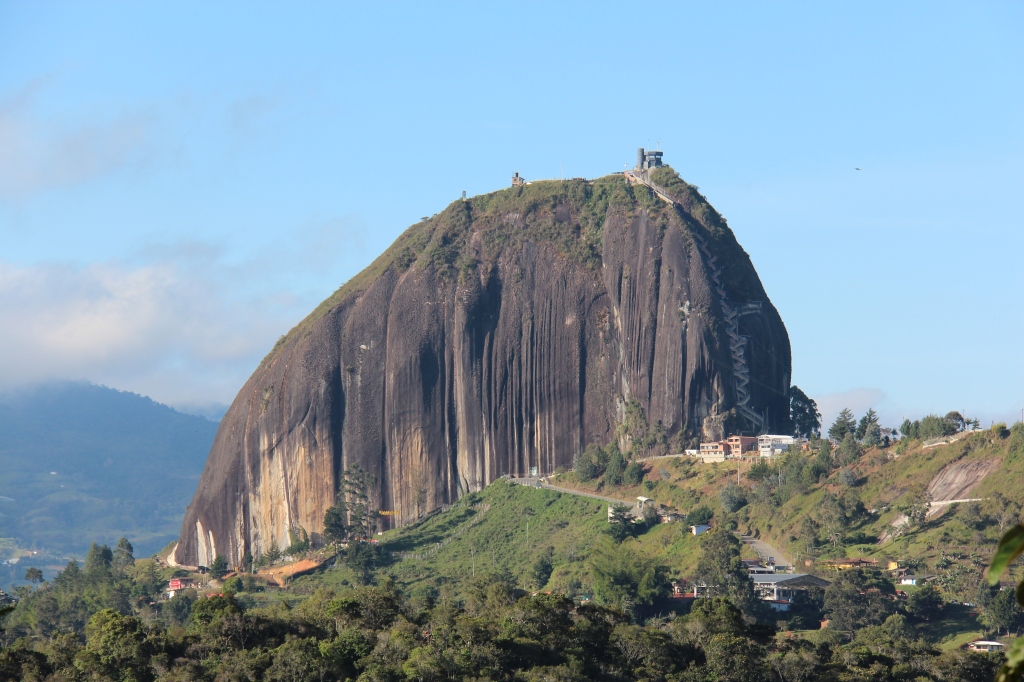
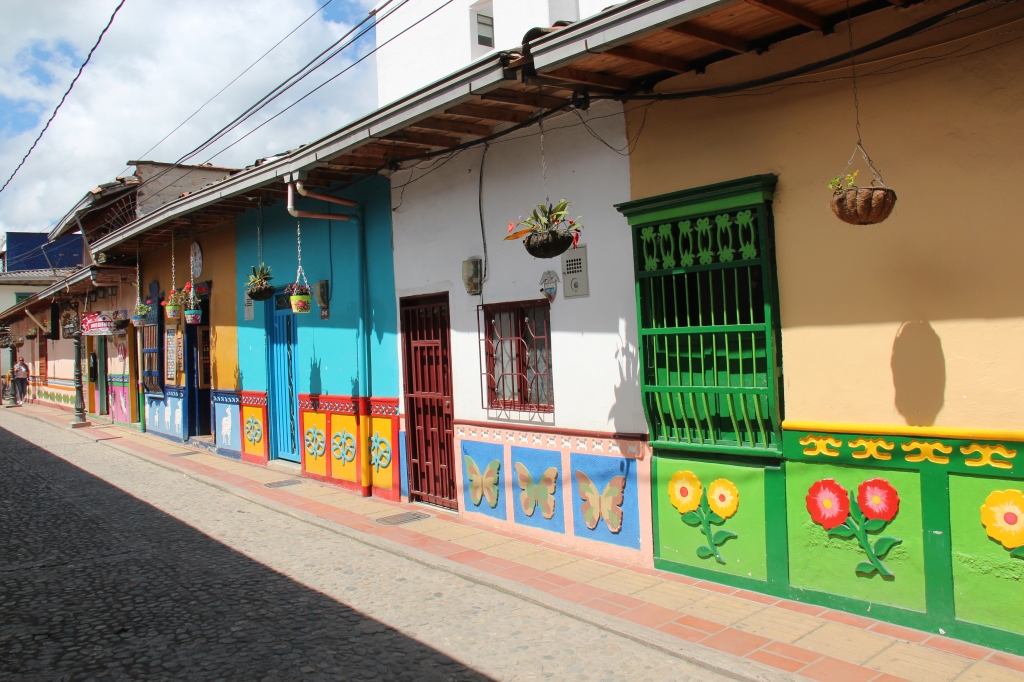
Just east of Medellin is a locally famous area of lakes and mountains centred on the town of Guatape. Heading east it seemed like a logical place to break our journey. While a little on the touristy side, the town and surroundings are indeed beautiful – not just famous for the lakes but the huge rock bluff ( El Penon ) that protrudes 656 feet straight up and is visible for miles as you approach the town. Colombia is justifiably famous for its colorful towns but Guatape is probably THE most famous of all Colombia’s town in terms of being “colorful”. Seems every house and business is trying to outdo the other and it does give an amazingly vibrant overall feel to the town as evidenced in the pictures below.
El Penon, Guatape Colorful homes, GuatapeFountain, GuatapeCobblestone street, GuatapeGuatapeGuatapeView of lake, Guatape
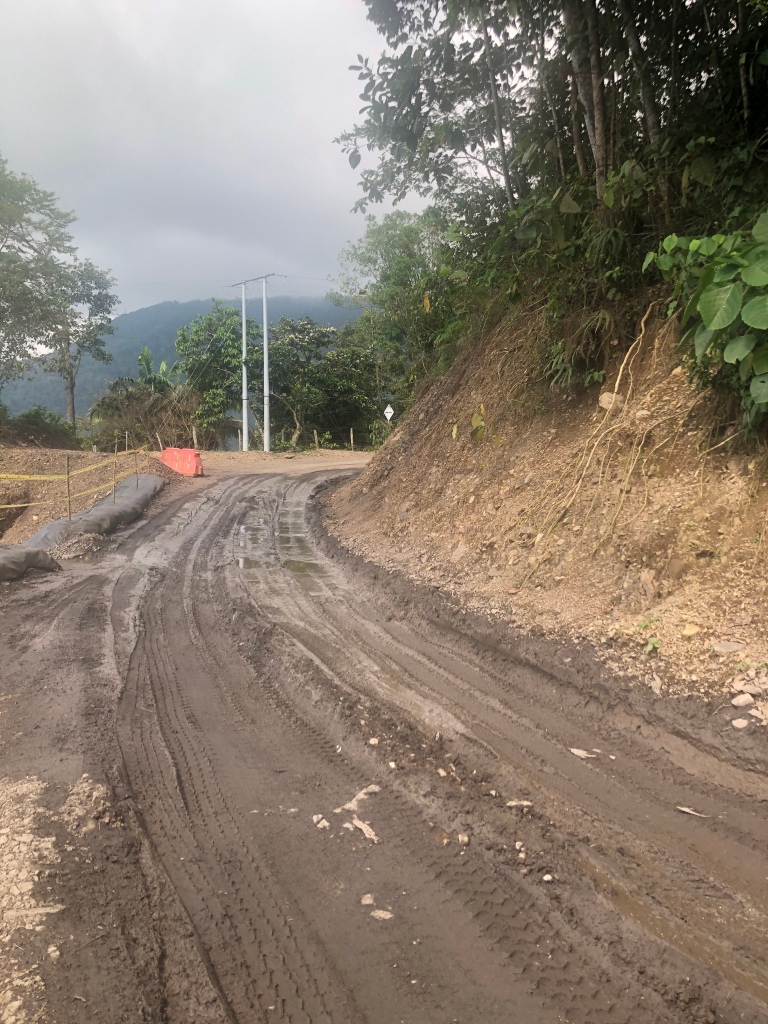
Leaving Guatape we got yet another lesson in relying on Google Maps – as in you can’t always ! Our route, ostensibly the shortest and quickest ( the latter does not always follow the former in Colombia ), turned out to be anything but and included 3 hours of bone shaking surface – potholed, gravel strewn mud covered and occasionally flooded at times barely wider than the donkey path it likely once was ( and we saw more of those than cars on it ). Given the remoteness and altitude ( at times over 9,000 feet ) we were concerned how we would ever get out if we had any vehicle problems- fortunately the truck handled it all with ease, even if it looked the worse for wear afterwards.
Google Maps indicated route 60 was a highway all the way – not so !“Highway” 60, east of Highway 45Same road, in a bit better conditionSome strange shaped peaks up at 9,000 feetOur altitude app – useful in Colombia !Truck was ready for a wash when we got to Villa de LeyvaFound a great “auto lavado” ( car wash ) run by two young refugees from Venezuela – you see many of them in Colombia. Did a great job cleaning it up.
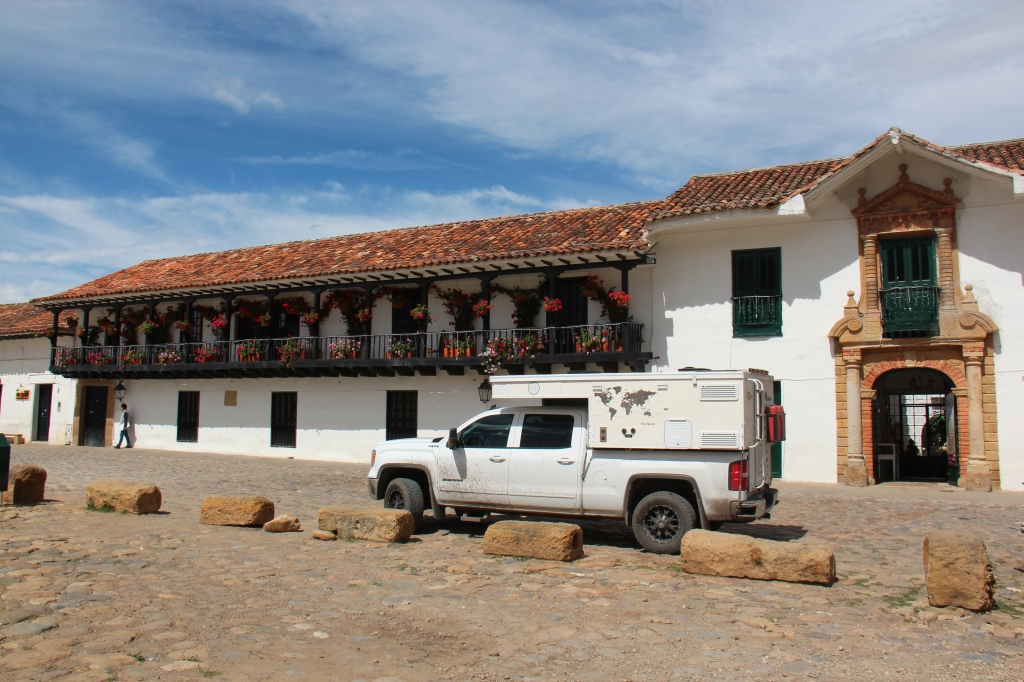
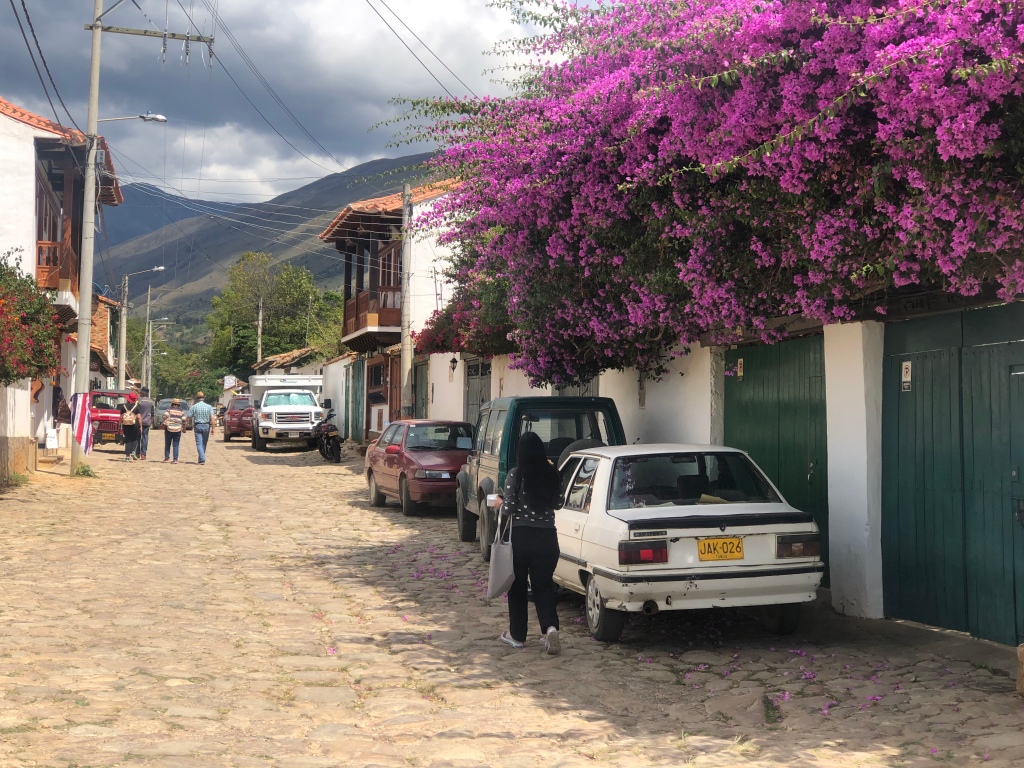
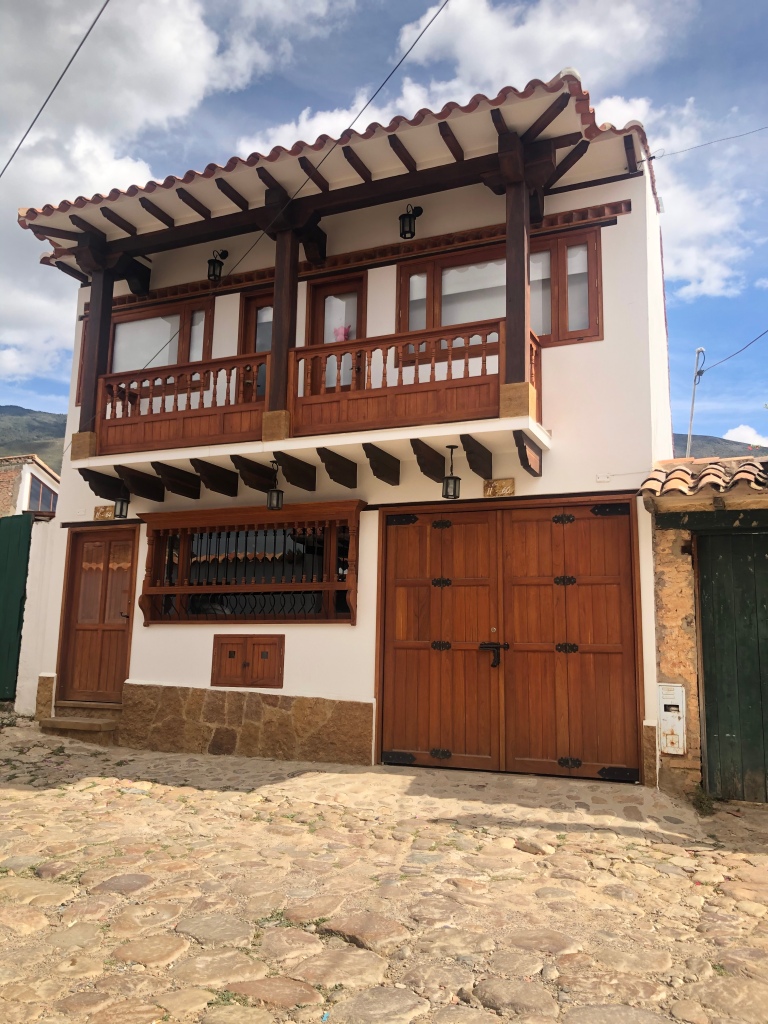
Arriving in Villa de Leyva quite late as darkness fell ( something we never do as a rule ) it was no problem to find the Renacer campground and first impressions were definitely in line with the high expectations set based on others who referred us there. A classic Colombian villa set on the edge of a mountain with great views and a relaxed vibe- we quickly elevated it to the top of our best in Colombia, edging out El Bosque in Medellin. Villa de Leyva, considered Colombia’s most picturesque and original colonial town did not disappoint either. While it was sheer hell getting here ( at least via the route we took ) we’re glad we made the detour to do it. A great place to spend a few days unwinding after a rigorous journey to get there – our stay further enhanced by the opportunity we had to spend some quality time with Peter and Heike, a German couple who were doing the same Pan American route as us ( also in a truck camper ) but doing it south to north ( as many Europeans do ). They picked our brains on Central America and Mexico and we theirs on countries that lay ahead for us in South America.
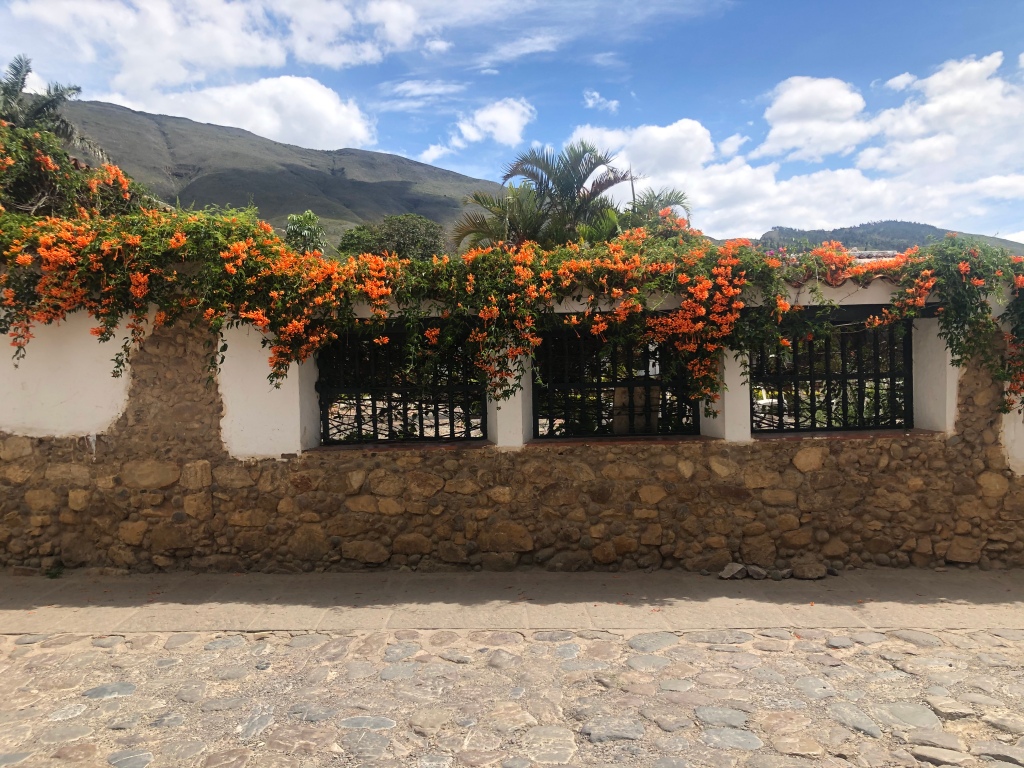
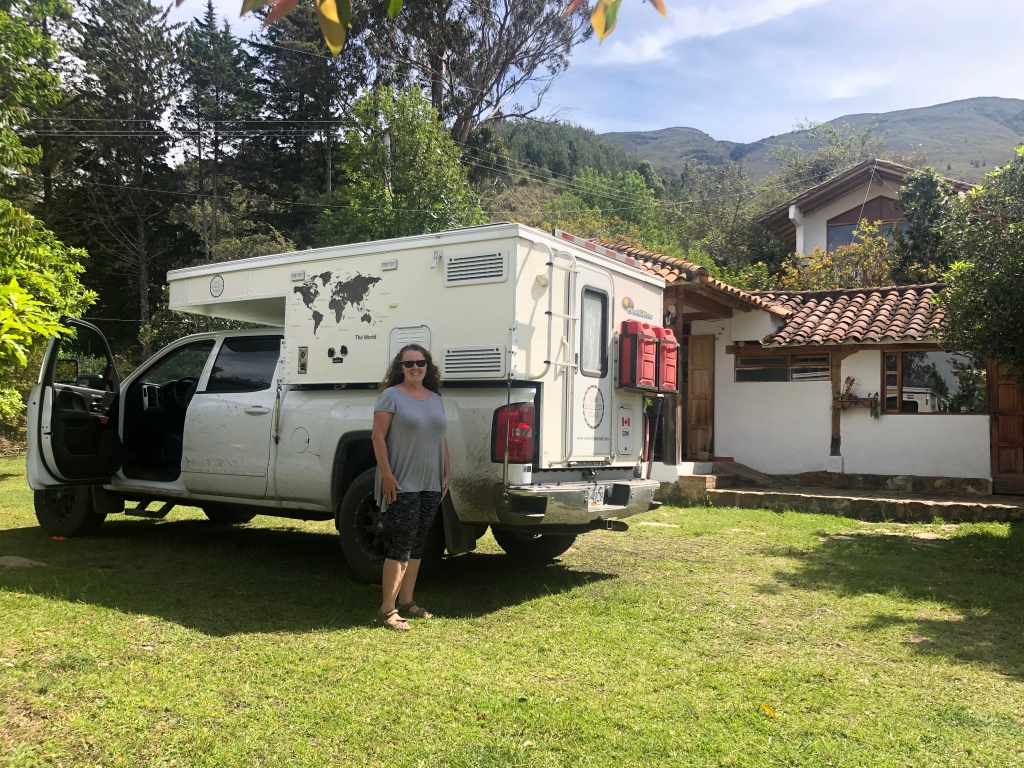
Plaza Mayor, Villa de LeyvaSame plaza, looking the other wayAnd one more viewParked in the main square, Villa de LeyvaSide street, Villa de LeyvaEven new construction fits the “colonial” themeThe flowers here were extremely colorfulLois at Renacer campground, Villa de Leyva
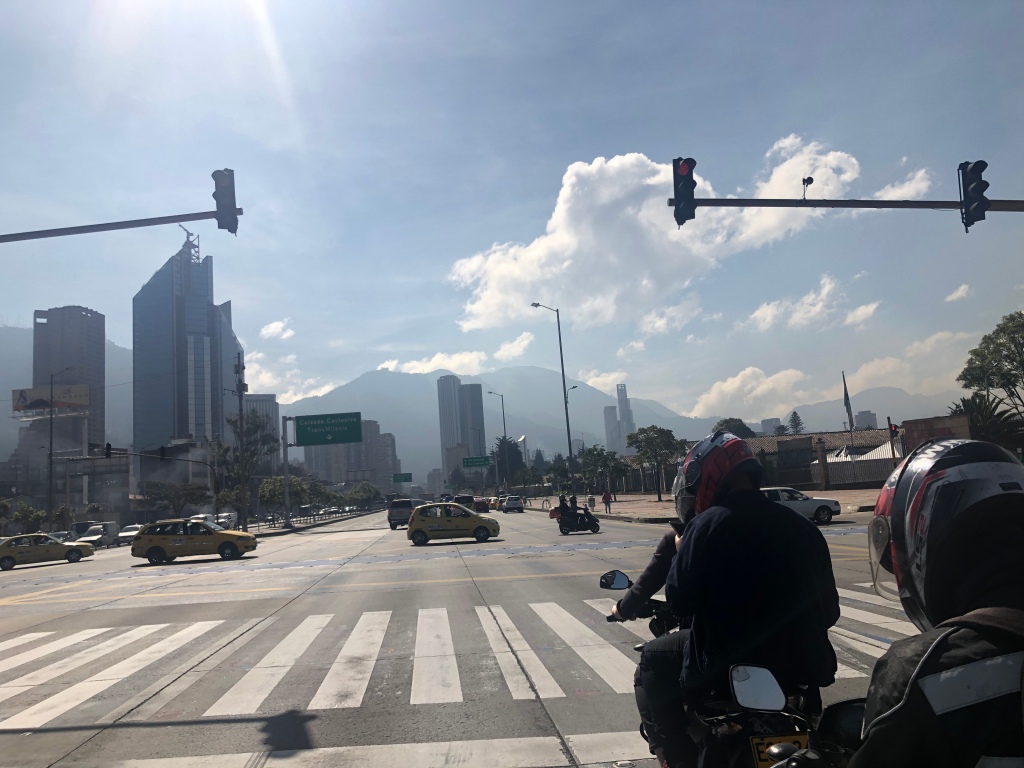
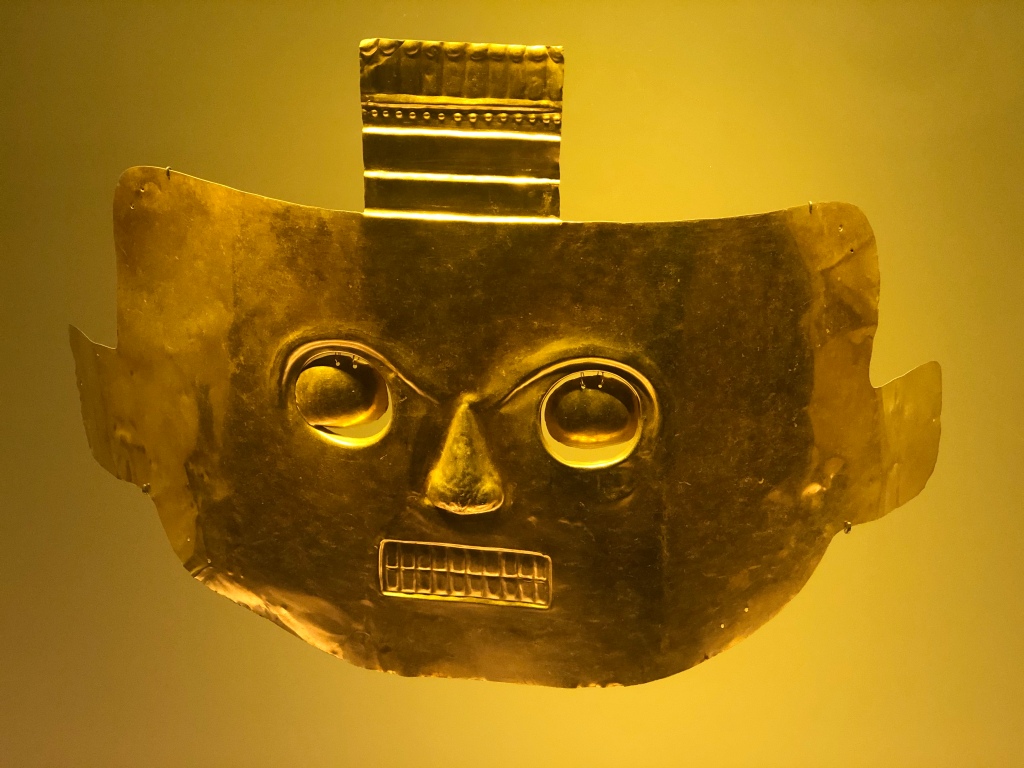
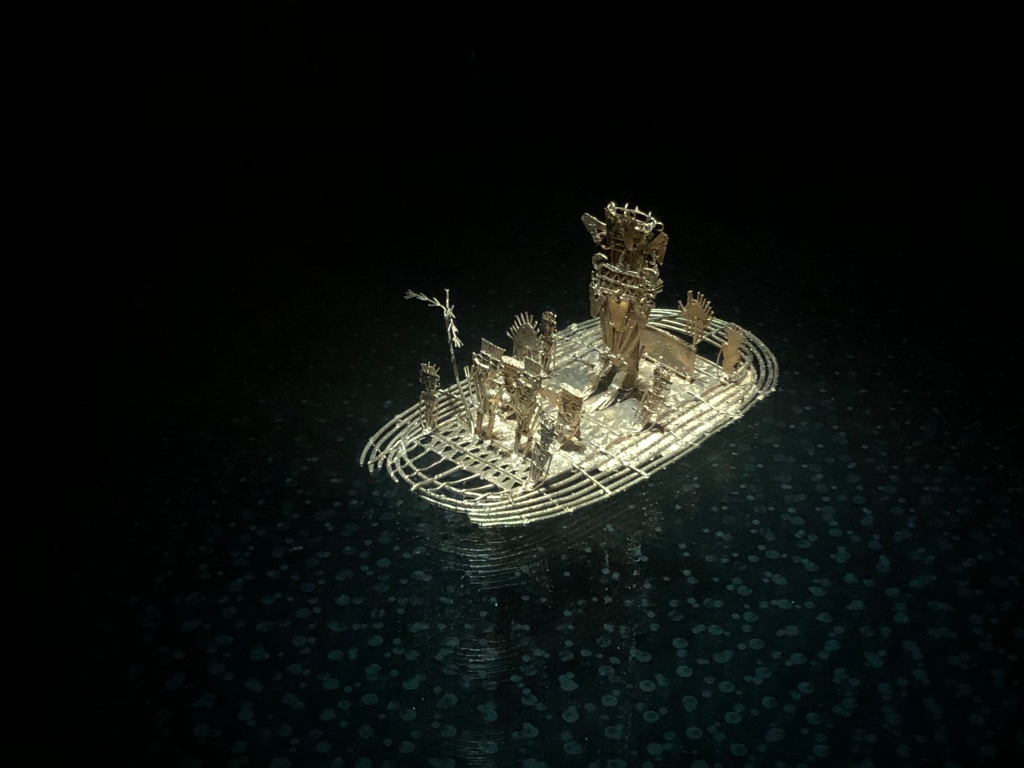
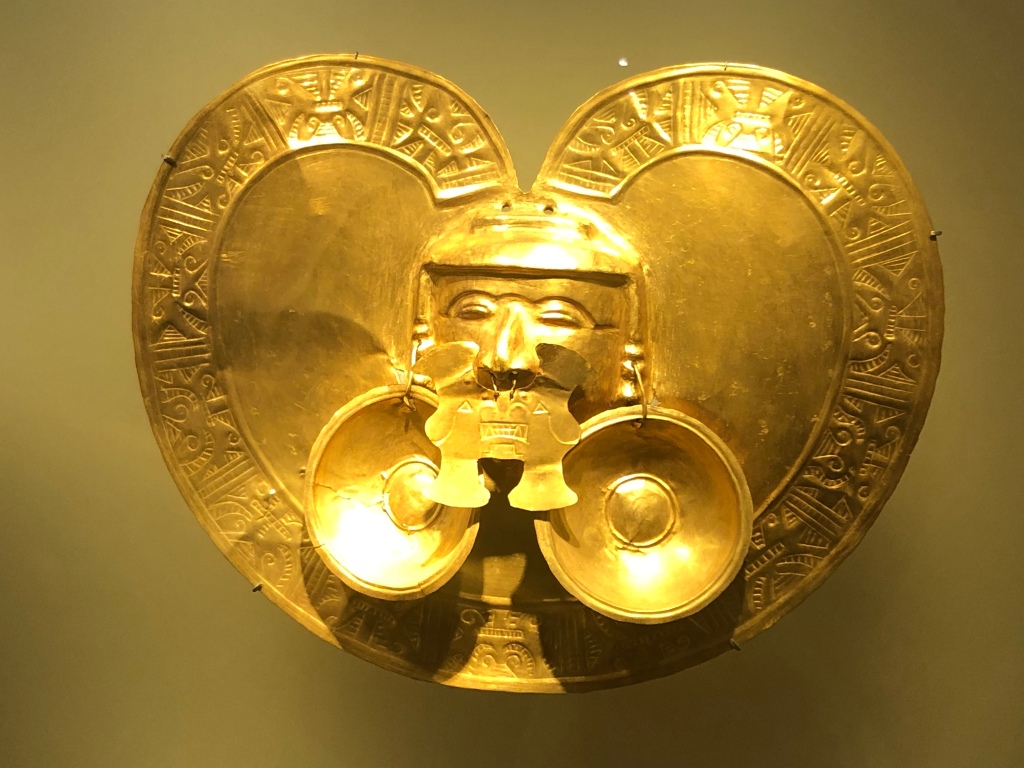
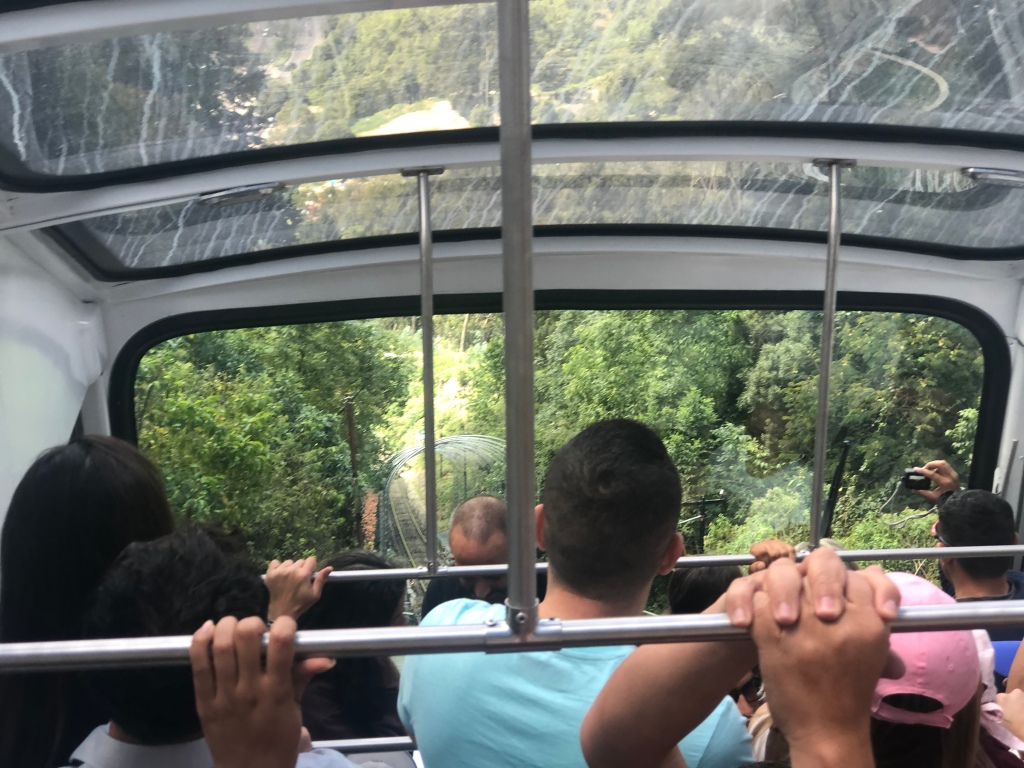
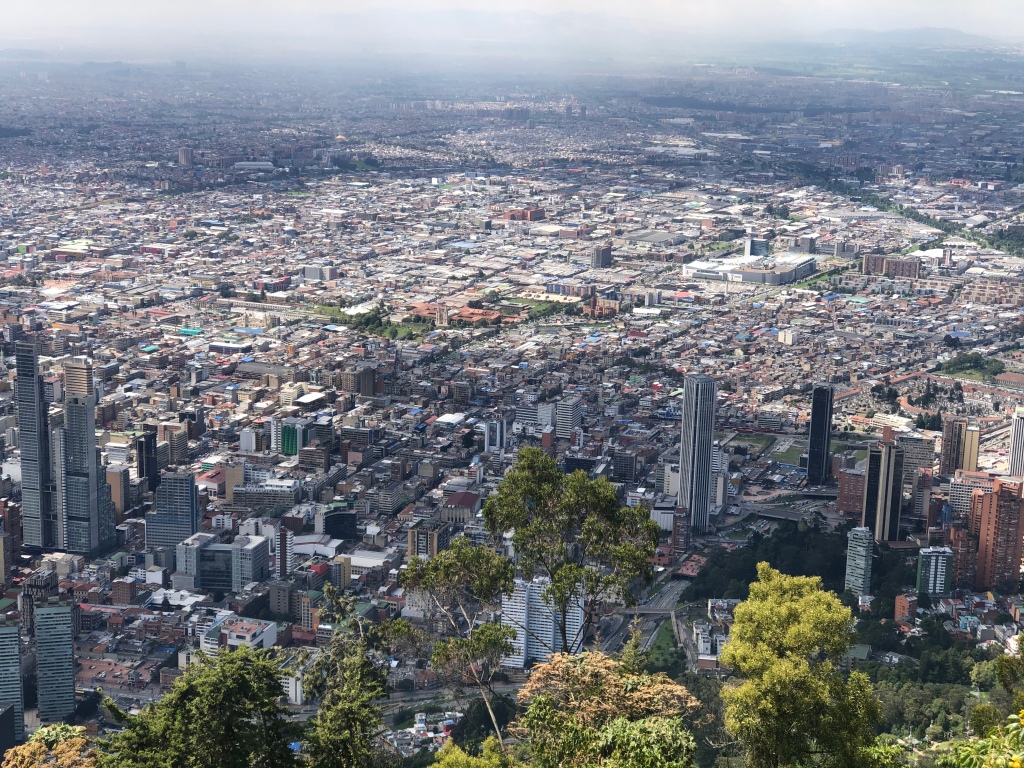
“Villa” is one of those places that’s tough to drag yourself away from but after 3 days there we left for Bogotá, excited to be heading home in just a few days. Bogota had seen a national strike the day before so all the traffic that was not on the road on Wednesday caused volumes to double on Thursday – getting into the city was brutal. With really only a full day at our disposal we limited our sightseeing to the world – renowned Gold Museum (one of the best museums we have ever been to and deserved of its exceptional reputation), some downtown wandering and an excursion on the city’s impressive funicular train up to nearby Monserrate ( treated ourself to a great lunch at the restaurant up top on our last day in Colombia and took in the spectacular views over Bogotá ). We would of course be returning to Bogotá in January – plenty of time for the other sights then.
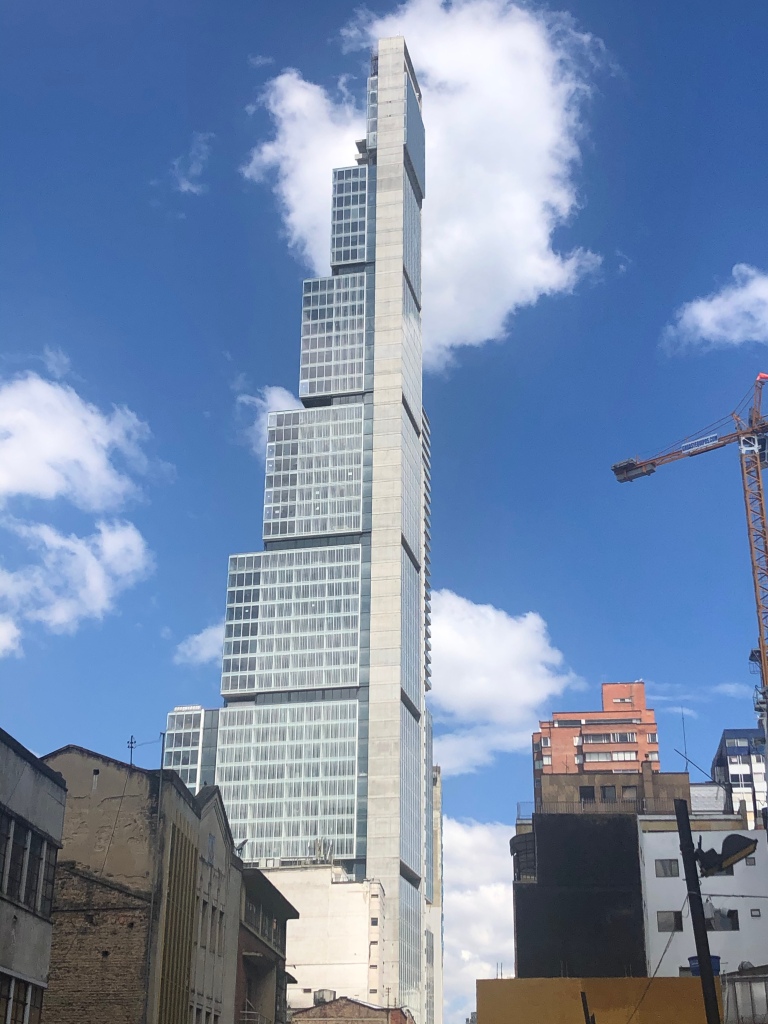
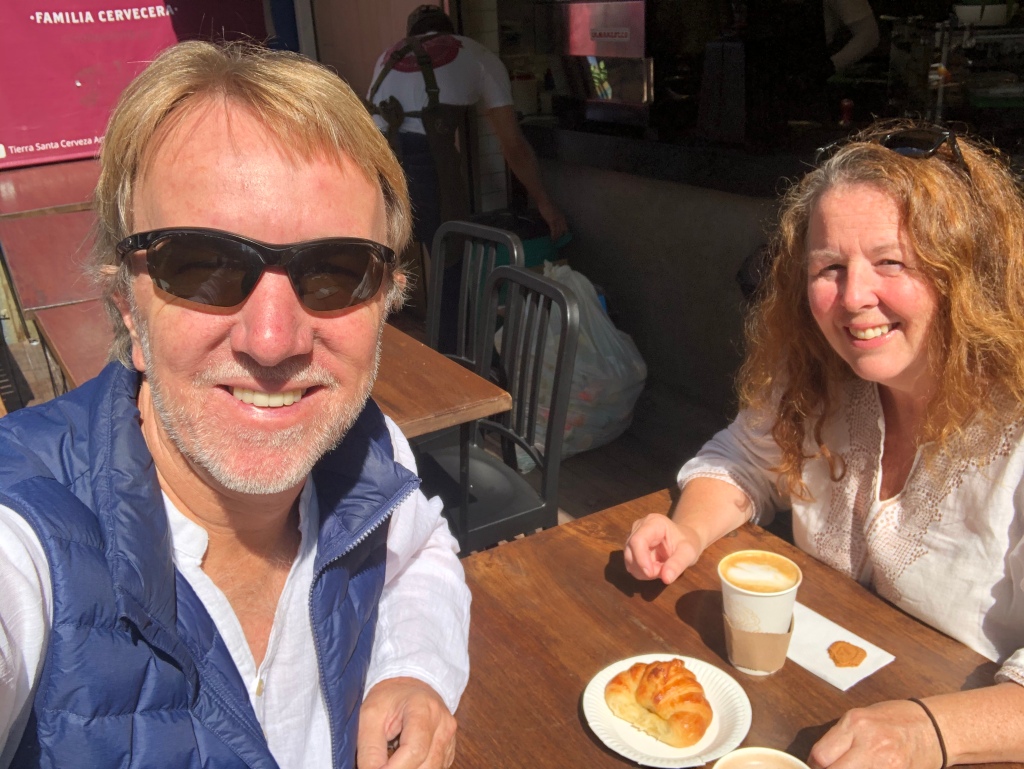
Heading in to Bogota’s downtown for some sightseeingJust one of the many ornamental gold articles in the Bogotá Gold MuseumAnother, a miniature raft, incredibly intricateMore from the Gold MuseumPanama was not the only city in Latin America with fancy high rise buildings !Funicular rail up to Monserrate View of Bogotá from the topUs…..enjoying a final Colombian morning ‘fix’ and beautiful sunshine in Bogotá before flying to the freezing north !
To all our faithful readers we sincerely hope you have been enjoying travelling along with us – we love hearing from you so keep the comments coming ( we always reply ! ). Enjoy the Christmas and New Year season with all your loved ones and we will be back at it in January ?. Feliz Navidad !!
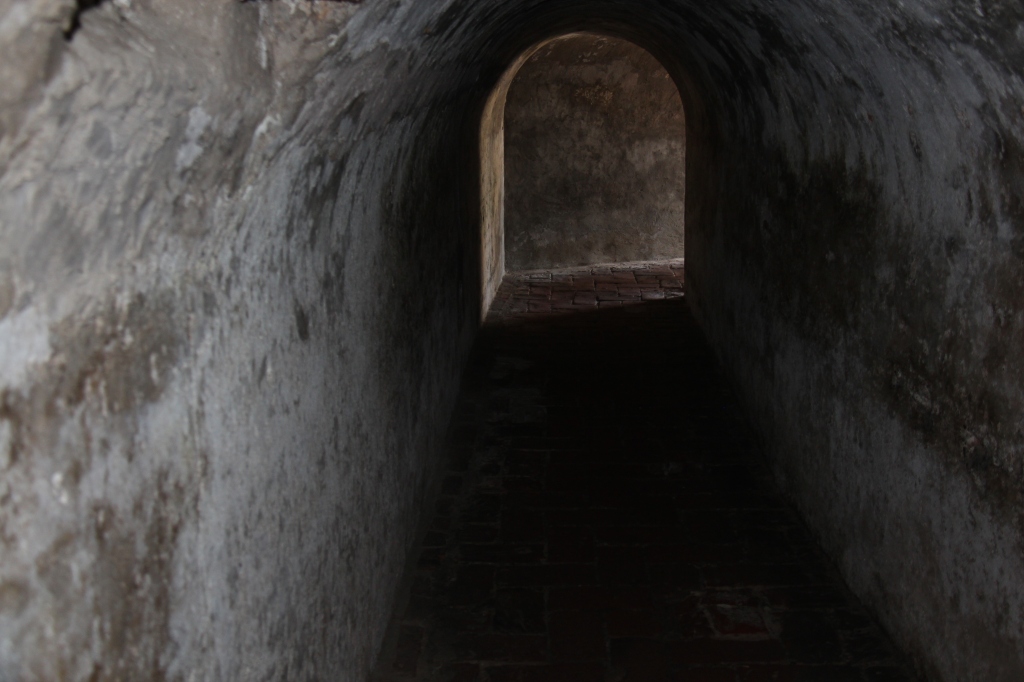
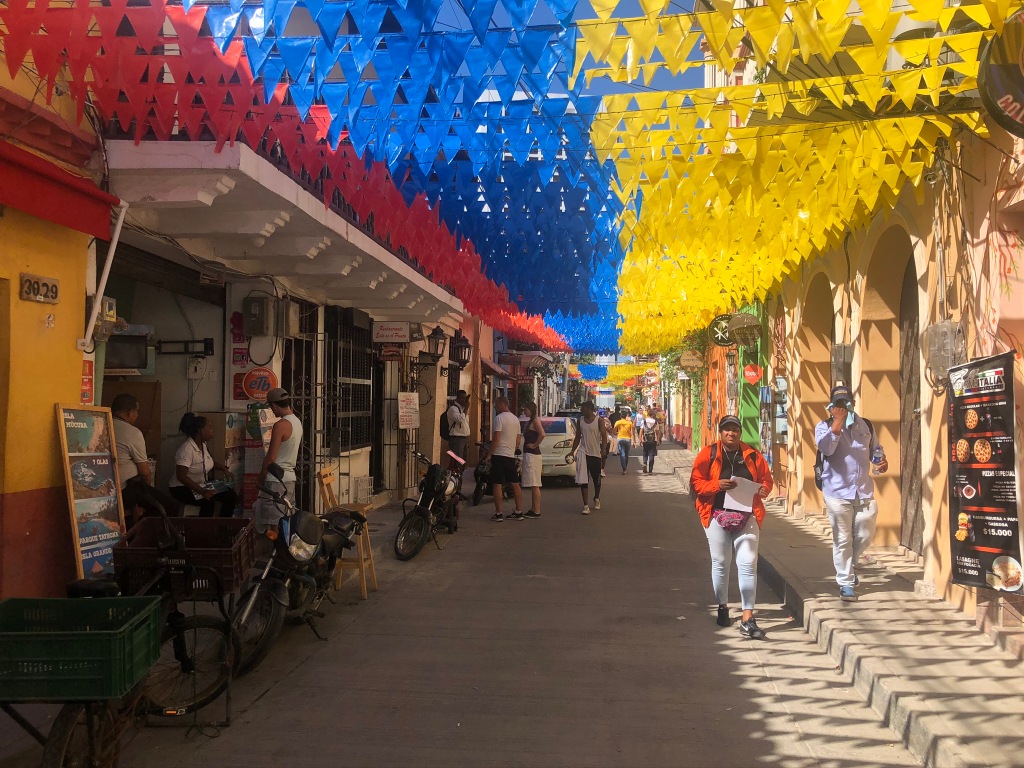
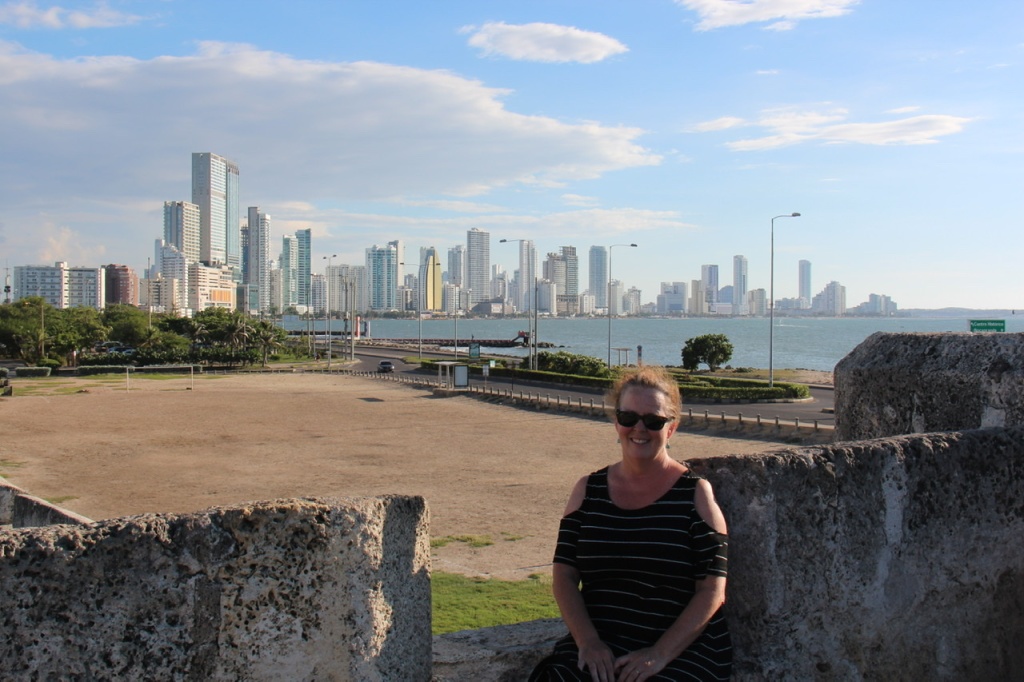
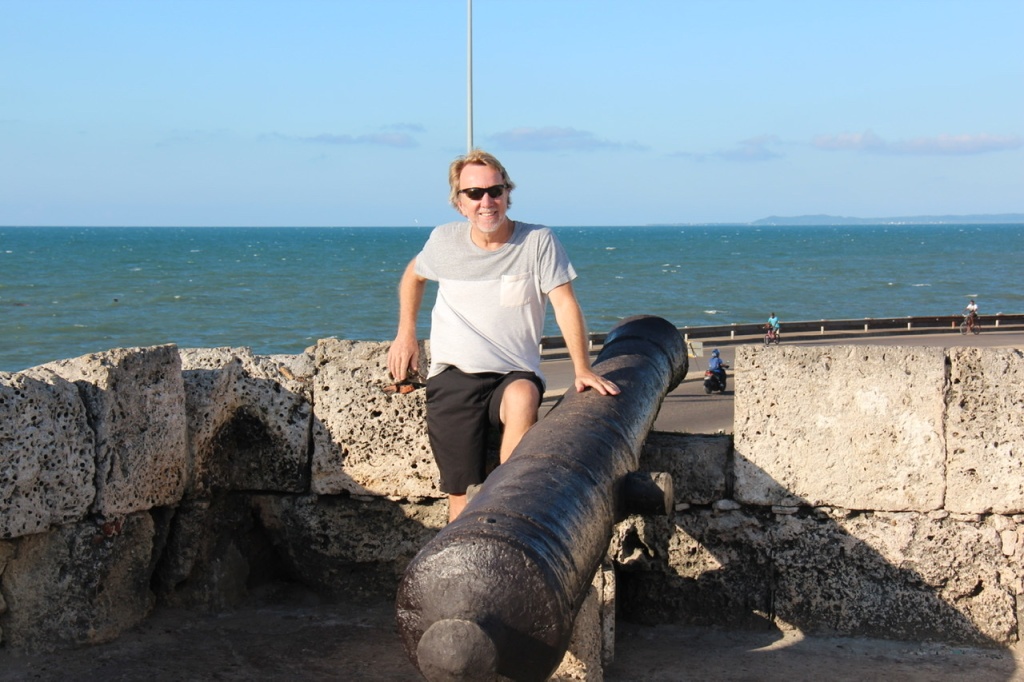
Cartagena continued to delight us while we waited both for our shipping buddy, Cassey – who sailed from Panama to Colombia on a yacht- and of course the container that held our vehicles. In the days while waiting for the unloading of the ship there was time to explore Castillo San Felipe ( one of the more impressive Spanish forts we have seen in the Americas ), to sample Colombia’s legendary Carribean beaches ( Isla Baru in our case ) and simply wander the old town fortifications and myriad streets and alleys inside it. Added to the great sights was the great weather; while Panama delivered rain on at least part of every day, Cartagena was sunny, hot and dry every day we spent there. It’s the kind of city where people often stay longer than expected; as it transpired we would fall into that category – and quite happily so.
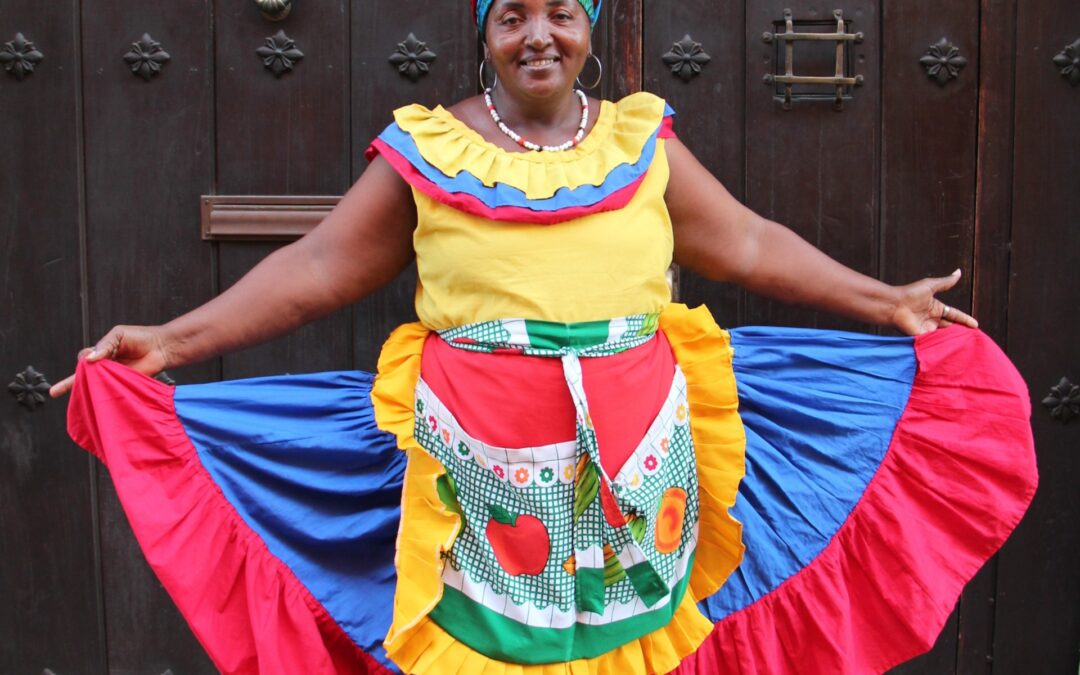
The city attracts people from everywhereAn entrance to the old town through the original wallsCastillo San Felipe Castillo San FelipeOriginal cannons, Castillo San FelipeTunnels, Castillo San FelipeCartagena is famous for its murals, such as this oneColombian fruit seller in traditional wearIsla Baru, south of Cartagena Isla Baru
While we were enjoying Cartagena, Cassey was making her way across the Carribean on the sailing yacht “Amande”. The highlight of that trip and the reason many overlanders choose to sail, rather than fly, to Colombia is the San Blas islands. We had heard lots about them – Cassey’s pictures below ( these are not ours ) will give a taste of what the San Blas islands offer for any of our readers that may be contemplating a visit. Carl, Renee, Victor – you might want to consider it !
Cassey’s yacht, the “Amande” in the San BlasCassey relaxing in the San BlasThe Amande, anchored in the San Blas
The Stella Walvis Bay sailed into Cartagena port ( with some precious – to us – cargo on board ) exactly as scheduled at about mid day Saturday. The plan was to hit the shipping terminal by early Monday afternoon as Cassey’s yacht was scheduled in by late morning (we could do nothing over the weekend of course ). That would allow us get all the import clearances, fee payment, vehicle unloading done and out by Tuesday afternoon. Well, not everything went exactly to plan. A container ship under power can pretty accurately predict its ETA – not so a yacht reliant on winds ! Due to poor wind conditions the yacht was delayed almost a day so we were set back a day as a result. That said, Cartagena is a nice place to be stuck and we occupied our time easily with the aforementioned activities and sights.
Night scene, old town, CartagenaOut for dinner, old town, above a town square
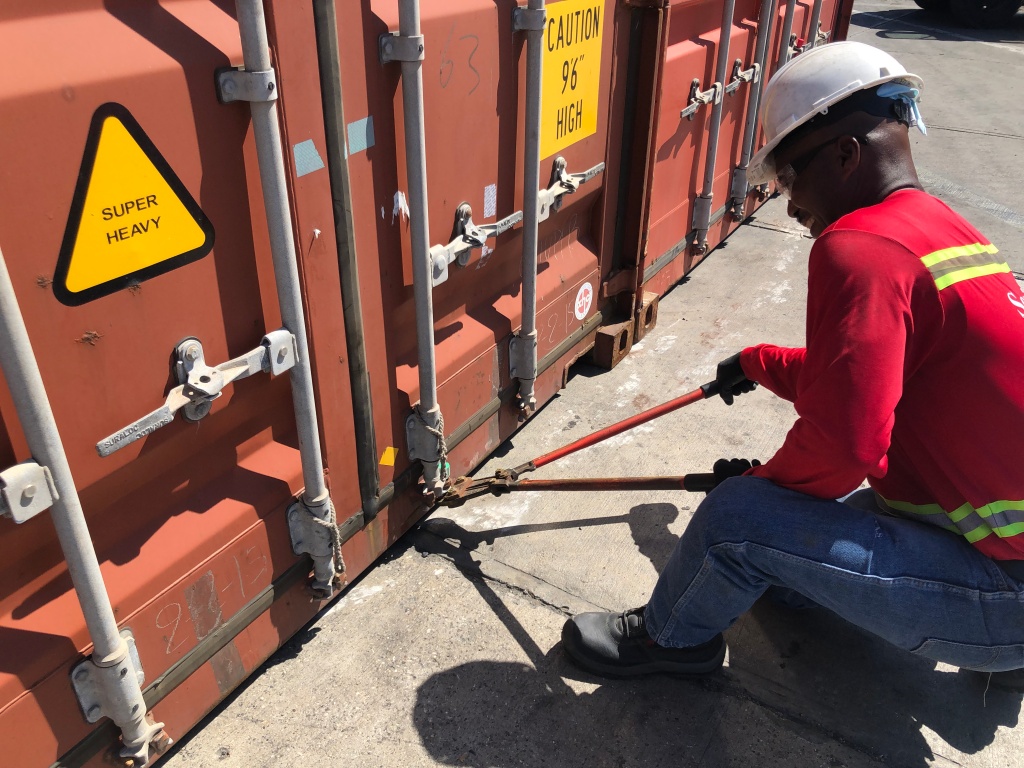
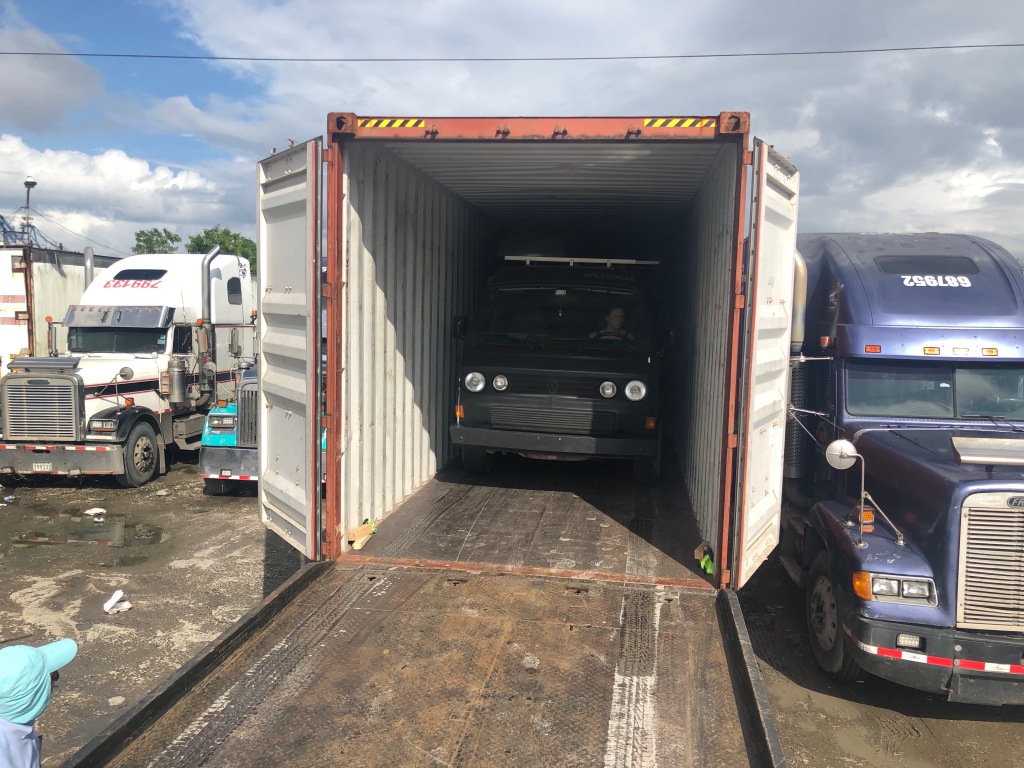
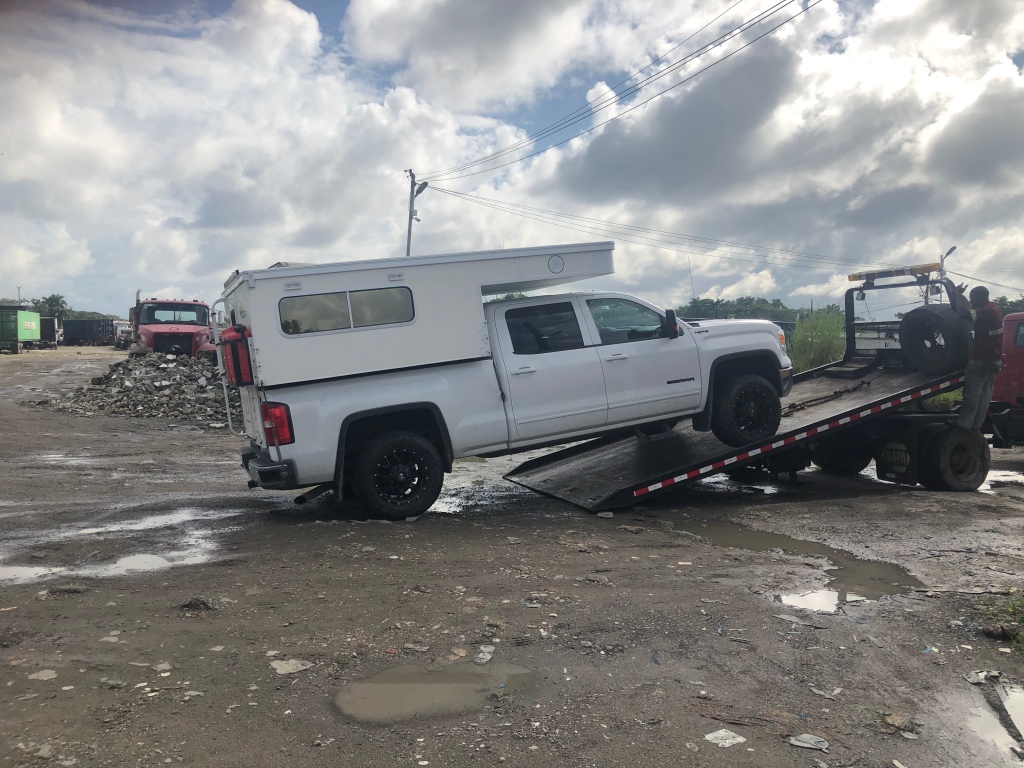
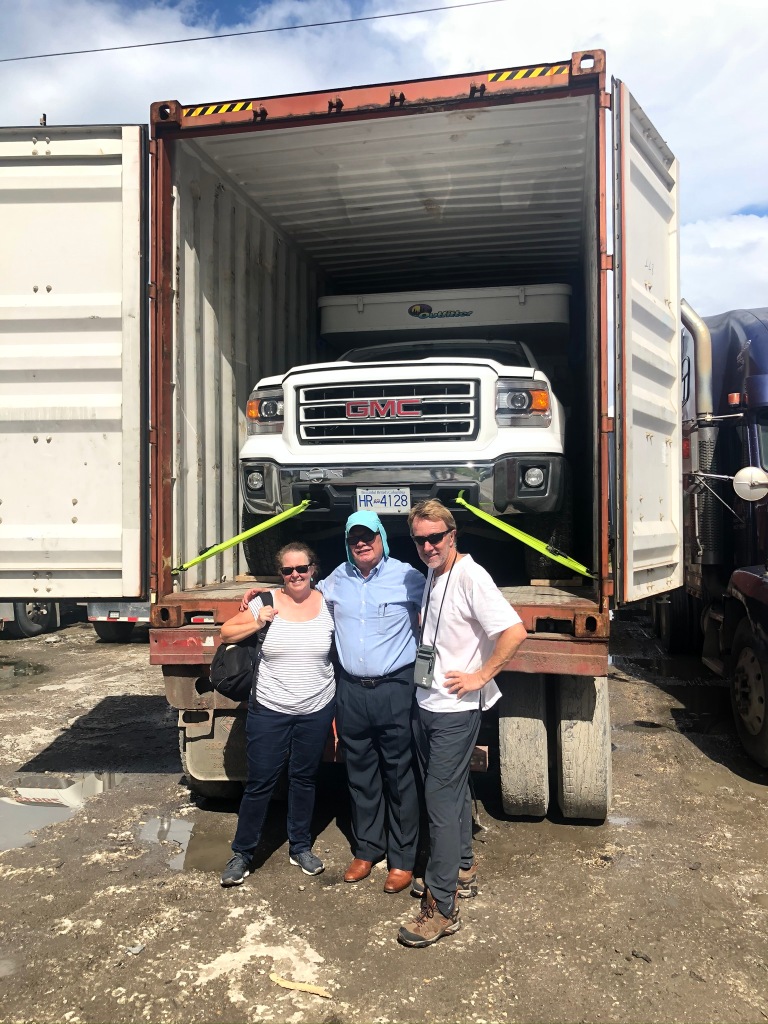
Once Cassey arrived we got down to the retrieval process. It is indeed quite a “process” but our shipping agent provided a detailed and accurate step by step guide and we managed it ourselves over the course of Tuesday and Wednesday. Naturally, the most exciting part was opening the container – I’d admit to some fear and trepidation ( it’s not uncommon for vehicles to move around in a container and with just inches between the camper and solid steel container walls, I was bracing for the worst). Such fears were unwarranted – the container doors were opened and both our vehicle and Cassey’s Westfalia were exactly as we had left them in Colon, Panama. We breathed a collective sigh of relief.
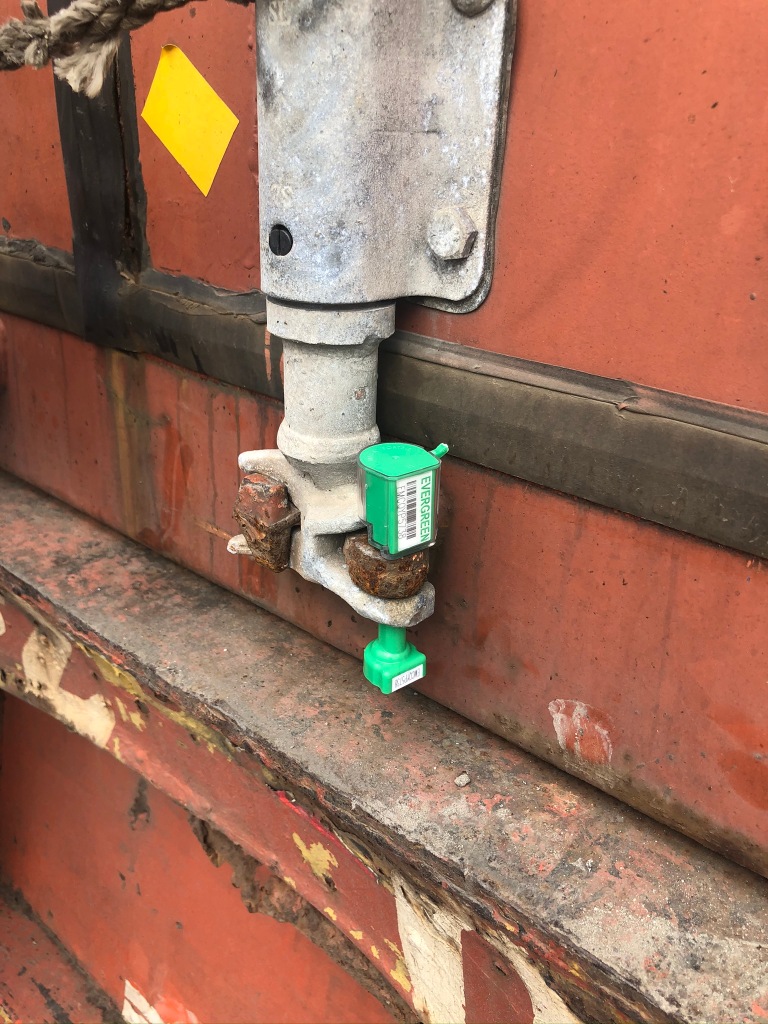
Entry to the port of CartagenaPort worker breaking the container seal put on in Colon Magic moment – opening the doorsUnstrapping the vehiclesGetting them out, unlike getting them in, was a snap !
Much running around remained after the initial inspection, including getting a temporary vehicle import permit for Colombia but that all went as expected. Cutting a long story short, by 3pm on Wednesday afternoon we were both driving our vehicles out of Cartagena port and were very pleased with ourselves. Our shared 40ft hi cube container had cost us significantly less than half what a RoRo crossing would have – and gave us the peace of mind of total vehicle security from start to finish. To the handful of Overlanders who we know read our blog – folks, if you can swing a shared container, and make the dates work it’s definitely the way to go.
Many inspections and checks – this one for the VINFinally, the most import one, the right to leave port ( Salir de la terminal ) !
Sadly, while Lois and I and Cassey had successfully completed the shipping process and essentially travelled together for almost 2 weeks, now our paths would diverge. Cassey of course had more exploring to do in Cartagena while Lois and I, with a week there already under our belts, were anxious to head south towards Bogotá. We bade our farewells but know our paths will likely cross again.
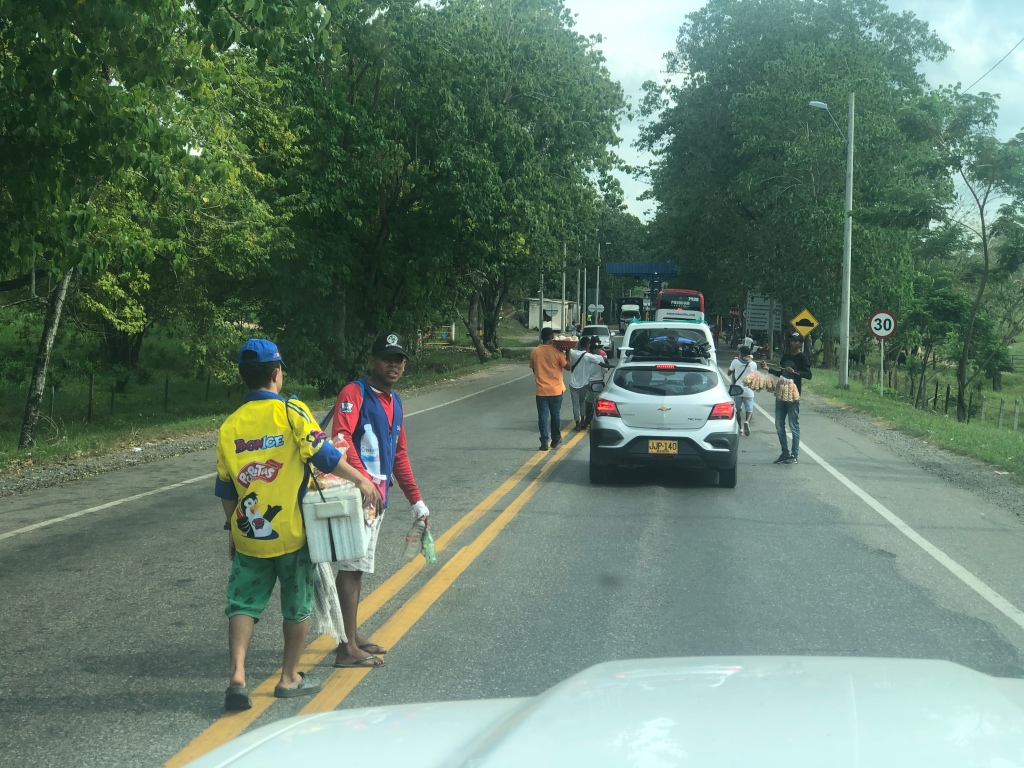
Driving out of Cartagena towards Bogotá Looking for a campsite – decided this area was probably not good !Shot this through the windscreen – a Colombian guy “hitching” a ride on a container. This vehicle was driving down the highway !Lots of tolls in Colombia – at every toll hawkers sell anything and everything – this is a typical scene
Considering we are scheduled to fly back to Canada on December 6 ( for a month at home with our family – which we are very excited about ), our final week here would need to be carefully planned out. With Bogotá almost 3 days drive south and planned stops in Medellin and the colonial town of Villa de Leyva ( where we would store the vehicle ) on the way, further exploring of Colombia will need to wait until our return in January – at which point we should have lots of time !
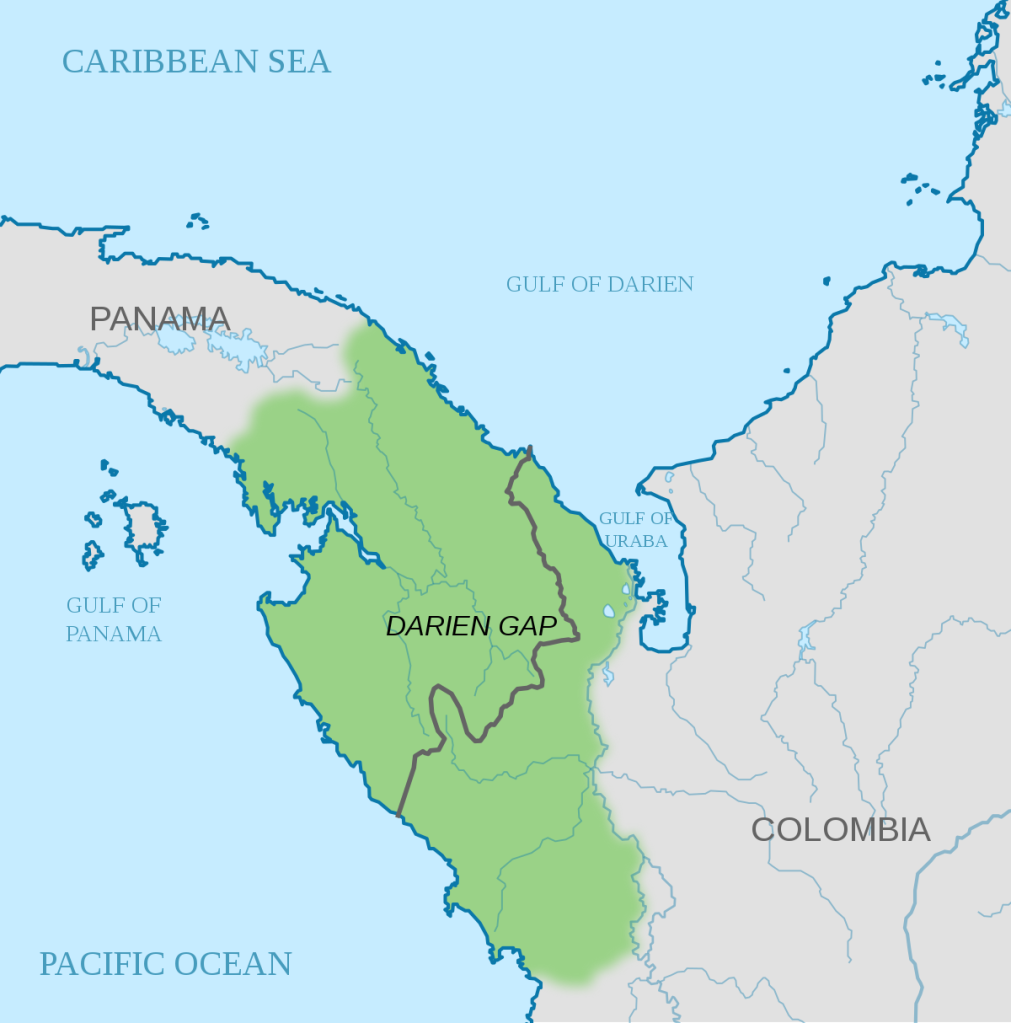
Quite simply, this was done the only way it could be. One cannot drive this impassable 70 or so miles of the PanAmerican Highway – the part between Panama and Colombia. Vehicles must be put on a container ship or “RoRo” carrier, and drivers and passengers must fly or sail between Panama and Colombia. It’s not cheap, it is stressful, and most Overlanders will admit that getting through the process is one of the biggest headaches on the 30,000km journey from Alaska to Argentina. We are now half-way through and hope to have a full ( and hopefully successful ) report to share by our next blog.
While other capital cities in Central America ( aside from San Jose ) were passed by, time spent in Panama’s capital city absorbed almost half our stay in the country – partly by design and partly by necessity. As noted last week most of a full day was spent doing a required vehicle export inspection. Following vehicle inspections, the next step in getting our vehicles around the Darien Gap was driving them to Colon ( on the Atlantic / Caribbean side of Panama ) for loading on to the container. Once it was confirmed that Cassey’s VW Westfalia and our truck/camper could both “technically” fit in a 40ft high cube ( a container that is a foot higher than normal ) deposits were paid and we committed to shipping that way – no turning back now !
The Maersk ship “Stella Walvis Bay” would take our vehicles to Colombia
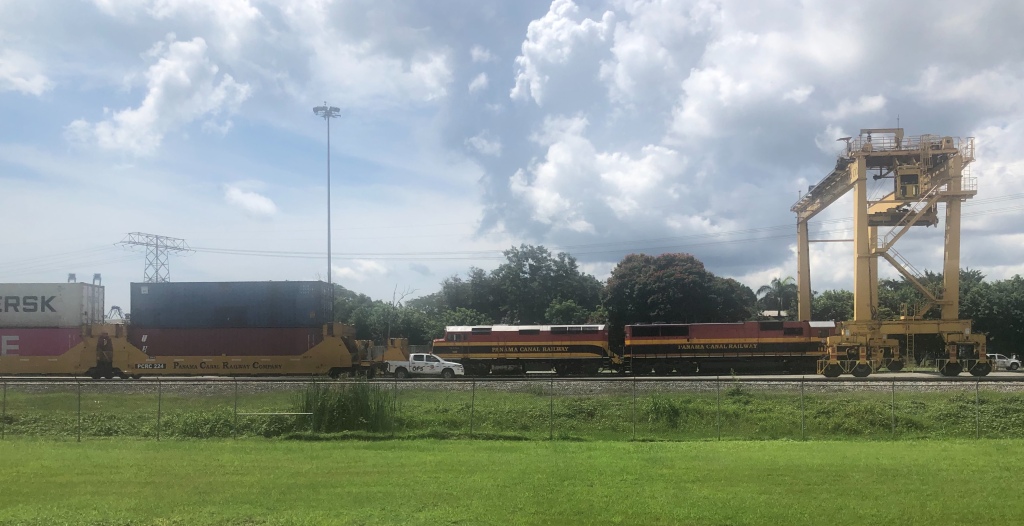
Driving to Colon was easy, the road more or less paralleling the Panama Canal and rail line all the way- odd to look out and see the occasional ship passing through what from the road looks to be continuous jungle ! Early Monday morning we met Boris, our agent, and were taken to the loading area. We’d seen the seedy side of Panama City while doing the vehicle inspection – now we saw the sketchy part of Colon. It’s not a terribly safe city at the best of times and let’s just say we were happy to be escorted around the port area for the loading process. As run down and decrepit a city as we had seen anywhere on our travels to date.
Panama Canal Railway
I was quite nervous about loading – while Cassey had a VW Westfalia ( a considerably narrower vehicle than our own ) our truck only had 3” clearance on each side. Complicating matters, it had to be reversed into the container ( so I could climb out the passenger window once loaded) – and do most of that without the aid of side mirrors which, of course, had to be folded in so the vehicle would fit. As it turned out, it all went well due largely to the skills of the loaders who positioned the flatbed truck ( on very rough ground ) so that it was perfectly aligned for the reverse manouvre into the container. A huge sigh of relief when it was all done ! Following the signing of a raft of customs and shipping documents, final payment was made at which point we suddenly found ourselves without our vehicle – our home – for the first time since we began the trip over 6 months and 24,000 km’s ago. On Thursday, November 21, our vehicles would sail for Cartagena on the “Stella Walvis Bay”. We would be on our own for at least a week while it was loaded, shipped, unloaded and cleared through the respective Panamanian and Colombian processes ( only two days of that would be actually at sea as the two ports are quite close ).
Cassey’s VW went in first, followed by oursStep 1 – drive on to a flatbed truckStep 2- get backed up to the edge of the container – driver has to keep it perfectly alignedStep 3 – use side mirrors and the helpers signals to back in straight, about half wayStep 4 – as you get further in, the mirrors need to be retracted – just watching hand signals at that point !I wedged a couple of “noodles” in between the camper and container to protect against rocking damageOn both sides – but it’s doubtful they will remain in placeStep 5 – once the truck is all the way in, driver climbs out the window, and then…….Step 6…the helper, who guided me from behind, slides out UNDER the truck !Step 7 – all done, time to celebrate with Boris !Step 8 – final step, seal the container !
Cassey, our container buddy, left us at this point – for the next 5 days she would sail on a yacht through the San Blas islands and connect with us on Monday morning ( all going well ) so that we could begin the vehicle retrieval process together in Cartagena. Lois and I travelled back to Panama City to spend a few relaxing days exploring ( it was a city that, despite heavy rain for parts of most days we were there, we really enjoyed ). A luxurious hotel room, pool, great restaurants in abundance and central location all helped. It has to be the most modern city in Central America, with a slick subway, famous “old town” and one of the most stunning skylines anywhere. All this on the doorstep of the Panama Canal.
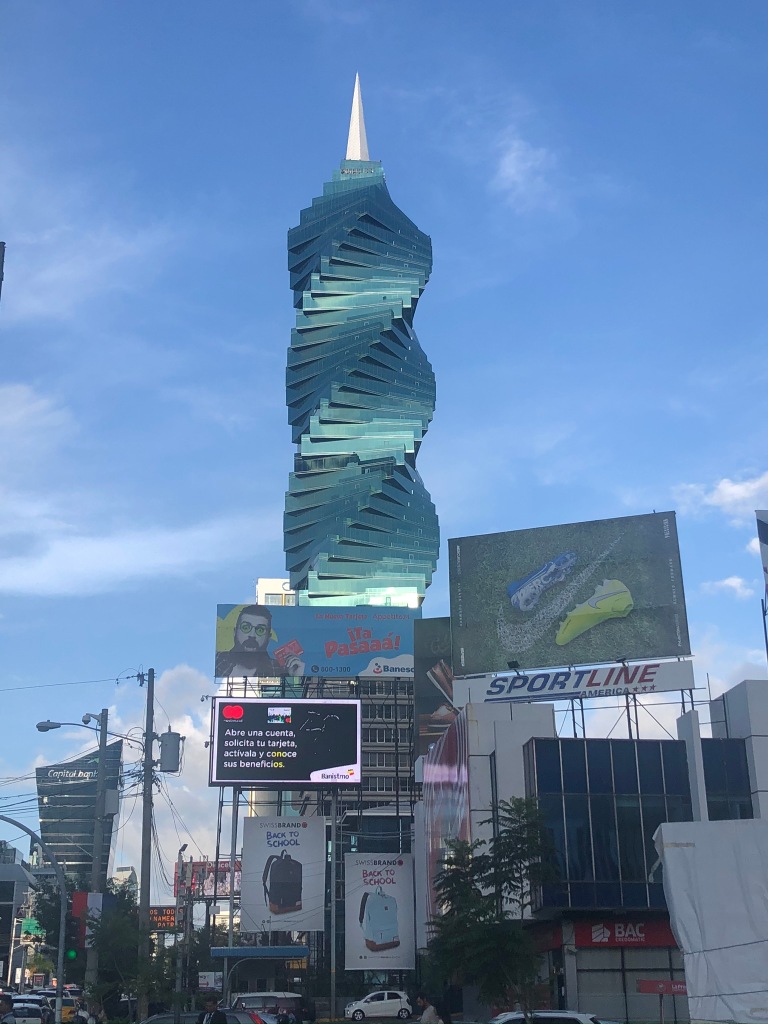
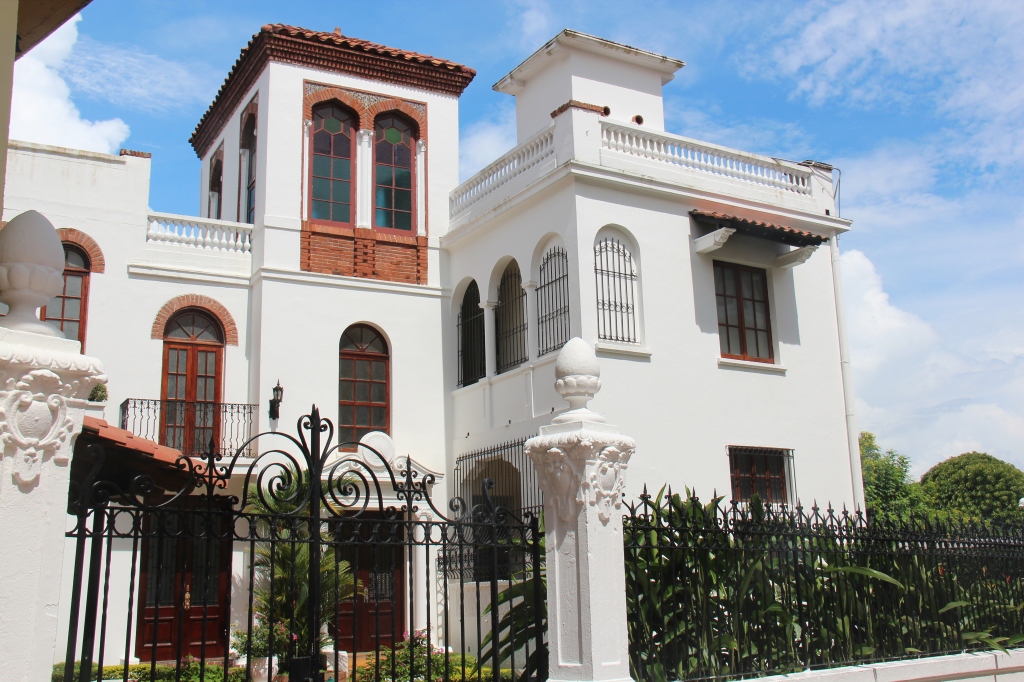
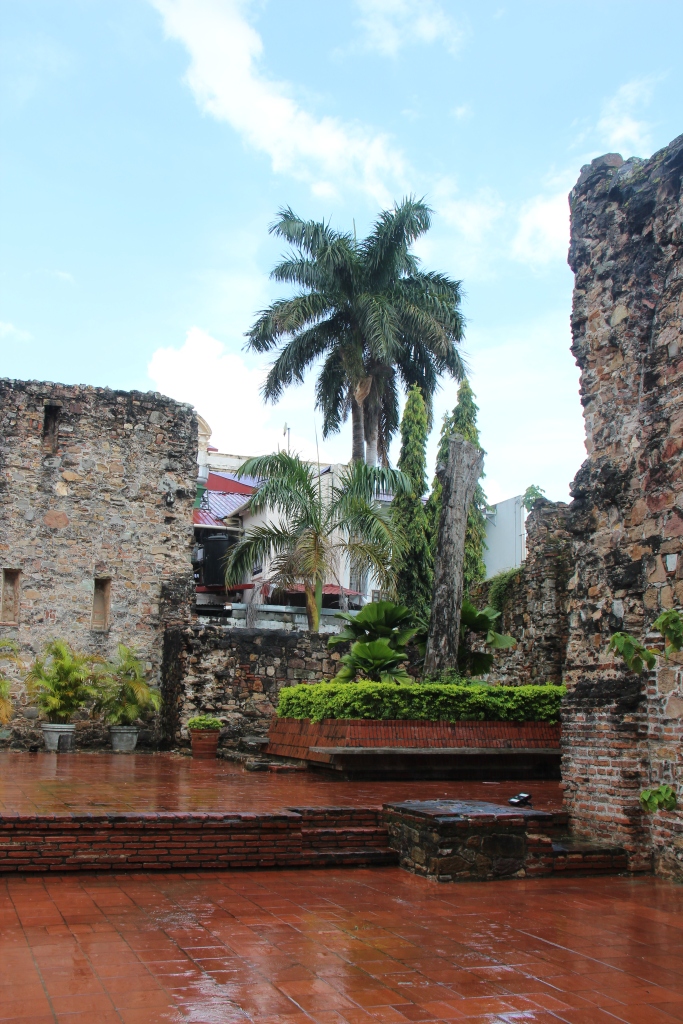
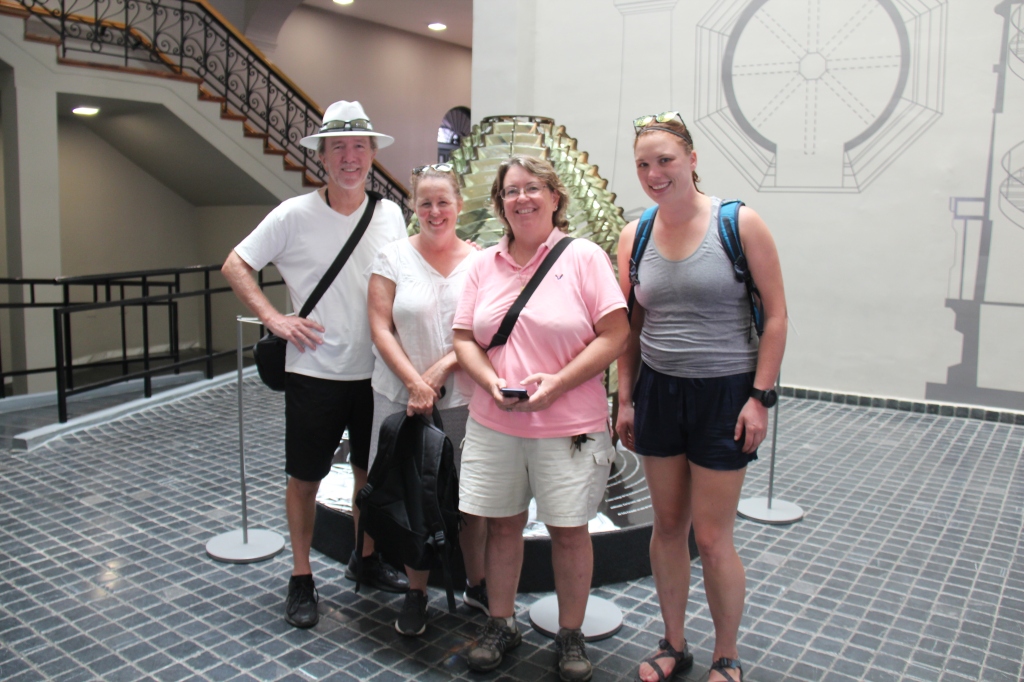
“The Screw”, one of Panama’s more famous buildingsOthers nearbyStreet scene near our hotelWalking old town, Casco Viejo, skyline in the backgroundClassy home, Casco ViejoColorful houses and remnants of the old walls, Panama City Ruins in the old town, Panama Lots of bright color, Casco Viejo, PanamaStreet scene, Casco Viejo, PanamaPanamanian guy trying to hustle the ladies for a walking tour of Casco ViejoInside Panama Canal Museum
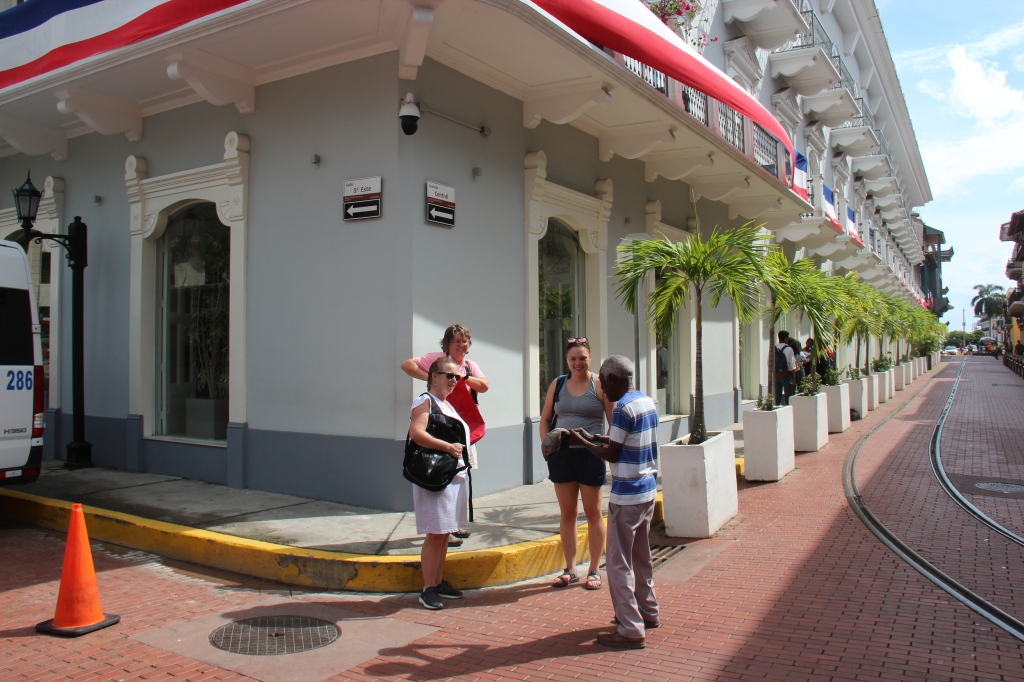
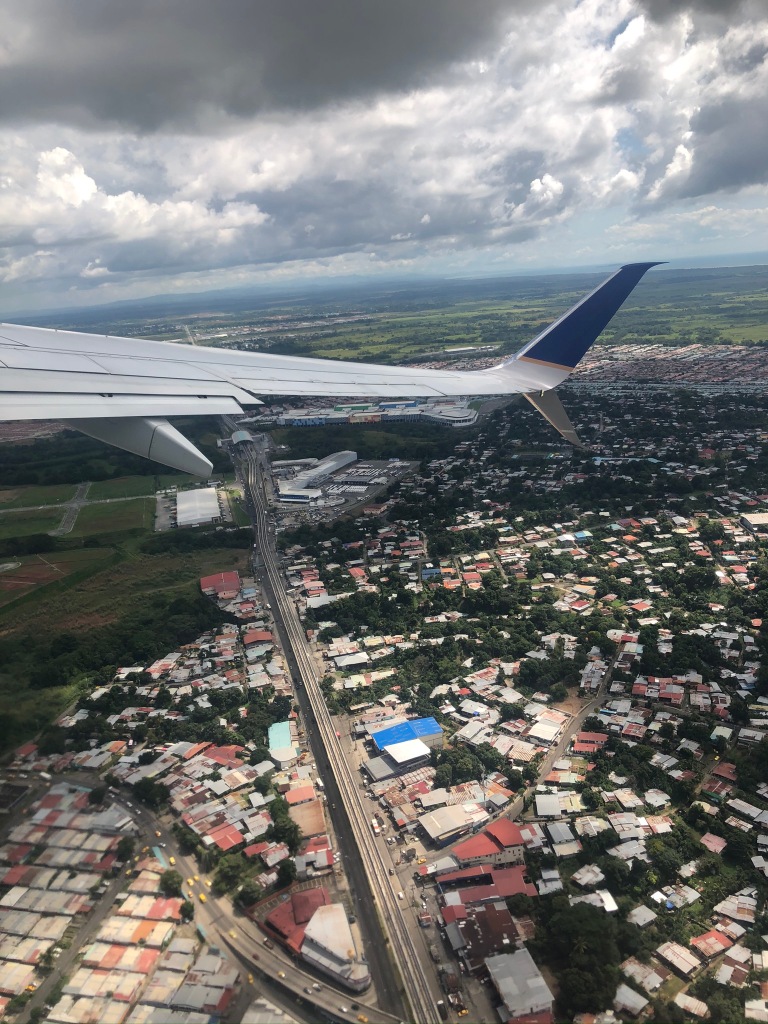
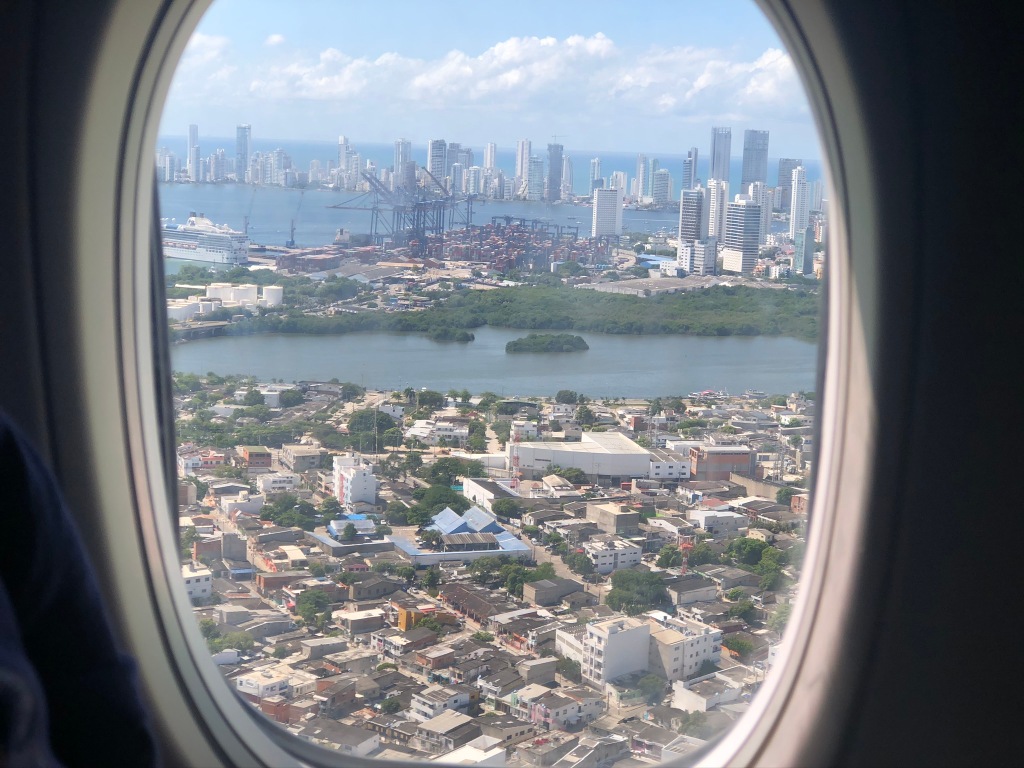
By midweek our time in Panama was over and we made the short 1 hour flight to Cartagena. Could not have been a smoother flight and immigration process, and by early afternoon we were sitting in Cartagena’s old town enjoying lunch. One of the most popular Colombian cities to visit and it’s easy to see why; a Miami-like skyline on the shores of the Caribbean, fascinating walled old-town dating to the Spanish era and a very lively entertainment and cultural scene. We will need at least 5 days here waiting for our vehicle and I don’t think it will be a problem to pass the time – so much to explore !
Leaving Panama, Copa Air to Cartagena, ColombiaCartagena from the airHopefully next week we will be able to find our container….down there…..somewhere !Cartagena, old townRenovated buildings, Cartagena old townTypical street, Cartagena old townColorful umbrellas, Cartagena old town
Thursday was spent exploring the old town, savouring the awesome coffee shops and sourcing some good restaurants ( can’t beat Tripadvisor ! ). It’s a city where there is always something going on – we managed to catch a Michael Jackson impersonator doing a ( very good ) rendition of “Thriller” in Plaza la Trinidad right in the heart of the old town. Our week closed out enjoying Colombian craft beer at a popular little bar at the aforementioned Plaza. Cartagena is definitely an easy place to like!
Lots of mural art in Cartagena – some with special effects at nightMJ – ThrillerBack street, old town One of the many historic doors, old townCartagena, old town looking to cityCartagena, walled old town, looking to Carribean sea
After what seemed like an inordinate delay at the Panamanian border, our temporary vehicle import was finally ready and we were able to begin our travels in Panama – last stop before South America ! Hard to believe we had already come this far ( over 24,000 kms since we left in May ).
First impressions were excellent-driving away from the chaos of the border area, one was immediately surprised by the roads – a smooth four-lane highway all the way to our first stop, the mountain town of Boquete ( in fact it was four lanes wide everywhere we went in Panama ). It wasn’t just the great roads in Panama – there was also a noticeable increase in the size of peoples homes and just how well-maintained they were. Bigger than in Costa Rica and probably even a bit nicer. The supermarkets have absolutely everything and prices are pretty much on par with the US which was a nice change after Costa Rica and likely the reason lots of Overlanders tend to linger here longer ( and why retirees flock here – lots of North Americans especially ).
Typical road in Panama, this just after our arrival
The campsite in Boquete was excellent – nice to have hot showers & good wifi finally ! A great restaurant, super friendly staff and close to the heart of town. What more does one need !
Boquete campground
The plan for Boquete was just to lay low for a few days, enjoy the cooler higher altitude, do a coffee tour and move forward with our shipping plans to Columbia. Turns out only Lois did the coffee tour as I was laid low with the remnants of a nasty flu most of our time in Boquete. Not being a coffee drinker I suppose it would have been a bit wasted on me – Lois thoroughly enjoyed it. Boquete is famous for its coffee, especially a variety known as “Geisha”.
Coffee plantsProcessing plantCoffee being baggedThe good part – tasting !Delicious !
We were also fortunate that Cassey, our soon to be shipping partner, was able to join us in Boquete, so we got to know each other a lot better. We would after all be joined at the hip for the next couple of weeks as we navigate the circuitous process of shipping two vehicles in a 40 foot container across the Caribbean to Cartagena.
Boquete townCassey and Lois in Cassey’s WestfaliaBackstreet, BoqueteCreek, Boquete
Cassey had a contact who was able to provide us with the best quote available so we opted to ship with him. “Boris” provided us step-by-step details for what was needed and given the lead time they require for vehicle inspections, stuffing the container, customs review etc, it quickly became obvious we didn’t really have much time to do anything else in Panama, outside Panama City.
Midweek we drove from Boquete to the town of Santa Clara (about an hour and a half west of Panama City). Another nice campground with a collection of parrots and macaws ( all noisy as hell but none could speak like “Lola” back in El Salvador !) – it enabled us to have an easy drive into chaotic Panama City the next day in time to miss the worst of it’s infamous rush-hour traffic.
“Cholo”, resident macaw at Santa Clara campground“Cholo”Santa Clara campground – holds 30 rigs, yet we were the only guests. Not seeing too many Overlanders these days
The drive-in took us over the Panama Canal and the famous Bridge of the Americas. Our camp spot was at the Balboa Yacht Club, somewhat of an Overlander favorite and very comfortable and conveniently located for a few nights in Panama while we did the vehicle inspections and customs clearance for shipping on to Columbia. While there we bumped into a fellow Overlander ( another lady travelling solo ), Dana from Ontario. Dana had been on the road about six months and was traveling with her mastiff and two cats – she was planning to get to Ecuador to check it out for possible retirement. Unfortunately with a very big rig she was running up against the extremely high cost of shipping “RoRo” – the vehicle would not fit in a container. In the last few months the cost of this shipping method has gone through the roof. Over a few drinks with her at the Balboa Yacht Club she mentioned she was actually rethinking her plans to cross to Colombia and contemplating returning to Nicaragua. She was in fact the second person in Panama we have met who may ditch their plans to cross the Darien Gap because of the high cost of shipping – both were in large, conventional ‘motorhomes’. Gave us a whole new appreciation for what we have.
Bridge of the Americas, view from Balboa Yacht ClubBalboa Yacht ClubView of shipping on the canal from the deck at BYCLois, Dana, and Cassey, at Balboa Yacht Club
As I close off this blog we have just completed an extremely exhausting day in Panama City but after quite the runaround we do now have a vehicle inspection approval and export permit in our hands. One would not think that is such a big undertaking but it was in fact a whole day affair and completed during a torrential down pour which had flooded many of the Panama City streets. Never a dull moment !
Driving in Panama City in a tropical stormVehicle inspection – an all day affair in one of Panama City’s less salubrious neighbourhoods
Our plan from here is to use the weekend to do some sightseeing in Panama City and on Monday drive to Colon to put the vehicle in the container-between loading the vehicle in the container, the transit time to Cartagena and the unloading time in Columbia we will be a full week without our camper – separation anxiety ! We are both a little nervous about that ( things can go wrong – we read of one Overlander whose vehicle was sent to the wrong port ! ) but at the same time we are both definitely looking forward to some hotel time !
Our last days in Nicaragua were spent at San Juan Del Sur, the beachside/surfing community close to Costa Rica. It was obvious that the town is still suffering from the effects of the Nicaraguan protests last year – restaurants and hotels were very quiet and there were not nearly as many tourists around as would be expected this time of year. A good sign – cruise ships have just started stopping in again after a long break and one arrived in the bay as we left. A popular place for Overlanders to stay there is actually at the port – and we did – since it had all the facilities and 24 / 7 security….and an awesome view of the bay !
The bay at San Juan Del SurViewed from the opposite side of the bay by the Jesus Christ statueGiant statue of Jesus, which overlooks San Juan Del SurSan Juan Del Sur port, safe, secure and centrally located for OverlandersAnother view of San Juan Del SurOne from a restaurant where we had lunchA very colorful fruit stand, typical of the many seen in Nicaragua
Apart from getting temporarily lost our entry to Costa Rica went very smoothly- leaving Nicaragua meant we had now safely navigated the so-called ‘more dangerous’ parts of Central America ( El Salvador, Guatemala, Honduras and Nicaragua) so, while there was a sense of relief, we were also actually a bit annoyed. Why all the fuss ? In all four countries the people were incredibly friendly, helpful and polite – always. At no point were we threatened, nor did we ever feel at any risk. Everyone we met there said the same thing. We both wish we just had more time. Hopefully the word gets out and the long suffering folks in the tourism business there start seeing normal tourism levels again.
First stop in Costa Rica, just north of Liberia, we met a Costa Rican family with a new baby – Lois just could not resist One the road to Sámara beach, Nicoya Península
Given our deadline to get to Panama we decided to limit our travel in Costa Rica to a week – a beach community ( we chose Samara on the Nicoya Peninsula ), the canopy walk ( in the clouds ) at Monteverde, possibly a National Park and lastly San Jose itself. While we would not have time to stay, our route out to Panama along the south coast would give us a look at Jaco beach and, ideally, time to explore the very small but famous Manuel Antonio National Park.
Sámara beach, Nicoya Península Sámara beach villageCamped at a surfing hotel in Sámara – getting in the back was, as always, a tight fit !
Costa Rica differs significantly from the 4 countries before it. More developed, very politically stable ( it’s NEVER in the news for the wrong reasons ) and with a generally higher living standard – commensurately higher prices, of course ! Many other travellers and Nicaraguans had warned us about costs in Costa Rica – consensus was 2 and in some cases 3 times higher than the rest of Central America. It turns out in many cases they were not wrong. Quite a shock. For the first time since we left Canada we were finding costs, at times anyway, higher than at home. That’s all fine, it is a more developed country overall, however we were still getting poor wifi, and cold showers ! Generally, pay more get more – but not so much in Costa Rica !
While it’s hard not to like Costa Rica, our overall impression after a week here was just a bit “underwhelmed”. We had no issues, people were great ( as they have been everywhere in Central America so far ) but the sights and attractions just did not match our ( admittedly elevated ) expectations. The beaches were nice, the water warm, but ( personal bias here ) neither of us could get excited about black, or at best, grey, sand – give me a traditional white sand beach any day ! The much hyped Monteverde cloud walk was again, “nice” , but we saw nothing we had not seen in the coastal rainforests of Oregon or other less renowned parts of the world. What we did enjoy in Monteverde was the cool nights ( and easy sleeping ) that comes with mountain elevations over 5,000 feet – hard to believe we were still in Central America. Delightful !
Views from Monteverde all the way to Nicoya Península Suspended bridge, MonteverdeViews from our hike in MonteverdeHike complete – time for a photo !Close up of a creek, MonteverdeFlowers, MonteverdeFlowers, MonteverdeLooking up through a gap in the jungle canopy, Monteverde
Our search for a shipping partner to cross the Darien Gap had put us in contact with a young American lady, Cassey, and based on our travel schedules it seemed San Jose was a great place to meet as we were both close by. Cassey is driving a VW Vanagon solo on the same route as us so it was a great fit. We certainly hope the plan works and if we can get the vehicles on the ship they would go in a shared container from Colon, Panama to Cartagena, Colombia later in November – fingers crossed !
Sunset at our campground in San Jose, Costa RicaDittoA colourful bird at our campground
Both Lois and I had come down with pretty nasty colds ( flu ? ) which possibly dimmed our usual travel enthusiasm this past week. No fun being sick on the road ! We wandered the downtown of San Jose after meeting Cassey but as it started to rain little exploring was done. Highlight of the day was an awesome lunch we treated ourselves to at a French bistro. Good food in Costa Rica !
Downtown San Jose pedestrian areaTraffic in San Jose is notoriously brutal – we took a bus
Our route out towards Panama took us back down to the coast, via Tarcoles ( famed for the crocodiles that lie under the Tarcoles bridge – probably the most impressive wildlife we saw in Costa Rica ), Jaco Beach and on to Manuel Antonio National Park. While we drove right down to the park entrance and could see what a stunning sight it must be ( the road in is spectacular – it is Costa Rica’s second most popular sight ), we were too late to have a meaningful visit that day – thunder clouds and the first drops of rain sealed the deal. Further exploration would have to wait for a return visit.
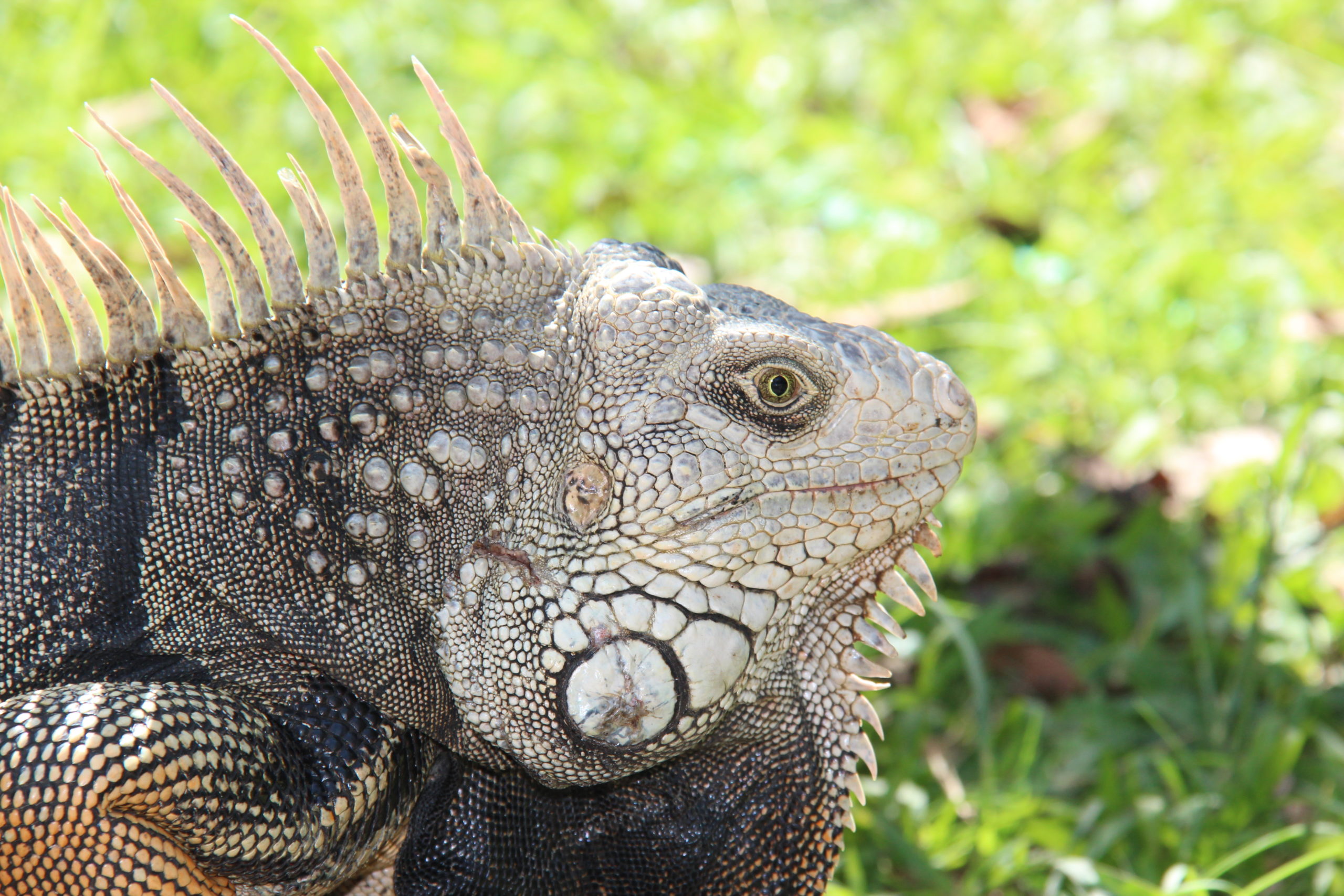
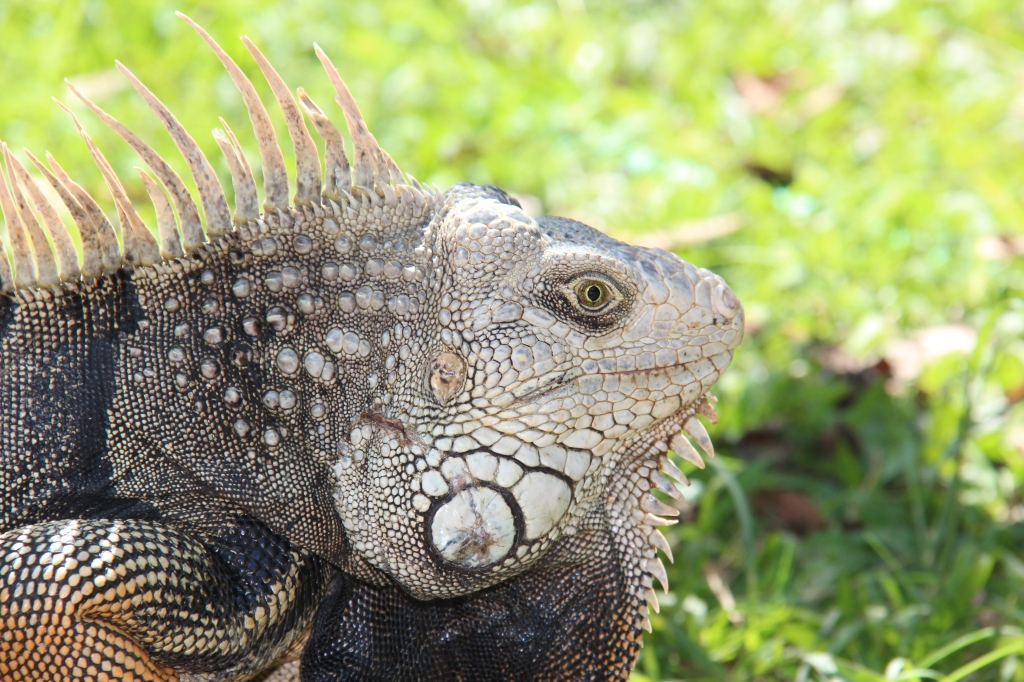
Crocodile in the wild, TarcolesDittoDittoWe were getting tired of these place name icons – but this one was a little differentView over Jaco beachYours truly, Jaco beachBeach just outside Manuel Antonio park – nicest one we saw in Costa RicaIguana
Our week closed out well down the Costa Rican coast and an easy drive away from Panama. Assuming the shipping goes as planned it should give us almost 2 weeks in Panama – a week of that ( almost anyway ) will be tied up with vehicle preparation, vehicle inspections and container loading still leaving us enough time to explore what Panama has to offer. We’re looking forward to it !
On a completely different note, a few months ago I wrote an article for Truck Camper Adventures reviewing the Outfitter Caribou Lite that we have. A lot of interest was raised in the drawer system we had custom built to create additional storage in the rear seat area of the truck. I was asked to write a separate article on the drawers and it was just published. For the more technically inclined, read all about how to build a rear seat drawer system here ( much credit to Chris and Andy of course ! ):
Feedback from folks on the road ( along with our personal preference ) was that we should travel El Salvador mostly via the coastal route – this would allow us to visit the renowned beach community of El Tunco while at the same time skirting around San Salvador – it’s capital city and not one of the safer places in Central America.
Long line up ( many trucks especially ) during road work in Guatemala
Leaving Rio Dulce, highway CA13 took us across the eastern end of Guatemala before turning south on the CA9. Reasonable roads although very heavily travelled by large trucks. At Rio Hondo the initial plan to cut into Honduras briefly to see the ruins of Copan was shelved – did we really want to see yet ANOTHER Mayan ruin ? It was a unanimous no – so we kept going. It turned into other of those long driving days ( in time at least, if not always distance in Central America) and got us to the small town of Jalpatagua where we closed out our 4 days in Guatemala at a beautiful campground run by a delightful Guatemalan family. All spoke English, served up great food and treated us like part of their family- we even joined in some table tennis ! Always nice to leave a country on a high note and with Guatemala we certainly were. We loved it in 2006 and equally as much in 2019. Fantastic people.
Crossing from Guatemala to El Salvador could not have been easier. Exactly as detailed in our trusty iOverlander app and despite the need for a temporary vehicle import permit, a rare border crossing that was totally free of charge- great first impression in El Salvador ! In addition to avoiding the capital, San Salvador, the route chosen gave us the chance to drive El Salvador’s famous Ruta de Flores ( Route of Flowers ), a bonus we had not expected. Though slightly early in the season for the full blossoming there were plenty of brightly coloured flowers to be seen along with some amazing mountain views, coffee plantations and quaint El Salvadoran towns and villages.
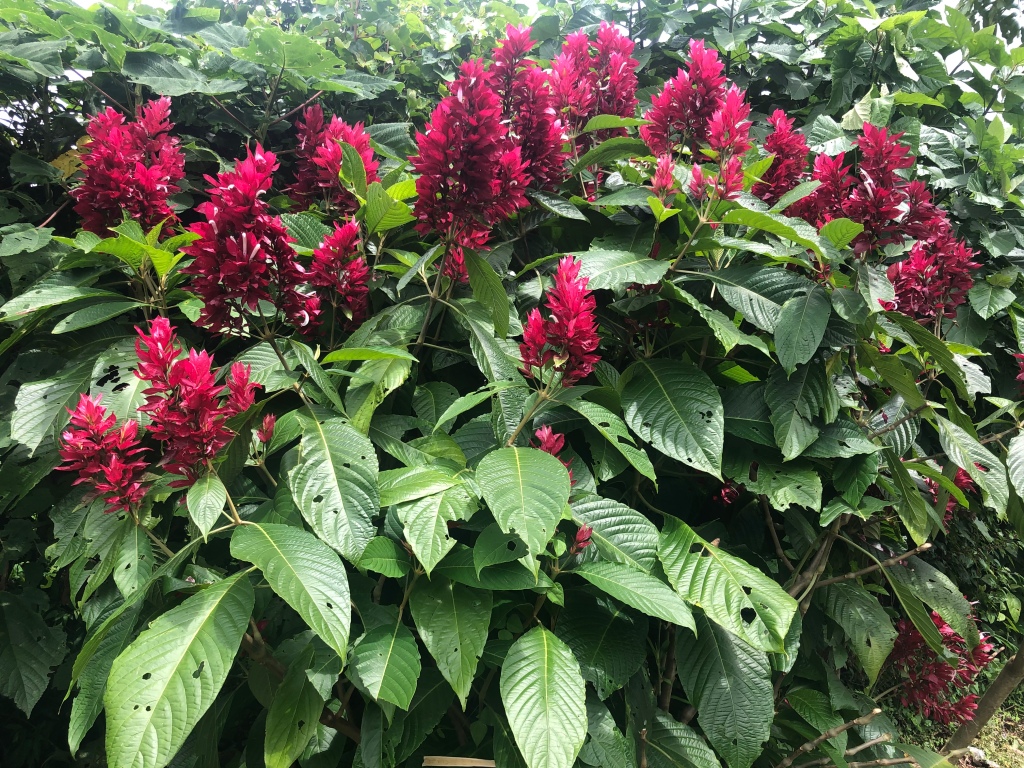
Part of the Ruta de FloresFlowers by the road, Ruta de FloresDittoEl Salvadoran highland townTypical mountain scenery, western El Salvador
Our next few nights were spent beach side in El Tunco- the El Salvadoran hospitality and friendliness ( as well as great food ) were there in abundance – actually, kind of a tough place to leave. We would also certainly miss the campsite’s talking parrot – “Lola”. Lola could whistle, and regurgitate “Hola”, “Amigo” and “Amiga” endlessly ( apparently even able to distinguish gender ! ) – she took a particular liking to Lois.
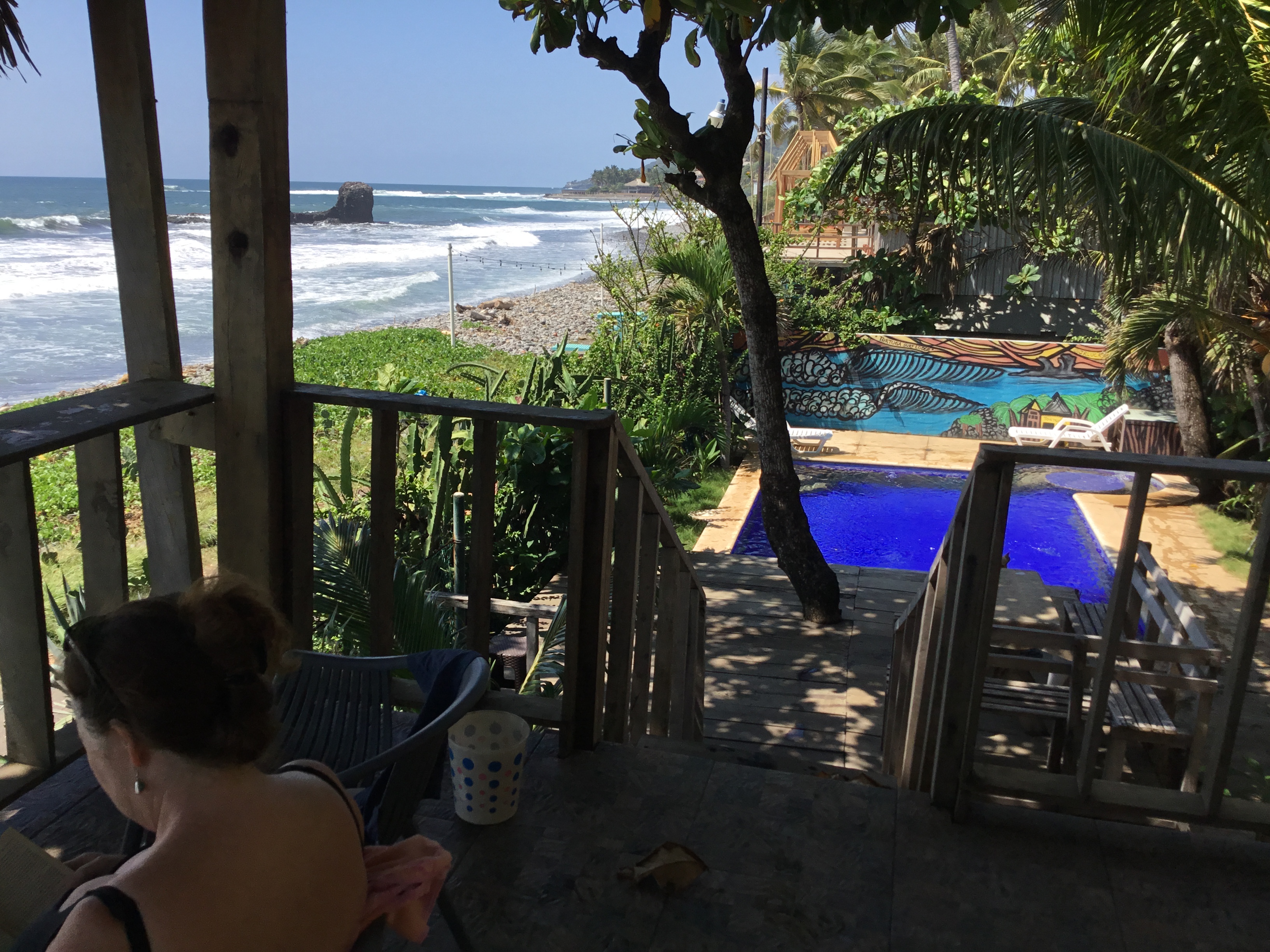
Lunched here, near El Tunco, El SalvadorStreet scene, El TuncoCamped at Tortuga Surf Lodge, El TuncoThe pool, Tortuga Surf Lodge. “Lola” – resident at Tortuga Surf LodgeA delicious meal at Dale Dale Restaurant , El Tunco – shrimp pesto pasta !El Tunco is famous for sunsets, and…………surfing of courseAccess lane to Tortuga Surf Lodge – and why we drive a small camper !
One of the great things about Central America is that the countries are all very small and the driving distances short – El Tunco all the way to the eastern side of Honduras was an easy 5 hour scenic drive – notable mostly for quite a number of volcanoes along the way. Crossing to Honduras was another easy border, and all went smoothly aside from the phalanx of local “helpers” that descend on every gringo who approaches the “frontera”. Talk about persistent- these guys stick to you like gum on a shoe until you relent and use one or two of their services, always for a small fee of course. At this particular border, one guy was very helpful so I slid him a few dollars. As we got back to our car there was another “helper” standing by it….this one demanding a dollar for guarding our truck while we were inside doing paperwork !
Arriving later in the day in Honduras the need was simply to find a hotel, rest and move on the next day – we had no plans for in depth exploring here. The roads were of excellent quality so travel was easy. In fact, we’d say they had the best roads in Central America so far, and were far better than expected. That was all good, however it was the next border that we were concerned about – Nicaragua.
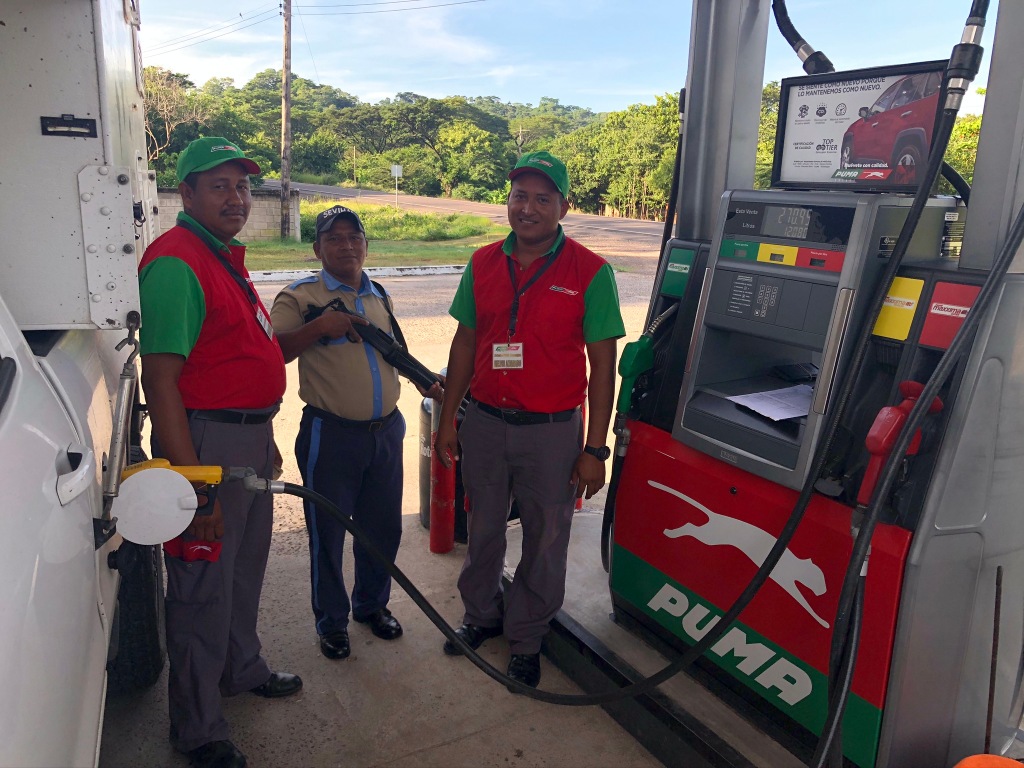
Last fill up in Honduras – no one “pumps and runs” here ! Note the shotgun-carrying guard.Surprisingly, some “long endless roads” even in Central America – one here in HondurasTruck lineup at El Salvador / Honduran border ( luckily we could drive around it )
What with the whole drone thing ( they never even asked incidentally but we are glad we sent it home ) and conflicting reports from other overlanders about the ease of the crossing we approached with some trepidation. Alas it was all for nought – save for some more aggressive border “helpers” it could not have gone more smoothly. Everyone charming, polite and professional.
So there we were, just over half way through the week and in and out of three countries ! While that sounds like a lot, one has to remember how small these countries are. You can, without much difficulty, cross from eastern El Salvador, through Honduras ( the part above the Gulf of Fonseca ) and almost across the length of Nicaragua in a long day’s drive. We haven’t suddenly “changed gears” and are not now travelling with that urgency, but our decision to be ready to ship to Colombia from Panama by the latter part of November meant we simply had to look at the map, determine our priorities for the coming weeks and stick to a fairly rigid schedule . As I write we are speaking to a potential shipping partner whose desired shipping schedule matches ours – roughly speaking, two vehicles in a 40ft High Cube container will halve our RoRo shipping costs. To boot, there is much greater security of the vehicle and its contents in a locked container versus the RoRo option. We are certainly hoping this works out to both our benefits – we should know within a week.
Our limited time here in Nicaragua forced some quick decisions upon us with regard to itinerary. As for El Salvador and Honduras we deliberately chose to avoid the capital ( Managua ) and our direct route through made that easy. Other than driving, our time here would be limited to the volcanic island of Ometepe ( in Lake Nicaragua ) and San Juan Del Sur ( another beach community ) in the south near the Costa Rican border.
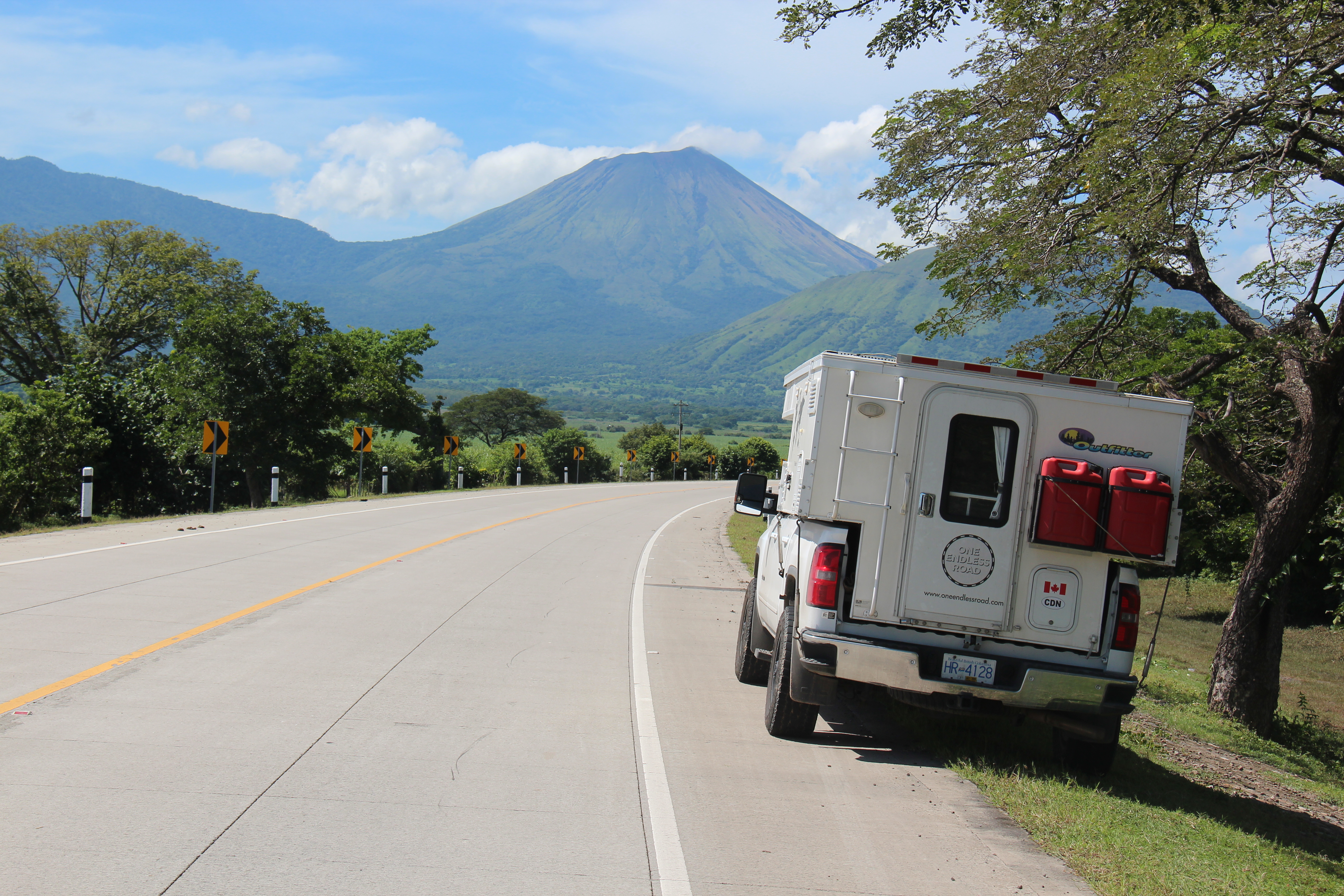
Volcano, western NicaraguaSometimes the roads in Nicaragua are like this…….….or like this…..and even like this !
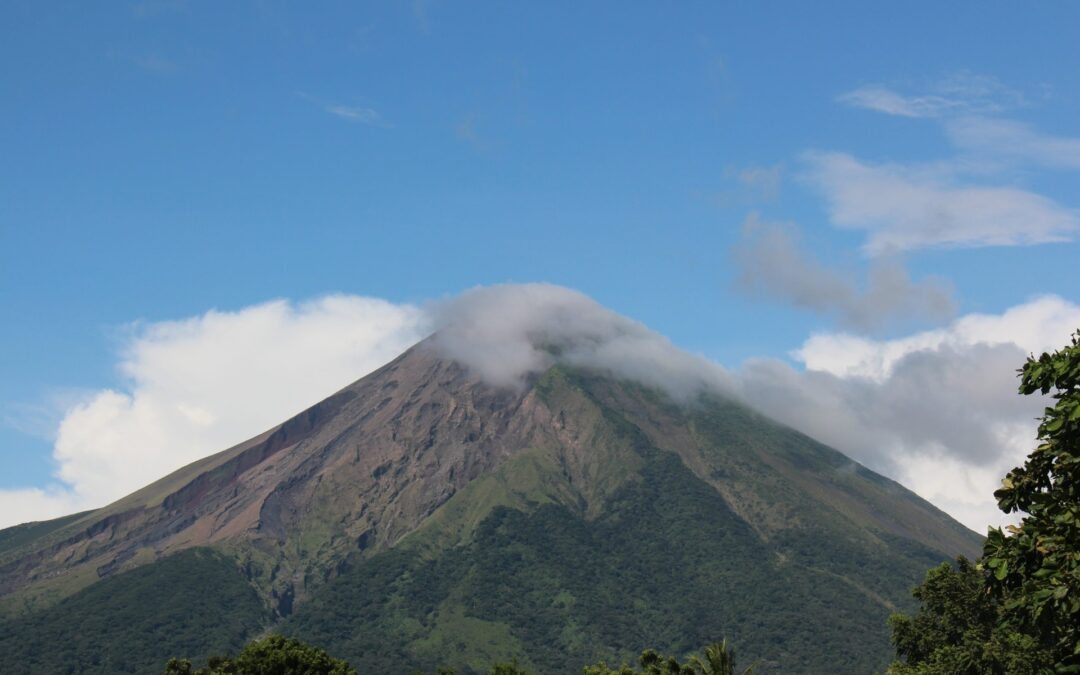
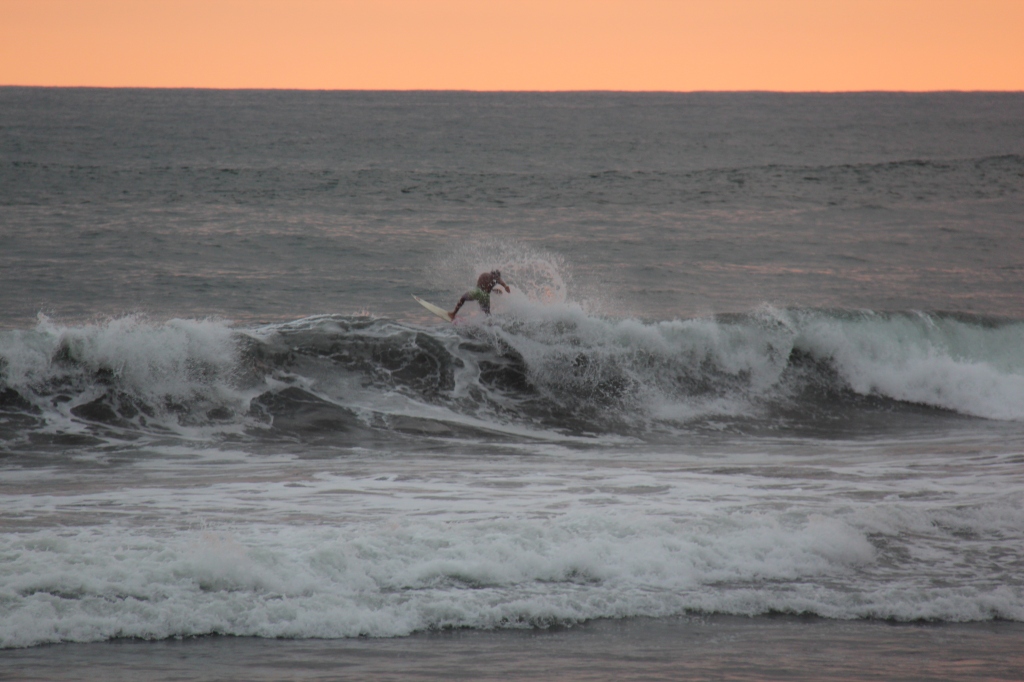
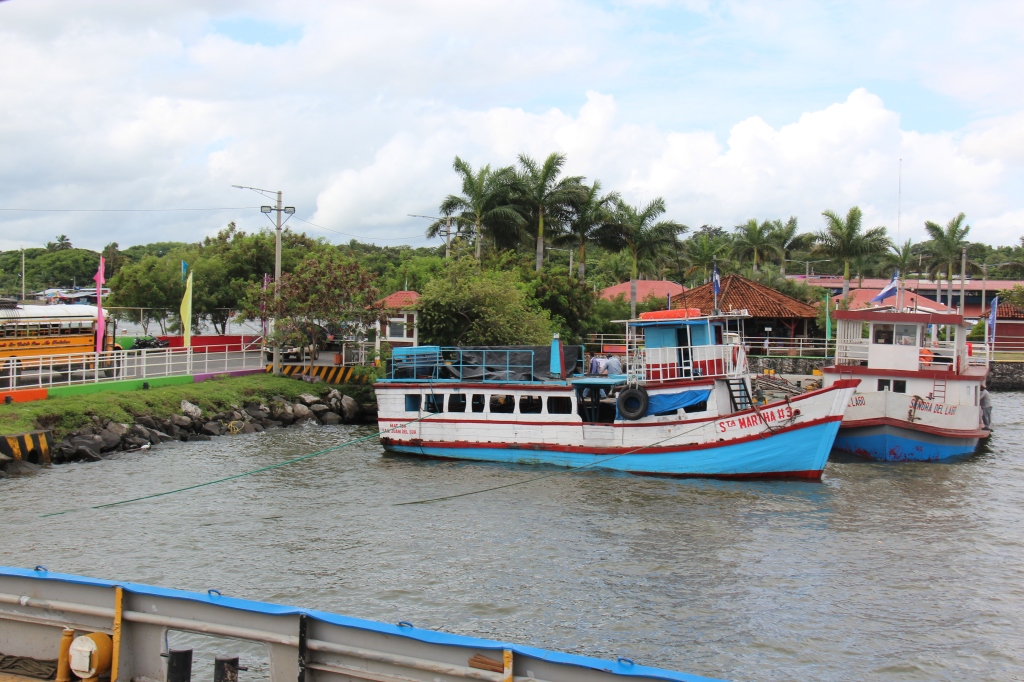
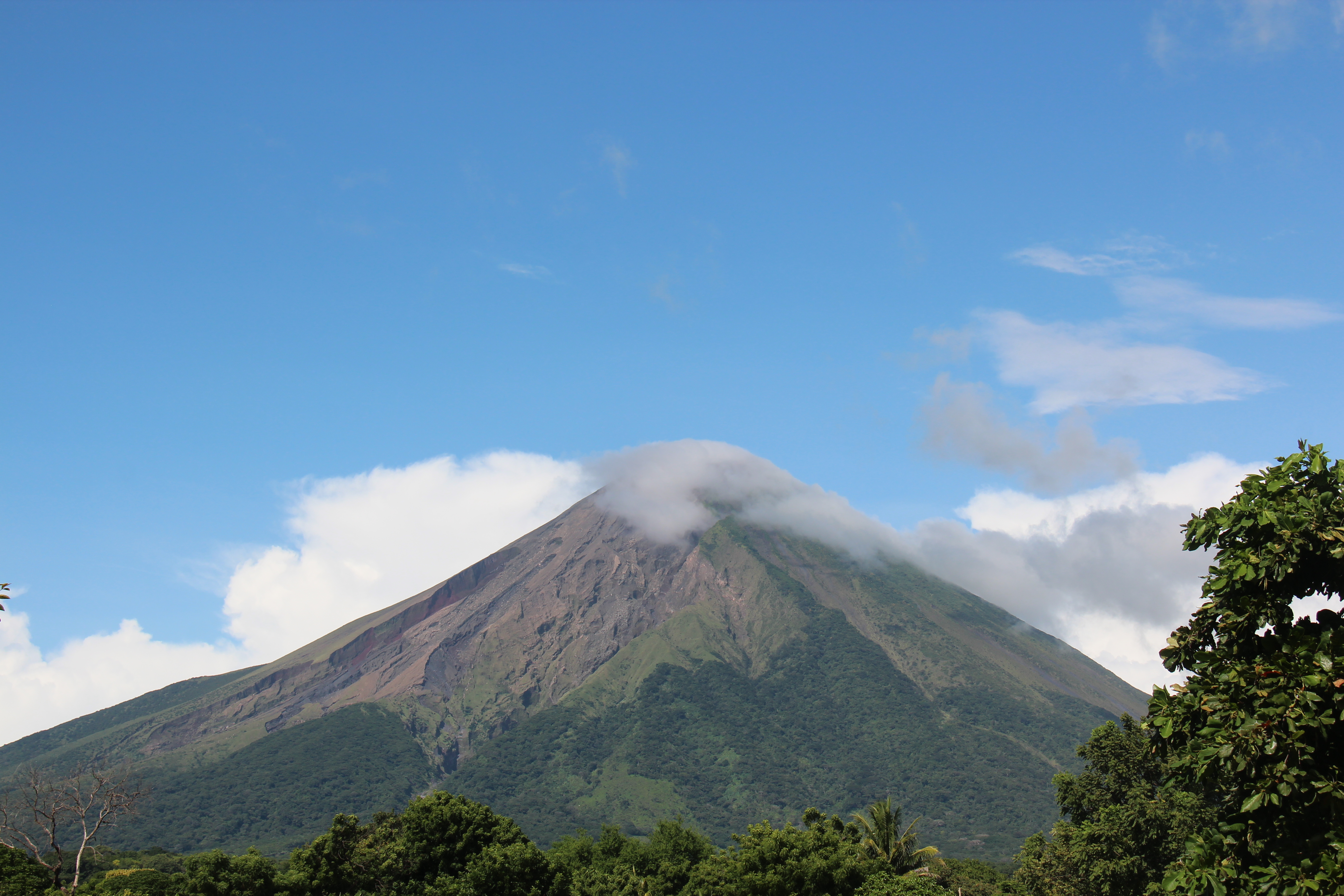
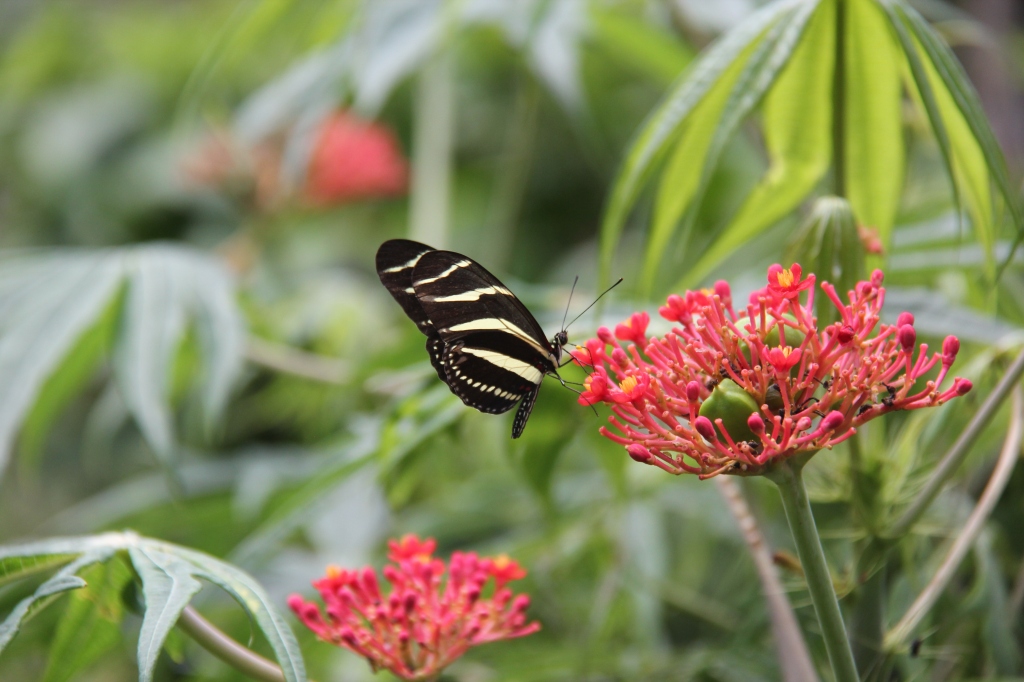
Omotepe did not disappoint – a beautiful island setting approached by ferry from San Jorge, its lush green foliage and perennially cloud – shrouded twin volcano backdrop provide almost an eerie aura, as if some giant beast would soon appear. No giant beasts, but quaint villages, an outstanding butterfly sanctuary, waterfalls and some idyllic view points. Great to take a break from the truck and get on a motorbike for a day !
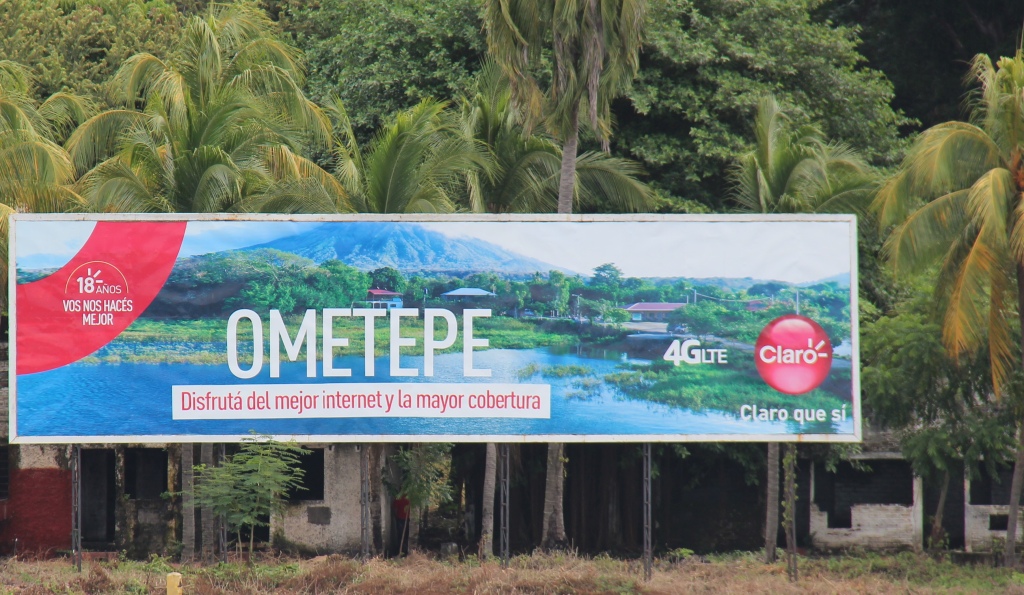
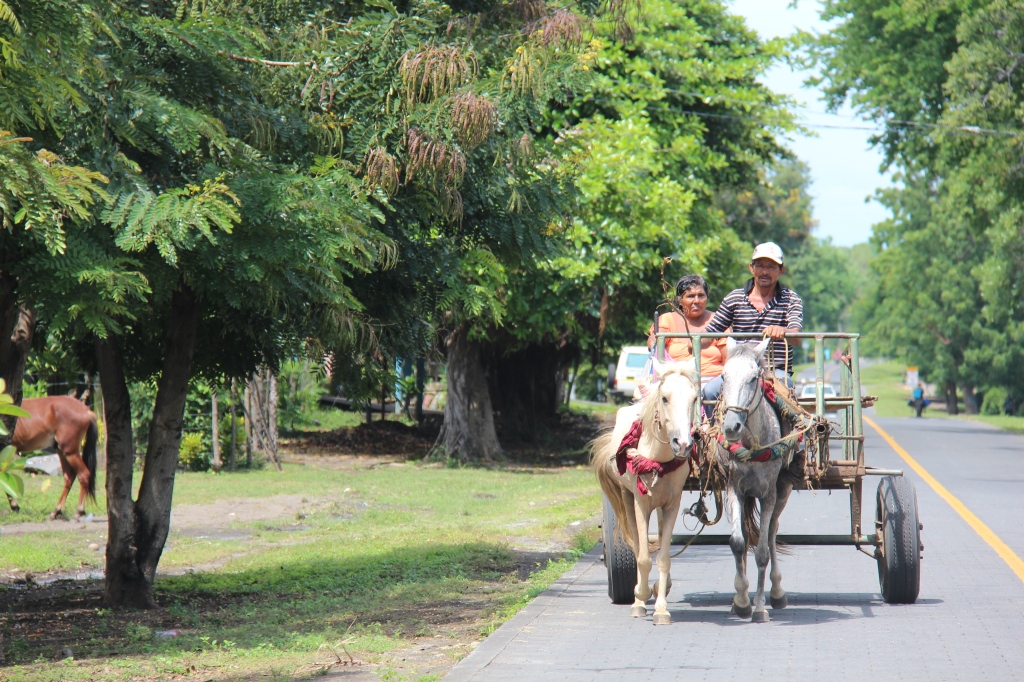
Welcome sign, Ometepe Island, Lake NicaraguaFerry to Ometepe – yes, reallyCloud- shrouded Volcan Concepcion, OmetepeLater in the day, almost cloud freeRural family, OmetepeOur “wheels”, OmetepeButterfly sanctuary, OmetepeDittoPlants at butterfly sanctuary, OmetepeDittoDittoResting up after a long ride, volcano viewpoint, Ometepe
As our week closes out we find ourselves en route to San Juan Del Sur – have heard so much about this place and we’re really looking forward to it. Once a thriving tourist town, and somewhat of an “in” spot on the Gringo Trail through Central America, the troubles in Nicaragua in 2018 ( which are all over now ) sadly caused a precipitous decline in visitor arrivals which are only now starting to recover. True, frankly, for much of Central America – nowhere we have travelled in the past 2 weeks has there been anything remotely close to “normal” tourist levels. The “migrant caravan” stories earlier this year have probably caused some of that. While we certainly enjoy the relative solace ( and better deals that ensue ), we hope for the sake of the many local people this has impacted that folks do start returning – there is so much to enjoy here and we only wish we had time to see more of it.
The PanAm completed in April, 2022 and with the truck camper sold, we shipped our new Sprinter van to Australia in late 2022. We travelled there through all of 2023 and into 2024 before shipping it up to North East Asia where we travelled for 4 months between Korea and Japan, before shipping it back to North America. It’s our plan to continue exploring the world in 2025.