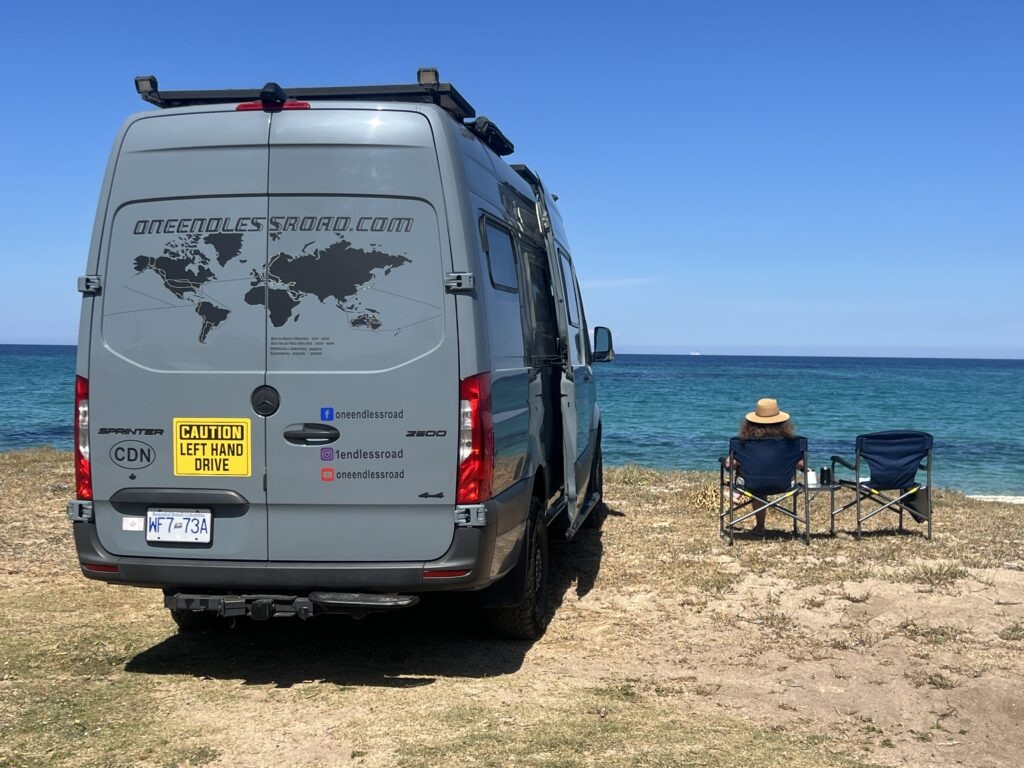
Just one city remained on our itinerary before flying home to Canada, but it was one of Spain’s most visited – the Catalonian capital of Barcelona. As legendary as it is, Barcelona itself wasn’t a destination that was for us in any way pre-ordained, but rather the confluence of three very separate but fortuitous travel situations:
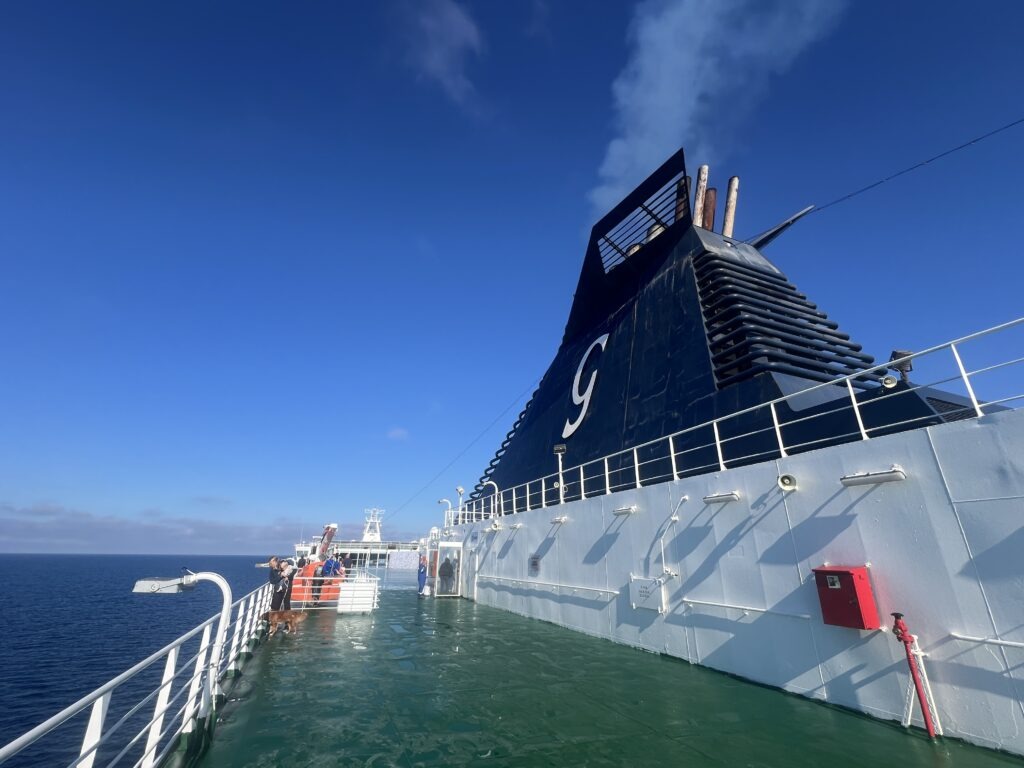
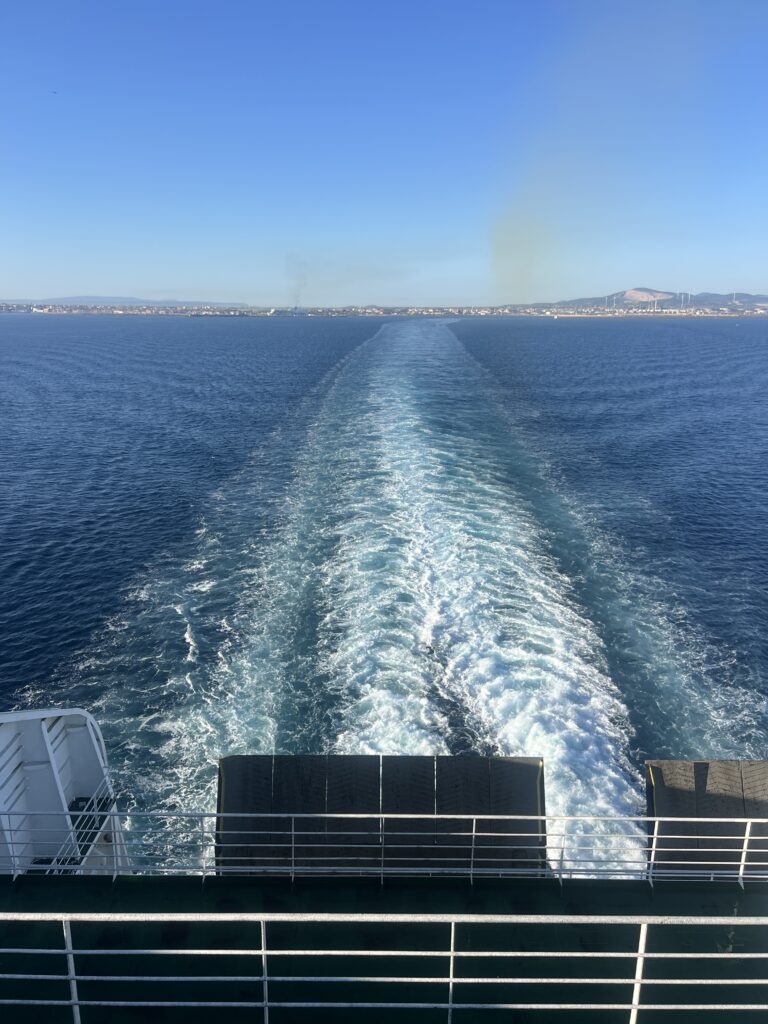
A perfect sailing day to Barcelona.
1. While looking for suitable flights out of Europe for the summer, we noticed that the Canadian airline, Westjet, had a great sale on flights ex Barcelona, with just one stop to Kelowna ( as direct as we can get ! ) – we grabbed two tickets.
2. Grimaldi shipping had an especially attractive ferry route/fare from Sardinia direct to Barcelona, saving us the considerable time, hassle and expense of an otherwise long drive (1,420km) around the north shore of the Mediterranean from Rome to Barcelona
3. And, finally, through sheer serendipitous happenstance, we were connected ( by a Canadian contact ) with a Barcelona vehicle broker who was able to offer us secure, covered, and affordable storage for the van during the 4 months we would be in Canada.
So it just seemed that everything pointed to Barcelona as the best place to park up and fly out of – the fact that it’s also a very beautiful city to visit was just icing on the cake.
Renowned for its art and architecture ( most famously, Gaudi’s Sagrada Família) Barcelona has become a hugely popular tourism destination in Europe. I mean hugely popular. To put its popularity in perspective and demonstrate just how absolutely completely overwhelmed the place is by tourists, an estimated 30 million people visit Barcelona each year, while Spain’s capital, Madrid ( twice Barcelona’s size ) sees barely 1/3 of that. Readers may recall the ant-tourism protests here back in the summer of 2025, where angry locals protested the impact tourism was having on the city by squirting water pistols at tourists as they marched through the city streets shouting, and waving “Tourists Go Home” placards ! Yes, it REALLY happened. Rents had skyrocketed pricing local families and ( essential ) service workers out of the accommodation market, AirBnB’s were proliferating, traffic had become insane and it all just boiled over. Other European cities saw similar protests but I guess the Barcelona water pistol activities just got most of the attention. Seems to have calmed now ( we were not squirted ! ) but the problems remain. Tourism here certainly has not slowed down.
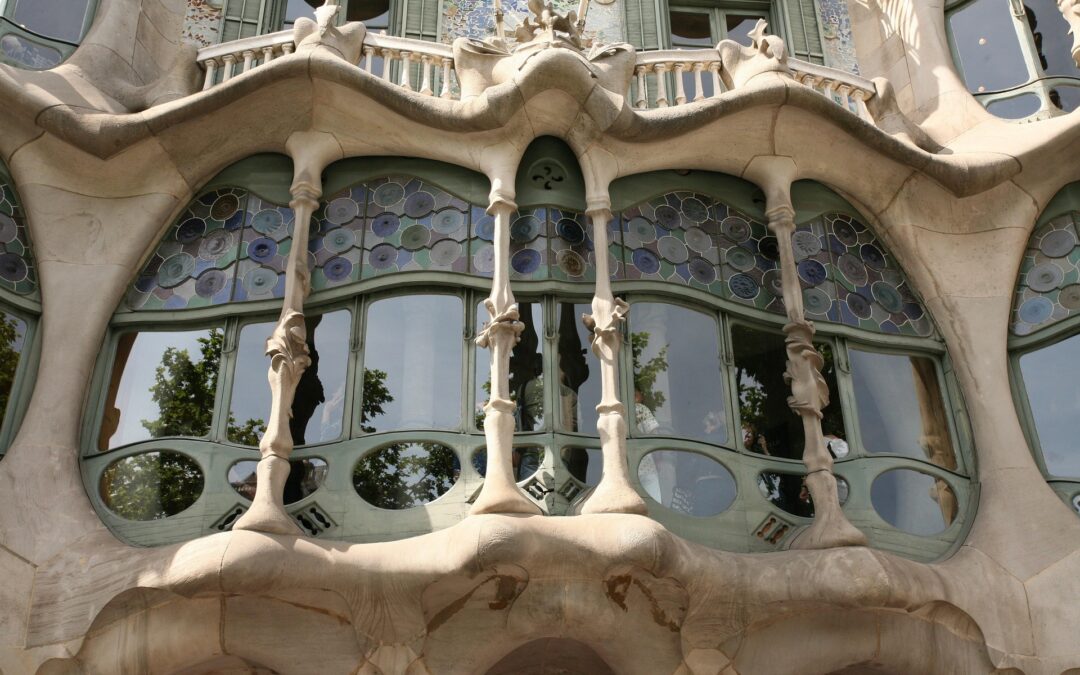
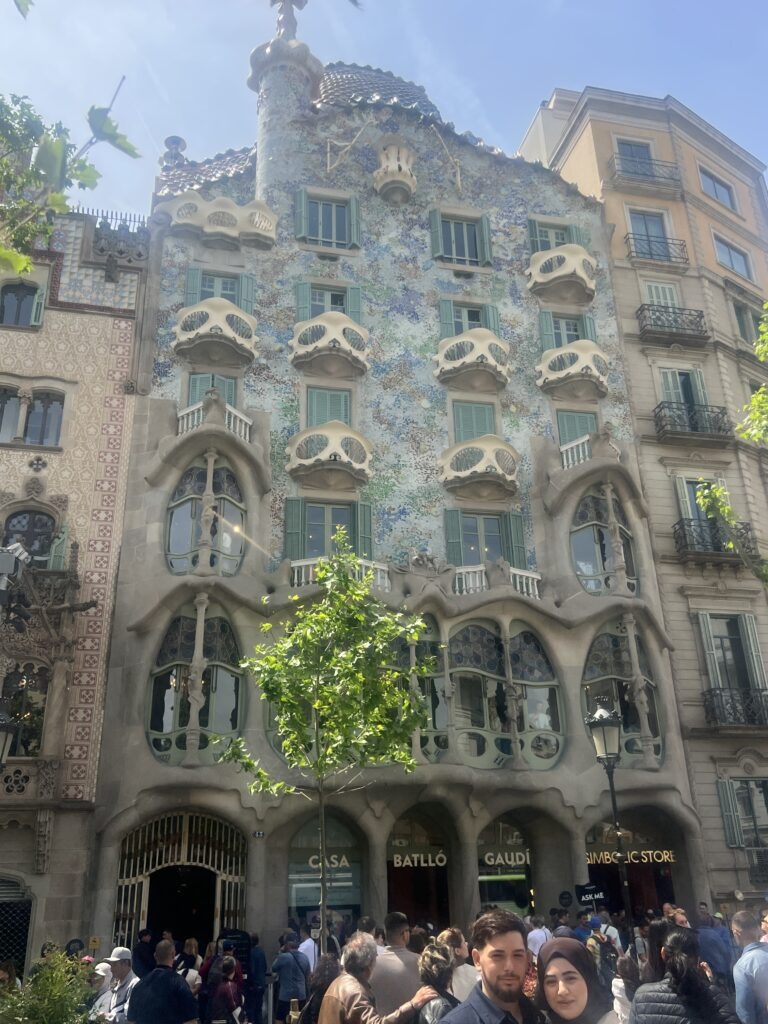
Gaudi’s “Casa Batllo”.
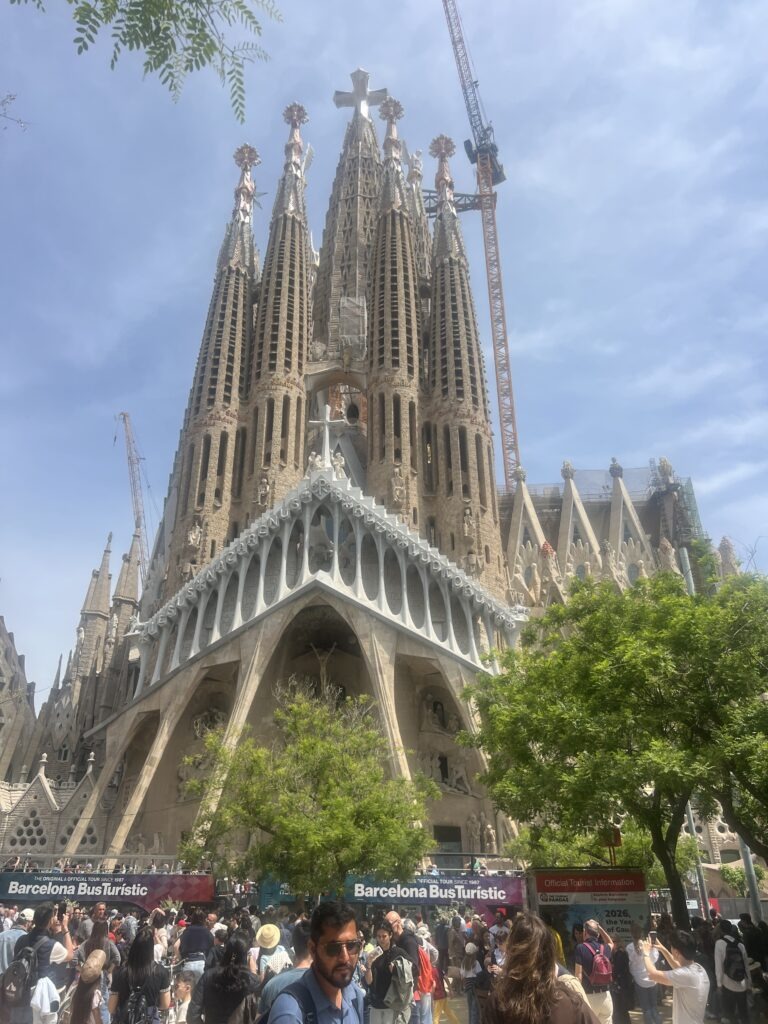
Luckily we’d seen the major attractions ( Sagrada Familia, etc ) on our first visit here in 1985 as locals informed us there is often a two week wait for reservations ( so one needs to book well in advance – never our style anyway ! ). We did walk past it while exploring the city on the only sightseeing day we had here and noticed the crowds were huge, lineups long ( and it’s only May ). Sadly, very visible cranes somewhat diminished the photo ops, but it remains a stunning structure.
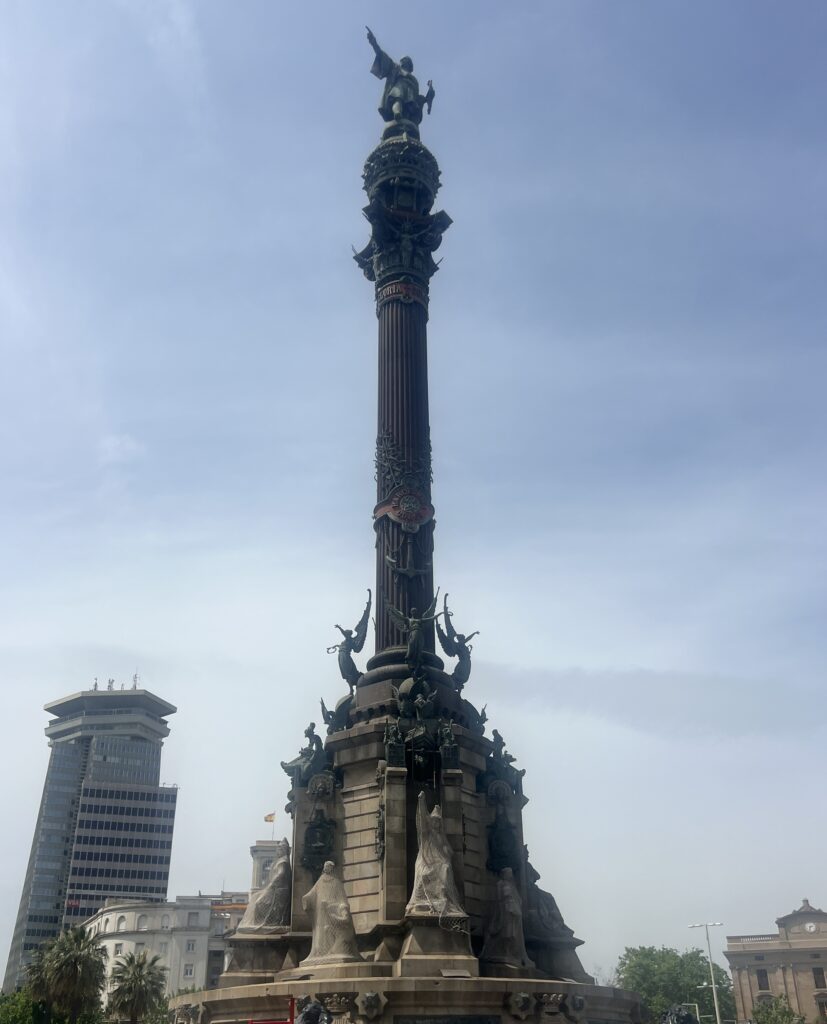
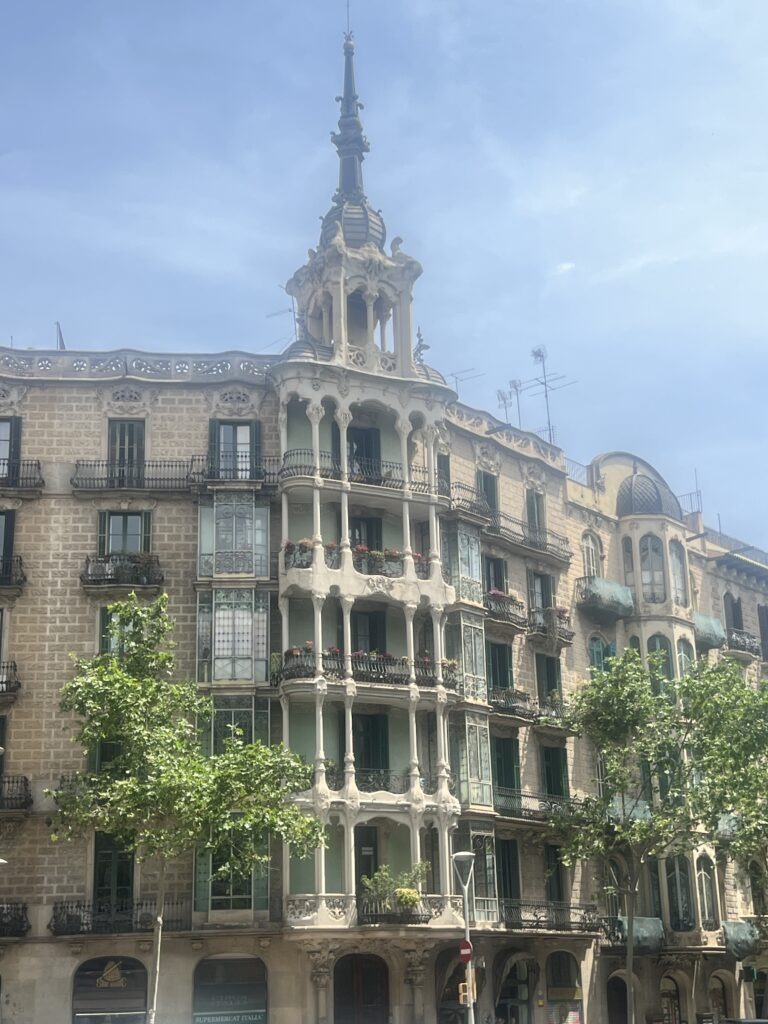
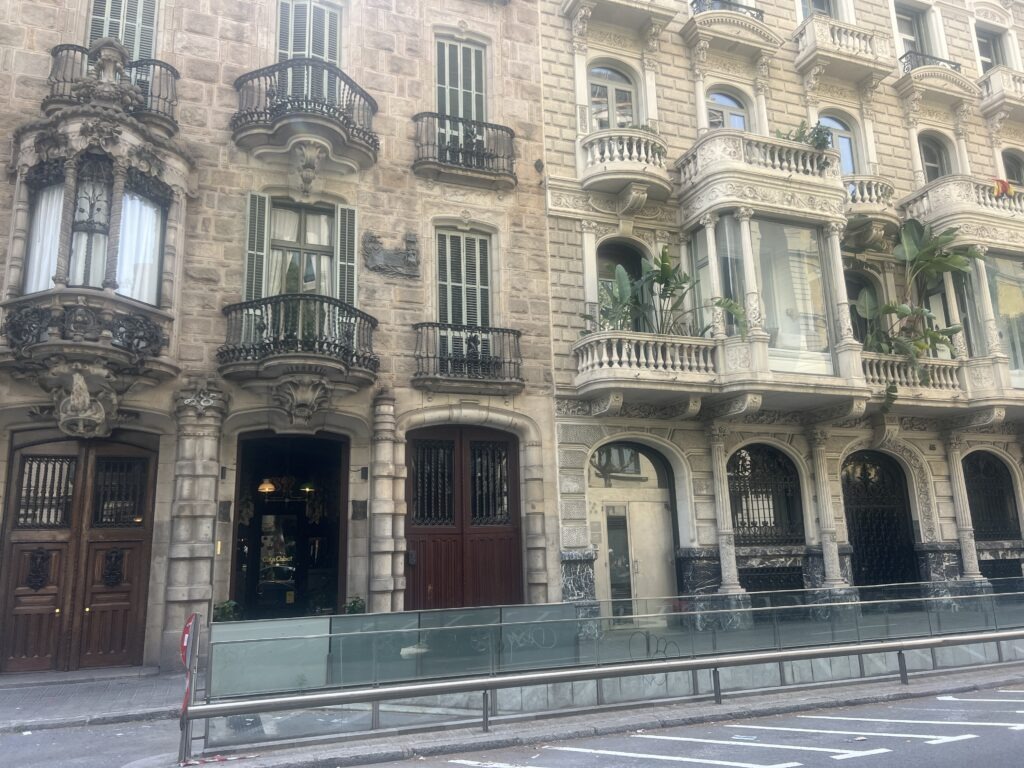
Much of what defines this city is the unique architecture, especially the Gaudi-inspired modernist work ( the Sagrada, Park Guell, Casa Battlo and others ), but also the beautiful apartment buildings on the long leafy boulevards (practically every street here is tree-lined), and it’s famous landmarks. We thought Italian cities had lots of cafe’s and restaurants – Barcelona is right up there ! It’s a city with a great vibe, easy to get around, and very pedestrian friendly. We look forward to returning when we’ll have a bit more time.
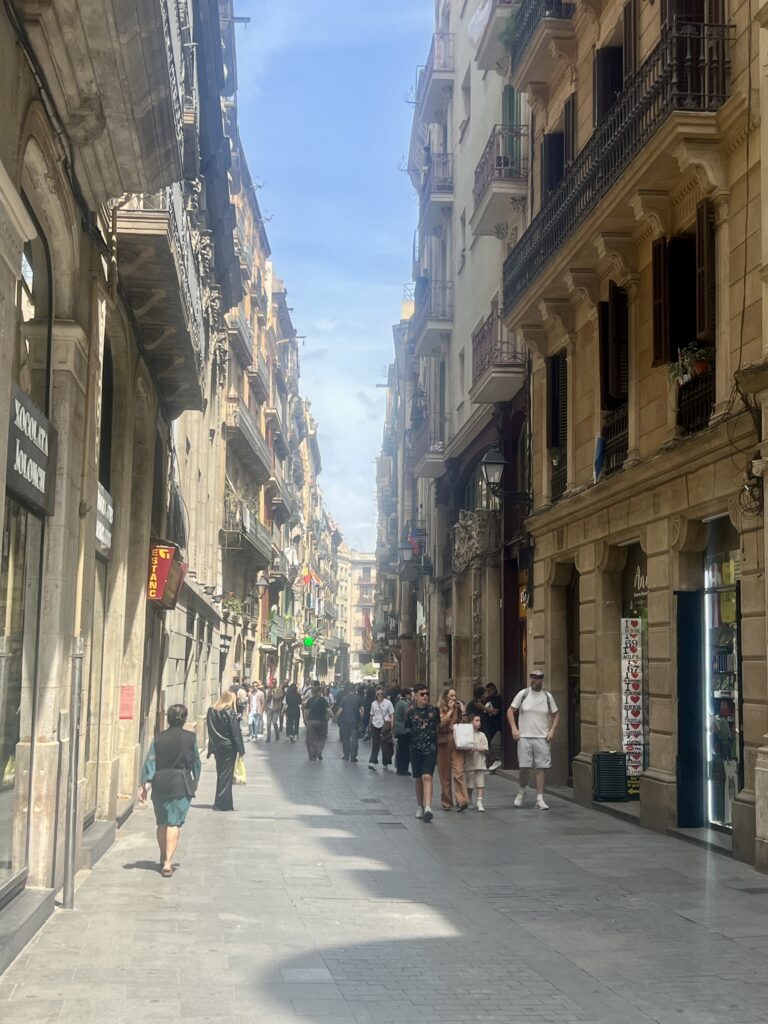
Typical of the beautiful Barcelona apartments all over the city. Another.Side street near plaza Catalunya.
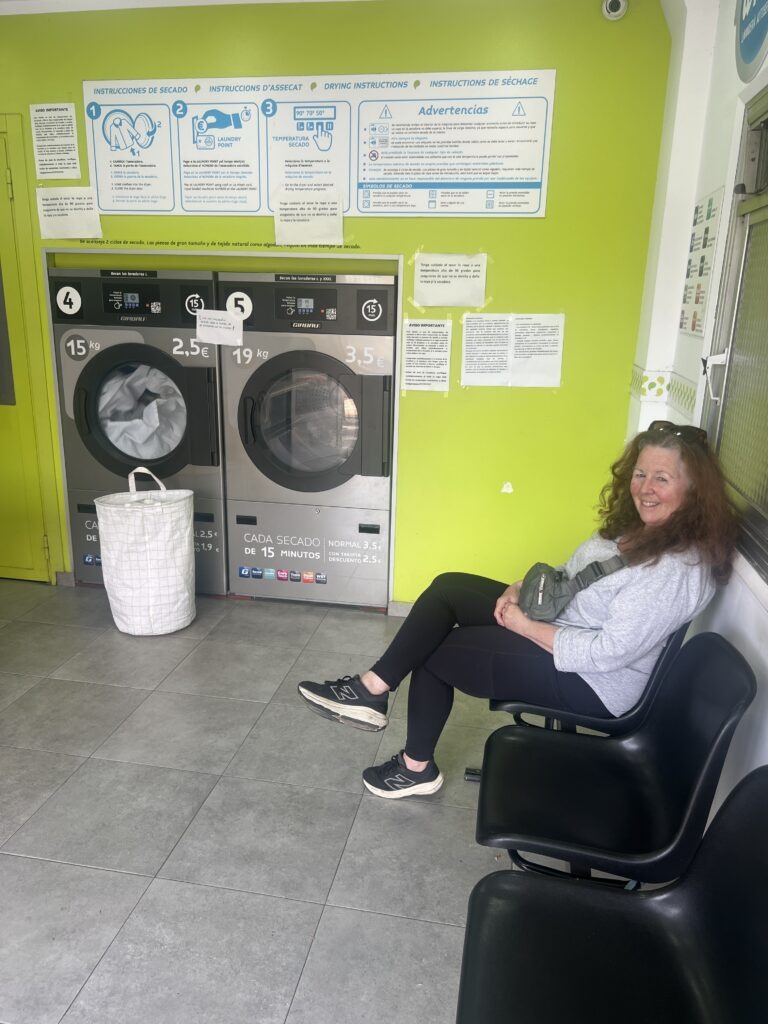
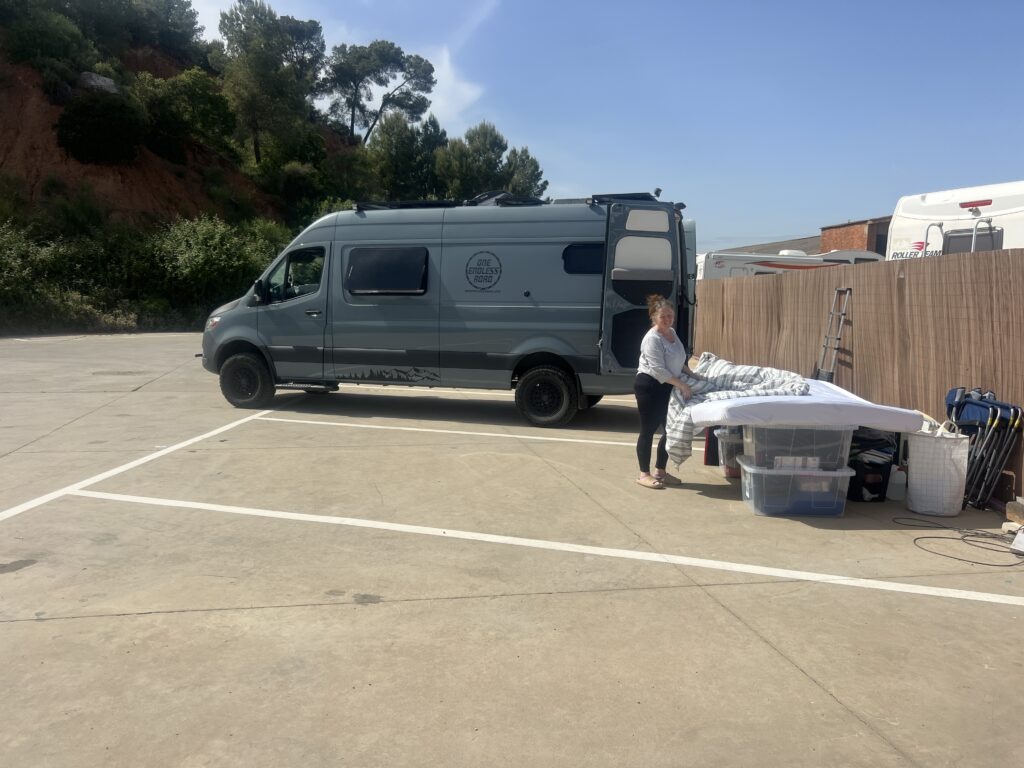
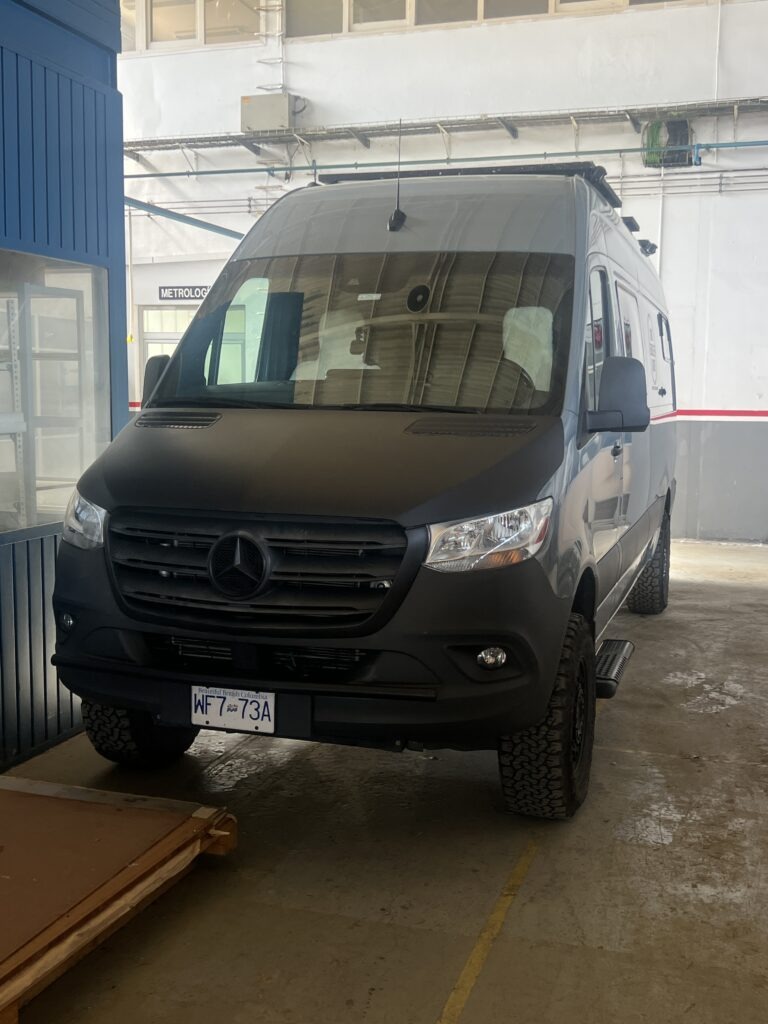
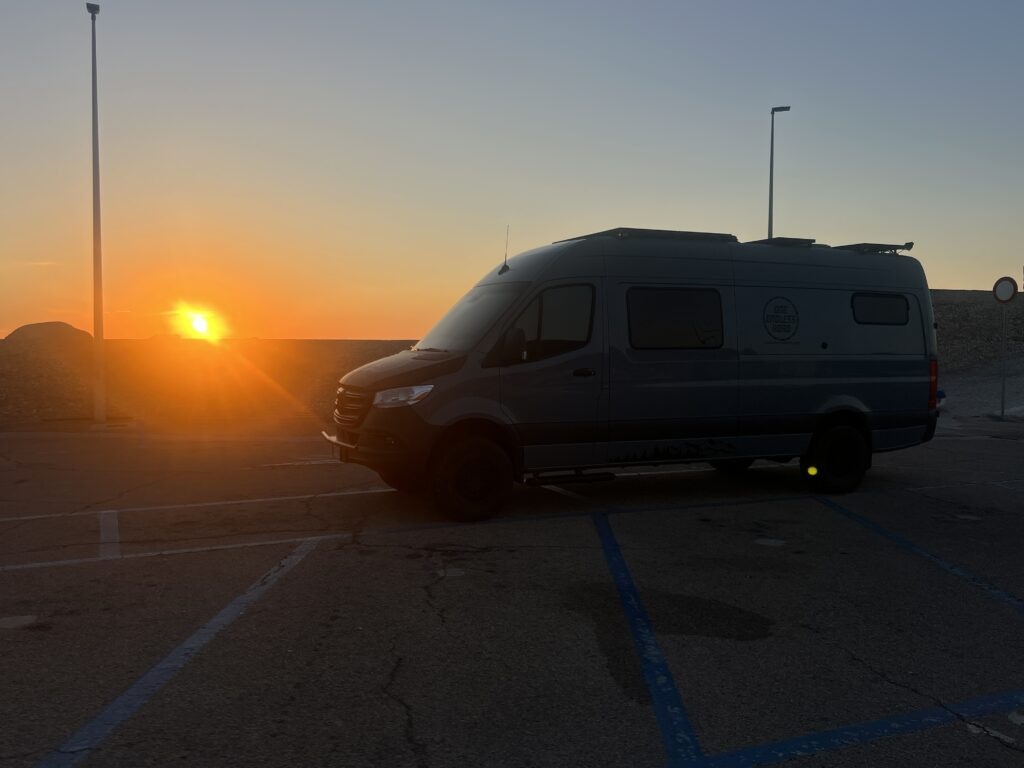
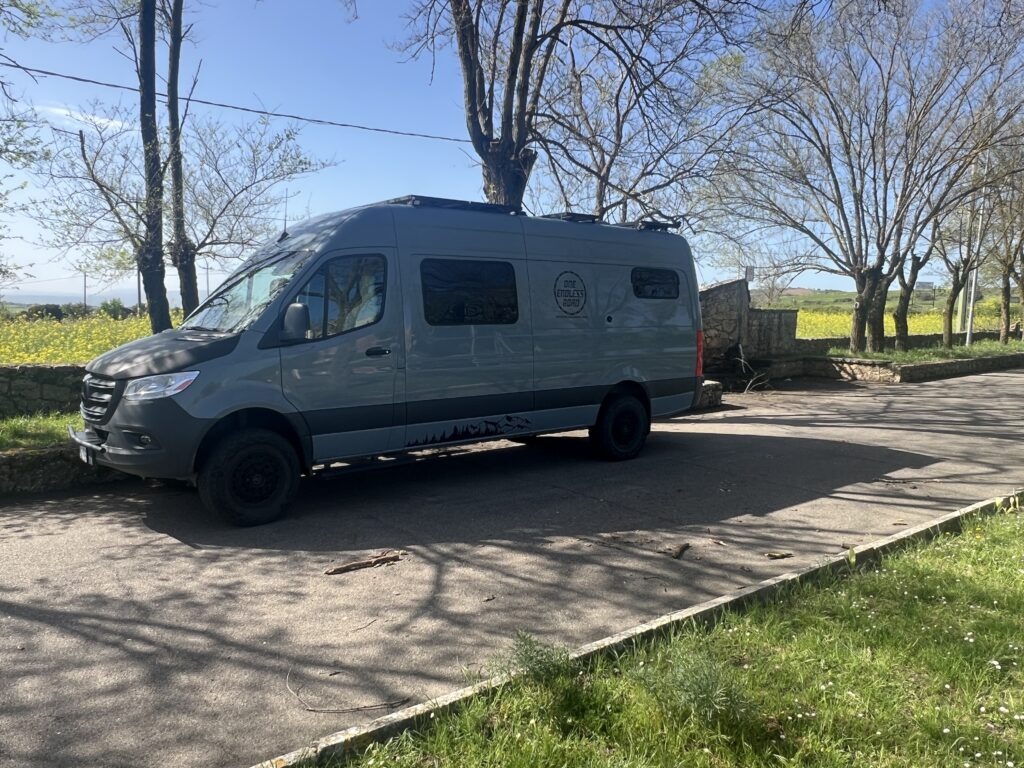
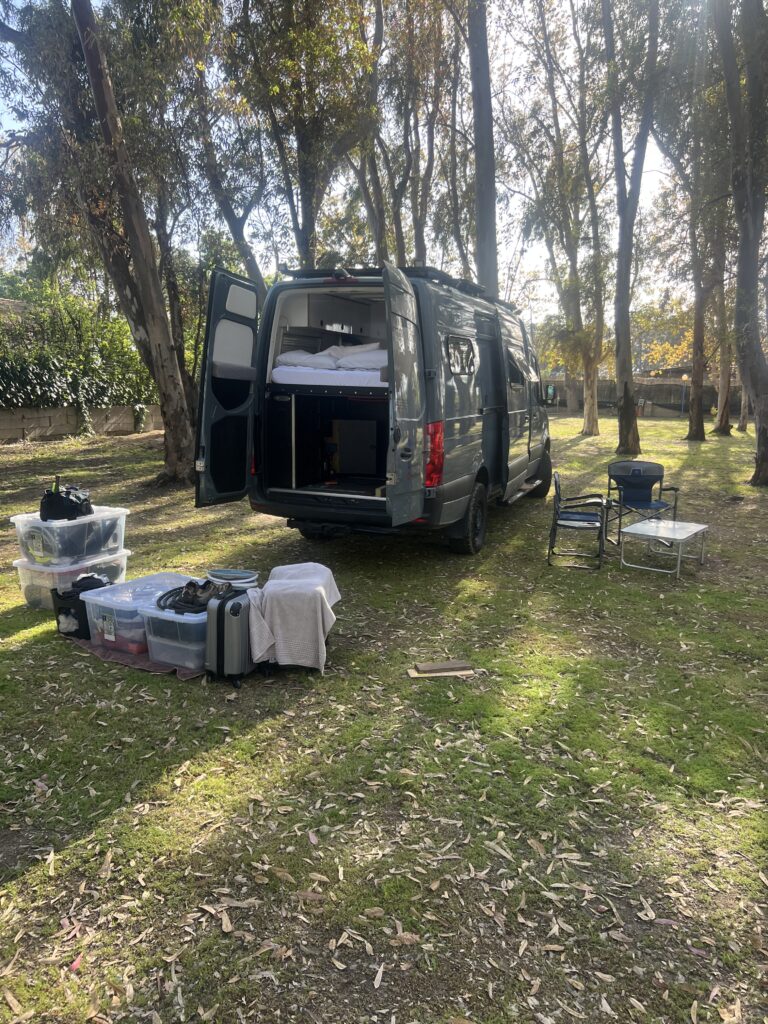
Much of our (already limited) time in the city was spent preparing the van for storage -cleaning it, emptying the service tanks, shutting off power supplies etc – and getting it out to the storage location west of the city. This all went to plan and we feel comfortable that our “home away from home” will be well cared for in our absence. Finding covered storage was a real godsend as summers are typically very hot here.
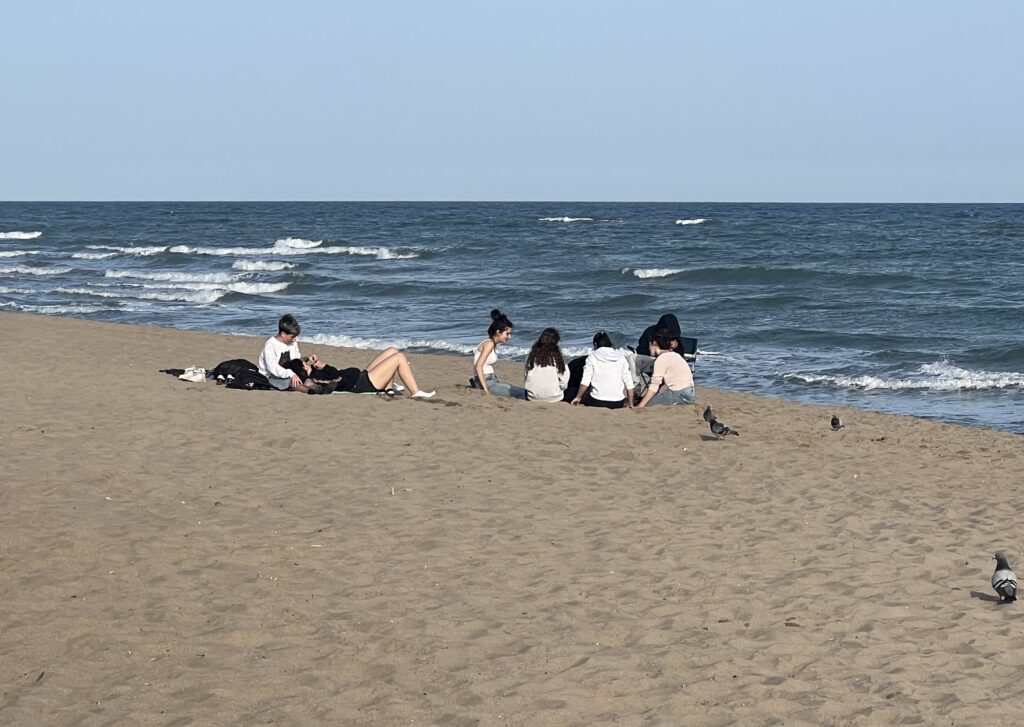
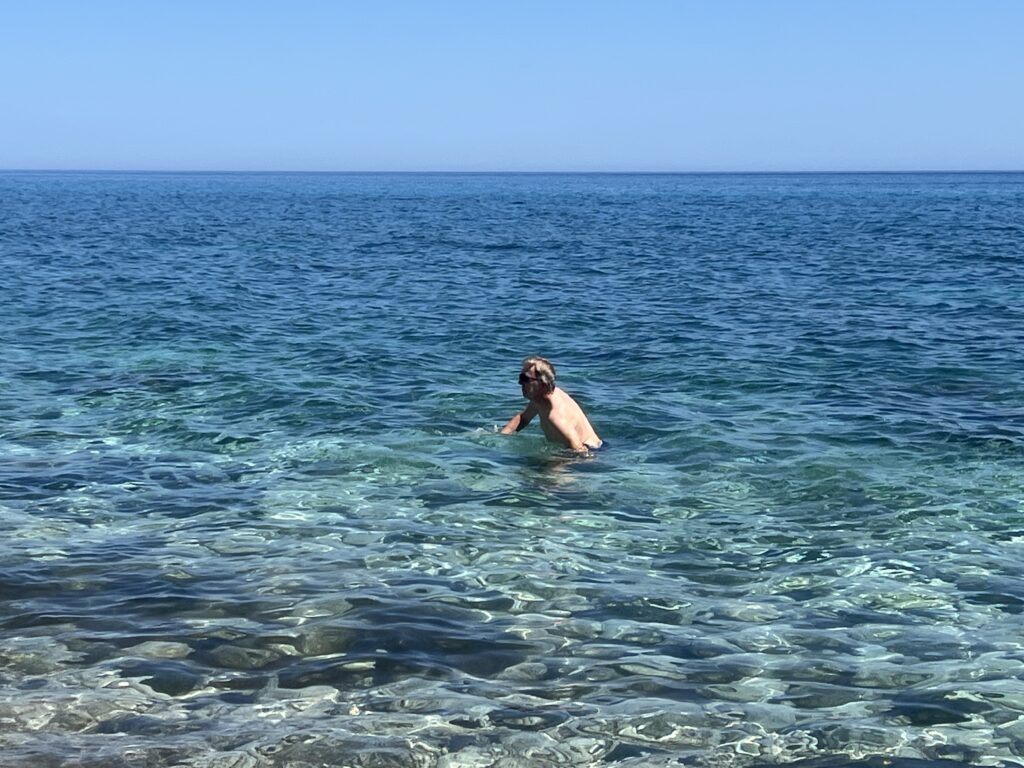
We seem to spend a lot of time in these places !Getting the van ready for 4 months of storage.Our hotel was located near Gava beach, nice for coastal walks but a bit cold for swimming.
Our van secured, some brief sightseeing completed, we made our way to Barcelona airport for the flight home to Kelowna ( via Calgary ) – incredibly convenient to be able to reach Kelowna in just one “hop” from here, certainly not what we expected. Always a tinge of sadness as we leave the rig in storage, tempered though, by the excitement of going home. Where did the last 4 months go ?
Locked and loaded – see you in September !
This being the final blog post for the current chapter of our European/Mediterranean travels, both Lois and I would like to thank all readers who have followed along for the past 4 months. Stay safe, enjoy the summer months, we plan to be back at it again in September and ( for those out traveling ) I hope our paths cross at some point down the road !
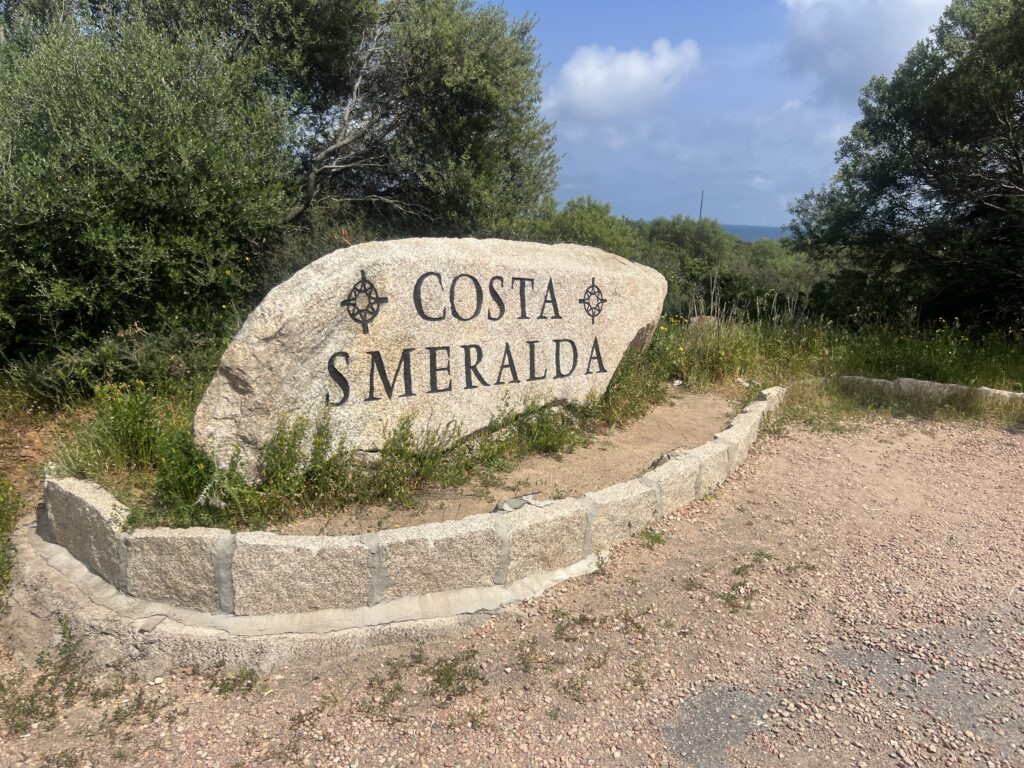
One might think that pristine Cala Goloritze (beach) would be a tough act to follow, but Sardinia’s northeast coast had even more in store. This was, after all, the most famed part of the island and Sardinia’s Costa Smerelda ( Emerald Coast ) lay just ahead of us – some Germans we’d met even suggested we spend most of our time right here.
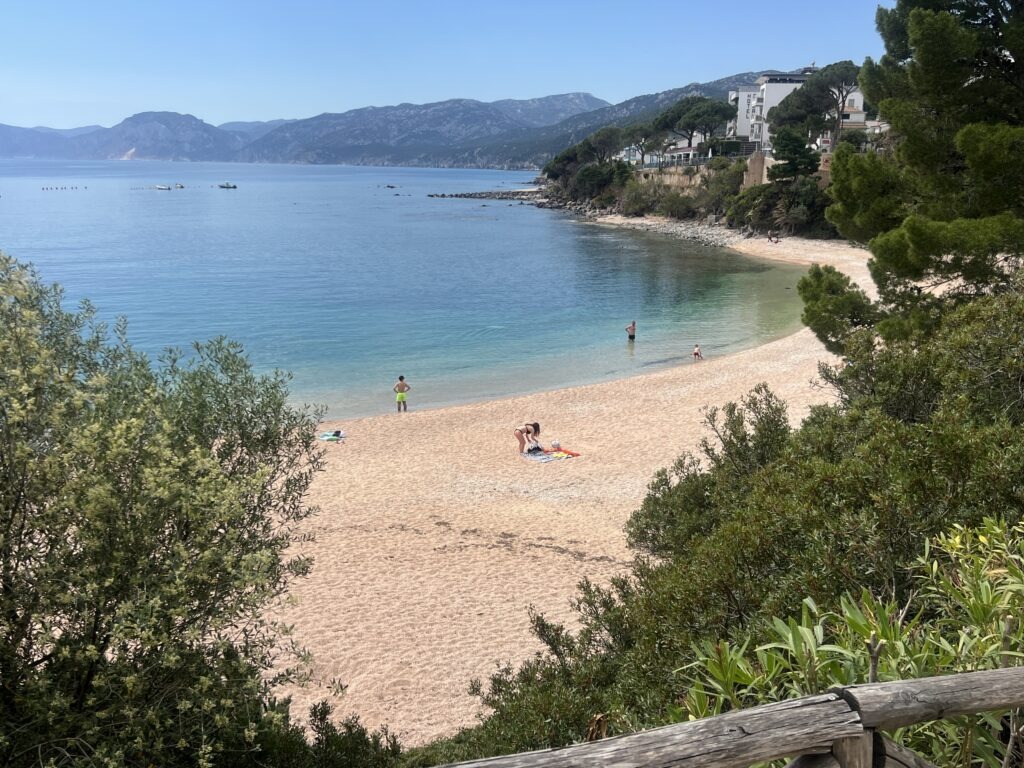
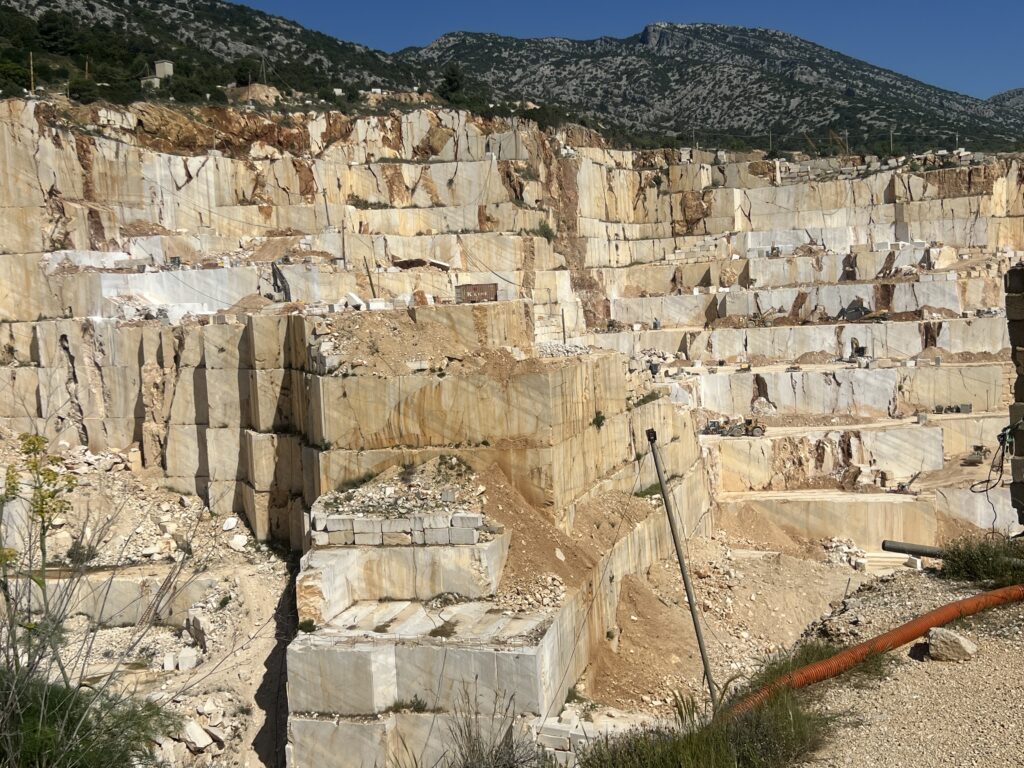
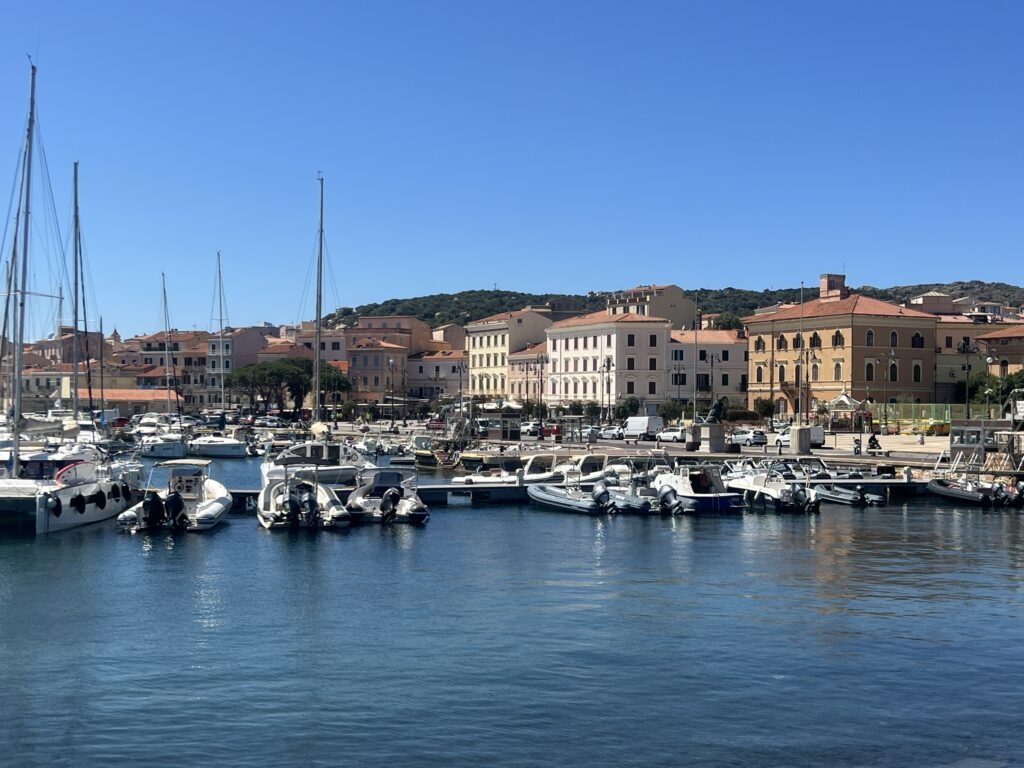
In fact it’s probably one of the most scenic areas of the island with a continuous line of bays, beaches, beautiful little towns and even a high mountain pass ( the views from which were very impressive ). Trekking north we passed by Orosei ( known for its historic old town and nearby marble mine ) and the bigger centre of Olbia. For us the most picturesque town was Palau, jumping off point for the Maddelena islands and just an excellent base for travels in this part of Sardinia. The Maddalena islands were certainly worthy of the ferry trek over there but we were disappointed by the lack of camping options – the only commercial campground had been closed by the local authorities and signs everywhere made it clear that wild camping was not a wise plan. Our Park4Night app listed several recent cases where campers were given heavy fines. Odd, because we were here out of season and had not experienced this before in Italy ( and only rarely in Europe generally ).
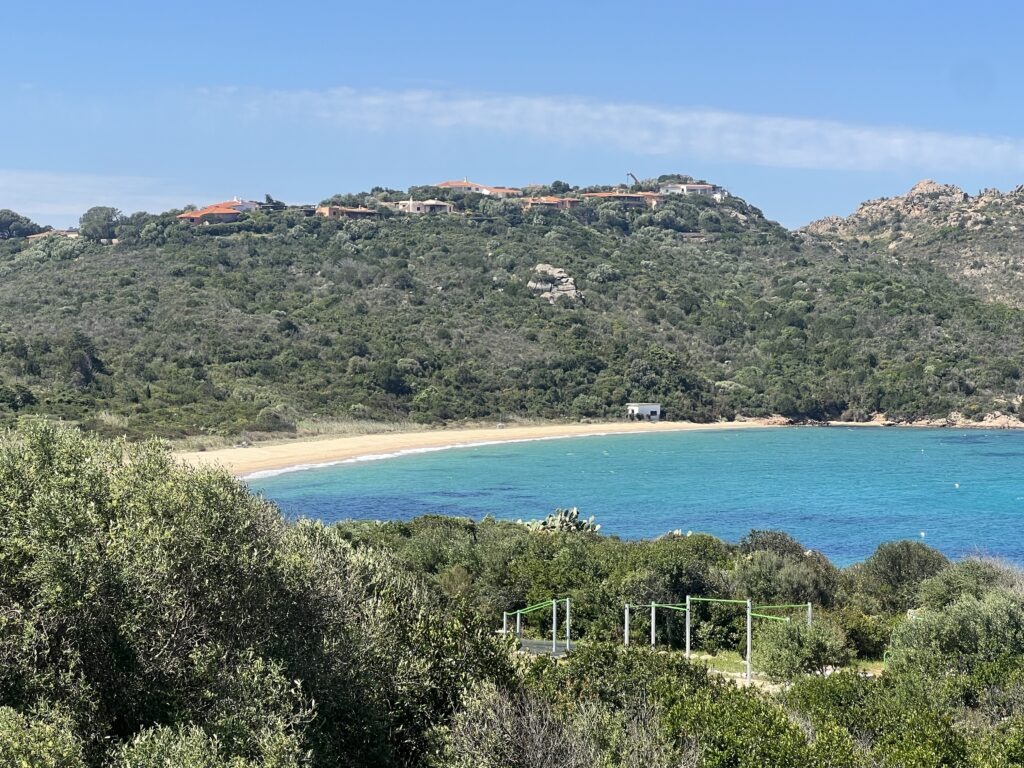
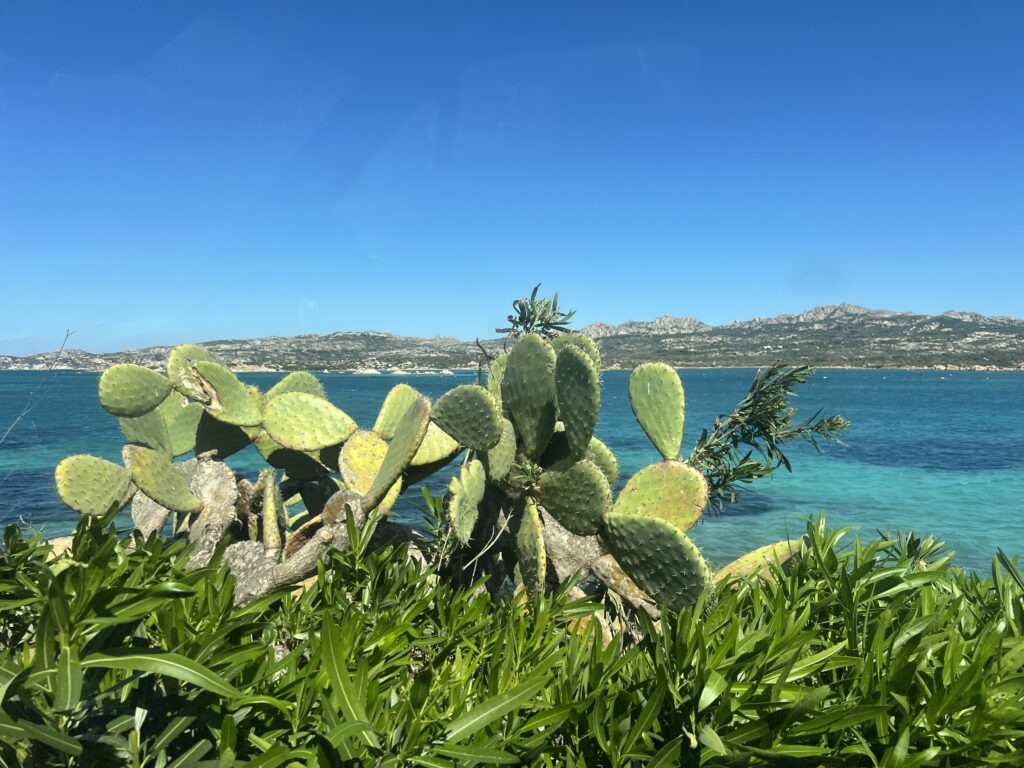
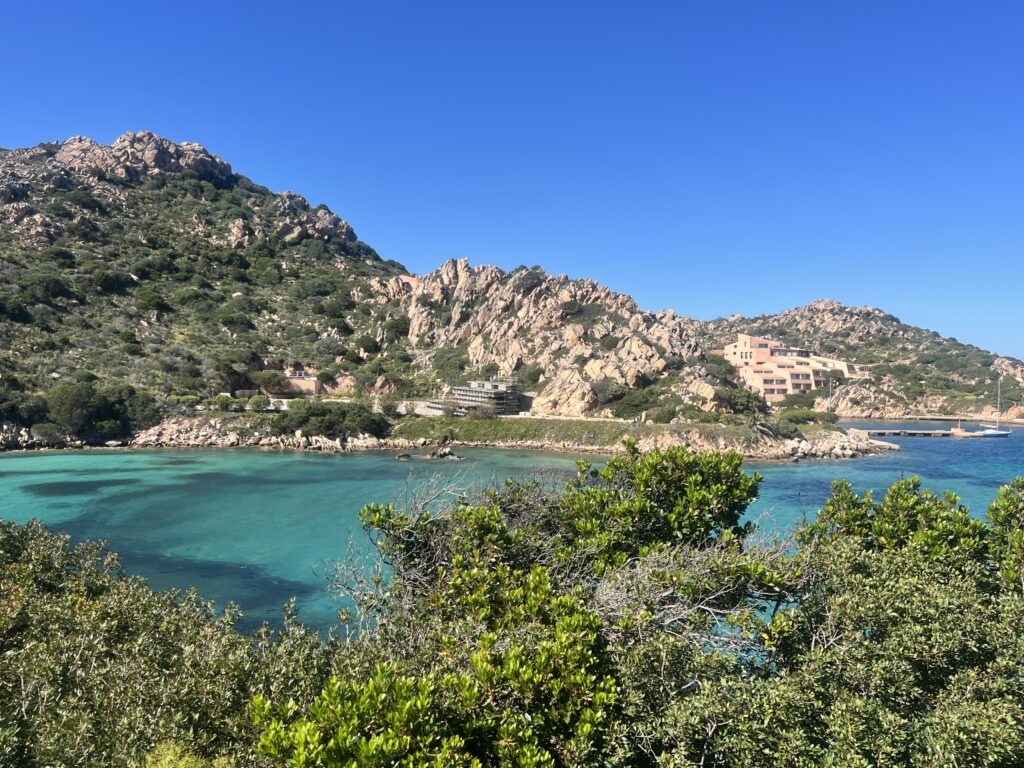
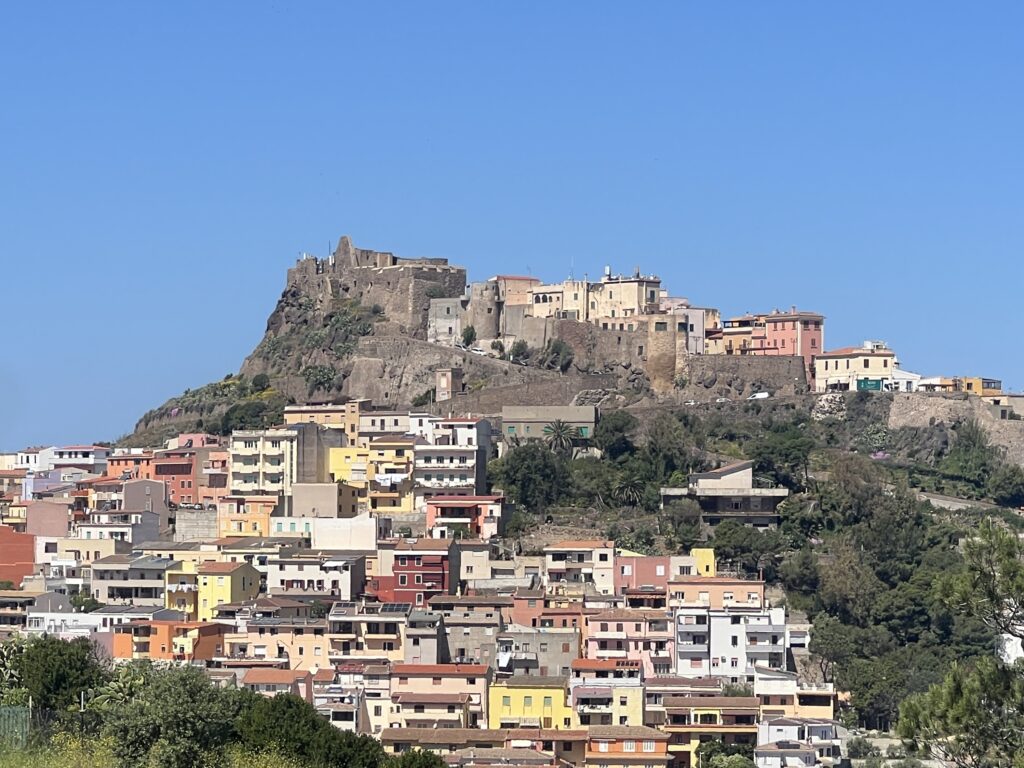
Near Cala Fuili beach….….where the water was nice and warm but the rocks were slippery !Beginning of the Emerald Coast ( north eastern Sardinia ).Marble mining near Orosei.Beach near Palau.La Maddelena town.La Maddelena islands.La Maddelena islands.Pretty Castellsardo.
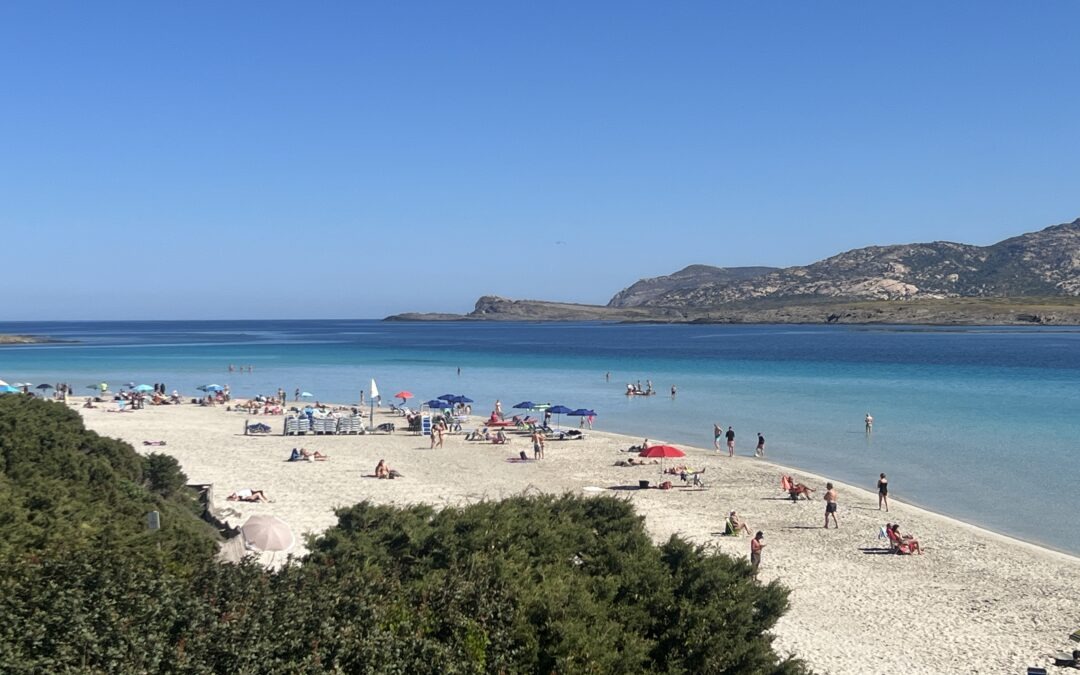
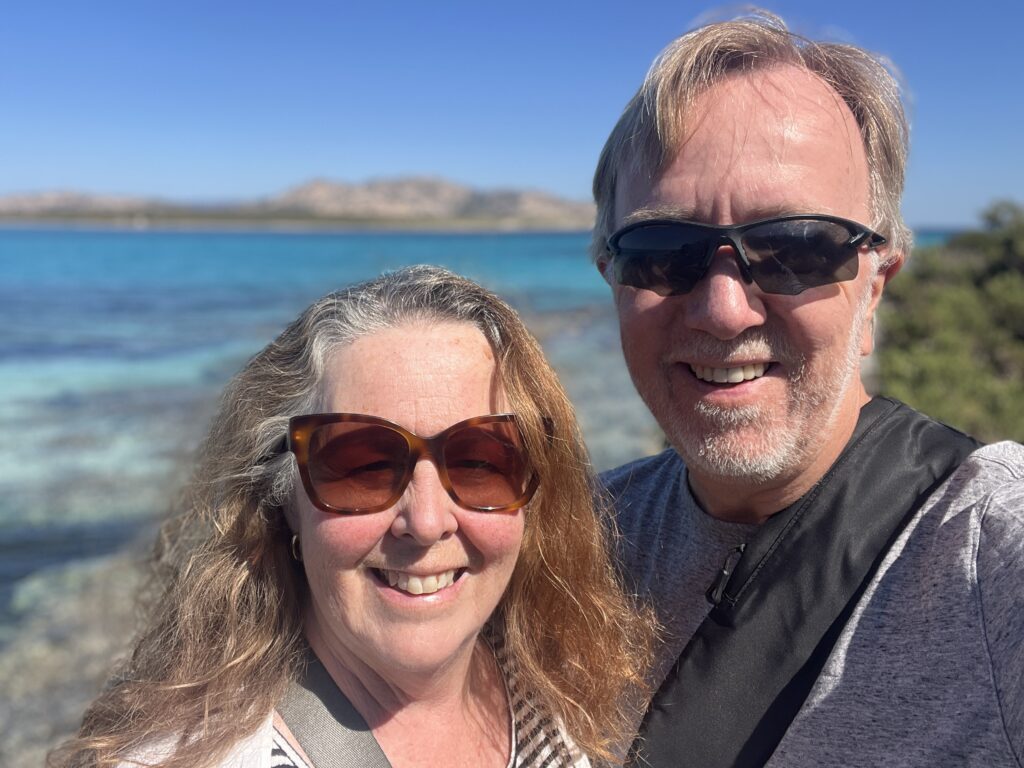
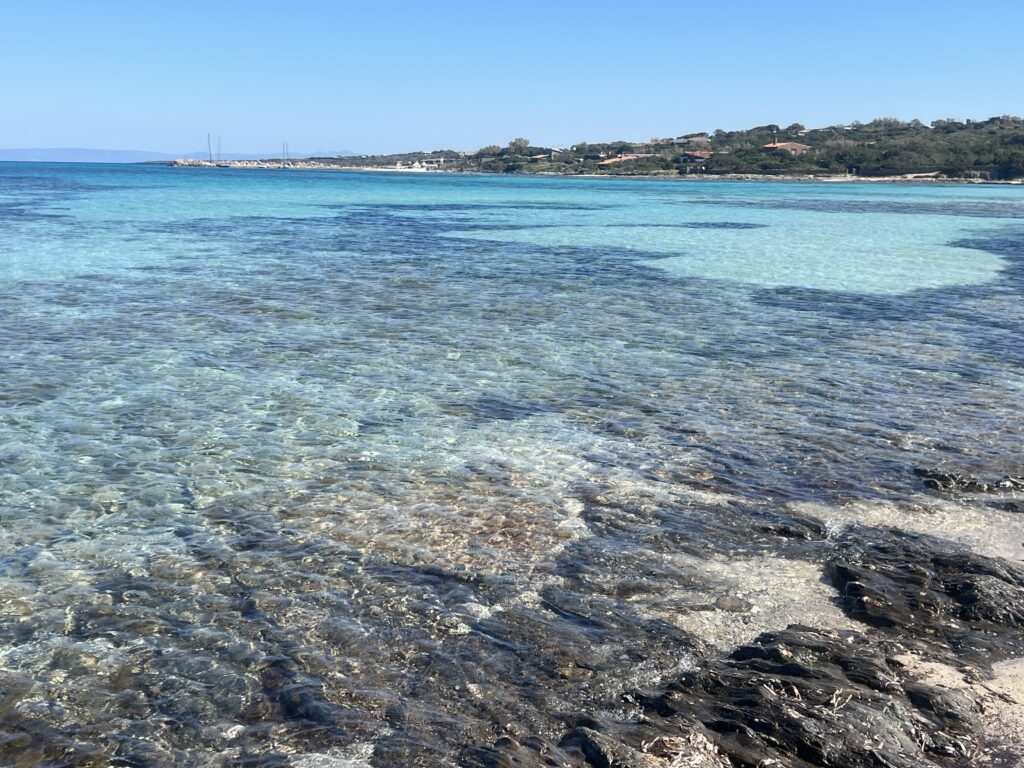
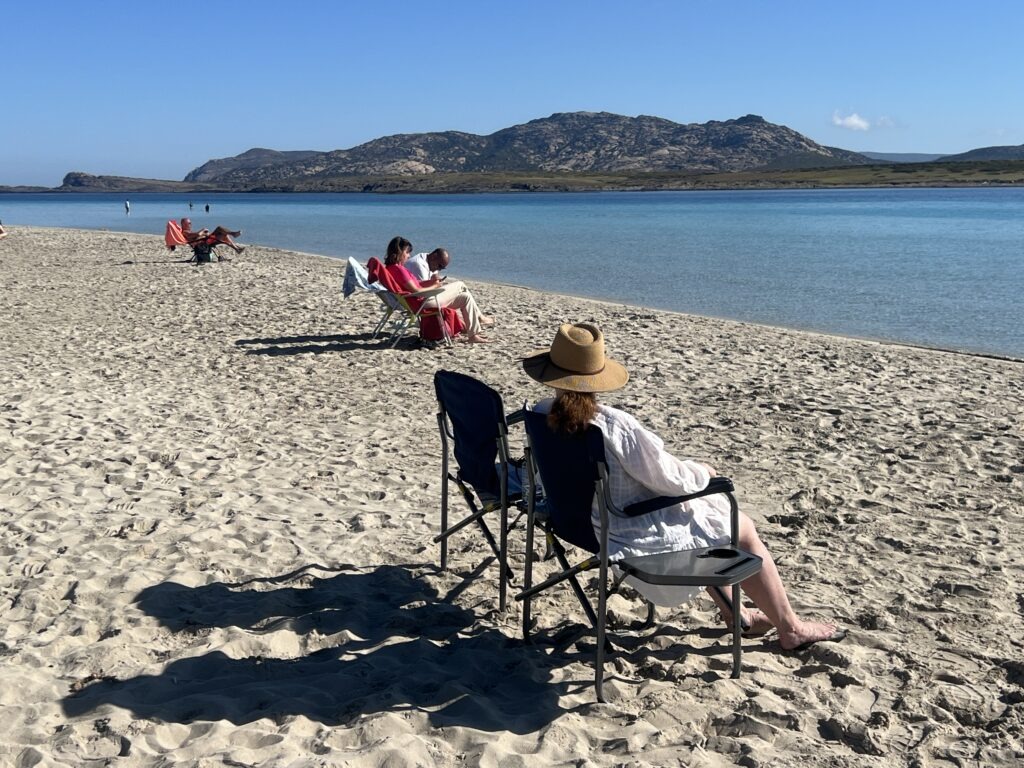
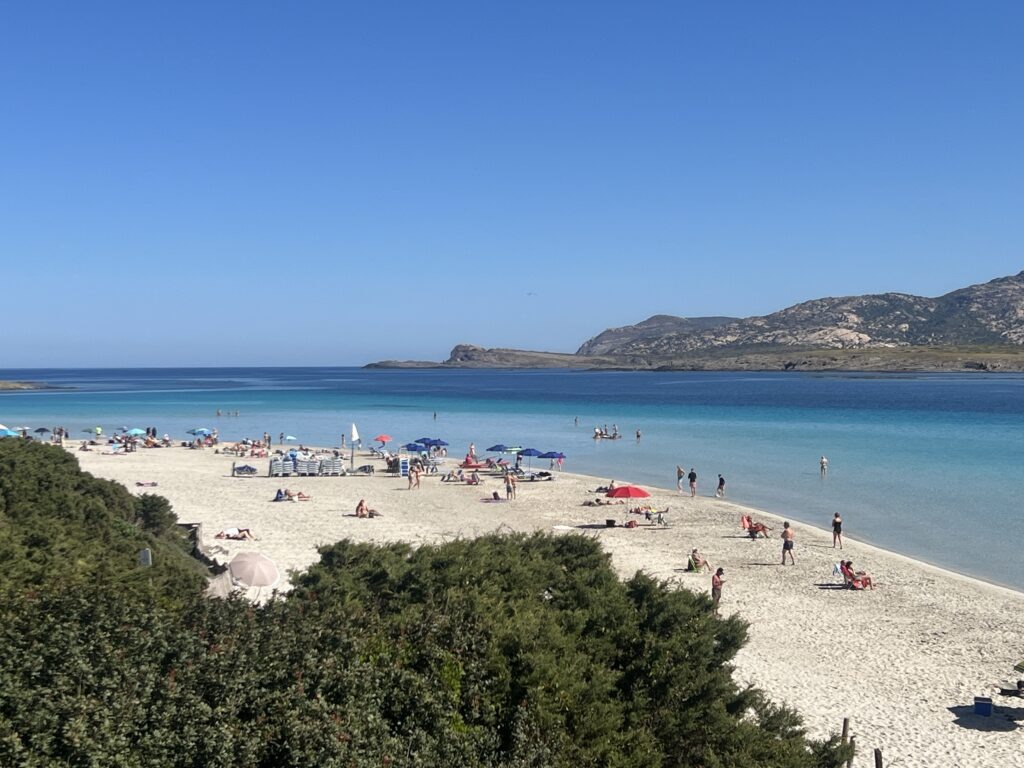
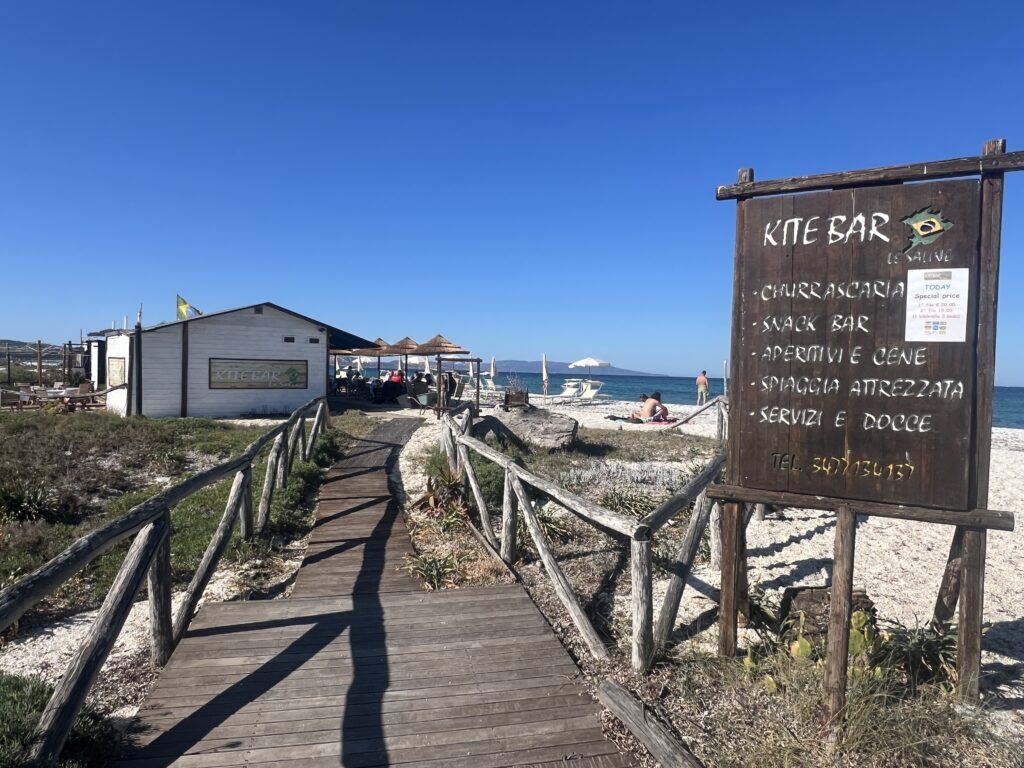
If the Maddalena islands were a bit underwhelming ( more the circumstances than the location itself ), our next stop ( highly recommended by a crew member on the ferry to Sardinia ) really took our breath away. La Pelosa is a silky white sand beach with shallow crystal clear warm waters, and, on the days we spent there, was set against the most vibrant blue sky – not a cloud to be seen. Magnificent ! It actually also featured in the previously mentioned “World’s 50 Best Beaches 2025”, although it was well down from the top. Surprising, because we would’ve put it right up there with Carla Goloritze – ahead of it, in fact, if one factors in accessibility ( you can drive right up to this one ! ). Making those two days even more pleasant was the fact that, just 5kms away was a municipally provided wild camping location right on another beach, this one replete with a cosy little beach bar run by a charming Brazilian/Italian fellow. Unsurprisingly it was a very popular layover and our only regret was not finding it until the very end of our Sardinia experience.
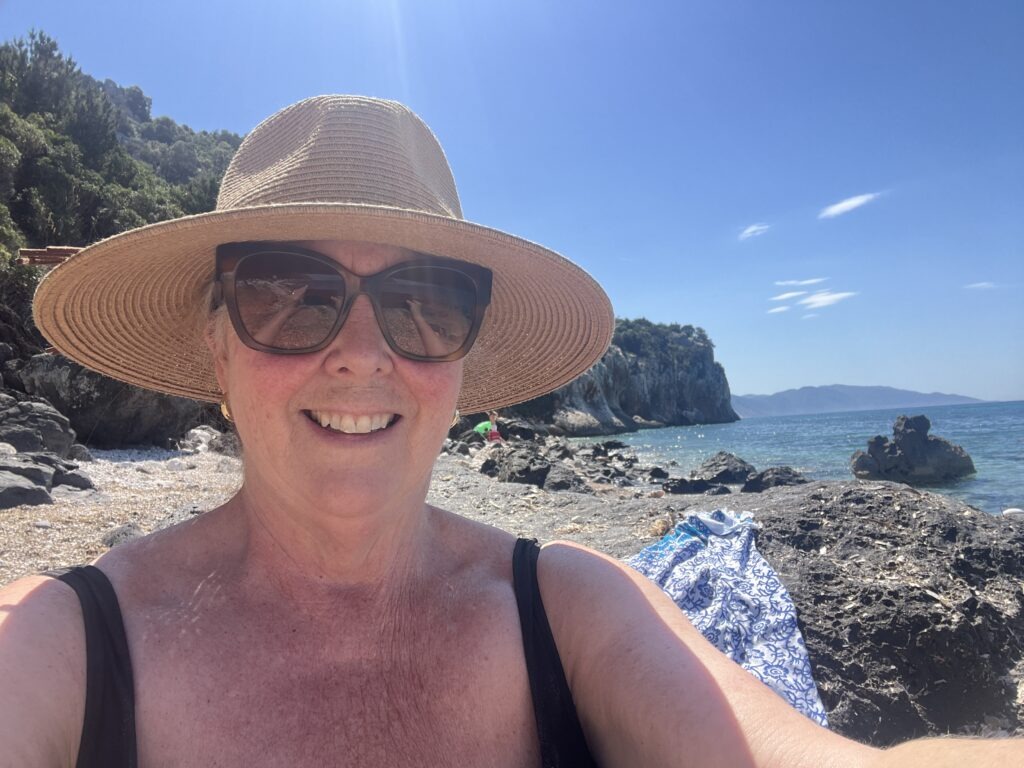
Selfie, La Pelosa.Coastline near La Pelosa.La Pelosa.La Pelosa.Beach bar near La Pelosa campsite.Last beach day in Sardinia 😟
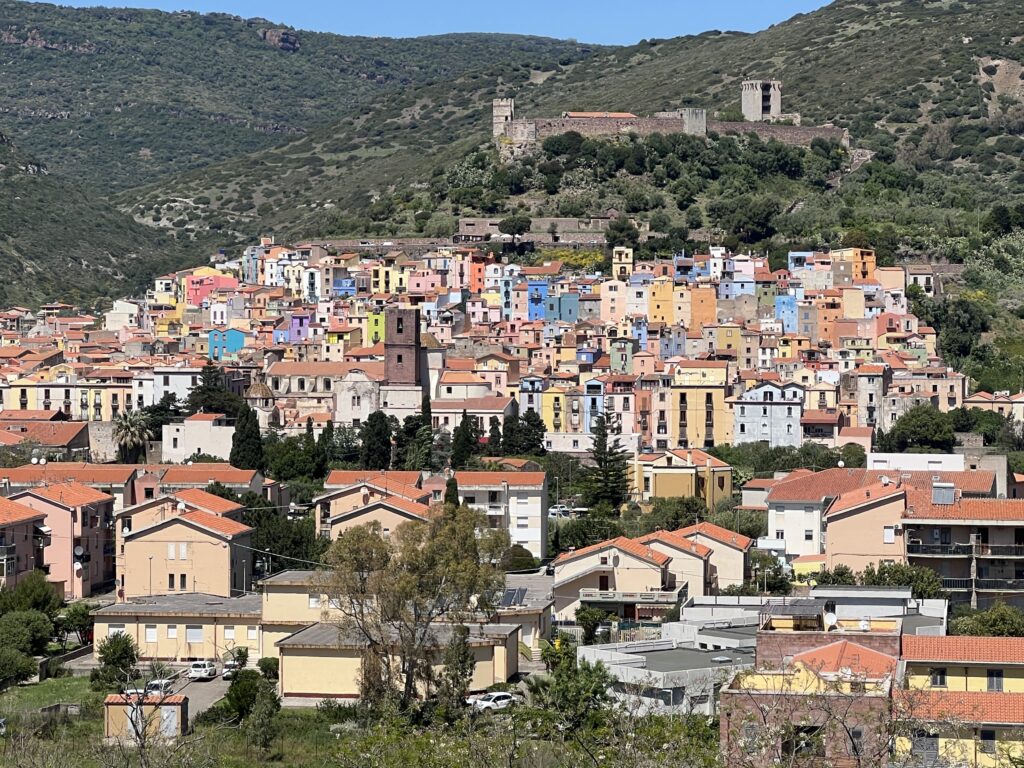
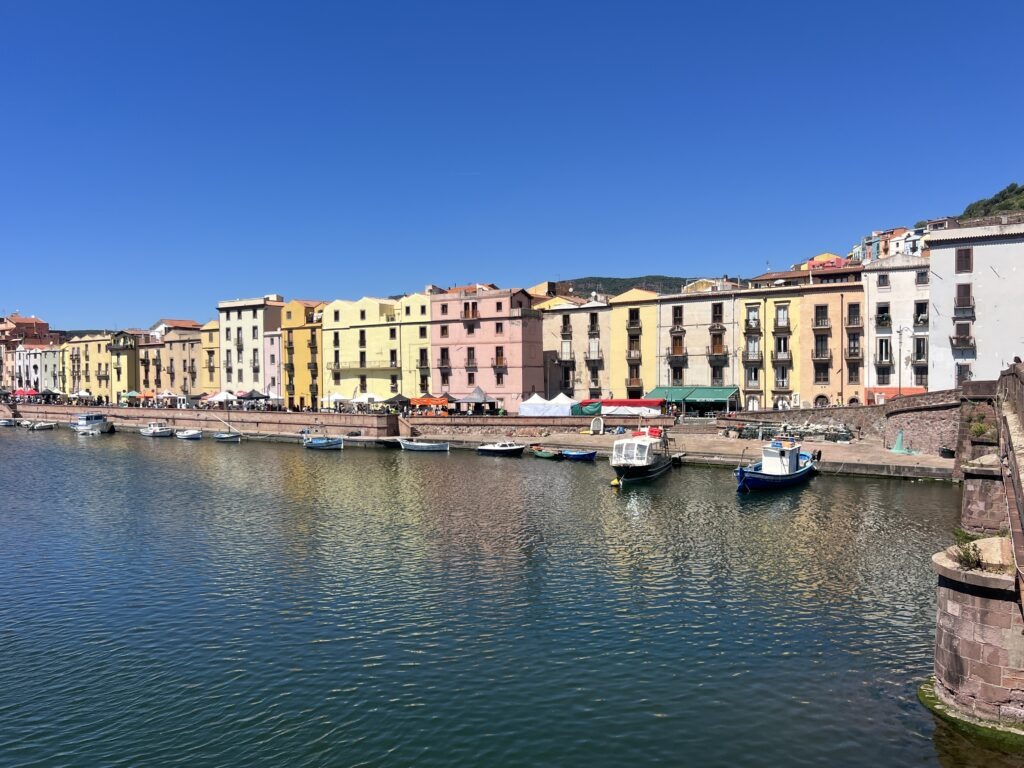
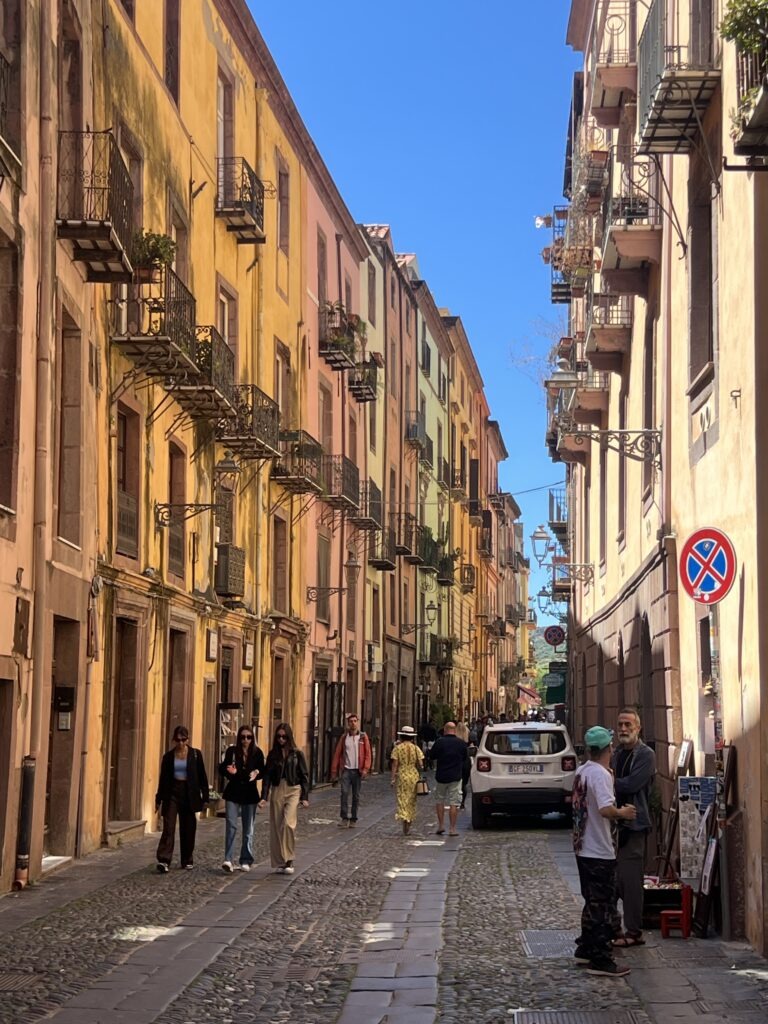
With just a day left before our ferry from Porto Torres to Barcelona, we took a brief detour down the west coast to riverside Bosa, one of Sardinia’s real hidden gems (according to an Instagram source). Certainly a “gem” it was but given we caught the last day of their annual beer festival it most definitely was not “hidden” ! The place was packed with locals and tourists alike filling its bars and restaurants. It’s extremely colorful and the old town is exceptionally well kept, with the riverside setting just adding to the ambience and proving Sardinia is not just all beaches.
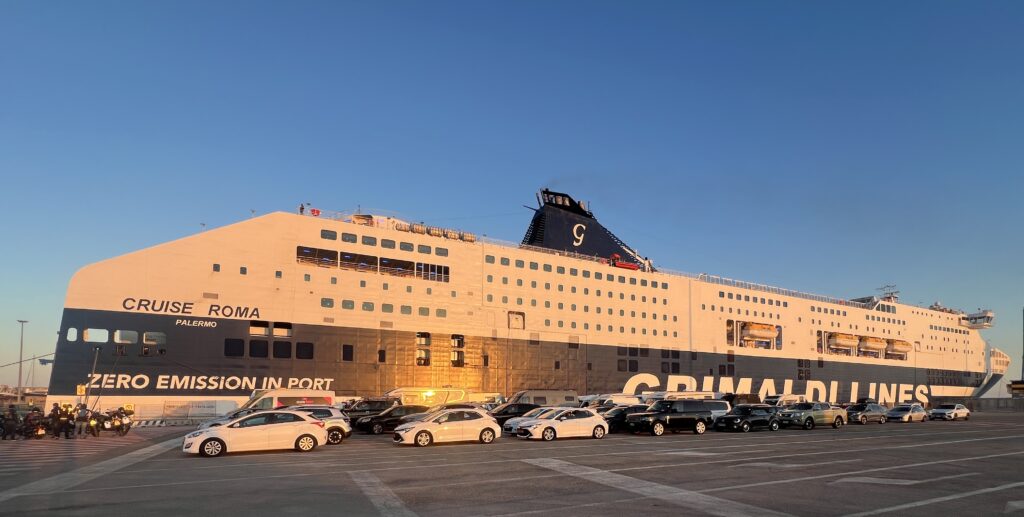
Sardinia has probably been our favourite Mediterranean island and we’re certainly glad we made the effort to get here. It was a long 12 hour car ferry ride in from Sicily and leaving involves an even longer 14 hour car ferry ride out to Barcelona, in Spain.
Our ferry to Spain. A fourteen hour slog !Farewell to Sardinia !
Remnants of WW2 bomb damage still remain in Cagliari as well.
Seems to be a bit of a pattern emerging – every time we arrive on a supposedly idyllic Island, the weather ( initially, at least ) is less than ideal. First in Sicily, and now in Sardinia it was a rocky start weatherwise, being cooler, cloudier, and rainier than one would like. Fortunately, just as it did in Sicily, things turned quickly for the better and the rest of our first week here proved to be ideal holiday/travelling weather. That was fortunate because it seemed that in the week leading up to our arrival, all we got on our Instagram feeds were stunning video clips of Sardinia‘s “must-see” towns, landscapes, and especially it’s legendary beaches. We had taken note of these and created both a list of places we wanted to visit and a crude itinerary for determining the order in which we would do so. The beaches featured prominently 🌞.
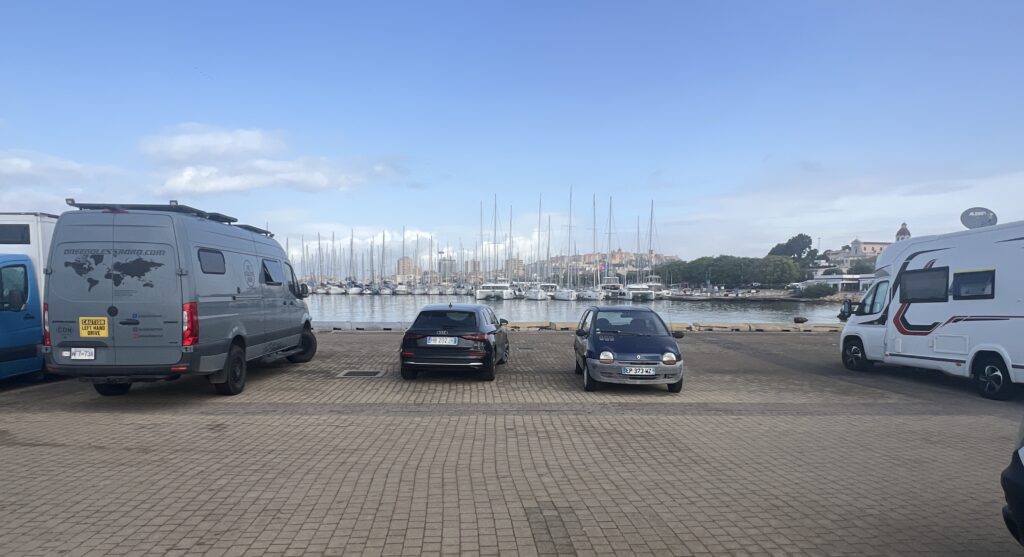
Nice view from the marina on on our first nights in Sardinia. And just 20 minutes walk into the city.
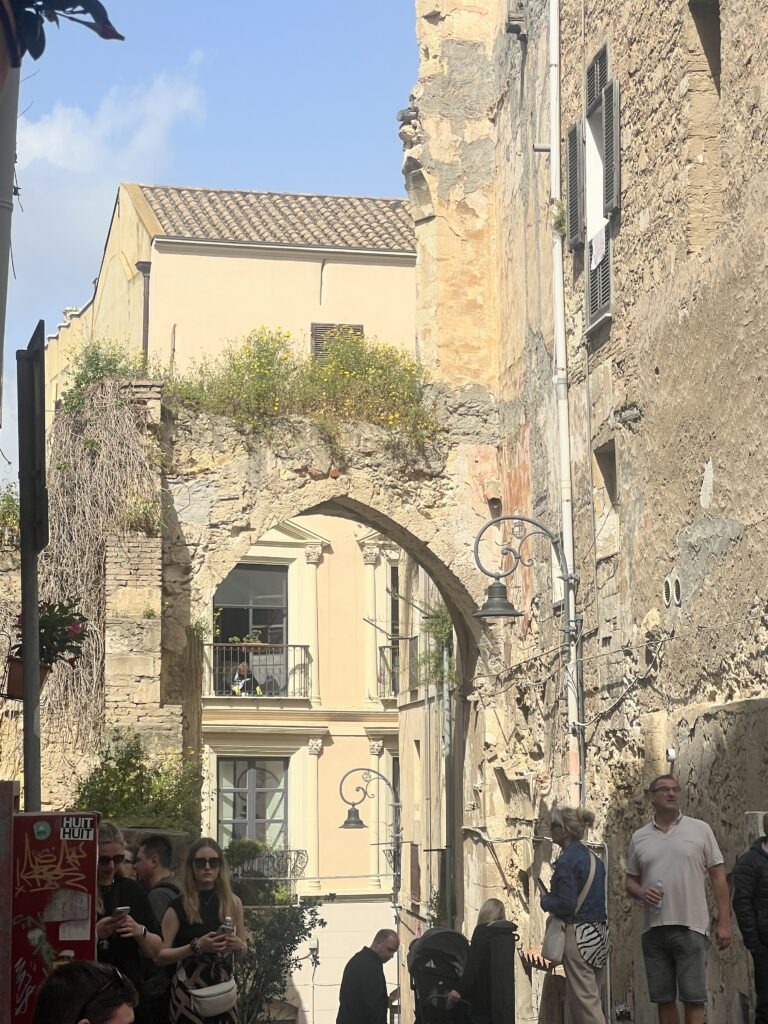
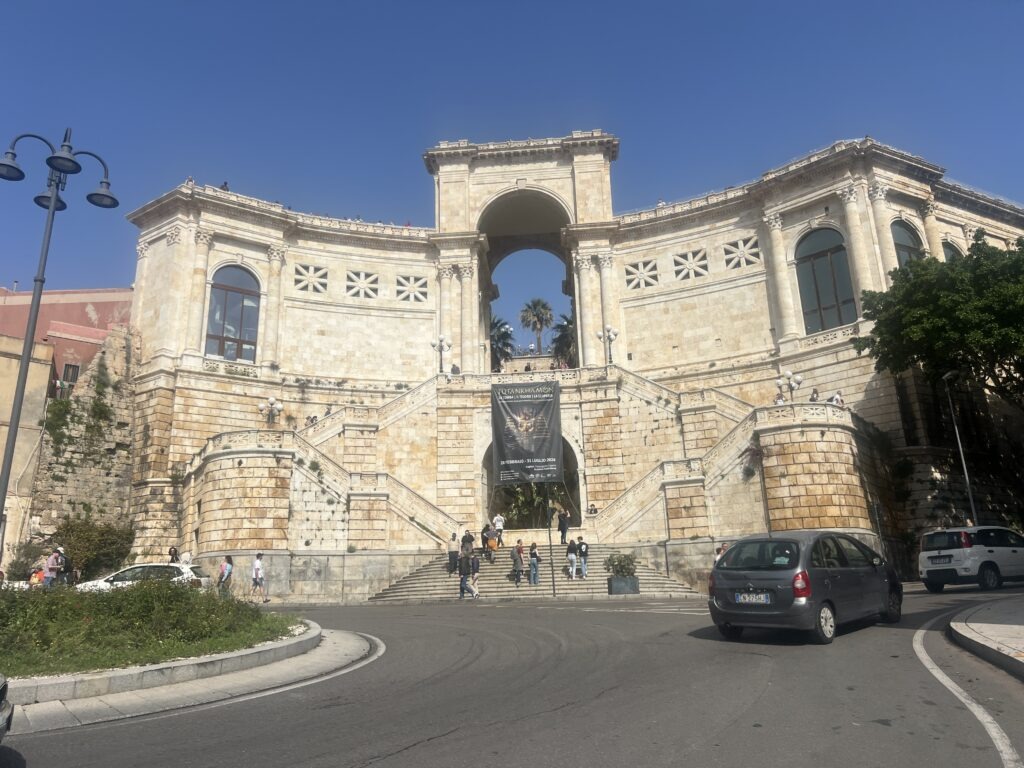
Sardinia’s capital, Cagliari, was our port of arrival and starting point for our exploring. It’s one of those places where excellent wild camping ( or rather, wild “parking” ) exists right by the port and so for the first couple of nights we based ourselves there, along with a half a dozen or so other European campers. Nice to go to sleep with the waves lapping at the shore and to wake up and start your day with a beautiful Italian cappuccino or hot chocolate from the excellent little coffee shop across the street. While Cagliari is a pleasant enough city to wander around, and conveniently small, apart from a few historic buildings and a famous church there was not a lot to see there. Most people don’t stay long and nor did we.
Bastione di Saint Remy, a famous Cagliari landmark.
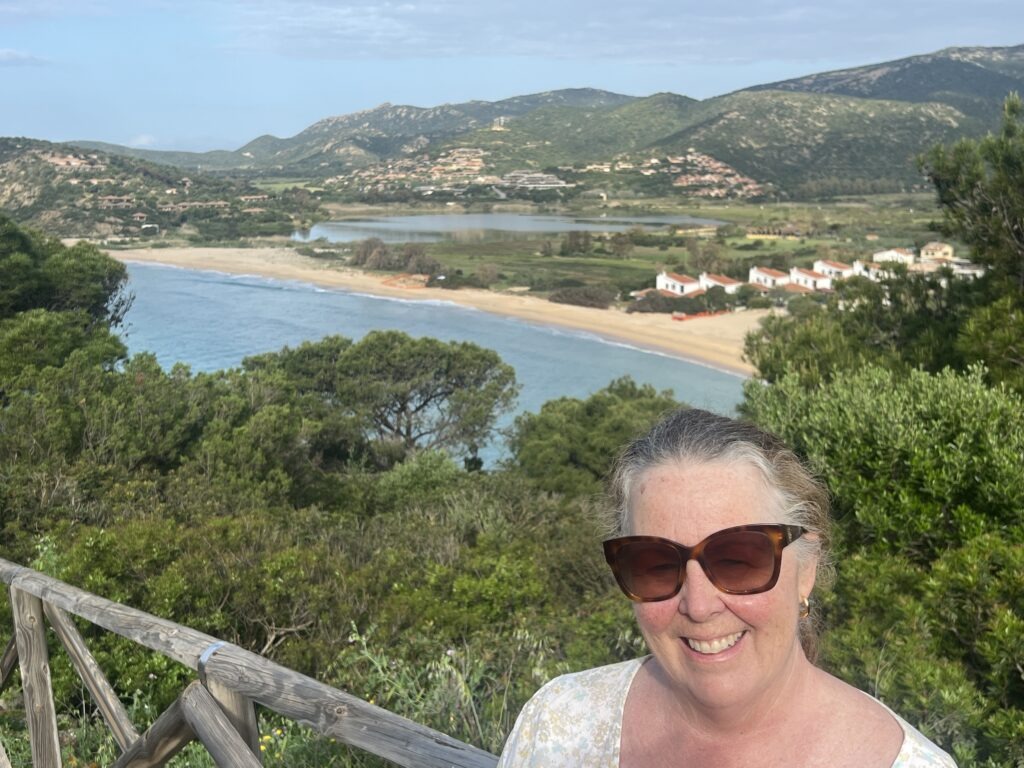
Heading immediately west took us thorough pleasant Pula, Chia and onto the quasi island city of San Antioch. Some great little coastal hikes and interesting lookouts along the way and it was here we began to see the nice beaches that the island is so famous for. Not its most stunning ( yet ) by a long shot, but pretty by any standards. The water is just so clean and clear here, which surprised us given that the Med is an enclosed sea surrounded by heavily populated countries, usually a recipe for at least some pollution. We saw no evidence of any.
A short but worthwhile hike up to the headland at Chia revealed first of many of Sardinia’s beaches. The coastline got prettier as we drove further around towards San Antioch before heading inland.
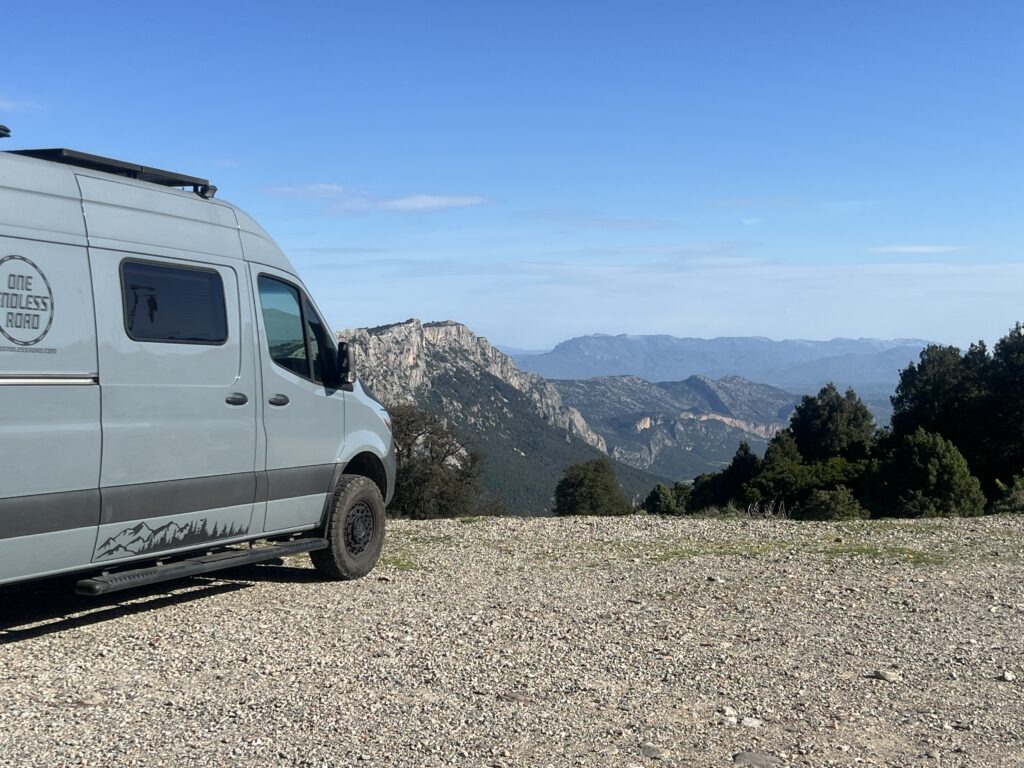
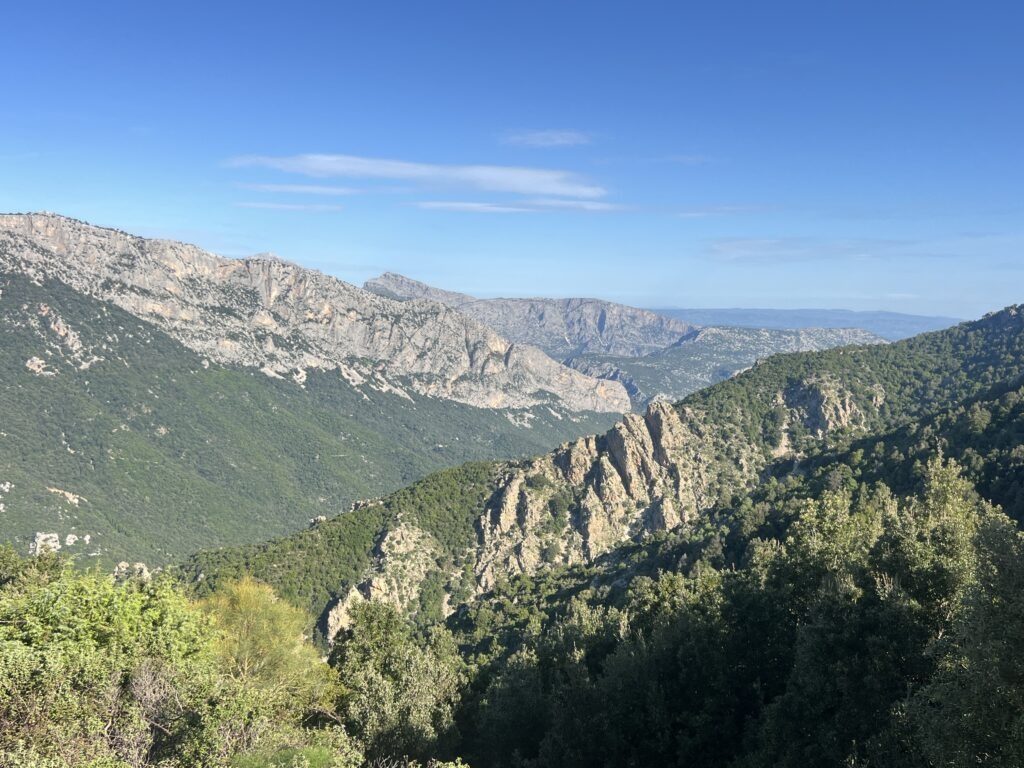
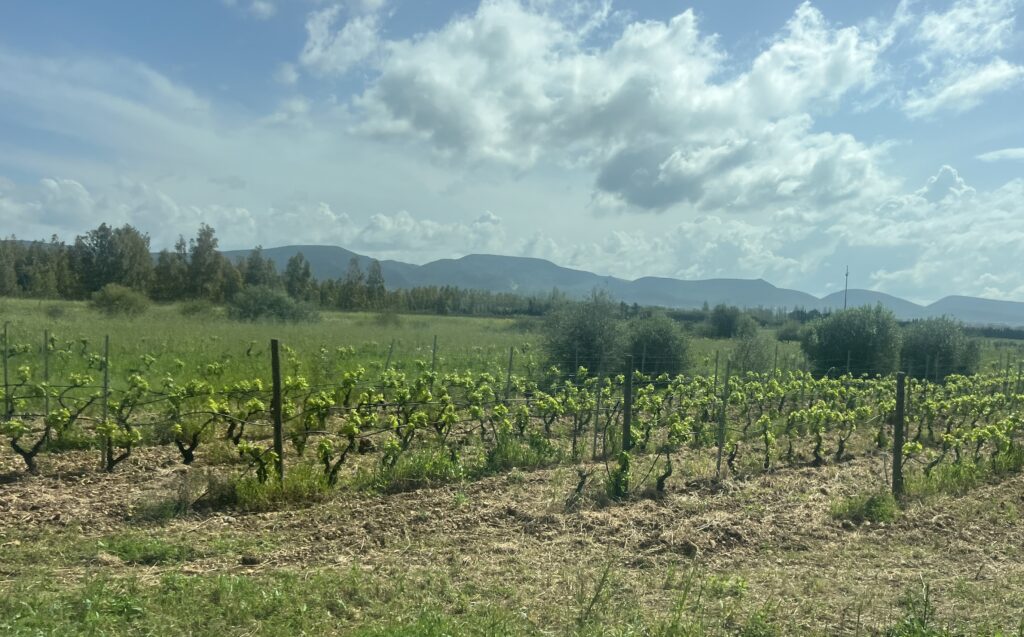
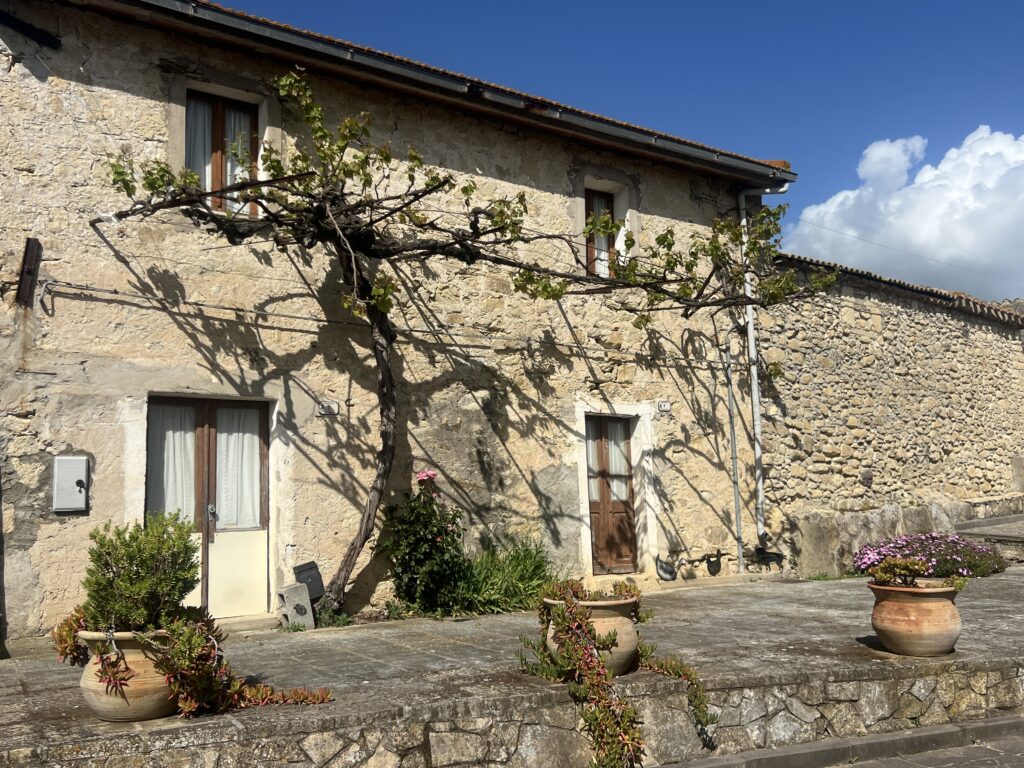
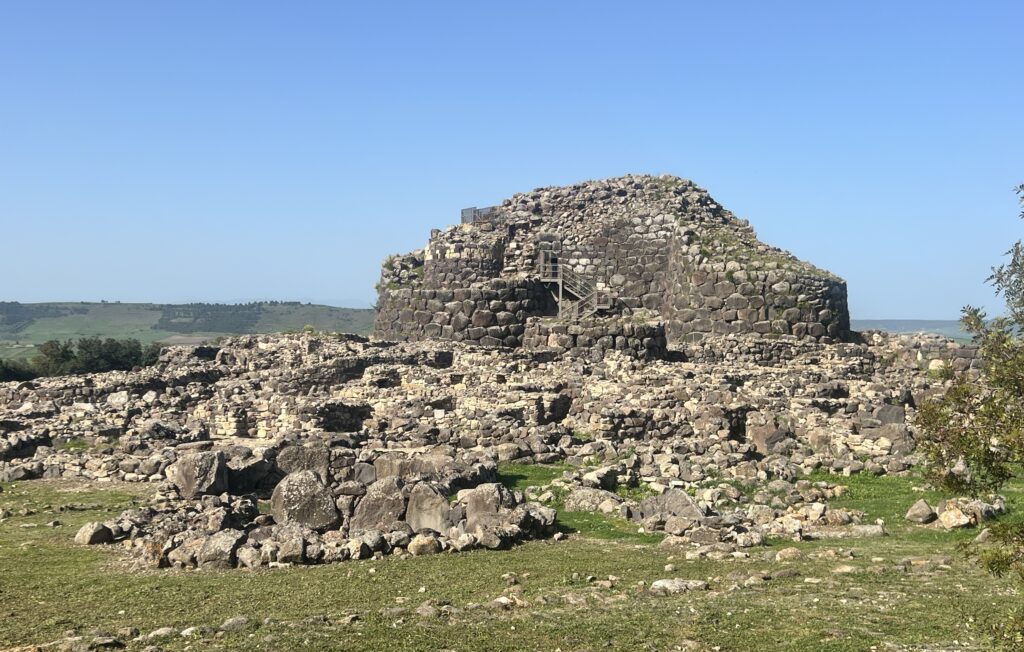
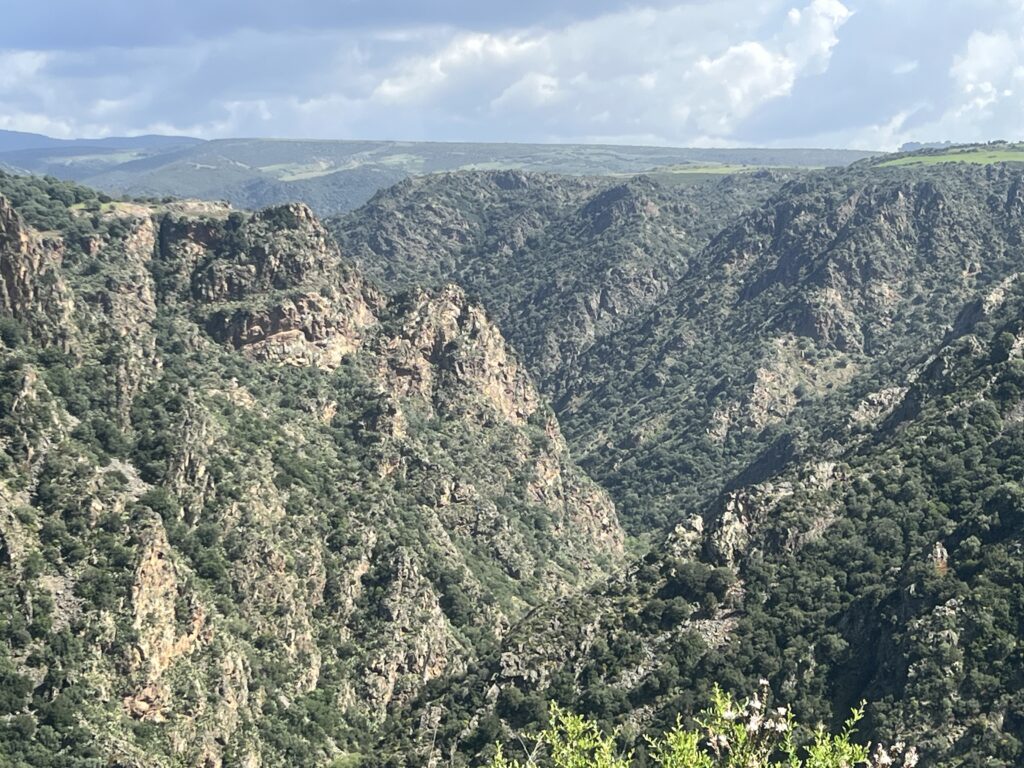
From the southwest of Sardinia we changed course and headed back east across the rugged interior of the island – a different kind of scenery, with lots of small, remote villages when we went off the beaten track a few times. This part of the island just felt very different, but by the time we hit the east coast things looked familiar again.
In the interior of Sardinia. Pretty vineyards…..…quaint little towns,some historic ruins,…great mountain/valley vistas, and,…nice morning tea pullouts as we crossed the mountainous interior !
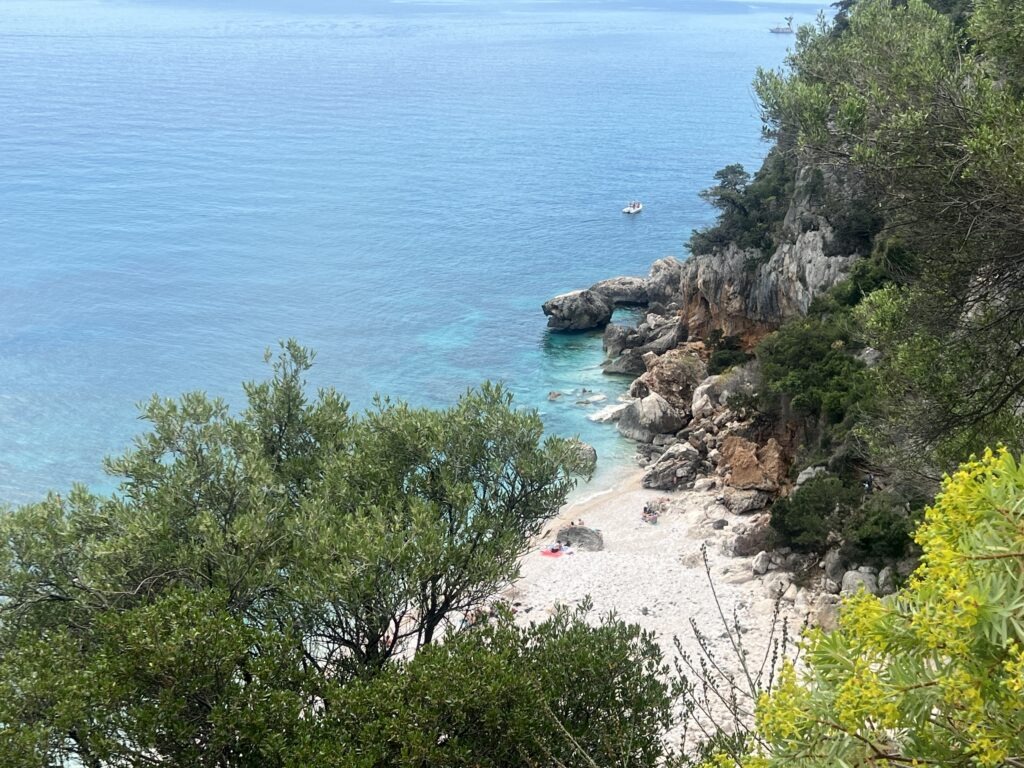
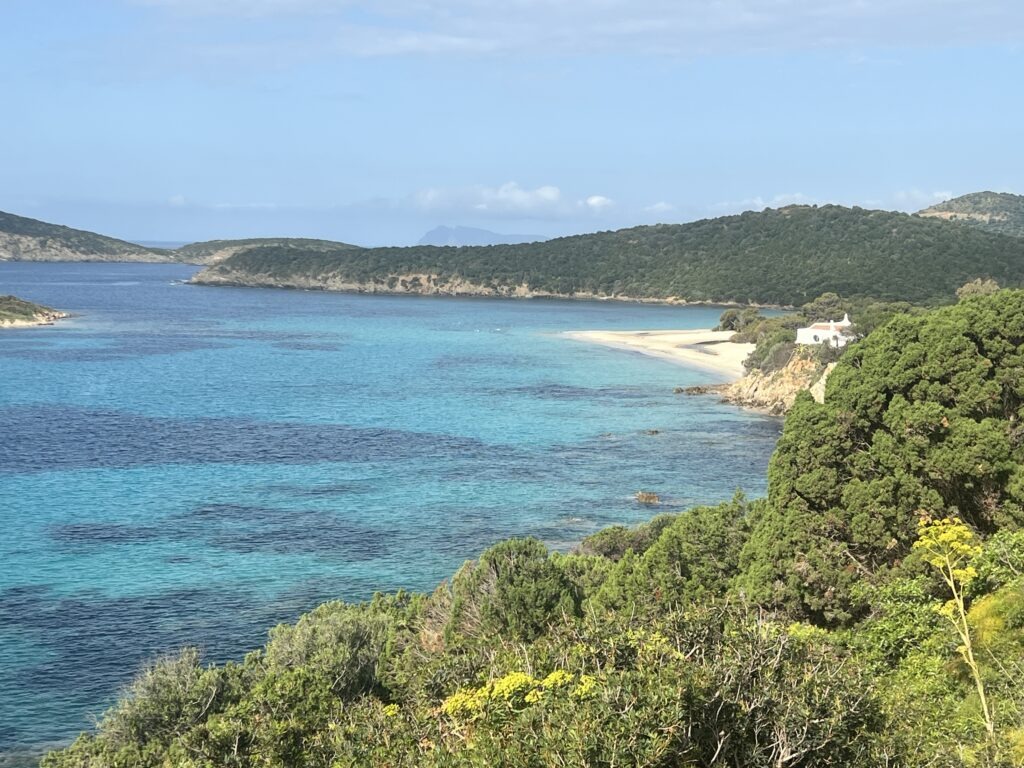
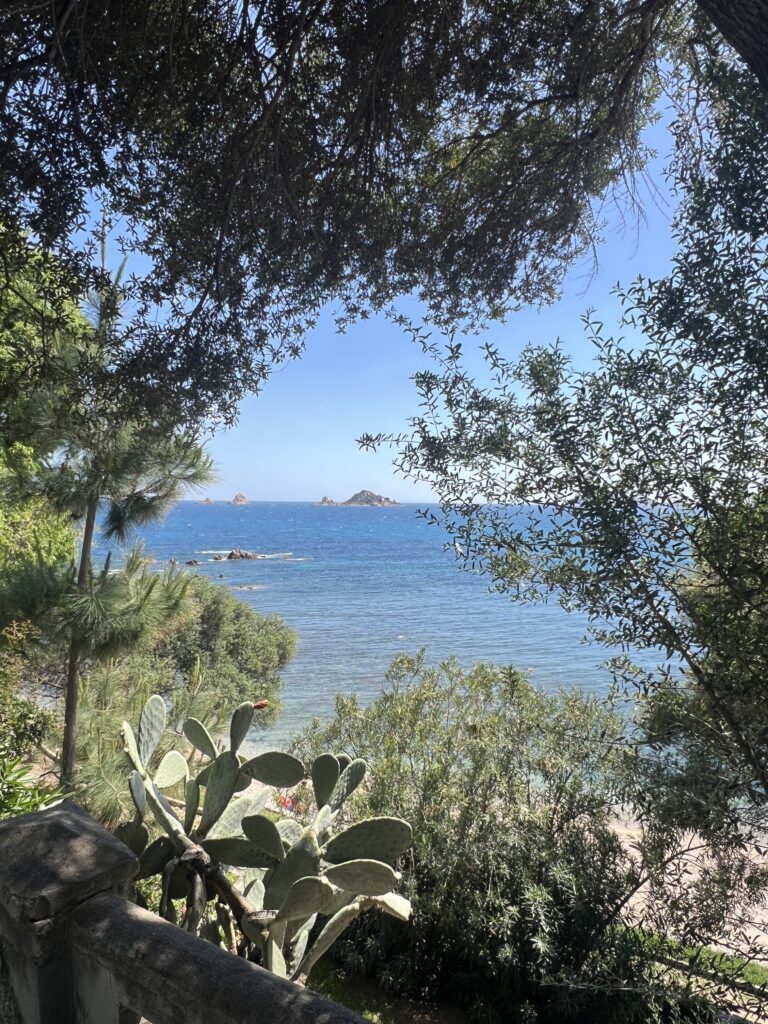
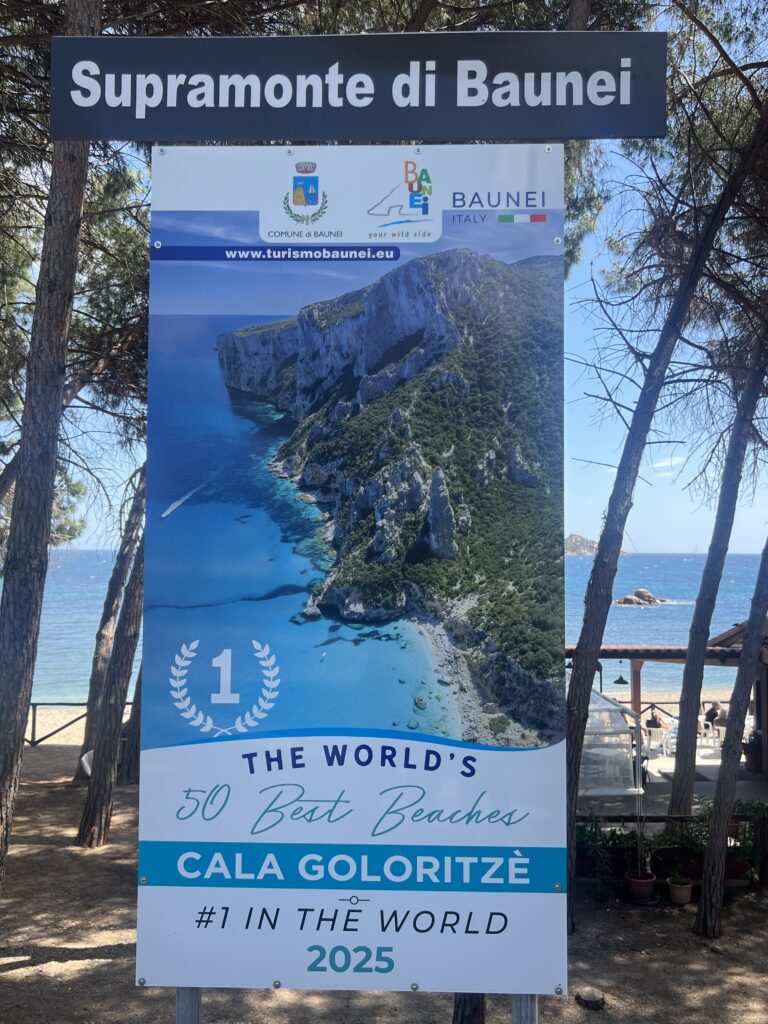
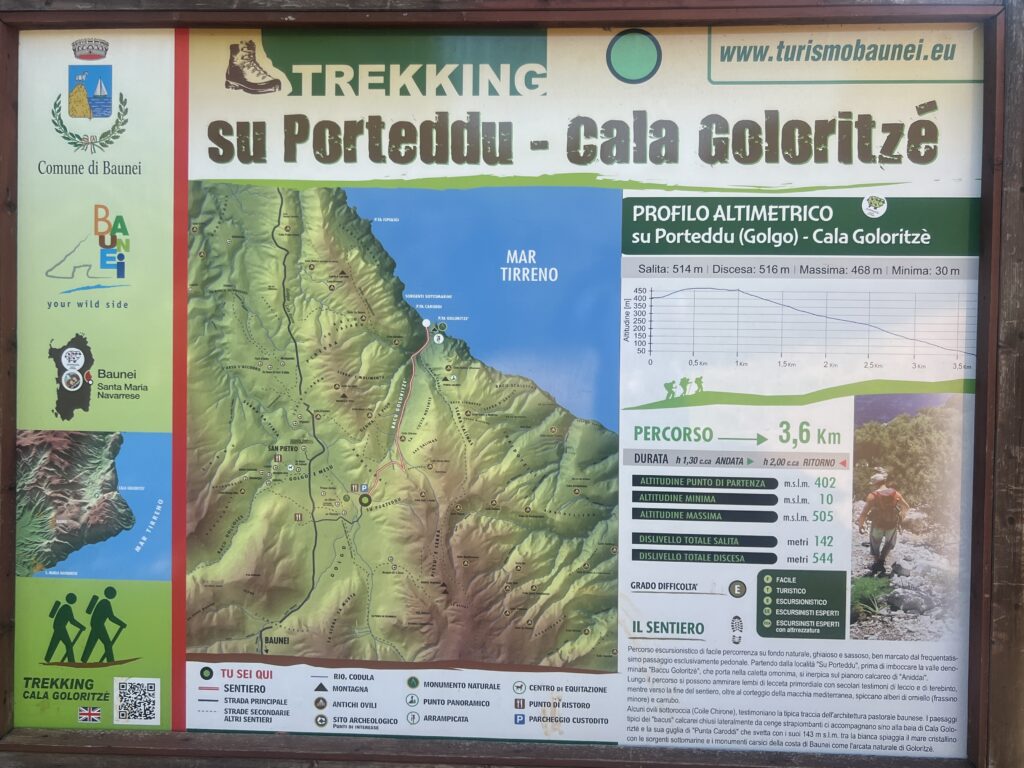
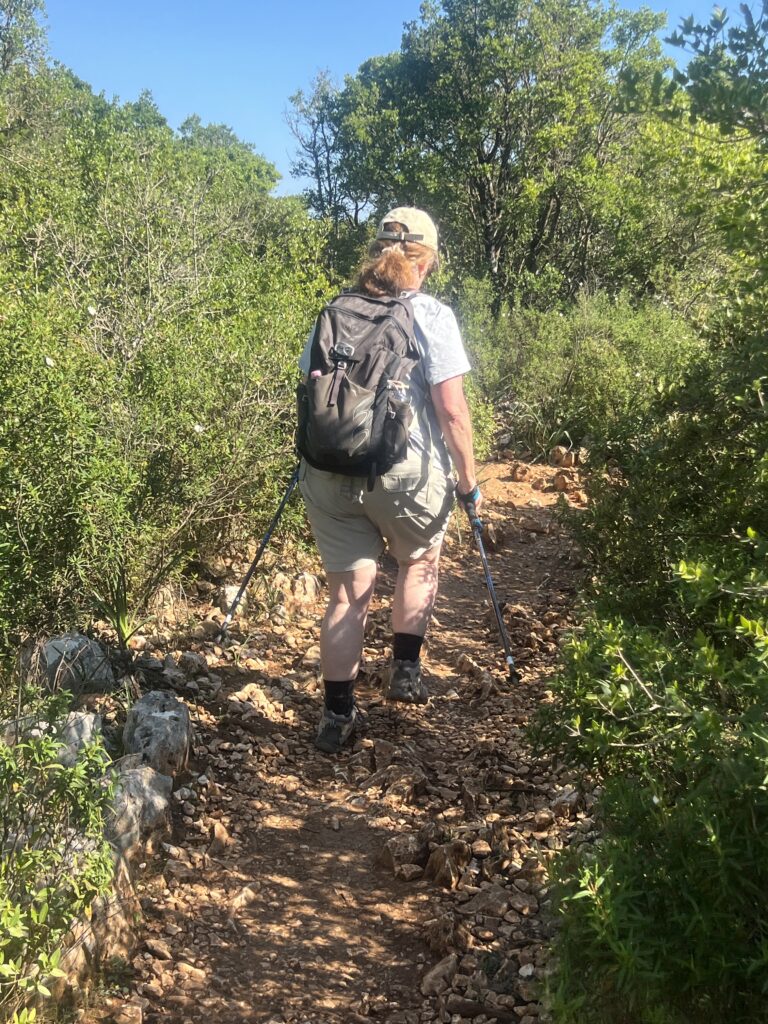
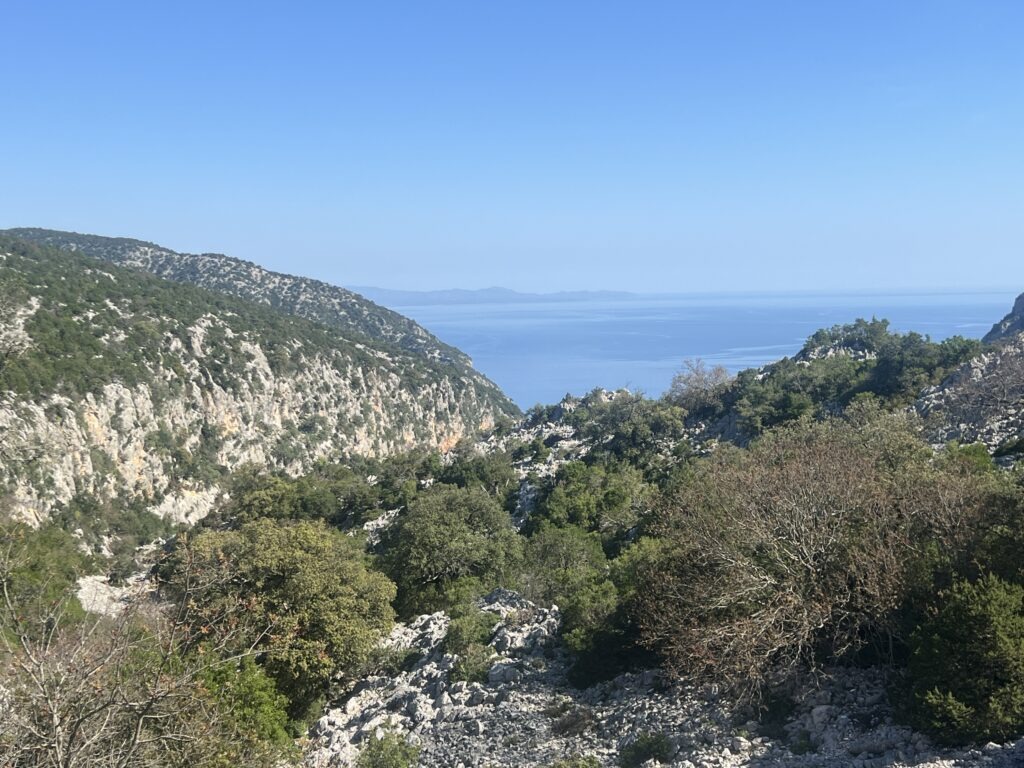
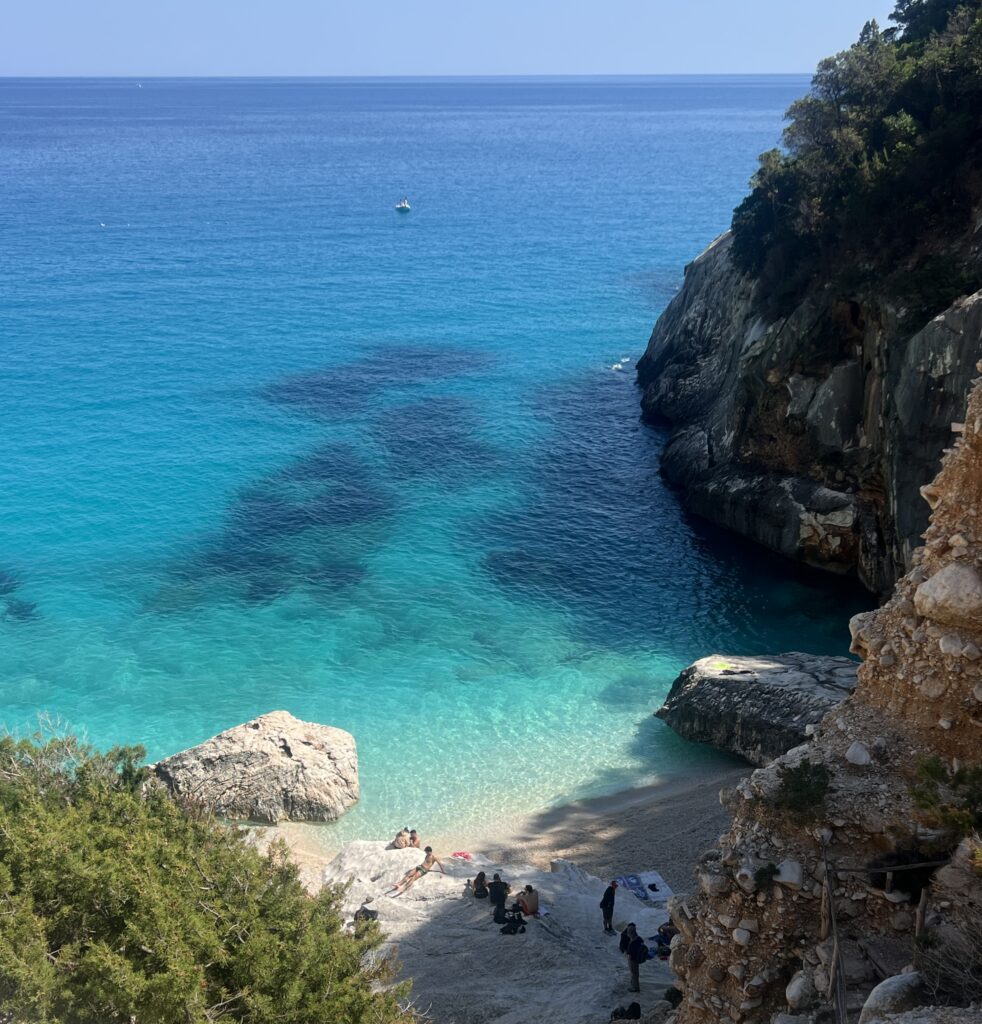
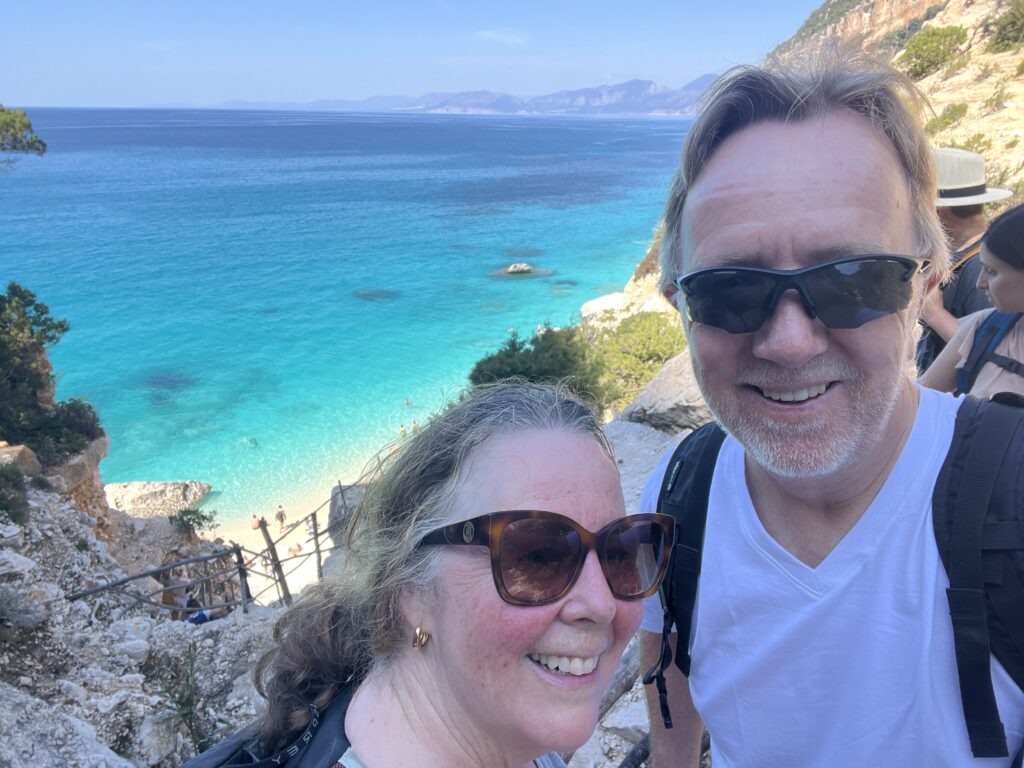
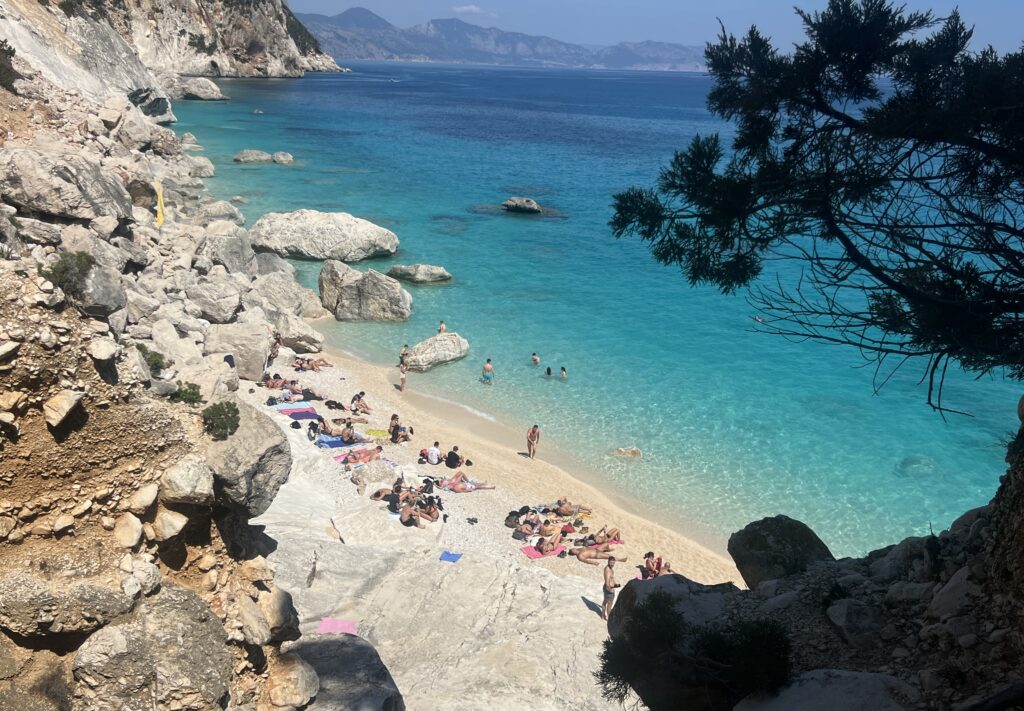
A couple of nights were spent camped at pretty coastal towns ( Arbatax and Santa Maria Navarresse ), the latter from which we booked an all day boat excursion to take in some otherwise difficult to access Baunei coast beaches. One in particular, Cala Goloritze, had only last year been voted “The World’s # 1 Beach”. This, we decided (since we were so close) we had to see, however forecast high winds meant we had to cancel the boat access option. Not to give up, there was another possibility – hiking it, a 7.2km excursion with an almost 500m elevation gain/descent over pretty rough terrain. Probably something we should NOT have done, but we did and got to see ( and swim in ) the 2025 World’s Best Beach. It was, indeed, spectacularly beautiful, but I’m not sure I would rank it number one given we’ve seen a few others that would more than match it. The blisters and aches after the strenuous hike also diminished some of its beauty in our mind at least !
A couple of nice days were spent at the beautiful little coastal town of Santa Maria Navarrese. Here, at a restaurant on the beach there.With an excellent and spacious camp site there was opportunity for a thorough van clean, one of those unpleasant necessities of van travel !Great coastal beach walks in the area.Coastal shot.When we saw this sign, we decided we just had to go – one way or another !The hard facts, laid out at the beginning of the Cala Goloritze hike.On the track.Half way down and the ocean still seemed a long way away !But worth it when we arrived.Selfie time.On the beach. Some better aspects in the video at the bottom of the blog.The reward at the end !
As much as we were impressed with Sicily’s offerings in our first week, we knew there was even more ahead as our travels moved onto the western side of the island.
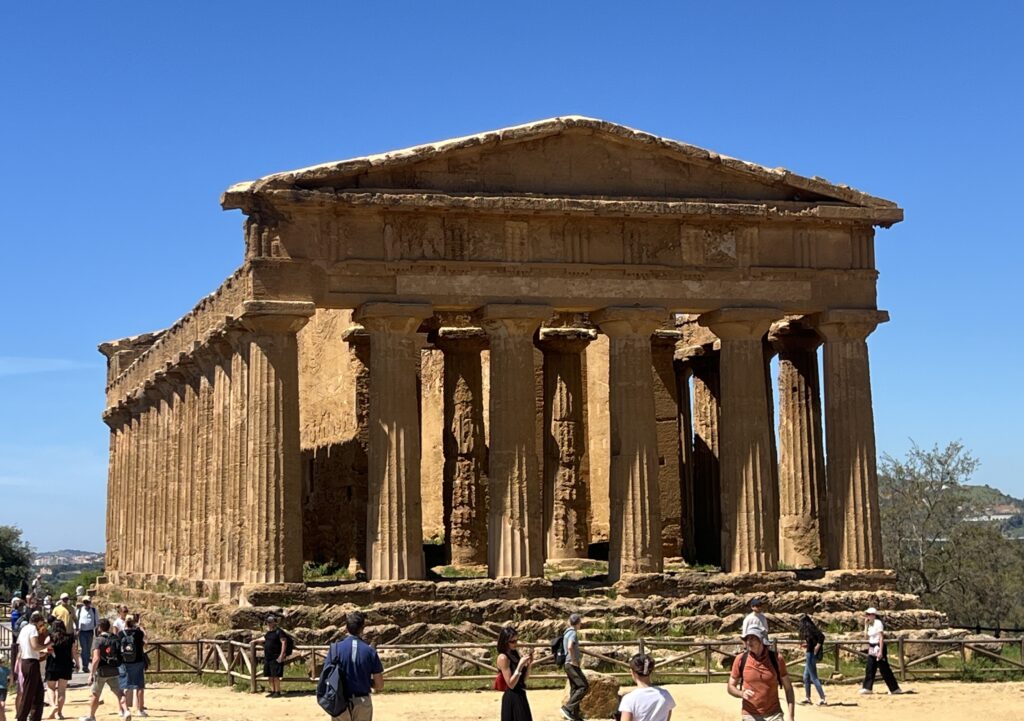
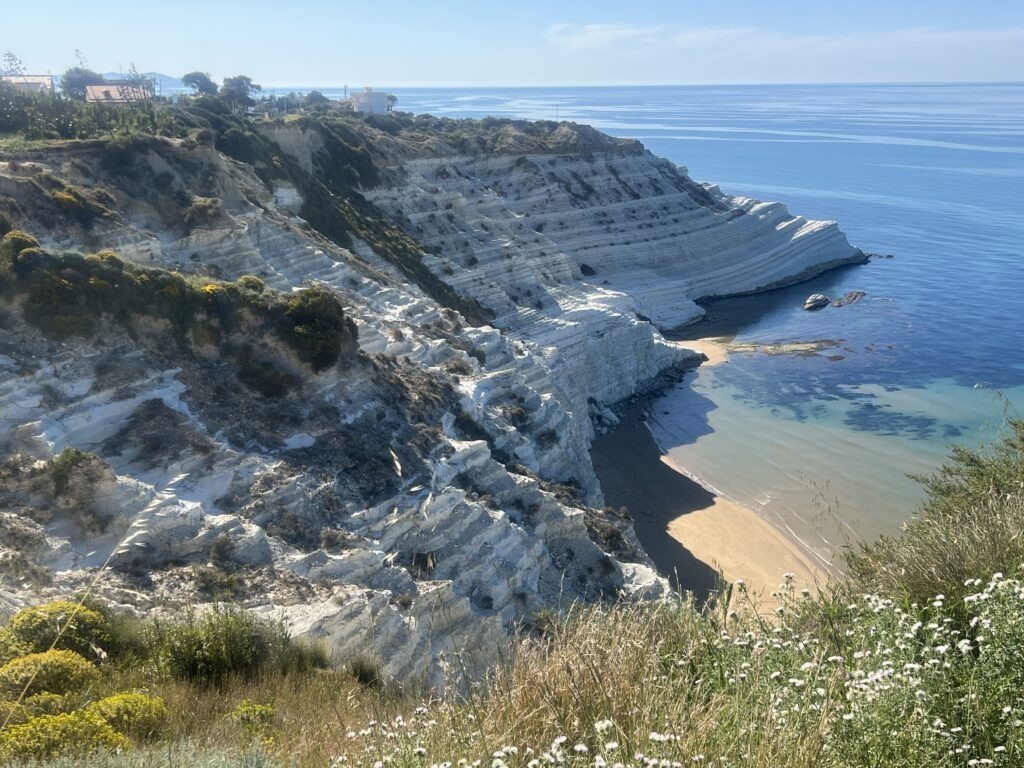
The Valley of the Temples is a spectacular Greek-era ruin located just east of the city of Agrigento. It’s somewhat ironic that some of the best Roman ruins are in Greece and some of the top Greek ruins are located in Italy, but that’s a pretty good testament to how various civilizations evolved centuries ago, with one side seizing (and then losing) control of another’s territory, followed ( quite often ! ) by a complete reversal of those fortunes. This particular location sits high up on a ridge and its imposing structures are visible from miles away as you approach, its beauty enhanced by the well-manicured Italian garden in which it stands. Impressive ! The wonderful little beachside campsite at nearby Scala Dei Turchi ( a sight in itself ) just made for an excellent stay in Agrigento.
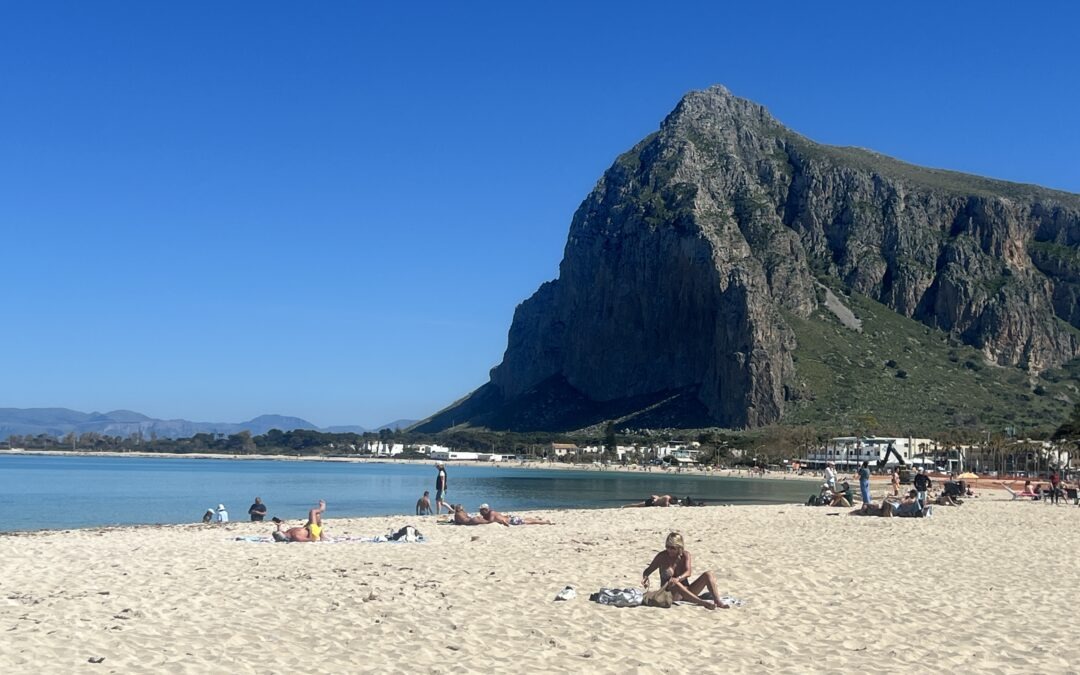
Valley of the Temples, Agrigento.Ditto.More Valley of the Temples.Scala Dei Turchi ( Turkish Stairs ).Scala Dei Turchi (from the west ).Selfie.San Vito Lo Capo. Turquoise water and sheer verdant mountain backdrop reminded us of Tahiti.
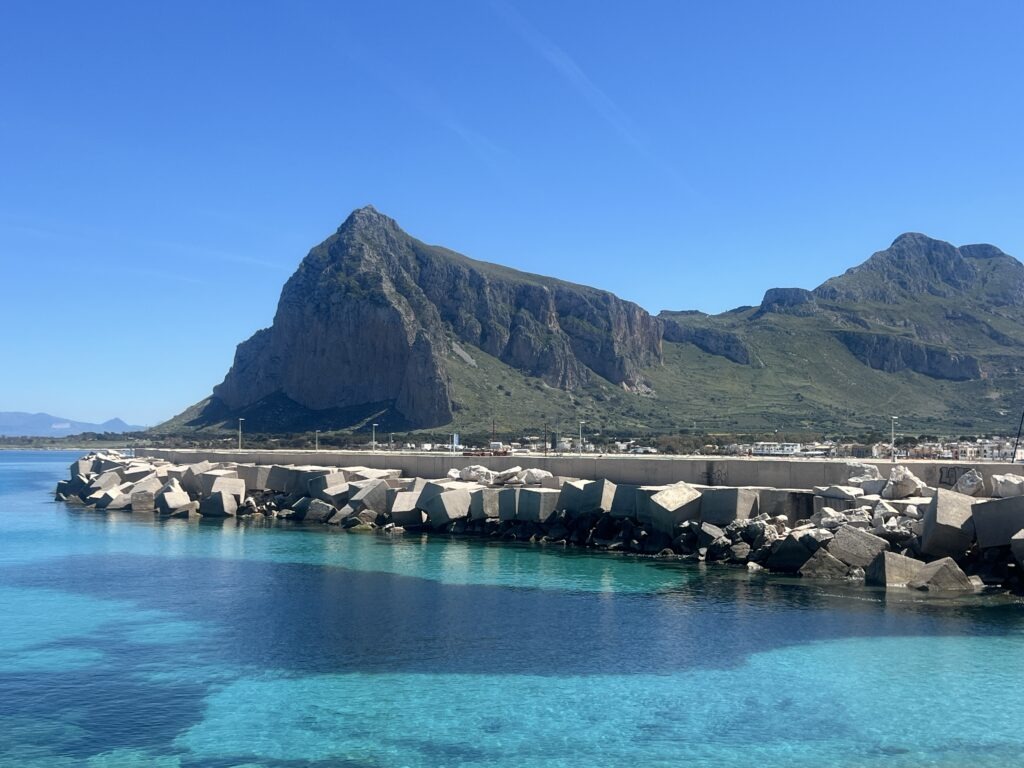
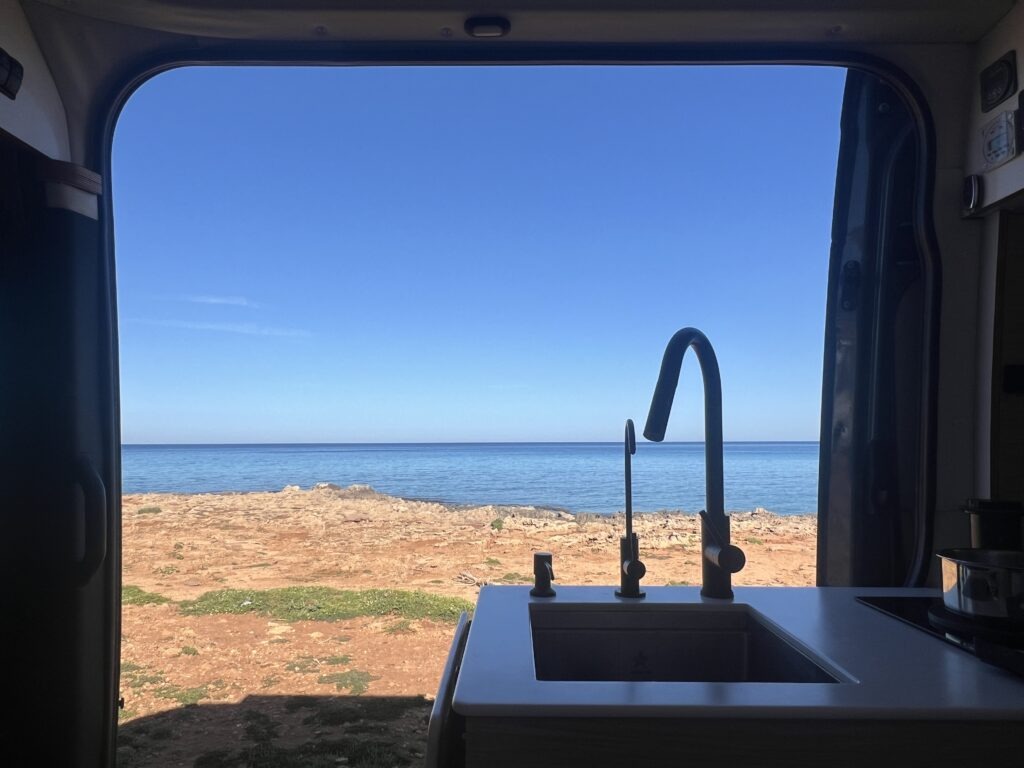
Continuing west took us through some of Sicily’s major agricultural regions – flatter and generally less mountainous than the east, it also made for more relaxed driving. Our route followed the coast ( mostly ) passing Marsala and Trapani with the exceptionally pretty little coastal town of San Vito Lo Capo being our next port of call. Like so much of the Sicily we have seen so far, the coastal waters are a shimmering turquoise and exceptionally clear. This place is a hotspot in summer and was already quite busy when we arrived in early April. It’s got some of the whitest sand beaches on the island and is set against a sheer mountain backdrop – postcard stuff ! While the water was still a little cool at first ( despite the sunny weather ), here the water was just too tempting to stay away from. Always a bonus when the camping is good and the wild camping just south of the town was probably our favourite so far in Sicily – we spent a couple of very enjoyable days there just relaxing. I’ll let the pictures below tell the story.
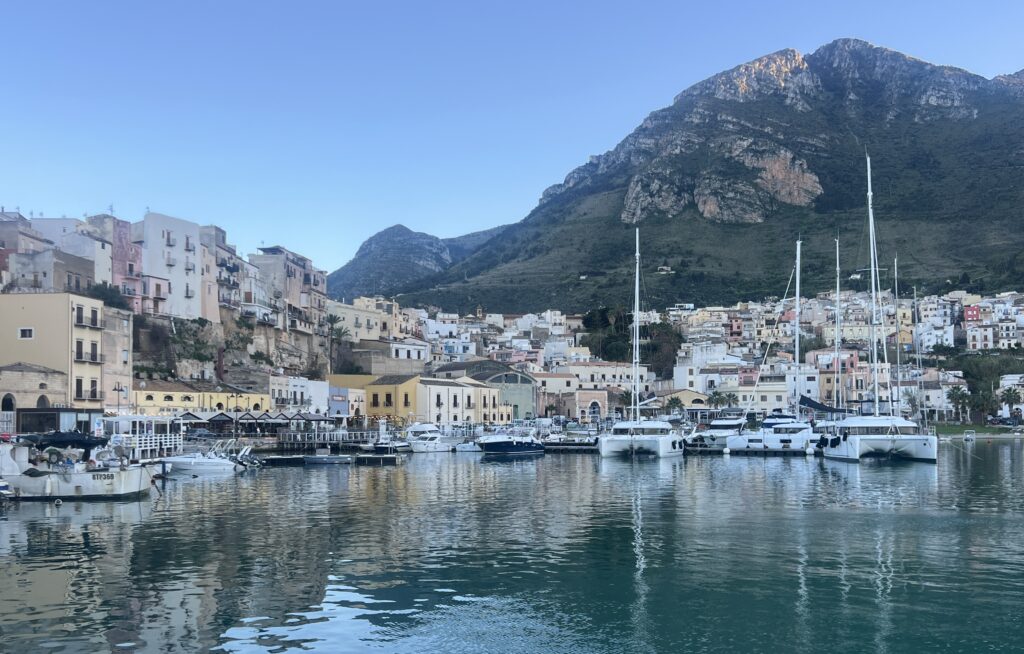
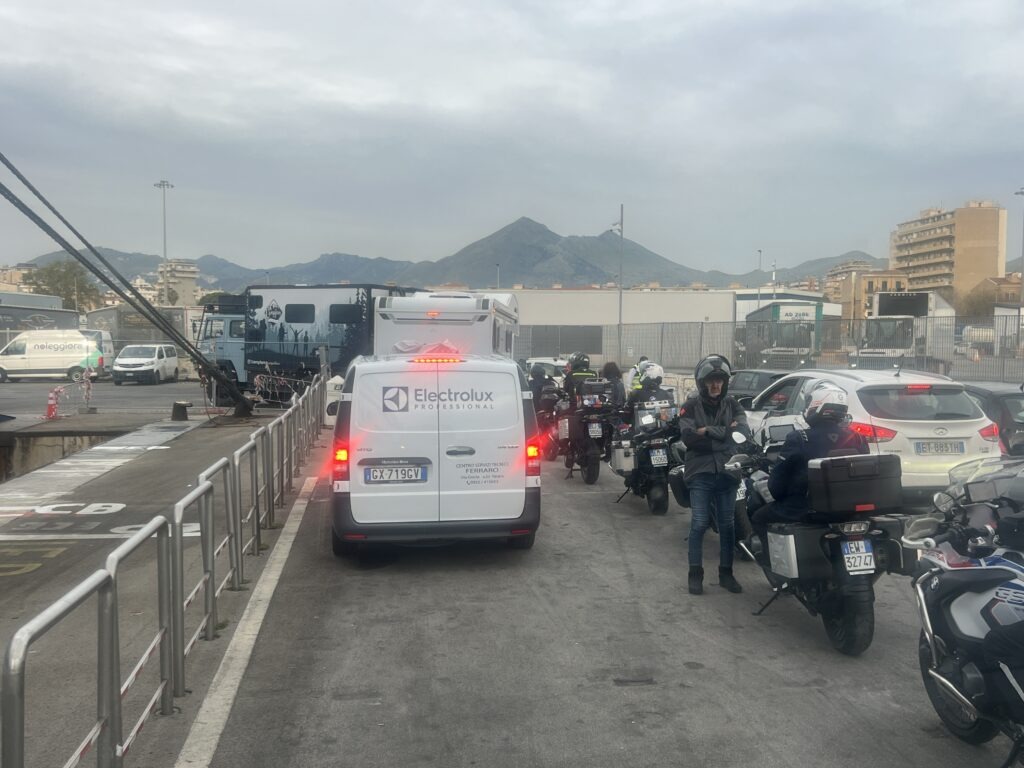
San Vito Lo Capo.Snorkeling area where we camped, san Vito Lo Capo.Ditto.Sunsets were beautiful.Wild camped with about 8 others along the beach.The beauty of a large sliding door – inside/outside camping .On our way to Palermo we enjoyed a one night stopover in pretty Castellammare del Golfo, as idyllic a little port town as you will find.Palermo’s impressive cathedral.Villa Bonnano, garden – Palermo.Historic church of Santa Maria dell Ammiraglio, with its ornate gold mosaics. Its history dates to the 1100’s and bears influence from Greeks, Albanians, the Normans and even the muslims who ruled here for a period.Ditto.Incredible as it seems, parts of Palermo still have unrepaired bomb damage from WW2. Saw several on Victor Emmanuel avenue.Our last sight in Palermo was the somewhat macabre “catacombs”. Dating back hundreds of years, one walks among the corpses of many hundreds of the deceased. Here, Lois is about to walk past the point beyond which you cannot take photographs. Quite eerie ! Click on the word “catacombs” if you must see what it looks like in there!Lines up for the ferry. A full 12 hour sail to Sardinia 😴😴😴The Europe Palace, a very nice ship, but a long journey.
Any hopes that our recent run of rather inclement weather might be over by the time we reached Sicily were quickly dashed – no sooner had we boarded the ferry for the short crossing from Calabria to Messina in Sicily’s northeast, than the rains started again. The morning had briefly looked somewhat promising but as we drove off the ferry into the crowded streets of Messina, it was raining heavily enough to dash any hopes we had of some sightseeing around the city. Beyond Messina, the plan for Sicily was pretty straightforward – start in the northeast of the island and head clockwise around it, taking in as many of the sights and attractions as we could, ending up in Palermo on Sicily’s northwest before taking another ferry on to Sardinia, the timing of which gave us almost 2 weeks here and just over two weeks there. With Messina somewhat of a write-off we headed directly south for one of Sicily‘s big drawcards, the historic coastal city of Taormina.
Our route around eastern Sicily, which ended at the famous Roman-era mosaic site of Villa Romana Del Casale.
The drive south was a real nailbiter with the “highway” ( and I use the word very loosely ! ) at many times, running right through the middle of some very small towns where there was just enough room to pass vehicles coming the other way ( should you ever come to Italy, rent the SMALLEST car you can find ! ). Henceforth we will be taking the autostrada a little more often ! An old stomping ground of famed Irish poet Oscar Wilde, Taormina has attracted visitors for centuries – on the day we were there two large cruise ships were docked so the streets were absolutely packed. Good for the ambience, but made getting around somewhat challenging. Fortunately, by the time we arrived, the rains had eased.
Taormina’s main street. A mix of historic buildings, boutique hotels and restaurants, and high end designer stores.Very crowded – and this is in April !Italian canoli- delicious !
Taormina sits high up on a cliff with breathtaking views up and down the coast. Camping is next to impossible in the town so we parked south of the city in nearby Giardini Naxos, and it was here we met a couple of quite remarkable Canadians travelling around in a van like ourselves. I say remarkable because Wendy and Graham are 80 and 81 respectively and have been roaming the globe in different overland vehicles for much of the last 20 years. They head home to Canada for part of the year , storing their van in various locations around Europe and other parts of the world as needed. Fascinating couple, and they shared some interesting tales from the road with us in our short time together. They were headed off to Greece, ironically to store their vehicle at the very same place we had used just a month earlier.
Graham and Wendy, from Nova Scotia in Canada ( though the vehicle is from Ontario ). Still travelling the world by van at 80 and 81 with no plans to slow down any time soon.
With the exception of one last day of poor weather ( which ruined our visit to Mt. Etna), the rest of our first week in Sicily saw the weather ( finally ) improve – bright sunshine greeted us in each of gritty Catania, stylish Syracuse, historically baroque Noto, and also while admiring the amazing Roman-era mosaics at Villa Romana del Casale. When you have missed the sun for a while, it’s amazing what sunny weather does to replenish your travel energy !
Unfortunately Mt. Etna was fogged in when we visited ( and the snow was deep ). We had the same problem viewing Stromboli just before coming to Sicily ( seems we have no luck with volcanoes ). We would at least see many nice views of Mt. Etna’s smoking volcano from various points further along in south eastern Sicily.The bad weather seems to have cleared for a while – looking awesome in the coming week.Downtown Catania. The historic centre is impressive but it’s rough around the edges. I saw it described as “gritty”. Apt !Why small is best in Italy. The ability to park sideways is useful – we saw this everywhere. Double parking is a national pastime here.Catania’s “Centro Historico”.Piazza Del Duomo, Catania.View of Mt Etna from our campground, Catania, seen from the southeast. It’s always smoking.Fountain in Piazza Archimedes, Syracuse.Stylish Syracuse, definitely a place for the well-heeled. Here, a shot standing on the bridge to Isola DI Ortigia, Syracuse’s historic, and now more fashionable and very touristy neighbourhood.Ancient city gate to Ortigia island, Syracuse.As soon as the weather turns, Italians flock to the beach, no matter how small ! Here, by Ortigia island in Syracuse. The water everywhere along the Italian coast has been amazingly clear.Backstreet, Syracuse.The baroque town of Noto. Here, the Porta Reale, marking the historic entrance to the city.Cathedral di San Nicolo, Noto.While we have ( so far ) had no problems buying diesel, it has become way more expensive than gasoline/petrol and some stations are occasionally out of diesel ( never out of petrol ). The sign says “Petrol Only”.A very nice “agricamp” stay near Ragusa/Modica. Farmers make their land available and provide many of the same facilities as campgrounds. Very quiet, flat and safe with a beautiful view over Ragusa.Just one of the many amazing Roman-era mosaics displayed at Villa Romana del Casale.More of same. And we thought the bikini was a modern thing !At this time of the year the fields were a patchwork of colour all across the island.Nice…but a bit too cold for Lois just yet ! The beach at our campsite in Licata.A beautiful beachside camping spot near Licata, run as a support business for a kite surfing school.
In addition to its natural beauty, one of the added benefits of travel in Sicily is that the cities are small and everything is so close – nice to be spending more time “doing” and “seeing” and much less time driving !
Just to the northwest of Matera lay a trio of top tier Italian attractions – Pompeii, Naples, and the legendary Amalfi Coast. Our previous forays into Italy had not reached any further south than Rome, and all three of these places were a few hours south of Rome, making them the northern extremity of our current travels.
Main square, Pompei
Basing ourselves in a wonderful little campground in Pompei ( a mere stone’s throw from the famous ruins ), our explorations began there. Pompeii likely needs no introduction since most people will recognize it as the old Roman city that was completely covered by the ash from a massive eruption of nearby Mount Vesuvius in ‘79AD. Everyone perished in the disaster and the city was effectively lost for almost 2 centuries until excavations revealed what the magnificent city once looked like. It’s a truly impressive archeological site and reveals much about life in those times.
Amphitheatre.View across vineyard to Mt. Vesuvius.A warning to visitors.The castes are pretty graphic.A home with courtyard.Original mural in the home. Amazingly well preserved.Floor mosaic in the house.Major street in the ruins.Typical of the smaller streets.Forum.Grand theatre.
Given Naples’ proximity to Pompeii ( just 40 mins by train ) it made sense to leave our vehicle at the campground and head into this gritty port city by rail. In our advanced reading on Naples, one theme came across consistently-it’s often described as a city that people either love or hate. It certainly was not a “love” for us, but nor would either of us say we hated it; but it’s dirty, busy, covered in graffiti, and definitely fell into the category of cities that we have no desire to return to. The windy and cold weather that day probably didn’t help our impression. It offers up some impressive public squares, the usual litany of historic churches ( common in most Italian cities ) and a good museum. Nothing here, though, that was more impressive than anything else we’ve seen anywhere else in Italy, so I suppose it just didn’t register as a “wow” for either of us. Some compensation came from the excellent pizza lunch we had in a nice little downtown restaurant and the artwork on the Toledo Metro station, which was exceptionally impressive.
Downtown Naples.Spanish Quarter – a storied history but now full of tourist trinkets and Diego Maradona paraphernalia !Maradona was/is worshipped here as a former player for local club, Napoli.You can’t escape it !Santa Chiara church.Naples is definitely “gritty”. Not very clean and graffiti everywhere.But the “Toledo” metro station is very upscale, with amazing works of art ( world renowned ).Naples metro station, “Toledo”.
Of all three attractions in the area it’s probably fair to say that we were most enamoured by the Amalfi Coast drive. Listed as a UNESCO World Heritage Site in 1997, the Costiera Amalfitana ( Amalfi Coast ) attracts tourists in their thousands every year, and has done for centuries. The weather was unexpectedly sunny and warm, compensating for the somewhat miserable weather the day before in Naples and just brought out the absolute best in this stunning piece of Mediterranean coastline. We’d heard much about it; the limestone cliffs, the crystal clear water, and the postcard-like villages hanging off the aforementioned cliffs. It actually blew away our expectations and we have seen some pretty exceptional coastal regions in our travels. Being late March, not all attractions in the area were yet open, but in no way did that take away from the views that we enjoyed. I was a tad nervous about navigating this famously tortuous piece of the Mediterranean coast in our 7m long van and in fact had been advised by our Pompei camp host that it was actually not possible to drive a private vehicle on that part of the coast anymore. That actually contradicted everything we had read so we soldiered on and figured we would just drive until someone told us we had to turn around. As expected, no one did, and there were others in small vans like ours taking in the breathtaking scenery. It wasn’t easy – VERY tight in places but with due care and 100% attention at all times we made it from Sorrento in the north to just south of Amalfi at the other end before climbing inland to another great little campsite high up in the hills. As wonderful as the drive was, it was also a huge relief to finish it- there is literally nowhere to stop once you start so it was a few continuous hours of white knuckling without respite!
The colour of the water near the cliffs in spectacular!Ditto.More of same.Positano.Amalfi, a place “to see and be seen” !Amalfi, pretty congested.Amalfi town.Camped up, in the hills, just behind the Amalfi coast. Nice to escape the hustle, bustle and continuous traffic from down below.
The Amalfi coast was always going to be hard to top but there were a few other little treasures as we continued down the west coast of the Italian mainland towards Sicily, with stops and visits made at the Greek ruins in Paestum, the historic mountain village of Maratea and on through to the beachside community of Scalea where we enjoyed a couple of days beachside. The latter part of this drive was mostly coastal, taking us away from the constant curves and tight switchbacks of the mountains just two days earlier – a nice change.
Paestum, Greek ruins.Paestum, at night.Paestum, view of the ancient town layout.Caught in traffic behind a crowd of Easter marchers.No, we will NOT be going down THAT hill !View from the lighthouse over the coastal town of Palinuro.Maratea Main Street.Maratea, back street.Historic Maratea.The beautiful village of Maratea by night.Wild camped by this beach, north of ScaleaView over the Tyrenhean sea from our camp site.Parked up, Lido Zio camping, Scalea.
At this point we are close to the bottom of the “boot” of Italy and in the coming days we will continue on to Tropea and Reggio Di Calabria before crossing the Straits of Messina to Sicily.
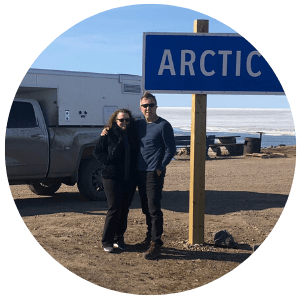
The PanAm completed in April, 2022 and with the truck camper sold, we shipped our new Sprinter van to Australia in late 2022. We travelled there through all of 2023 and into 2024 before shipping it up to North East Asia where we travelled for 4 months between Korea and Japan, before shipping it back to North America. It’s our plan to continue exploring the world in 2025.