From Zadar, our route south followed a series of picturesque coastal towns around Split, a detour across to the very popular island of Hvar, a wonderfully secluded little beach camp in Duba, before culminating in that most iconic of all Croatian coastal cities, Dubrovnik. It’s a coastline with a LOT to see ( this did take us a bit more than a week – 10 days in fact ).
Tracking our route through Croatia, essentially hugging its coast and islands, save for a detour inland to Plitvice Lakes NP..
South of Zadar, en route to Split, lie two other Dalmatian coast gems – Primosten and Trogir. We spent more time at historic Trogir, and stayed the night, finding a beautiful park up spot right by a nearby beach. Such gems are exceedingly hard to find in Croatia given its draconian rules on wild camping ( for travellers coming here with a campervan I’ve provided some candid information in the addendum to this blog- worth reviewing before you come! ).
Pretty Primošten- sadly, inaccessible due to parking limitations, but we had much better luck in nearby Trogir.Truffles and olive oil are huge in Croatia – we bought some excellent stuff !In a country where wild camping is notoriously difficult we managed a great seaside spot just outside Trogir.Nice little beach with a restaurant close by, Trogir.Old town, Trogir.Main square, old town, Trogir.Old town walls, TrogirSt. Lawrences’s Cathedral, Trogir
The coast south of Split includes some of the Croatia’s most desirable islands – Brac, Korcula and Hvar just to name a few. They’re all scenic and historic and probably more the domain of the ultra rich but since we were as close as we were ever going to be we decided to put our rig on a ferry and pop on over. Hvar was the choice, and then only because we were closest to it – while the old town is one of the nicest on the coast, it was especially crowded, the roads were incredibly narrow and much of Hvar island, save for the old town in Hvar town itself, is not particularly scenic. Interesting though, to wander the backstreets of the old town and the waterfront marina to check out how the top 0.1% live – there were some incredible motor yachts docked there ( one 70m long ! ). Its impressive old castle affords stunning views over the old town and out to the smaller islands offshore.
Amused ourselves on a beachside swing while waiting for the Hvar ferry.Waiting for Hvar ferry.Arrival in Hvar, on the far south end of the island. We then realized it was over a 1 hour drive on tortuously windy and very narrow roads to reach the town of Hvar itself.Hvar waterfront.Some, including us, arrived on Hvar like this, while others…..….arrived in somewhat more “style” !Fishing boat marina, Hvar.The climb up to the fort.We saw some pretty aggressive signage in Croatia and some incredibly steep fines for infractions ( for parking or for wearing the wrong beach outfit ! )Beautiful view from the Fort, Hvar.
Needless to say, we were not long on Hvar and soon left. Continuing on down the coast, we stumbled upon what for us was a real diamond in the rough. A beautiful little secluded, rustic campground, right on the beach, near the town of Duba, away from the crowds and main road, and with all the facilities we needed. For the most part, there were just six of us camping there and we spent a wonderful few days, relaxing and simply winding down – the beach just metres from our van. This we need to do more often !
Beach camping, Duba.Sunset, Duba.Camping, Duba.
Freshly rested, we prepared for the final coastal assault in Croatia – Dubrovnik. As mentioned, unquestionably its best known coastal landmark and justly so, its famously walled old town attracts visitors from all over the world. For obvious reasons, they’ve struggled with tourism overload so we didn’t even pretend that we were likely to park anywhere nearby. Instead, we parked outside the city and just walked in for the day. It was a stunningly beautiful day as can be seen from the pics below.
Insane crowds in Dubrovnik ( two cruise ships in port that day ).This part of the old town was reasonably sane .Dubrovnik’s old town sits, literally, right on the water.Pretty fishing marina, Dubrovnik.View of the town showing the walls surrounding it.
With Dubrovnik’s sights completed, it was a wrap for Croatia. Only about 30kms further south lies Montenegro, a place we loved before and one we were excited to return to. In our minds Montenegro ( which we passed through on our first 3 months in Europe ), was the point from which we started heading north to Amsterdam. Getting back to Montenegro then, was really just picking up from where we left off in May.
Till next week……
In Case You Wondered:
Q: How do you fill propane/lpg tanks given that fittings are different all over the world ?
A: Fortunately we don’t have this issue as we do not use propane anywhere in the vehicle. We use a diesel heater and an induction cooktop and love both. Propane tanks are a headache to fill on the road and a nightmare when it comes to shipping ( which we discovered in South America – we had a propane tank in our truck camper ). It’s also very flammable. More and more people are foregoing propane. For a camping stove the standard butane cylinders work well, are cheap, disposable, and can be bought everywhere in the world. We carry a couple (as backup only) with a small stove that we have.
If You Take A Van To Croatia
This is a little side note that will be of interest and relevance only to those travelling to Croatia ( and Slovenia ) with a van/RV/motorhome.
We had been warned about Slovenia and Croatia prior to our arrival in these two countries but didn’t believe the stories until until we saw it for ourselves, The hard truth is that these two countries are probably the worst in Europe for travelling with your own rig. They hate people in campervans ( they figure that the Croatian tourism industry is not benefitting sufficiently from them since campers typically don’t stay in hotels, nor eat regularly at expensive restaurants). They make parking very difficult, in some cases, impossible, and always charge punitive premiums for vans versus regular cars, applying differentials that simply defy any logical explanation. There seems to be a national crackdown on parking and any larger vehicles are particular targets. The fines are heavy and it is a “take no prisoner” approach.
Take a look at the picture below as an example. We pulled up behind a German couple on a scenic roadside pull out just south of Split and planned to have lunch there and enjoy the view.. Then we noticed a parking sign just behind us, indicating €2 per hour for a car and, wait for it, I kid you not, €50 per hour for camper vans.!!! Yep, 25 TIMES THE CAR PRICE ! Needless to say we quickly moved on, as did our German friends. This would have been free anywhere else in the world. It was but one example. In many places, campervans were prohibited from parking at all. One Just did not feel very welcome in this country.
A beautiful view !Quite the premium to park our van (€50 per hour !! ).
Costs at attractions were another irritant in Croatia ( and totally out of whack with costs we saw in other countries in Europe). We paid €40 each and €17 to park at Plitvice ( that’s €97, or $US115. By way of comparison ( and to put the cost into an international perspective), you can get an Annual US National Parks pass for $80 which allows you entry to every national park in the United States and includes everyone that is in your vehicle. Invariably no parking charges. That’s considerably less than we paid to get just two of us and our van into Plitvice National Park in Croatia .
We saw this sign ALL OVER Croatia. No campervans, of ANY kind or ANY size. Even small ones that could fit in small car parks. Like I said, sadly the country has a hate on for campervans. Only in Croatia and ( to a lesser extent ) Slovenia, did we experience this. Generally, everywhere in Europe we were welcomed with open arms !
It gets worse – they asked €40 per person just to walk the walls of Dubrovnik ( and understandably got very few takers ). The prices for these types of things in Croatia were just next level and bore no relation to pricing for other comparable attractions in Europe. And yes, lots of folks complained about this as well !
Possibly the greatest tourist rip-off we have ever seen, anywhere ( and we have seen some ! ). Just to go for a walk.
Considering the extortionate fees for the Plitvice Lakes NP visit, the Dubrovnik wall-walk fee and some periodic less-than-friendly attitudes that we encountered, you could say this was just not our favourite place – easily could have been, and should have been….. but wasn’t. Everyone with a camping vehicle that we spoke to said the same thing and no one could figure why the attitude to campervans was so harsh and different to everywhere else in Europe. Hopefully that may change.
The last time we came to “Slovenia” it was part of Yugoslavia and the “Eastern Bloc” ( remember that terminology ? Seems so passé these days. ). Apart from a little Cold War memorial we saw on the way in ( mentioned in the last blog ) there is almost no hint of those days any longer. Indeed, Slovenia ( and Croatia ) look so much like nearby Italy that you’d never know they were once ( however loosely ) under the Soviet embrace. Both now use the Euro, are in the EU and belong to the Schengen border program – as a result, travel within and between them is a breeze.
There were really just a couple of attractions that appealed to us in Slovenia – Lake Bled and then the massive underground caves of Postojna ( Europe’s largest ). Slovenia is small and getting across it from Austria to Croatia required only a couple of days and included both of these great sights. Lake Bled is postcard-like and the Postojna caves are as close as we’ve been to a “Journey to the centre of the earth” experience !
Pretty Slovenian village en route to Lake Bled
Even if you don’t recognizing the name, I’m sure most readers will have seen pictures of Lake Bled. It’s a stunningly beautiful little lake near the town of Bled with a small island at one end on which a beautiful cathedral sits. Overlooking the lake and cathedral is a very impressive castle. It’s a beautiful two hour walk/hike around the lake and at various points excellent photo opportunities emerge for both the cathedral on the island and the castle up above. It was a magnificent day so we had plenty of company, but it’s the kind of place you don’t really notice the crowds. Why we missed this place before I don’t know, but glad we made time to check it out on this occasion.
Lake BledCastle, Lake Bled
The other “biggie” in Slovenia is the huge Postojna cave network. In contrast to Lake Bled, the weather forecast for our Postojna visit was not good, but, given that it’s a cave and of course completely underground, it didn’t really matter at all. A German fellow that was camped with us the night before insisted we should check it out – this turned out to be excellent advice. Again, huge crowds, but well handled by the Slovenians who have been guiding tourists around this place for almost 150 years.
Postojna Caves Ditto
There was one other place the aforementioned German traveller told us about – the beautiful Venetian-era coastal town of Piran so we made sure to travel to that little bit of the Adriatic coast that belongs to Slovenia to check it out. The images looked stunning and he’d gotten us both quite excited to visit – sadly, like in Italy’s Dolomites, parking was literally impossible ( signs everywhere prohibiting campers/trucks and buses ). We would have happily walked in from the outskirts, however the parking out there also prohibited campers, giving us no other real options. This was a very new experience for us – we had faced no such restrictions anywhere else in Europe, though we had been warned that both Slovenia and Croatia ( seemingly alone among the 30 Schengen states ) make it literally impossible to get campervans anywhere near their “crown jewel” attractions. It did not take long to experience it, and not, I must add, a very welcoming experience ( one which stood in stark contrast to our experiences everywhere else on the continent ). Noses firmly out of joint, we moved on, crossing next into Croatia.
Piran – pretty, but was not to be !
While our time here was absolutely fantastic in terms of weather, scenery, nature, historic attractions and STUNNING coastline, the whole “anti-campervan” vibe in Croatia was simply next level. Won’t bore regular readers with the minutiae since it would be irrelevant to to the average tourist however for those travelling with their own wheels it’s something one absolutely needs to consider ( I’ve added a little addendum to next week’s blog to further illustrate what we experienced – you’ve been warned ! ).
First planned stop here was historic Pula on the ( formerly Italian controlled ) Istrian peninsula – a beautiful day made for some excellent sightseeing the highlight being their Roman-era arena ( like, 1st century ! ) – truly, you’d swear you were in Rome at the Coliseum ( not quite as big but much more of this one is preserved ). The whole town is beautiful, so much of it dating back to Roman times ( the Italians really did have a huge influence on this side of the Adriatic and their influence lingers to this day – every sign, and menu is in both Croatian and Italian).
Roman Arena, PulaDittoTemple of Augustus ( dating from 2 BC ), Pula.BackstreetRoman ruins, Pula
From Pula the route was to travel south along the coast checking out towns and islands of note – one is truly spoilt for choice, there being so many options. Circling around Rijeka, the island of Krk is first up. Conveniently connected to the mainland by bridge, we decided it was worth a look and spent a day sightseeing there. The old town Krk was definitely of interest, although the rest of the island didn’t stand out to us in any way.
Walls of the Old Town, KrkA typical roadside bay on the Adriatic coast. We stopped for a swim in this one.
Further down the coast, though, lay one of Croatia’s crown jewels – Plitvice Lakes National Park, and it lived up to its hype in every way – just an amazingly impressive area of lakes and waterfalls, made unique by the way in which the lakes are tiered and flow into one another. A picture perfect day just made an already great natural sight even more impressive. The fact that we managed to get a 12km hike done in the process of seeing it all – bonus !
Plitvice National ParkDittoLine up for ferry on the lake…!….and the “African Queen” era ferry 😳More lakes in Plitvice DittoDitto
From the higher ( and definitely cooler ) elevations inland at Plitvice, our route meandered down to the coast and the historic port city of Zadar. Somewhat like Pula in terms of its historic old town which was vibrant on a very sunny Sunday ( a cruise ship in port ensured the crowds were big ). No problems accessing the town and finding parking ( thankfully ) and enjoyed our time exploring there. As we were sitting on the waterfront promenade there was an unexpected bonus – the Croatian Air Force put on a very impressive aerobatic display ( see attached video ) a delightful way to close out our time in Zadar !
Zadar, 11th century Benedictine Monastery of St. Maria Waterfront promenade, Zadar. Great place for an airbase !Not quite Hvar, or Dubrovnik, but Zadar also attracts a lot of very high end cruising boats.Busy old town, Zadar
In the coming week we’ll continue down the Adriatic ( or “Dalmatian” ) coast- lots to see and the weather forecast looks awesome 😎 !
Till next week…
PS: Last week I was lamenting the volume of traffic on the Paso de Stelvio and thinking we were perhaps a few weeks too early. It would appear not ! Check this out:
Q: How do you insure your van for international travel ?
A: For Canadian registered vehicles, provincial insurance only covers Canada and the US. Beyond that you need to get coverage in the countries or regions you are travelling in. In all our travels, only in Mexico, Japan and Australia were we able to get comprehensive insurance – everywhere else we have been limited to third party coverage, typically sold as “border insurance” when you enter a country. It’s mostly fairly cheap but covers only the minimum that is legally required ( which is often quite low ! ). In Europe, one buys “Green Card” insurance by the month, the first month being more expensive but subsequent months being €108/m. We have used Tourinsure ( from Germany ) and found them very efficient. It’s liability only but has more reasonable limits and covers all countries in the EU ( and thus is quite convenient ). One can get comprehensive cover in Europe but it is VERY expensive. Best insurance is to drive very carefully and hope that any accident is deemed the fault of someone else ( assuming THEY are insured ! ).
Starting high atop the Stelvio Pass, our plan for the coming week was simply to continue east and explore Italy’s world renowned Dolomite mountain range ( “Dolomiti”, to the Italians ), briefly cross southern Austria and then head south down the Adriatic coast with a brief stop as we crossed Slovenia. If that sounds like a lot, it’s actually all very close together ( the beauty of Europe ! ).
The run down the Stelvio Pass was just as exciting as the climb up to it and again we saw plenty of folks out walking, riding, but mostly driving this iconic road. Scenery was at all times breathtaking as was the variety of exotic cars we saw testing out its famous curves. Highlight was a classic Aston Martin DB5, closely followed by an E-type Jag of the same vintage. I was drooling. More Lamborghini’s and Ferrari’s than we could even count !
Very grainy shot as it was enlarged but the classic lines of the DB5 are clear. And look what is coming behind it !….another classic. The unmistakable, incomparable, E – type Jaguar. And, being driven on the Stelvio, no less .
After a little bit of rural northern Italy we approached the famous Dolomite mountain range. If we did not underestimate the stunning beauty of the Dolomites ( their reputation is very well deserved ) we most certainly did underestimate how popular they were. The roads were intensely busy, parking ( anything, even small cars ) was a real challenge, and getting access to its more famous hikes ( Seceda, Tre Cime, for example ) proved nigh on impossible. The fact that it was a Saturday again ( did we not learn anything from last Saturday in Chamonix ? ), one of the last weekends of summer, and probably the most perfect day of the year meant that it was a gong show of people and vehicles. Loved the couple of days, total scenic overload, but could have done without the crowds.
Views coming off the Stelvio PassHo hum…..just another Italian exotic car on the Stelvio Pass ( lol ! ).The Italians all love to travel to “Le Dolomiti” !Dolomites in the distance.Beautiful lighting when we camped the first night.Dolomites – in places reminiscent of Torres del Paine in Chile.Dolomites, near St. Christina.One of the days was picture perfect – the bluest skies, the greenest mountainsides.One of those places where you just had to get out and soak it all in ( when you could find a place to stop !!).Paso de Falzarego, the pass we went through. Coming down into Cortina d’Ampezzo ( site of the 1956 Winter Olympics.Pretty Lago do Ghedina, just outside the ski village of Cortina d’Ampezzo.This is typical of what one faces on a beautiful summer’s day in the Italian Dolomites -Tre Cime ( and Seceda ) are a couple of the more spectacular ridges/formations and attract huge traffic. We could not even get parking, much less make our way to the gondola where the line ups were brutal. Fortunately still many other stunning views elsewhere in the area.Tried twice to access Tre Cime but they turned us back both times 😟.People parked miles away, then lined up for buses. Crazy popular place.Still lots of beauty here beyond just the well known ones.
At this stage we’d had our fill of beautiful mountains, our necks now kinked from constantly twisting 180 degrees to take it all in. Leaving Italy through southern Austria we ended up spending a couple of days in and around a pretty town called Villach. The front brake job we had skipped in Amsterdam ( due to a parts delay ) still needed doing ( if not before, then certainly after the workout they got coming down those high passes in Switzerland and Italy ! ). The local Mercedes dealer was able to get them in and install them in 2 days so we decided to wait it out and have the work done there. The folks at MB in Villach were super helpful and once the parts arrived it was all done in just a couple of hours – we should now be good for many more mountain passes !
Extremely helpful service from Mercedes Benz in Villach, Austria. Thank you, Mary and Michael.
From Austria we will finally start heading south again – in the coming blog we’ll share an update on Slovenia and our first days in Croatia.
Museum of the Cold War era on the Austria/Slovenian border.
Till next week…😉
In Case You Wondered
Q: What do you do for medical insurance being away for so long and isn’t it expensive ?
A: We’ve used several different medical providers over the years but most recently have been using IMG Global, a US company. They have a good reputation, offer a variety of tailored options, and make extensions easy ( a feature we often use ). We returned to Canada in late May, 3 weeks before our policy expired, and they even provided a pro-rated premium refund. In our experience, few companies do this. Most importantly they allow us to select a higher deductible ( excess ) in order to keep premiums more affordable. We “self insure” up to $2,500 USD and so far ( fingers crossed ! ) that’s worked well for us.
From our first visit here in 1985, and through a couple of others since, this has always been one of our favourite countries – and one of the countries in the world that we admire most.
Had not thought of castles in Switzerland but passed this one near Martigny on the way in from France.We were also surprised by what looked like terraced vineyards in the area – wine, from Switzerland ?
This visit we had a few specific goals – drive some of Switzerland’s great mountain passes, explore regions we had missed before ( in the south and south east ), revisit a couple of our favourite places, and finally, visit some old friends we had last seen a few years back at an Overlander camp in Buenos Aires.
First, the road trip. From the very beginning of our retirement travels ( back in 2019 when we created the OneEndlessRoad website ), our primary goal was simply to drive some of the worlds great roads. In the years since we’ve been working our way through many of them ( the full Pan Am, the “full lap” of Australia, to name but a few, and of course, countless legendary national road trips within these long national and international routes – Chile’s Carretera Austral, Argentina’s Route 40, Australia’s Gibb River Rd and Cape York Track being among the more memorable). Switzerland, while not offering any such lengthy road trips of note, does offer some world-renowned high mountain passes (one of which was even featured in a classic James Bond movie). While sadly not doing it in an iconic Aston Martin DB5, we still managed to drive the famous Furka Pass ( featured in Goldfinger ), and nearby Grimsel Pass, the even more stunning “Paso de Stelvio” ( Stelvio Pass ) connecting Switzerland with Italy , and the Fluela Pass ( connecting Davos to the Stelvio Pass road ). These, in addition to the impressive back roads we took across Crans Montana and the Appenzell region made for an incredibly memorable driving week in Switzerland – it’s just that kind of postcard-like country in which every direction you look, you see something of stunning beauty. Equally impressive was to see the range of truly exotic and iconic European sports cars traversing these routes, along with a couple of old British classic cars as well. Seems we were not the only car ( or, in our case, ‘van’ ) buffs on the road in Switzerland that week.
Swiss countryside in the way to Furka Pass.First view of Furka’s famous switchbacks.The view down over Furka from above.A tedious, slow climb but made it to the top. Here the elevation is 2,429 metres.You might recognize this famous ( but now closed ) hotel from the car chase scene in the James Bond classic movie “Goldfinger”. It was built into the inside of a very tight hairpin bend. Still attracting tourists over 50 years after the movie made it famous.Hotel Belvedere, Furka Pass.Tacky tourist shot !From the Furka Pass to the almost equally challenging Grimsel Pass.Traditional Swiss scene at the bottom of the Grimsel Pass.
In between all these particular mountain pass roads, time was made time for revisits to Interlaken and Lucerne, two of Switzerlands prettier attractions which fell conveniently within our path across the south of the country. Both offered exceptionally clear and sunny days making for memorable return visits.
Brienz, near Interlaken.Downtown in beautiful Interlaken.View from Interlaken.A street scene, Interlaken. Not sure which city started this “inverted umbrella the” thing, but we have now seen it in at least half a dozen other places.Mountain road en route to Lucerne.Our prettiest camp spot in Switzerland- just across the lake from Lungern. We woke up to this view.Lucerne city – one of Switzerland prettiest.Selfie time.
Great road trips and scenic cities are always highlights when you are on the road but so too is the opportunity to catch up with old friends. We had kept in contact with Peter and Nicole over the past 3 years since last meeting them at a campground in Buenos Aires as we wrapped up the PanAm. We enjoyed a few wonderful days together there and went out for dinner in the city on a couple of occasions. They’ve spent many years traveling South America in their 4 x 4 VW and we have enjoyed following their overlanding adventures since we left them. Fortunately, this summer found them back in Switzerland for a few months R&R so it provided a great opportunity to stop by and see them in the picturesque community of Gonten where they live. It’s a stunningly beautiful place and close by is the city of Appenzell where we joined them to watch one of Switzerland’s seasonal “cow descent“ ( or Alpabfahrt ). A visit to the nearby Laderach chocolate plant gave us the opportunity to get involved in making some chocolate and to learn about just exactly what goes into making this legendary Swiss product. Sharing the time with them and their good friends Bruno and Regula ( just back from an overland trip to Georgia themselves ) and enjoying a traditional Raclette dinner with them was a real highlight of the trip so far – I don’t think we have had such an intense culinary and sensory experience in some time ! Thank you, Peter and Nicole !
Visited Laderach chocolate factory – hand a hand in making some for ourselves and enjoyed learning how the Swiss kits make it so well.The “blonde” chocolate fountain. I took a few extra tastes at this one – divine !Our creations on the conveyer for cooling.Lois’s finished map of Switzerland.…and mine.In the almost 4 month long hunt for Europe’s best hot chocolate, the search ended with this one from Laderach. No surprise then that one of the best chocolatiers should make the best hot chocolate !Wonderful reconnection with our dear Swiss friends, Peter and Nicole – we’d last seen each other in Buenos AiresHappened to stop by as Bruno and Regula were visiting while n route home to a Switzerland from Georgia – great tips gleaned about a possible trip through there.Nicole treated us to a traditional Swiss Rackette dinner. The BEST cheese !Shout out to Peter, whose impressive array of tools helped me with some maintenance on the van. High light of our stay in Gonten – the traditional Swiss “cow descent”, or Alpabfahrt.If we were not listening to church bells, then it was cow bells. Such a peaceful rural sound- the bells can be huge !
From Switzerland, the plan is to tour through Italy’s legendary Dolomites for a few days before heading to Slovenia through eastern Austria. Lots to see. I’ll close this week with a few shots of our last “drive” in Switzerland – from Gonten, south east to Davos and on through the Fluela Pass to Zernez and then to the Stelvio Pass on the Swiss / Italian border ( exhilarating, to say the least !).
Left Gonten for the Stelvio Pass – almost missed the fact that it cut through the bottom of Liechtenstein and this beautiful castle in Balzers.Scenery en route to Fluela and Stelvio passes.A couple of Lotus’s and a Porsche Boxster overtaking us on the way to Stelvio. We were overtaken…..a lot !Memorial at Stelvio pass marking a military battle in WW1.Camped for the night, atop the stunning Stelvio pass.Signs marking the options to go down. Stelvio sign in the middle.View down from the top is Stelvio. A spectacular drive with incredibly tight hairpins, some requiring 2 point turns in our 7m long rig.
Till next week…..
In Case You Wondered:
Q: How do you determine where to stay each night ?
A: We have been asked this one a lot. I have periodically been adding pics of camping/parking places ( to show what’s typical ) but it seems people are especially curious about this. While campgrounds are certainly available if one needs to use them, we are fully self-contained and hence generally avoid them. There is just no need, and in Europe they can sometimes be congested as well. They can also be expensive, especially in high season, and the popular ones require booking in advance – and we always avoid that !
In cities it’s very common to use 24hr parking stations ( these allow you to get right downtown, but you are “parking” and not “camping” in the strict sense of the word ). The term “camping” is probably used somewhat generously in some cases. In these situations, one does not put chairs or awnings out – but we are still very thankful and appreciative of the flexibility to stay so close to downtown areas ( we are very respectful and certainly “don’t bite the hand that feeds us” ! ). So far anyway it just seems much easier to do this in Europe. Park4Night ( an app ) is the “bible” of European van/RV travellers in this regard. The iOverlander app is good all over the world though not quite so strong in Europe. Both these apps show both free and payable locations where one can park/camp overnight. The options are numerous – we’ve never worried about finding a place, ever.
Personally when deciding where to stay ( though some would prioritize differently ) we focus on security first, convenience of location second, flat( or “flat’ish” at least !) third, with reasonable quietness next. Any other benefits are a complete bonus. We don’t hesitate to drive right downtown and have done so everywhere we have been, the advantage of having a rig that, while spacious, is still quite easy to manoeuvre.
During our summer break back in Canada ( but also at other points in our van travels ) we’ve been asked lots of questions about our somewhat extended “life on the road”, ranging from the technical, to the personal, to the financial, to the operational and various other aspects of it. Over time I’ve made a bit of a mental list of them and recently collated some of the more common ones – in the coming weeks I thought I’d add an addendum to the blog as a short “Q and A”. If some were asking it, we figured, likely others were thinking it ! We’ll kick it off at the bottom of this week’s edition ( feel free to send us any others that you would like answered ) 😊.
One of the toughest things about travelling in Europe is the simple fact that you are so spoilt for choice. We’re finding ourselves a little bit tormented in a way, and by moving on in the direction we are going we always seem to be passing up something else that we feel we really should be checking out – a nice problem to have though, I suppose. Seems each time we make a detour there is something else equally appealing if we could “just drive a little further on” ! So that’s kind of how we got where we are now ( south eastern France, exploring some of their historic villages and cities ) and we have absolutely no regrets. Why go straight south when there are so many great detours to distract us !
What could be more French – classic Citroen 2CV !
This past week the route took us further south in France, through the stunning castle village of Chateau Chateauneuf, the foodie haven of Dijon ( yes, home of the eponymous mustard ), a few other smaller villages and ultimately to Annecy ( sometimes known as the “Venice of the North” ) – one of France’s prettiest small cities where we spent a couple of days. The week wrapped up with a foray into the Alps at Chamonix, and while not quite the outcome we hoped for it was probably one we should have expected 🧐.
If Flavigny was impressive, Chateau Chateauneuf took it a notch higher. The same historic, original French stone buildings and cobblestone streets, but Chateauneuf also had the most imposing castle perched high atop a knoll with the most expansive views. Taking the self guided tour of it was well worthwhile – interesting to see how the nobility lived back in the day.
Entryway, Chateauneuf.The chateau.Chateau ChateauneufSuit of armour, inside the chateau.The village of Chateauneuf.
World-renowned Dijon was only 40 minutes away and with more to offer than just its famous mustard we enjoyed wandering its historic streets and parks. Sadly, it’s famous market was not open the day we visited but we had no problem finding other sights to enjoy and an excellent lunch to savour- a foodie haven so thought it a good spot to sample the local fare.
Cathedral, Dijon.The walking tour of Dijon is easy – follow the Owl’s route !Building from the 1400’s in Dijon. Made partially with wood and still in amazing shape.One is, unsurprisingly, spoilt for choice with varieties of Dijon’s eponymous mustard.
Close to Dijon was the smaller city of Besançon and, while we would not have made a special trip to see it, there was a very worthwhile reason for the detour there that we made. While the Mercedes dealer in Troyes couldn’t help us with the EGR part we needed, the Service Associate very thoughtfully arranged for it to be delivered to the nearby Besancon dealership – most conveniently they could also fit us in for the installation. With service appointments often needing to be booked weeks in advance, we were incredibly appreciative of the cooperation between the two dealers that made it possible for us to continue travelling with what ultimately amounted to a very minor interruption. Thank you, again Saber and Cédric !
Thank you to Cédric and team at Besancon Mercedes. Not only did they get the new EGR valve it was installed quickly and with out fuss.While waiting for parts to arrive the service guys were checking our route.Street scene, village of Poligny. Originally visited because there was a great spot to camp and then realized it was also a great little village to explore. Famous for Compte cheese ( we loved it ).We’ve become somewhat addicted to visiting cheese stores – here at a market in Poligny. The local specialty is Compte…delicious.
Annecy, a beautiful small city on Lake Annecy, and just a few hours further south, was effectively our last stop in France. We had read much about this place and seen quite a few pictures so were keen to get there and explore it for ourselves. It did not disappoint. With our van parked up right on the waterfront and just on the edge of downtown, it was one of the most convenient locations imaginable and gave us lots of opportunity to explore Annecy’s beautiful attractions. It’s popular, being just an hour or so south of Geneva in Switzerland, and being a weekend it was extra busy, however the crowd of visitors from all over the world simply added to the ambiance.
Annecy.Pizza lunch.Selfie in front of Palais de I’lle, Annecy.Annecy.Coffee time, Annecy.Annecy.Thiou River, Annecy.Pont de Amours, Annecy.Annecy, waterfront. Long waterfront walks were necessary to burn off the calories consumed here !
At this stage, we planned to finally start heading east with our first stop being to visit some old friends in the east of Switzerland. East was also the logical direction we should’ve been heading ! Rather than scoot across the top of the industrial region of Italy as originally planned, we opted to cross the Alps and go straight up to Switzerland, but planned a route which would be all virgin territory to us. This gave us the opportunity to sneak in a visit to Chamonix, ( a skiing mecca and home to Mt Blanc ) just before leaving France. It was probably optimistic to think we could park anywhere near the place ( but thought we’d roll the dice ) – even a nice view of Mt Blanc alone would make a visit worthwhile and it lay right on our path to Switzerland anyway. See below – let’s just say it was fortunate we did not go too far out of our way !
Chamonix- bumper to bumper traffic, packed with tourists and impossible to park. It was the last Saturday of summer holidays on a gorgeous summer day – what were we thinking !!!Too cloudy to see Mt Blanc from Chamonix but got a good view of the glacier. A consolation prize of sorts 😊.
Q: Do you guys argue from time to time and isn’t it difficult living for extended periods in a ( relatively ) small space ?
A: A surprisingly common question ! Yes, we do, mostly about driving directions but sometimes about destinations, and routes as well. Made worse when one of us is sick, or something goes wrong with the vehicle ( the severed ABS brake cable issue in remote northern Norway in sub zero temperatures would be a good example ), or when the weather is bad ( “Jeff, remind me, again, why are we here in March ?” ) ! We actually don’t find the space “small” and we see MANY travellers in vehicles smaller and less well equipped than ours. We are very thankful for all the facilities and features our van has – helps minimize those arguments !
A typical “micro-camper” the likes of which we saw regularly during our time in Japan. As can be seen (compared to the standard Japanese sedan parked beside it), some of their campers are really small ! Very happy with the size and comforts of our van ( and having lived in Japan for 3 years we are used to small spaces ! ).
Memo to self – when you think it might be a good idea to break up an otherwise long flight from Kelowna to Amsterdam with a few stops en route, think again ! What could’ve been done in 12 hours stretched out to almost 20, meaning we arrived in Amsterdam absolutely exhausted. Lounge passes, we thought, would make things easier, but that of course assumes you can get into the airport lounge….not when they are full, you can’t ! We just should have known better – chalk that one up to a case of “seemed like a good idea at the time” 🙄.
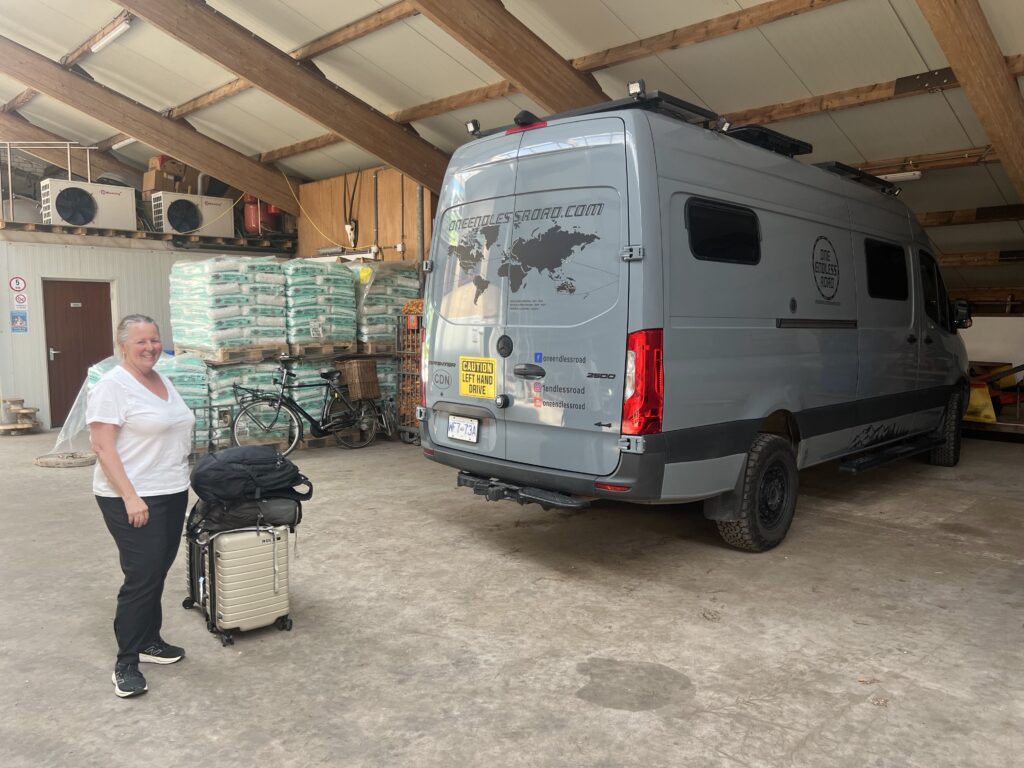
While the return flight did not go so well, things did get better on arrival – initially. The good news was that when our van was collected it was as sparkling clean as we had left it, very well cared for, and started up immediately. May seem rather obvious but one does worry about that when the vehicle has been stored for over three months. Very happy with that. We then drove straight to the same campground we had stayed in just before leaving Holland, checked in and had a pretty good night’s sleep. So far, so good.
The van looked sparkling clean when we picked it up and started right away after 3 months of no use ( phew ! ).The Swallows Nest campground, Ter Aar, near Amsterdam.
The next day we had a previously scheduled appointment with Mercedes Benz Amsterdam to replace the front brake pads ( routine ) and to ( very likely ) replace the EGR – an emission component, under warranty, that has plagued us ( and thousands of other Sprinter owners around the world ) before and was acting up again. We’d planned all this before leaving Amsterdam in May and had asked that they ensure the parts would be available when we got back. Let’s just say it did not go as planned ( no parts on hand ) and cost us two unnecessarily wasted days. Worse, they found an unexpected ( and serious ) issue with the rear passenger side shock absorber – I’ll spare casual readers the blow by blow of what happened but for those more curious about mechanical malfunctions I’ve added relevant detail at the end of the blog; not what you want happening on your first days back in Europe !
One must make the best of a bad situation ( always ) so we used the unexpected time in Amsterdam to further explore the city. Having hit the major tourist sites on two previous visits, this time we split our days between wandering the canals and sampling all the cheese and pancakes on offer ( when in Holland…..) as well as taking in the amazing sights of “Sail 2025” a 4 day expo of famous tall ships and other assorted marine vessels which happened to be on right when we were there. Made for a couple of extremely busy days ( the city was packed ) but certainly helped us take our mind off the delays with the vehicle. The entertainment was amazing !
The 2025 “Amsterdam Sail” event was in full swing while we visited – we went over two days. Have never seen so many tall ships in one place !“Sail 2025”The line for a public toilet in Amsterdam during Sail, 2025 !Amsterdam Central Station.Cheese stores everywhere in Amsterdam. It was fun to do the samples – some delicious cheeses !…..and bikes. Bikes everywhere!On a hugely busy day the Amsterdam canals were jam packed with tourists.Famous canal houses near Amsterdam station.
With only one of three vehicle tasks completed while in Amsterdam ( the shock absorber problem fortunately, as it was the most urgent) we pushed on from Amsterdam on our intended route south, first destination being the historic and beautifully maintained town of Troyes, in France. This took us through Belgium, via Antwerp but skirting Brussels, and on through the areas of France known as The Marne and Ardennes ( famous battle areas from WW1 and WW2 respectively – I can recall my grandfather, who fought in WW1, speaking about the Marne). As the day went on we passed monuments to those battles and many others, along with the very sad sight of thousands of white crosses marking the graves of young soldiers who died in the conflicts. Heartbreaking to see so many of them – their lives tragically cut so short.
Driving out of Mercedes Benz, Amsterdam. While the staff there were delightful we were quite sick of the place after visits which spanned three consecutive days due to a delay in getting parts and an unexpected power outage.
This time we passed through Belgium – no sightseeing but we did buy, what else, some chocolate !
As it turned out we never got to Troyes that day – between stop offs in Gouda and Breda ( Holland – for the cheese, of course ! ) and requisite stops at some French battlefields we only got as far as Vouziers where we stumbled on a great municipal camp site, and, purely by happenstance, the gravesite of Roland Garros – tennis fans will know him for his name adorning the stadium which hosts the French Open. Sadly, Garros, a fighter pilot, was shot down just one month before the Armistice was signed in November, 1918. He was famed for a revolutionary invention – the “through the propeller” machine gun which made him a legend at the time.
The grave of famous WW1 French airman, Roland Garros. His name lives on at the French Open tennis stadium.Sadly shot down just a month prior to the war’s end.Travel rural France and you will see lots of WW1 and WW2 cemeteries. It’s said that “Old men start wars, young men fight them”. Sadly, so very true – some of these still in their teens.A monument to a great battle fought in WW1 in Suippes. Over 10,000 soldiers are buried here.
Just a few hours further south is the small city of Troyes. While there was much damage in the surrounding area, Troyes escaped it during the two wars and as such its old town retains some of the best classical urban French architecture in the country. The cobbled streets, narrow alleys and colorful facades made for an enchanting visit. Not a place either of us knew about before but want to extend a big thanks to reader,Tjalle, for the tip – well worth the stopover !
Old town, Troyes.Old town, Troyes.Narrow alleys and buildings that are leaning. In some places they touch at the top.On the day we visited it was the 81st anniversary of a World War II battle near Troyes involving mostly US serviceman. Lots of American flags and a classic Willy’s Jeep.Troyes cathedral.Another beautiful Troyes church.So classically European. Troyes is a very beautiful town.
From Troyes we continued exploring some of the classic small, traditional French towns in the region. After the predominantly wood style buildings in Troyes, it was interesting to see the contrast with the almost exclusively stone buildings in historic Flavigny sur Ozerain. Flavigny sits up on a mountaintop with panoramic views of the surrounding countryside. Typically French and very picturesque, we look forward to exploring more places like it in the coming week.
A picturesque riverside setting in Mussy sur Seine where we stopped for lunch.Traditional French street scene in Flavigny Sur Ozerain Another. They do such an amazing job keeping/restoring old buildings in France. Flavigny is one of the more famous towns in the region.
Till next week…….
Appendix 1: The Dealership Visit Fiasco:
The brake pad check and EGR inspection revealed exactly what we had expected ( no surprise there ), but then things went totally pear shaped – not only were the parts NOT on hand, they could not give a firm date for when they would be available. Incredibly frustrating, but it got worse. While doing a quick visual inspection of the van they noticed that the passenger side rear shock absorber had sheered off from its top mount and was ( literally ) dangling loose from the other end in the wheel well. This was bad enough news but on closer inspection the bolt had not just come loose and fallen off, it had actually snapped inside the chassis rail and could be ( we were advised ) very difficult to remove. Yes, this is when you hear yourself saying, “For the love of god, why my van !”.
The intended one day dealership visit ( “and it should all be done” ) notion turned into three consecutive days of visits ( a power outage in the area causing additional delays ) with the only positive outcome being that the bolt was successfully drilled out from the chassis rail and the new bolts were ordered and installed ( as a preventative measure I asked that the other side bolt also be replaced figuring it may soon succumb to the same metal fatigue that did its partner in ). Bolts, of course, are cheap – Mercedes hourly rates in Holland, are not; $710 ( CAD ) later, we had the van back and the rear shocks, at least, were now all good. Brake pad replacement and EGR install would need to be done elsewhere due to parts availability ( or should I say, lack of ). Apparently, according to my Canadian installer/supplier, the shock bolt snapping is not uncommon ( yes, I was assured, it can and does happen even though one has upgraded suspension to handle the extra weight ). At this point, after three days in and out of the dealer, we decided to move on. Never a dull moment on the road. I will provide an update on both the brakes and EGR matter when they are dealt with.
The bolt, visible on the top of the driver side shock absorber, sheered off completely on the passenger side. It left half the bolt stuck inside the chassis requiring a special tool and much expense ( and stress ! ) to remove…😟.The passenger side shock absorber. While in the dealer for routine brake pad replacement they noticed the passenger side shock absorber had broken free of the chassis mount. The sheered off remains of the mounting bolt are visible in the green circle. Result of simple metal fatigue after thousands of kms of severely corrugated roads in Australia and just eventually collapsed they suspected.
By the time this blog appears in your email we should be back in Europe and ready to return to the road (where did the last three months go ?). A bit of a “one off” blog in that it’s mostly about our time away from the road so if you’re expecting exotic pictures and tales from Europe you’d best wait till next week. That said, we’ve had the most wonderful summer and managed to catch up with many ( but certainly not all ) of our friends and ( Canadian ) family. What follows are some highlights of our time back in Kelowna – more a “friends and family” update this time as opposed to our normal travel journal, but we’ll be back to the Europe pics and stories next week.
First up, lots of time with our granddaughter!
A friend’s retirement party provided a rare opportunity to catch up with dozens of old colleagues – all at once ( thanks Laura ! ). We have reconnected with other old friends and we’ve also done some travel within BC, taking an opportunity to visit Lois’s brother, Mark ( and his wife ) in beautiful Comox on Vancouver Island. All in all, a wonderful time with everyone – more boats, bars, bikes and beaches than we can remember ! Here is a selection of pics:
Canada Day festivities.Neighbourhood block party.Kelowna Golf Club with old colleagues, Dale and Ernie and their wives.An evening with good friends, Sue and Darrell at their cabin in Vernon.Lois, Mark, Dawn on the pier in Campbell River, Vancouver Island.A sunset on Vancouver island.Lois taking the helm.Lois reeled in the biggest fish of a successful day – this ( almost 20 lb ) Chinook salmon…!Caught up with old friend, Norm, while visiting family on Vancouver island. He and his family had relocated to “the island” a few years ago.
In addition to all the visiting, we were also delighted to receive a visit from Kym and Lyn Bolton, an Australian couple who have overlanded much of the world, most recently shipping their Fuso 4×4 from Australia to North America where they will travel for 12 months before shipping on to Europe. It was delightful to have them with us – Kym had been a big part of the inspiration for us taking our van to Japan, a country they had travelled to with theirs just a few months before us. Kym builds overlanding vehicles in Australia ( https://aav4x4.com.au/ ) – they make a great product and quite a few of our neighbours were admiring their rig parked in our driveway.
Kym and Lyn Bolton, Aussie Overlanders who stopped over with us.Like I said, they’ve done most corners of the globe !We met Kym at a camping show back in Australia.
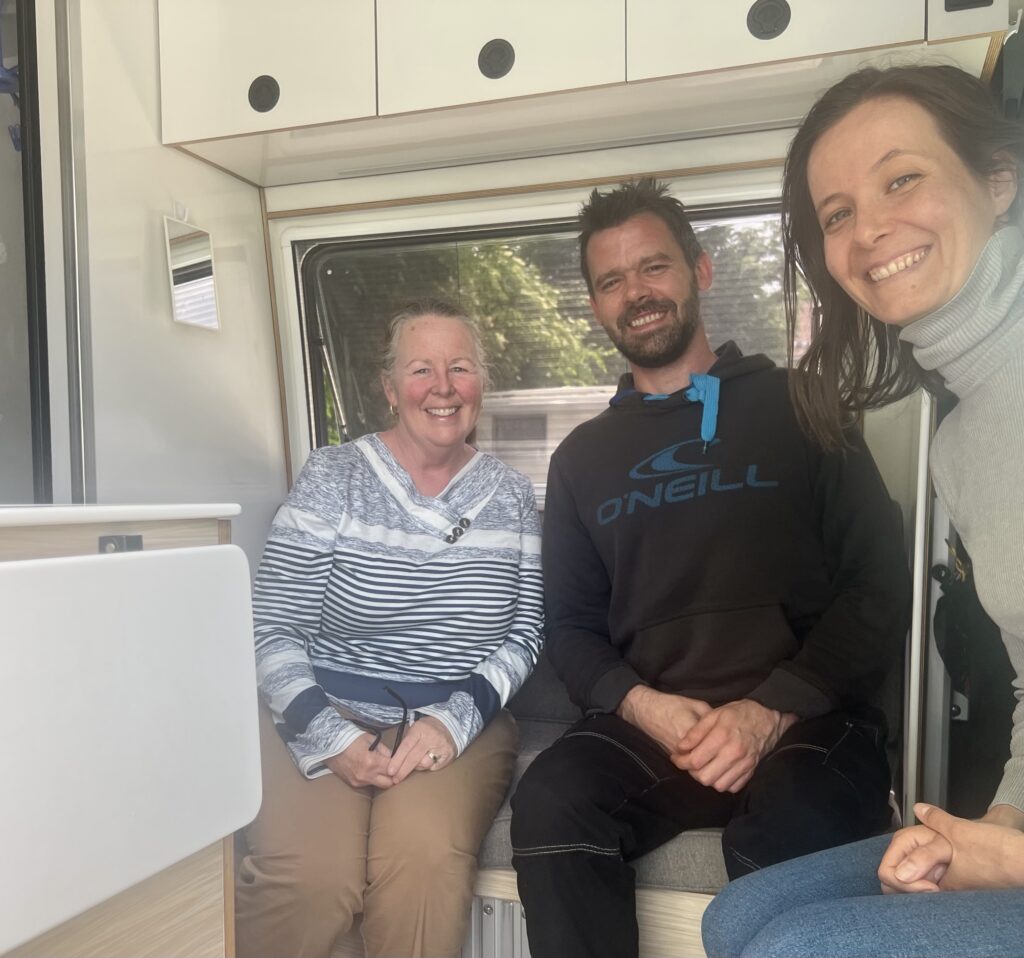
On a slightly different note we were delighted to be introduced to Alex and Nadja, a couple that met us through a mutual friend and who are very keen to get into overlanding in future. A wonderful evening was spent sharing all our tips and answering many questions; what vehicle, diesel or gasoline, which route, how to insure, the intricacies of shipping, need for carnets, and so forth. Wonderful to be able to share what we have learned and to reciprocate with others the information that we sought when we started this lifestyle back in May, 2019 ( oh my god – 6 years already ! )
Alex and Nadja, picking our overlanding brains while out for dinner in Kelowna.
Continuing the info sharing theme, good friends, Charlie and Penny introduced us to Kevin and Mandy (their neighbours) who are part way through a van build themselves and wanted some perspective and opinion on our own experience – again, a wonderful afternoon spent sharing tips and advice. Not sure we’ll ever be able to repay the many folks who similarly guided us but we feel we are getting there !
Mandy and Kev’s Sprinter. Beginning the conversion process.With Mandy and Kevin.
Two birthdays were celebrated – our granddaughter, Hadley’s 2nd and my 64th ( yes, Lois and the kids took very good care of me ). Also picked up a few parts required for some minor repairs in the van ( unsurprisingly, imperial fittings are scarce in metric Europe ) and made arrangements to have our brakes done on arrival in Amsterdam – 102,000kms on the original pads, pretty good, I thought, all things considered. News wise, we’ve been as gripped as any by the unfolding events in the Middle East – perhaps more so, in fact, since it’s one overland route we are considering after southern Europe. Encouraged to see some semblance of normality returning in the past 2 months after a violent June. Let’s hope the peace holds 🙏.
Biking around Wood Lake with good friends, Sue and Darrell. First long ride on an E-bike ( so much fun !).Wrapped up our last week in Kelowna with Mike and Aurora and family – on a gorgeous Okanagan day.Ditto.One last day at the lake….we will miss it !
In the last few days of our time at home it’s been busy; cleaning house, packing and, of course, some preliminary planning. Vehicle insurance has been reactivated , medical insurance re-started and so forth. There’s also been some preliminary route planning – I say preliminary because we are always flexible and often change our plans . Just the way we roll…! There’s a little trepidation at returning while it’s still high season in Europe, we know it’s extremely busy in quite a few places- our plan is simply to avoid major tourist locations until September.
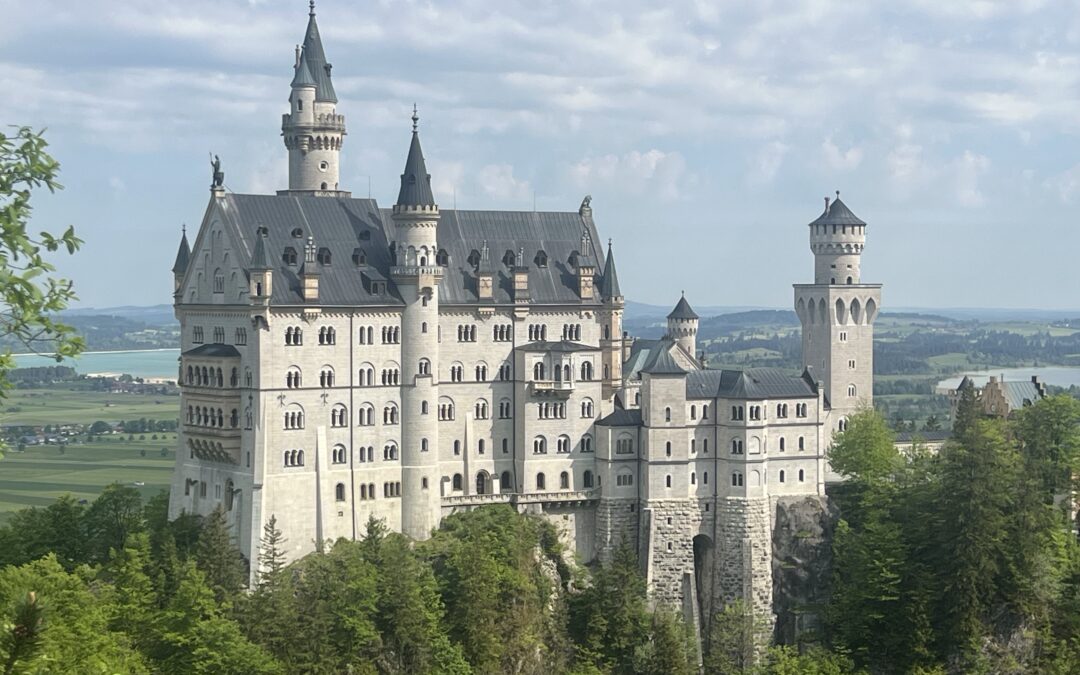
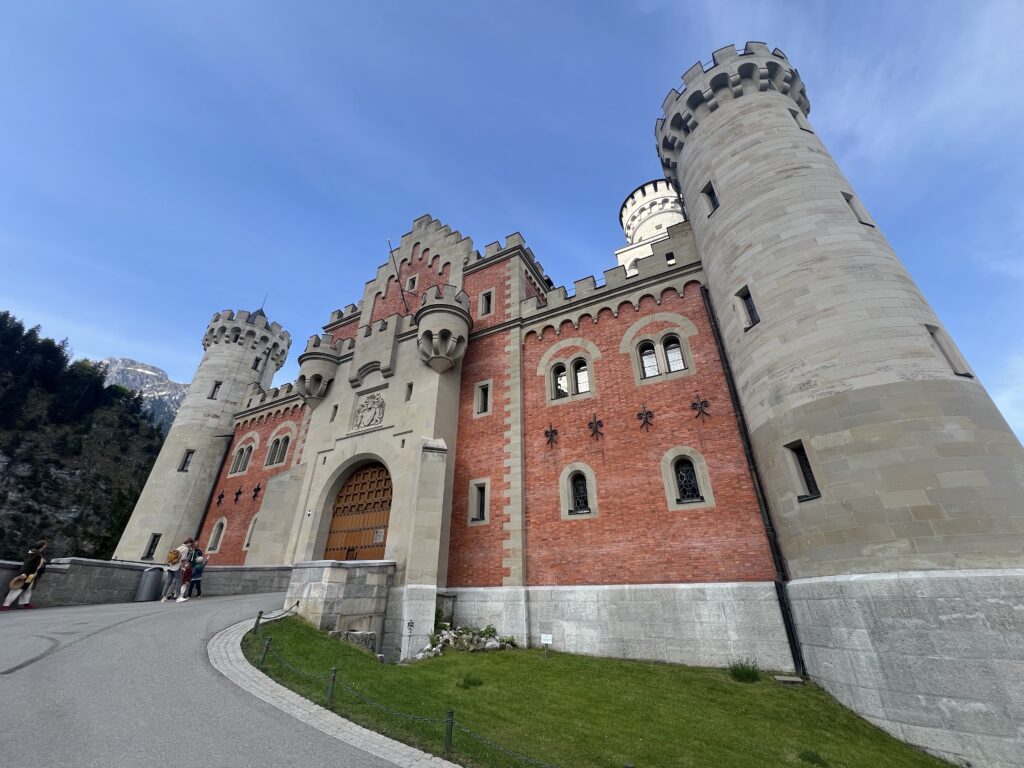
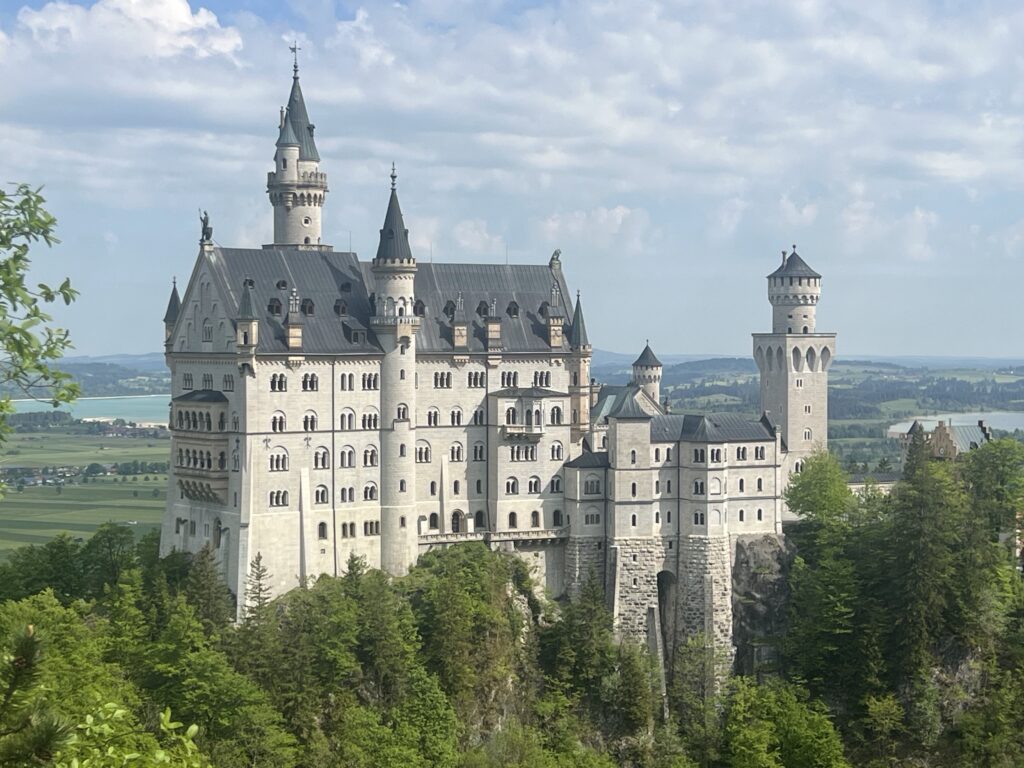
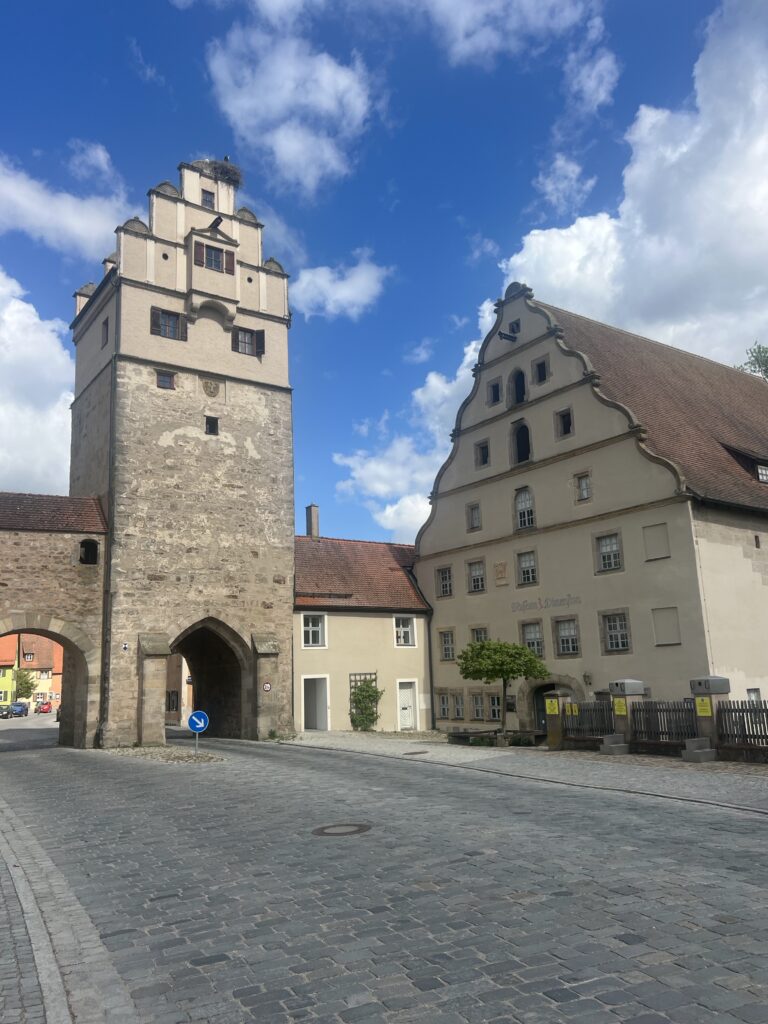
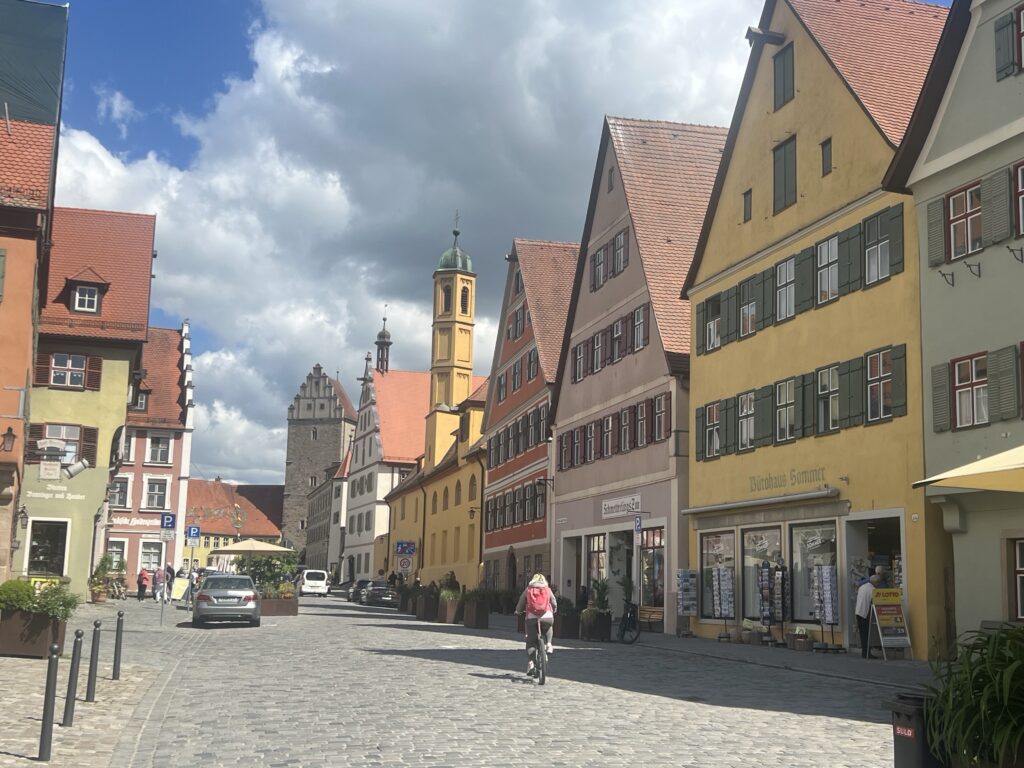
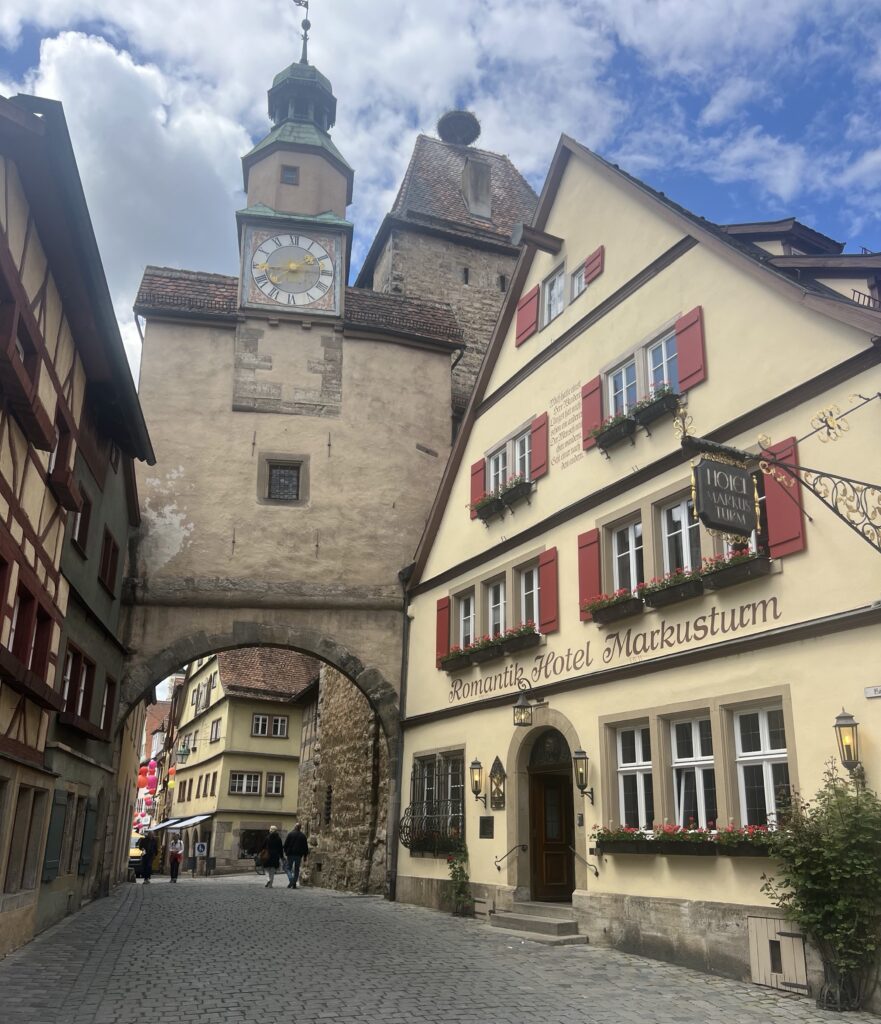
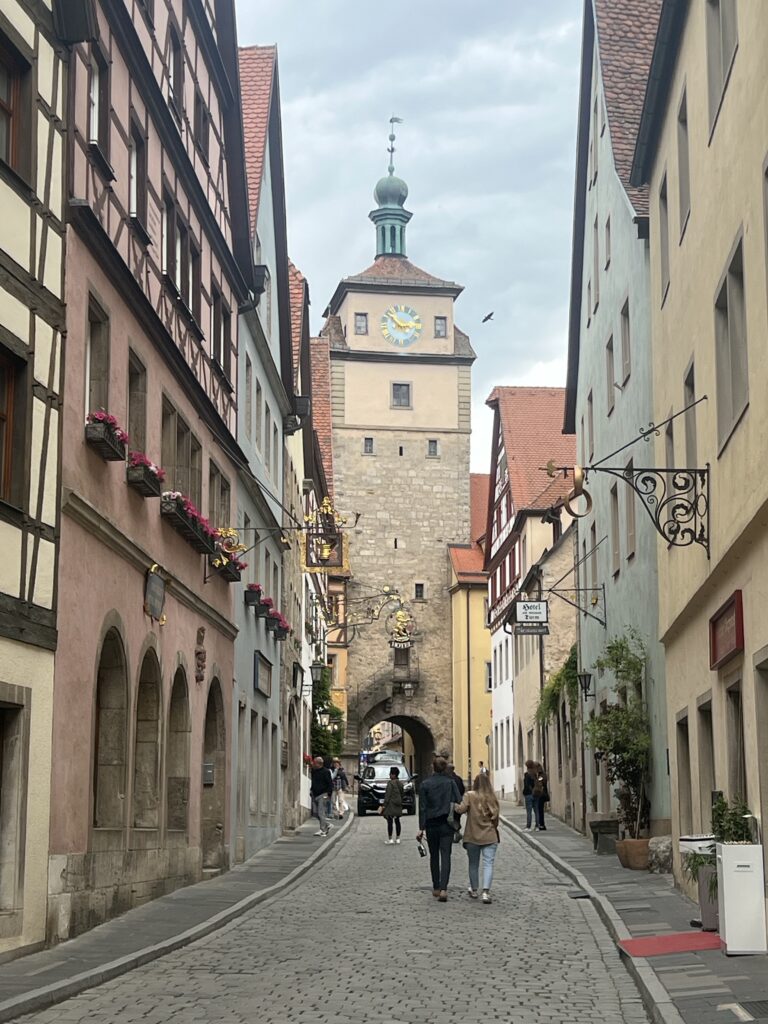
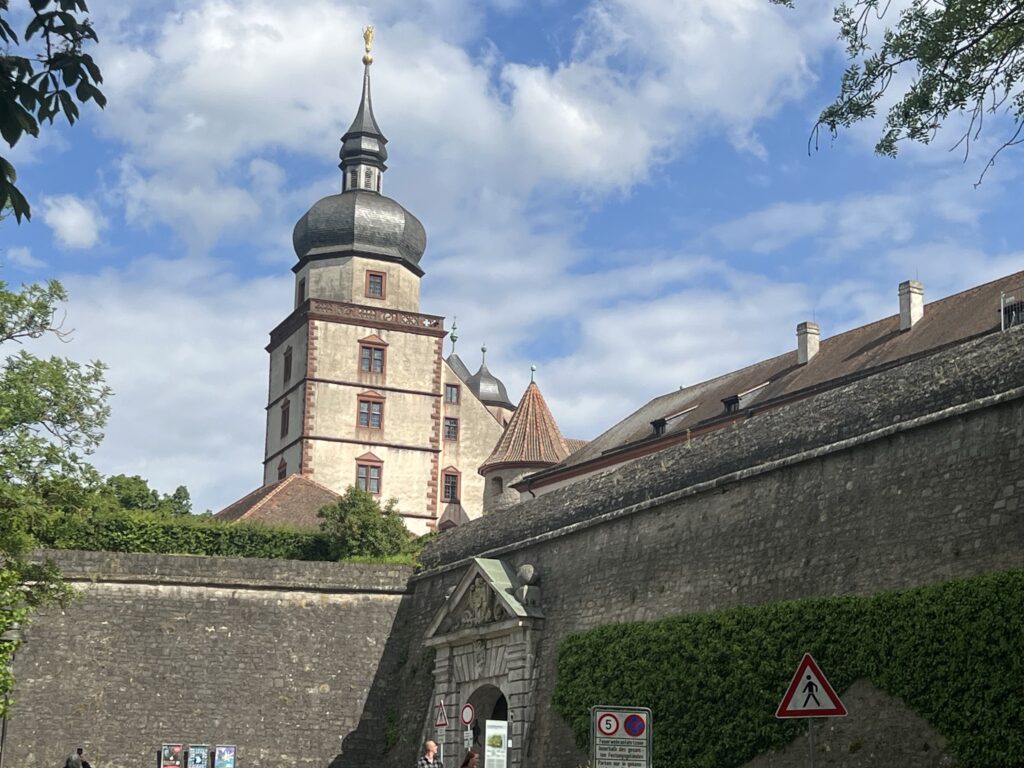
Fussen itself is picturesque but the big draw at the south end of the Romantic Road is unquestionably the fairytale castle of Neuschwanstein. Absolutely stunning, and well worth going out of our way to see it. The story behind it is fascinating, along with the tragedy of the king that built it. I’ll leave the following pictures to document our route north on the ”Romantische Strasse” ( as it’s known in Germany ) but a few favourite spots on the route ( to the surprise of no one who has travelled it ) would include Dinklesbuhl, Rothenburg ob der Tauber and Wurzburg itself. If you ever imagined what it would have been like to live, and/or travel through the Germany of centuries past, this road is a must. I’ll confess to originally thinking that it was a bit of a kitschy tourist gimmick, but it absolutely is not; rather, it’s a well connected route which pulls together some of Germany’s most beautiful and historic sights in one of the most beautiful parts of the country. It’s world class and Bavaria is just beautiful everywhere you look – we were so glad to have taken this detour for a few days on our way out of Germany.
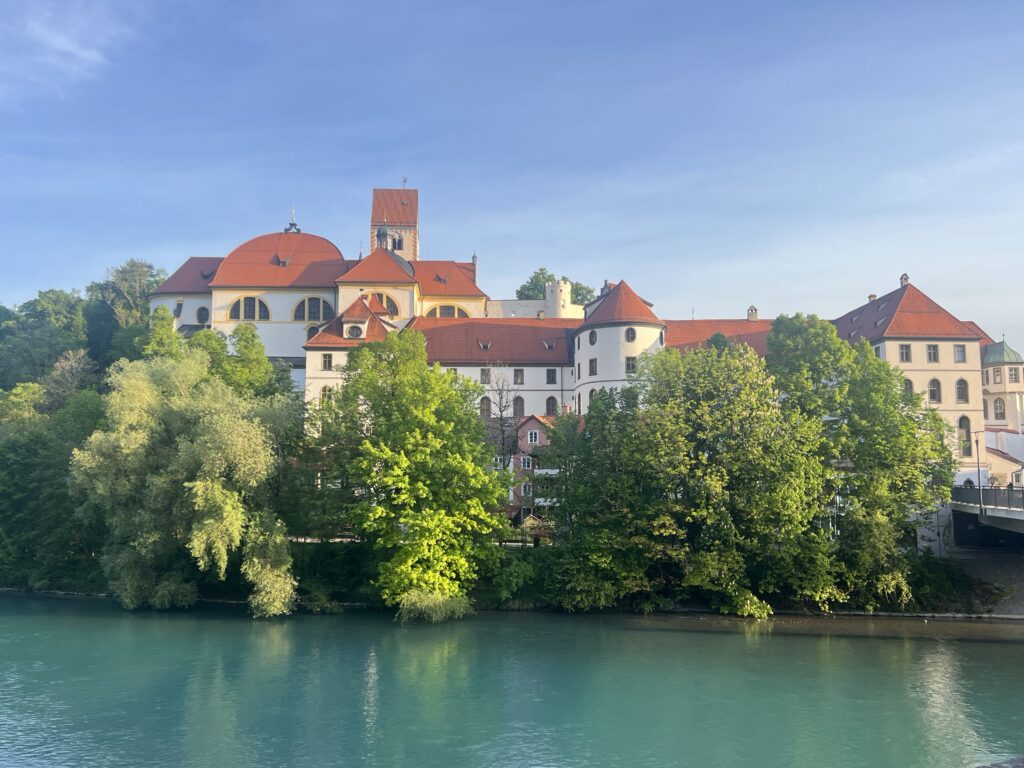
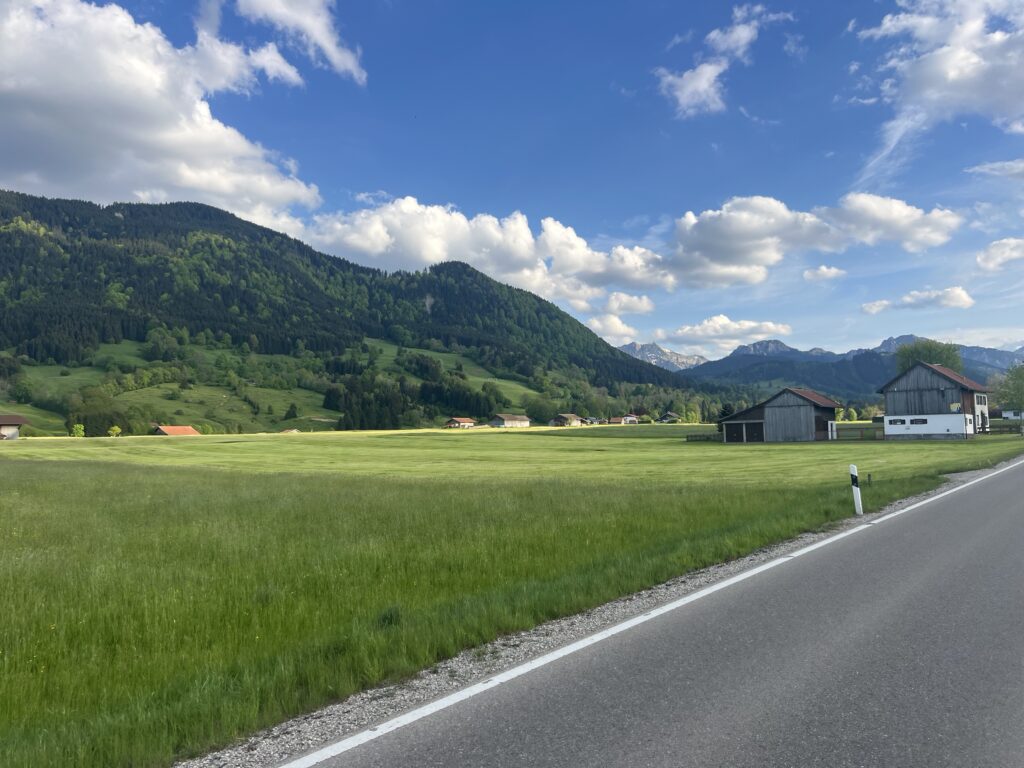
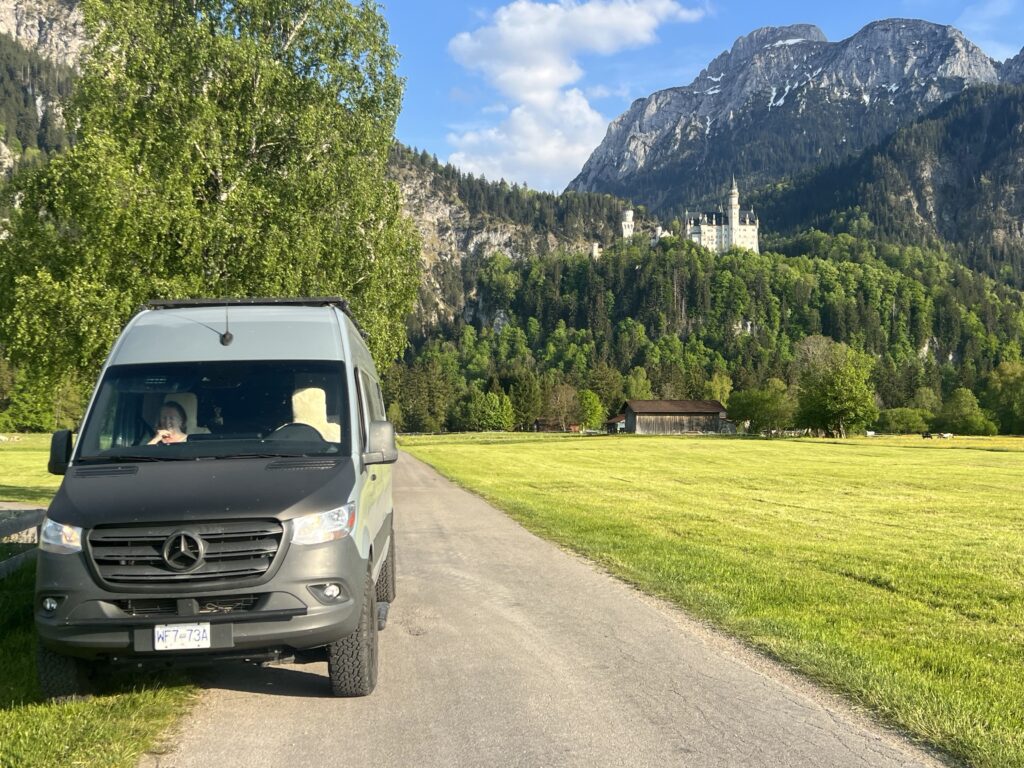
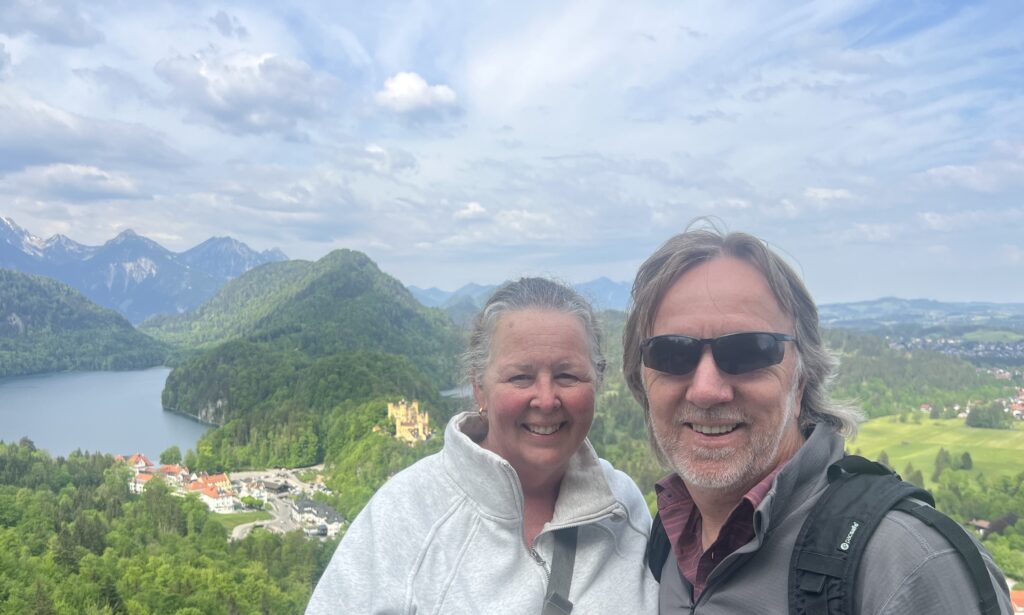
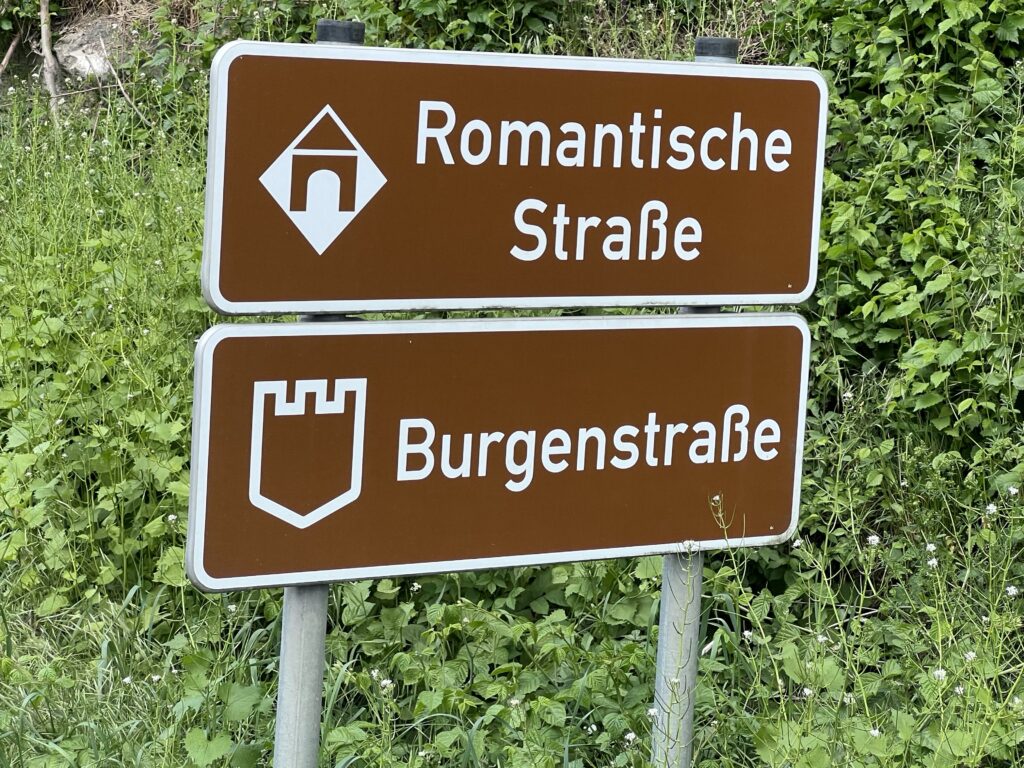
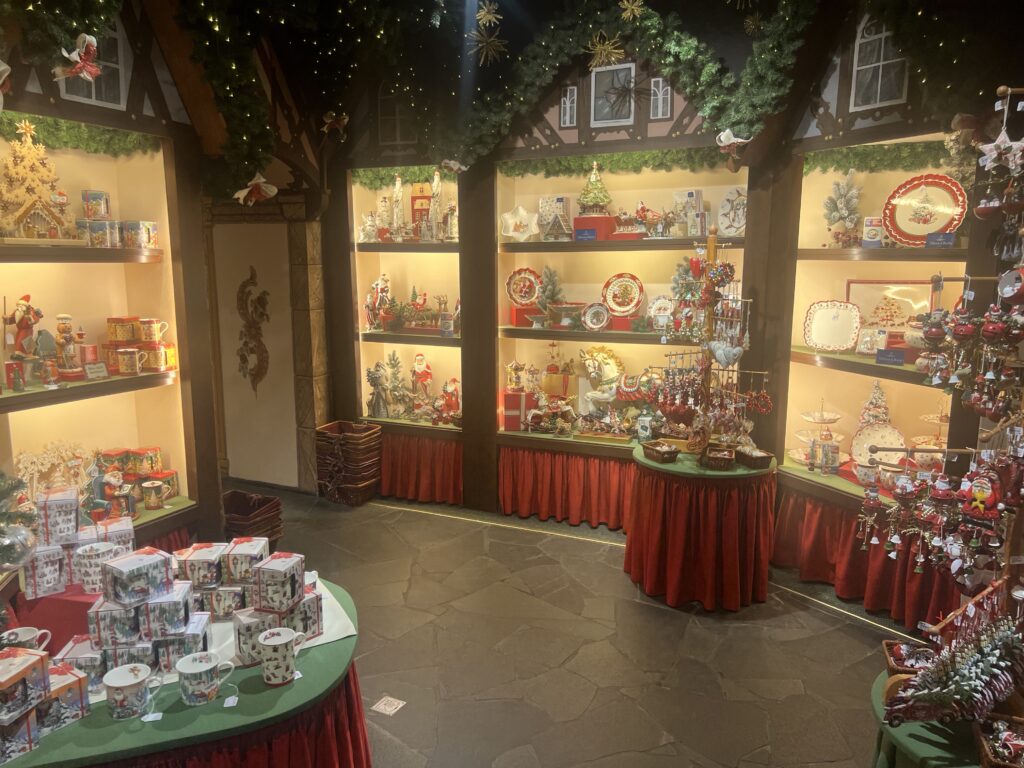
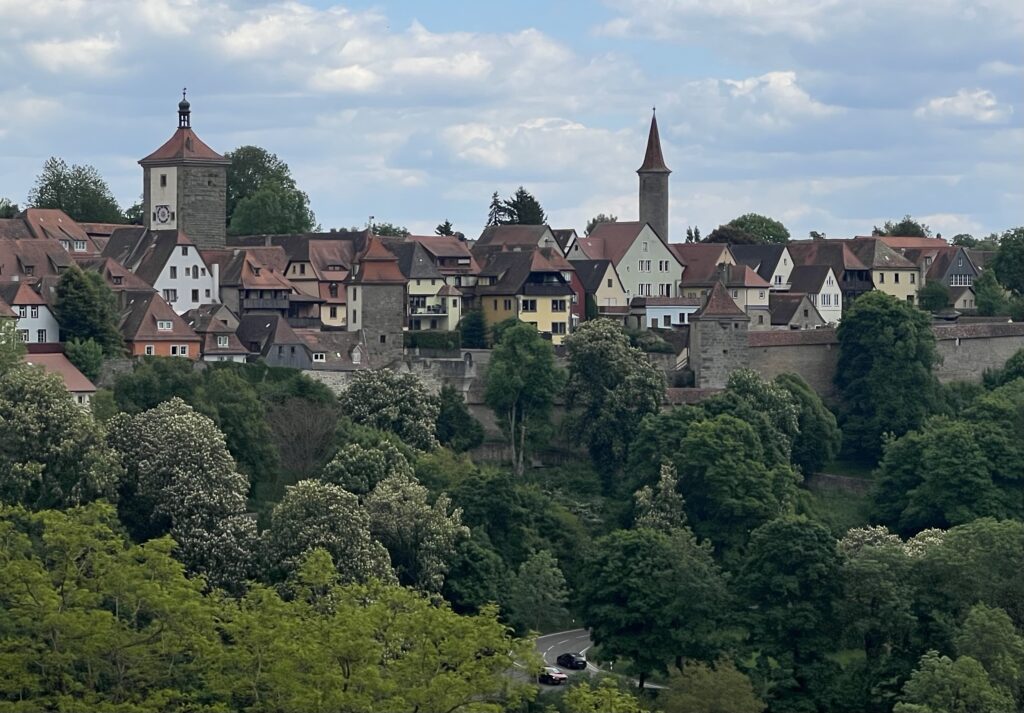
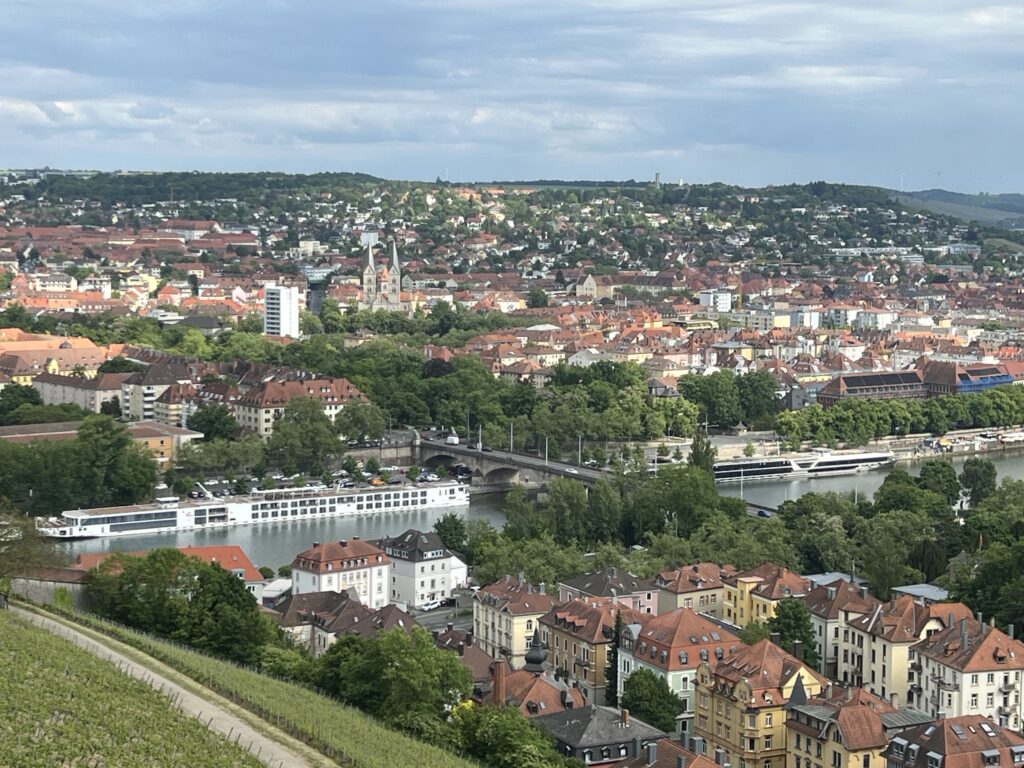
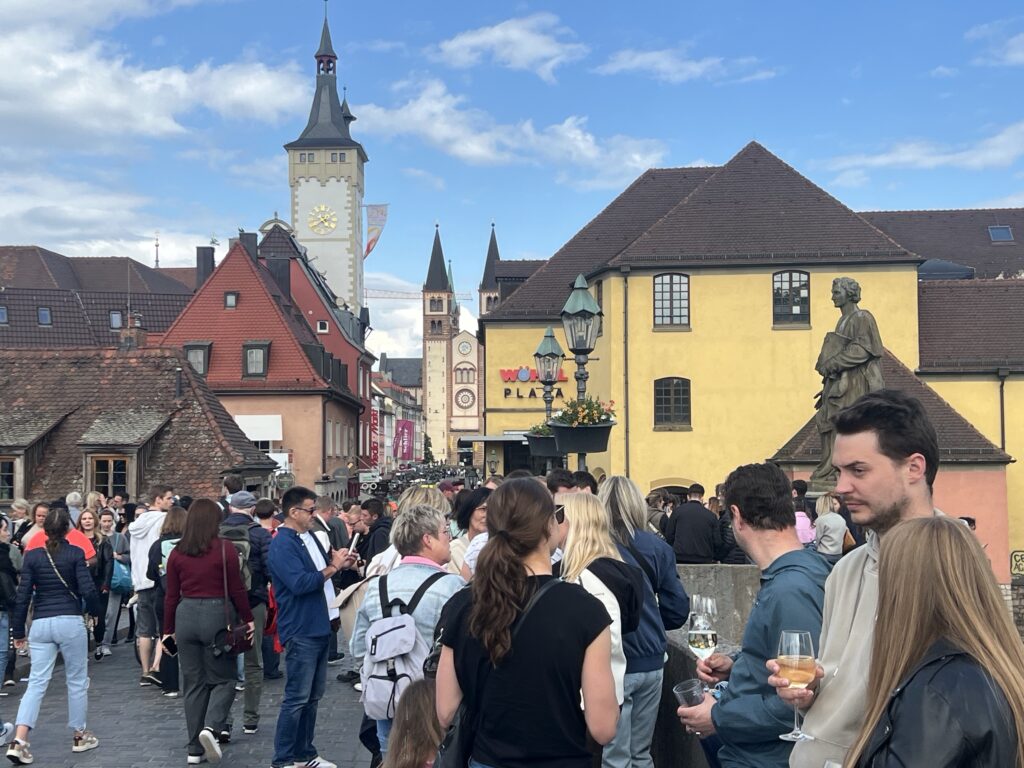
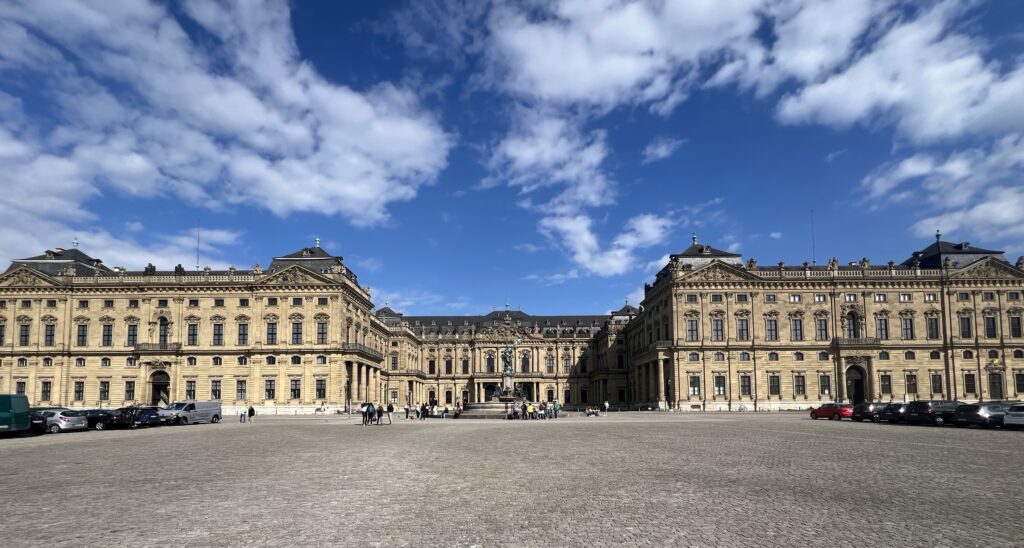
Fussen, GermanyEn route to the Romantic Road.First stop, Neuschwanstein Castle.Up close ! The guided tour took about an hour but no pictures were allowed inside 🙁The castle, in all its glory.Great views of Bavaria from the castle, including another castle ( just over Lois’s shoulder ).One can’t get lost on the Romantic Road, just follow the signs !Dinklelsbuhl.Dinkelsbuhl.So tough to resist this….it’s everywhere !Rothenburg o d Tauber.Rothenburg is famous for its Christmas items. Selection is huge !Rothenburg.Rothenburg.Fortress Marienberg, Wurzburg.Beautiful Wurzburg, the northern end of the Romantic Road.For some reason everyone was on the main bridge drinking wine when we visited – like, everyone ! Wurzburg.Wurzburg Residenz.
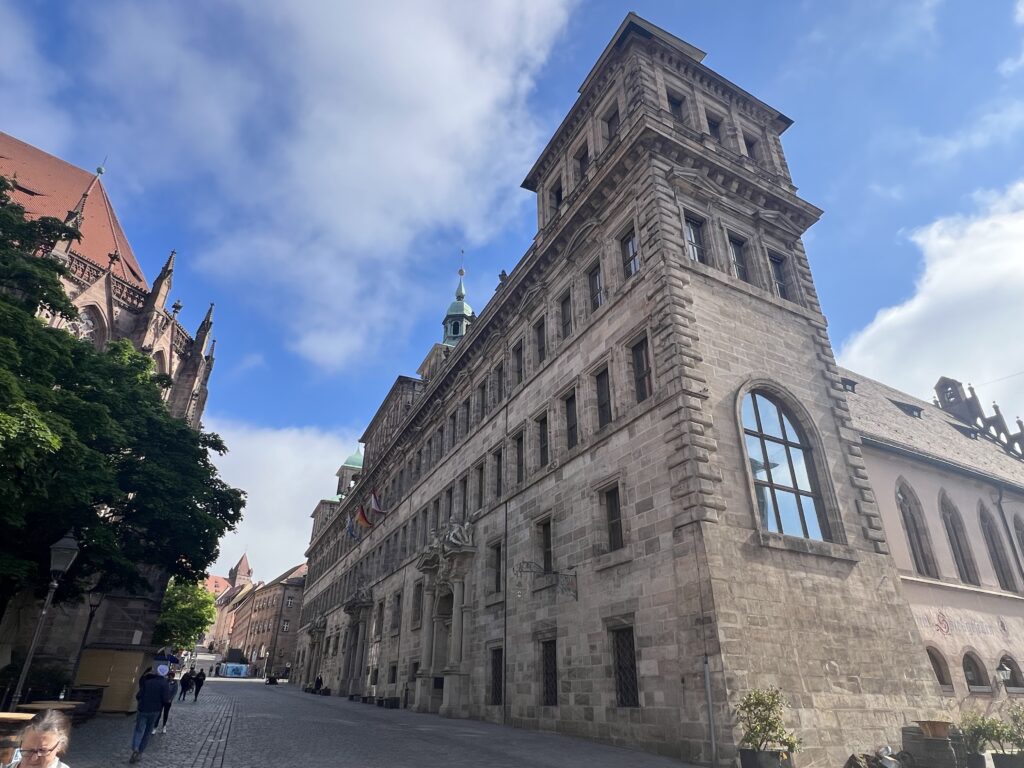
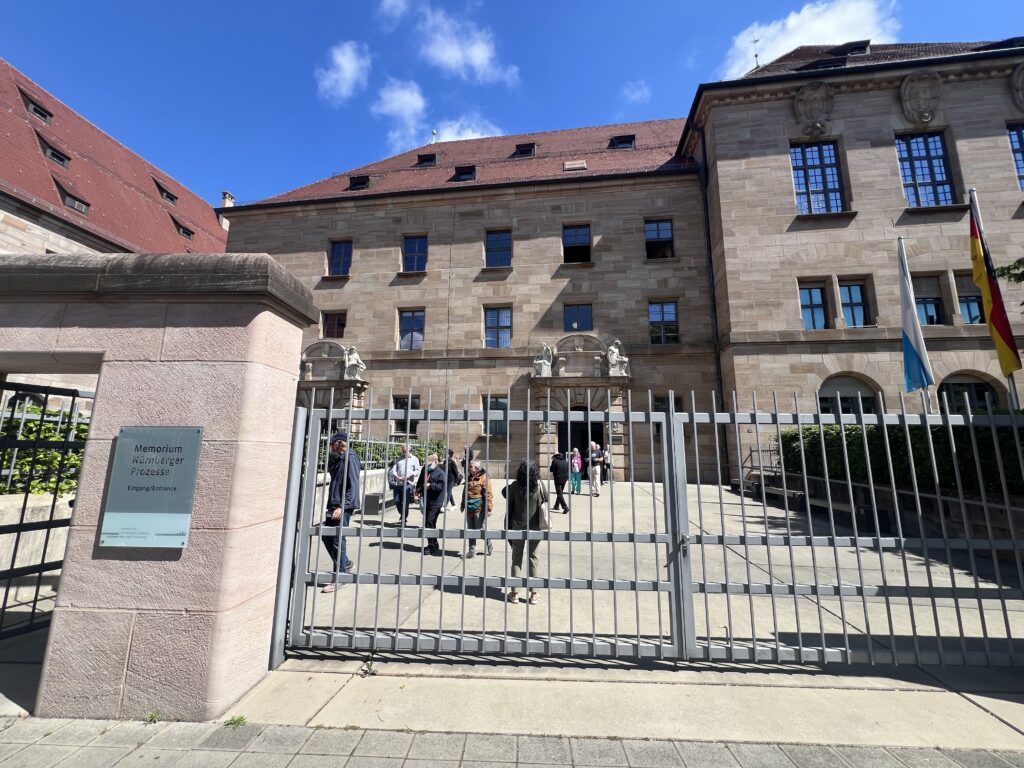
The last place we wanted to see ( and had time for ) in Germany was Nuremberg. Just slightly off the Romantic Road (so not too far off our path) this city has a long history and ( sadly for Nurembergers ) was heavily associated with the Nazi era. It was here that many of Hitler’s largest rallies were held, that some of the classic Nazi films were shot, and perhaps appropriately, was the scene of the famous Nuremberg Trials, where, between 1946 and 1949 top Nazi leaders were prosecuted. As a World War II buff, I simply could not pass up this opportunity, especially to see the very scene of the Nuremberg Trials.
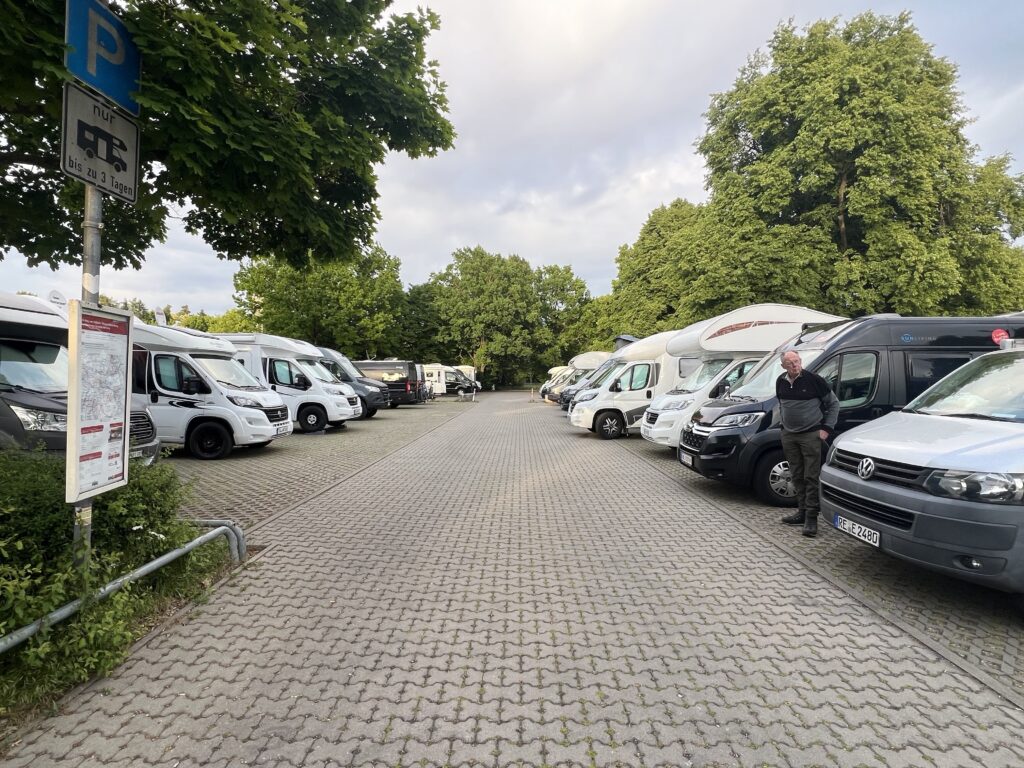
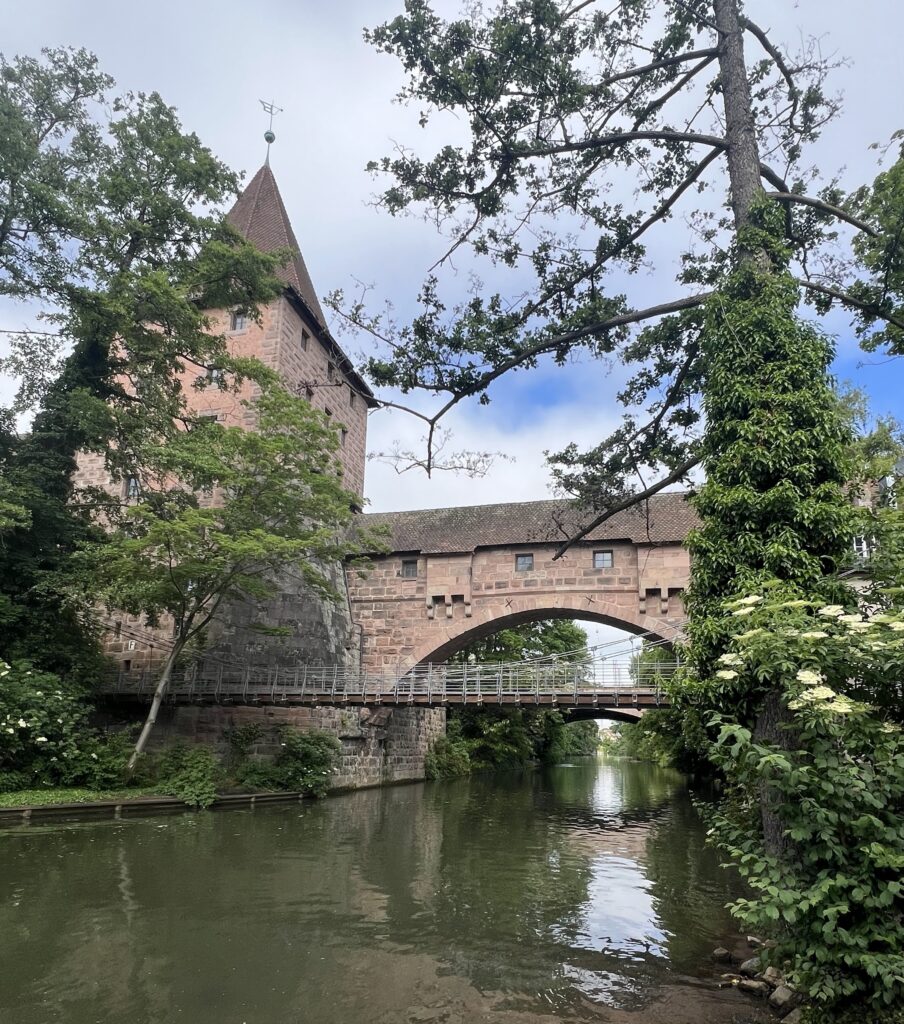
The wonderful city of Nuremberg provides secure, flat, convenient campervan parking close to the city. Three days, free of charge. Predictably it’s often full !Sebalduskirche ( church ), Nuremberg.Covered bridge, Nuremberg.
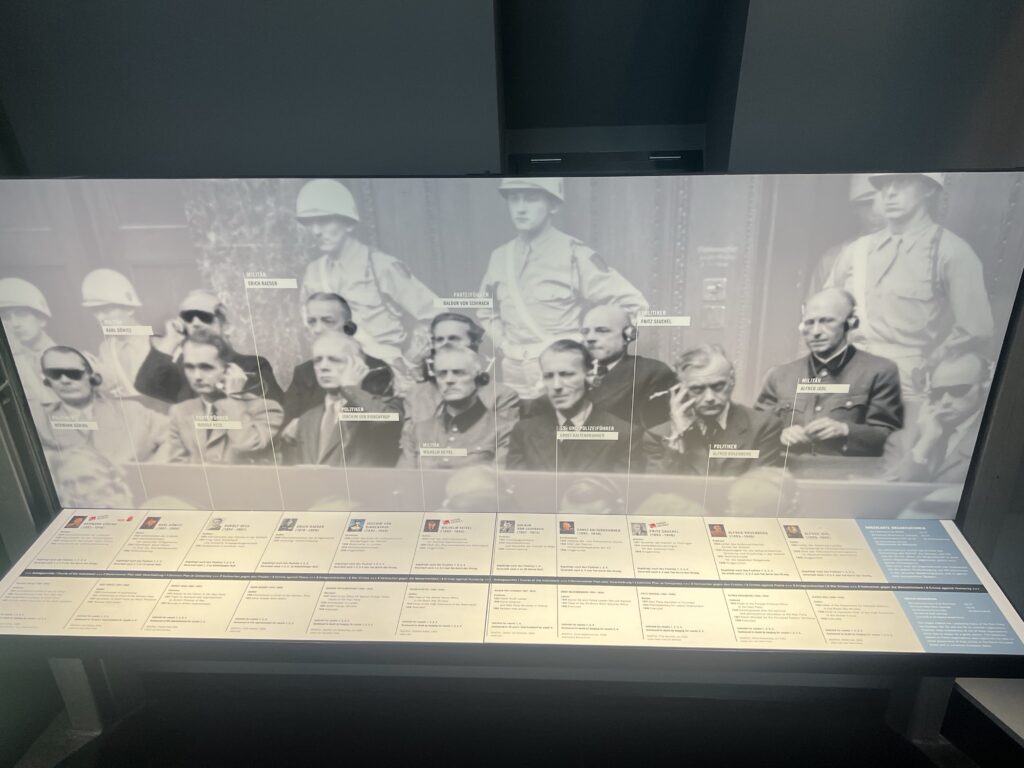
It was moving to actually stand today in the very courtroom where the scales of justice were applied to such hideous crimes committed by such truly evil leaders. It’s very well laid out with intricate and graphic detail telling the whole history of the trials and the court. One thing I learned that I did not know – why this particular courtroom, number 600, chosen for the trials ? Apparently, this was the very room where Hitler conducted sham trials for political opponents and other undesirables during the 1930’s. Perhaps fitting then, that some victor‘s justice might be meted out in the very same room.
Nuremberg Trials court, Nuremberg.“The” courtroom ( 600 ), where surviving senior Nazi’s were tried and sentenced ( many to hang ).A picture ( of a picture ) of senior Nazi’s on the defendants bench during the trial.
Of course, there is lots of other history, famous food, and some beautiful architecture in Nurenberg, which we explored. It’s a tradition to try Nuremberg sausages and bratwurst – delicious I might add !
From Nuremburg, one long day along the autobahn got us to the outskirts of Amsterdam. Here we found a wonderful rural campsite where we could relax, do some overdue van cleaning and preparation before putting the vehicle in storage nearby. This all worked out well and we felt fortunate to find what seems like excellent storage in a secure covered facility just outside the city.
Just outside Wurzburg we overnighted in probably the best camping spot we’d stayed at in Germany. A small inn offered up its flat gravel parking lot, and use of facilities for the princely sum of 5€ ( less than $6 US ). Baumhof Tenne, Marktheidenfeld.Rural camping, just outside Amsterdam, gave us the chance to clean and pack before storing the van. A delightful spot.All packed, all cleaned, the van was put into storage here just outside Amsterdam. We were very fortunate to get affordable, secure, covered parking so close to a major city ( from which we could fly home ).
We will explore Amsterdam in more detail upon our return, but for now we have an airport to run to, a flight to catch, our kids to reunite with and of course, a very special granddaughter that we have not seen for almost 4 months . If you’ve been with us for the past few months, thanks for tagging along, we enjoy sharing the experience with those who are interested in the region and those who we know are contemplating bringing a vehicle to Europe. Hopefully the information we’ve provided along the way has been of some help. If you have any specific questions in that regard, feel free to send me a note via the website, I’ll have plenty of time to answer in the months ahead.
In the meantime enjoy your summer and we will connect again in late August !
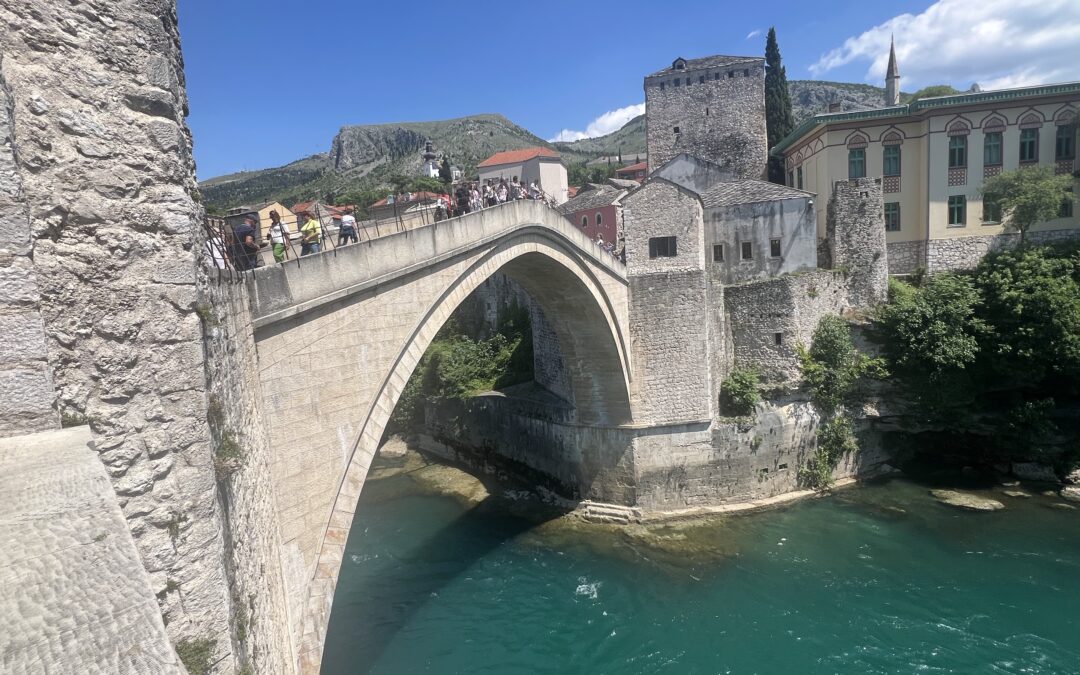
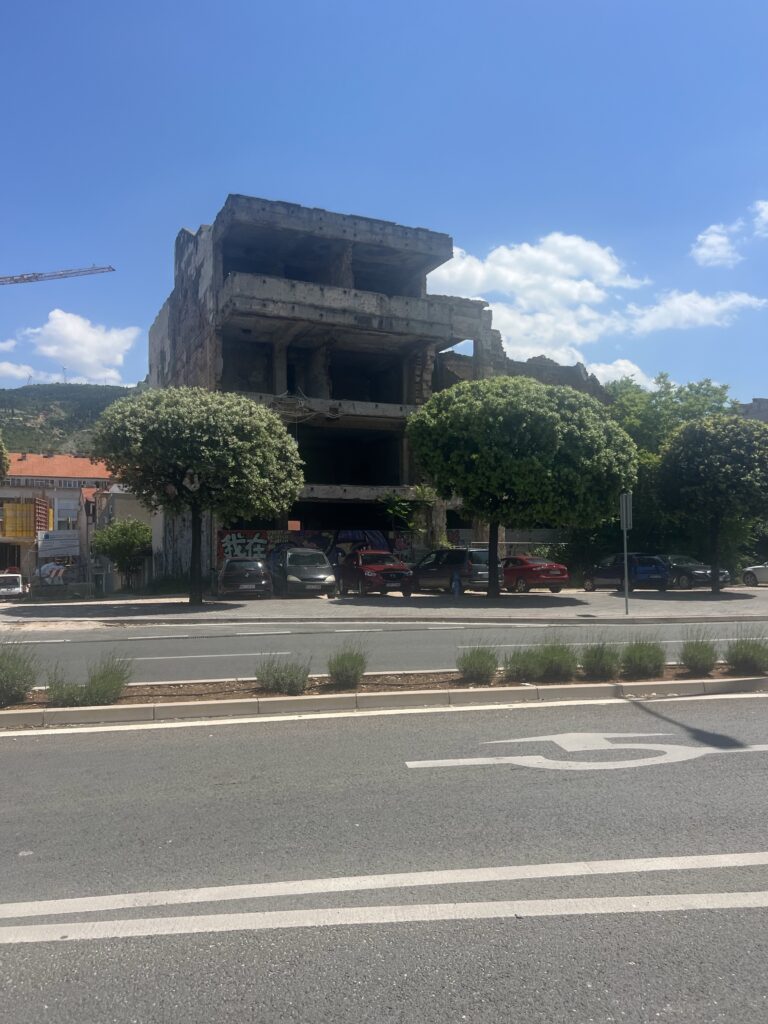
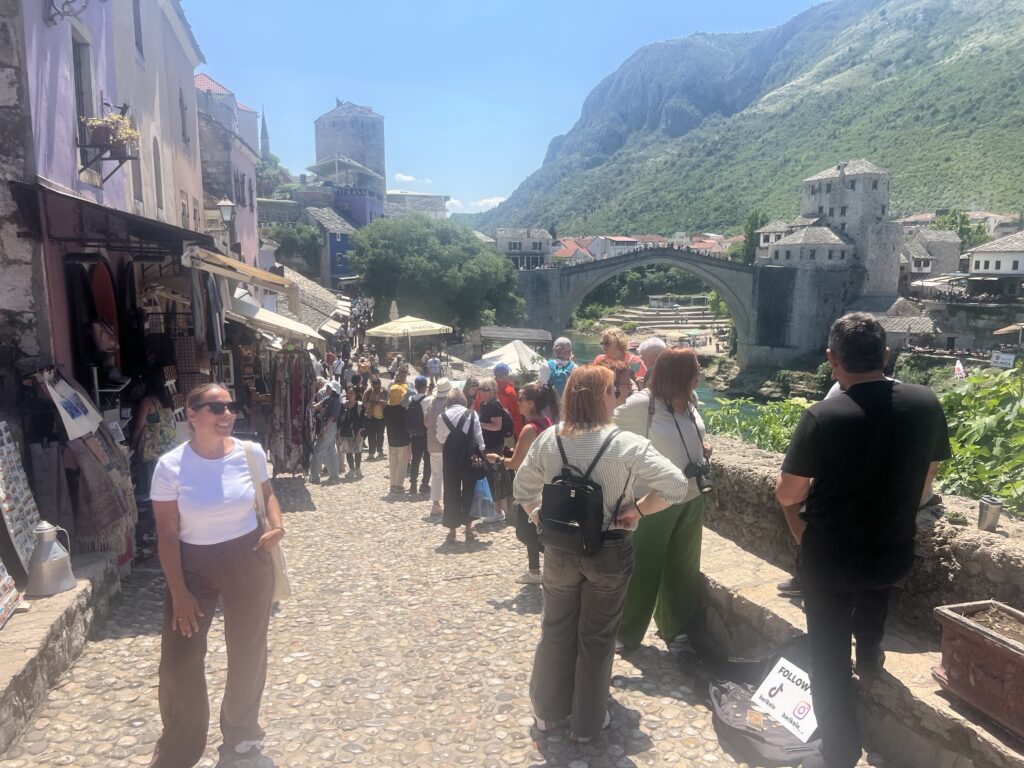
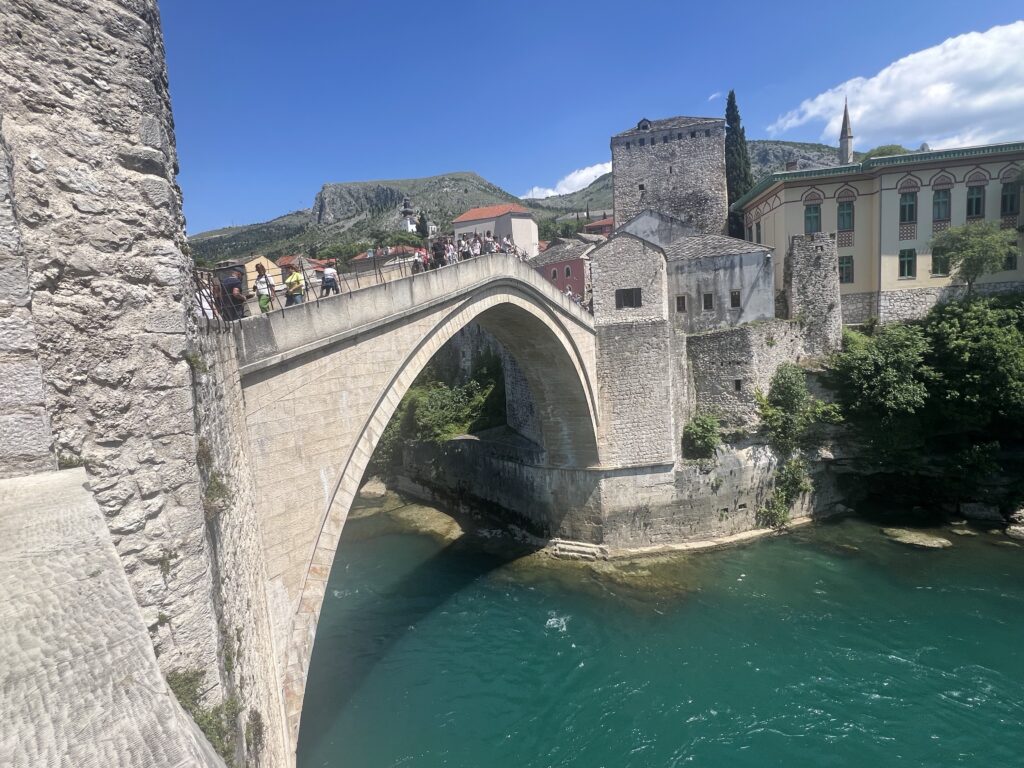
Bosnia lies just above Montenegro and while it has many more attractions our plan was just to visit historic Mostar and revisit ( even more historic ) Sarajevo. Mostar ( and Sarajevo ) were heavily damaged in the Balkans war and evidence of that conflict is still very visible on many buildings. Sadly, Mostar’s famous bridge was directly bombed in the conflict, but, while completely destroyed at the time, it was later painstakingly restored to all its former glory. The place is an absolute magnet for tourists and probably one of the busiest towns we have visited. It was literally difficult to walk down the streets…! In Mostar you just got the unmistakable vibe that Bosnia right now is an “in” destination.
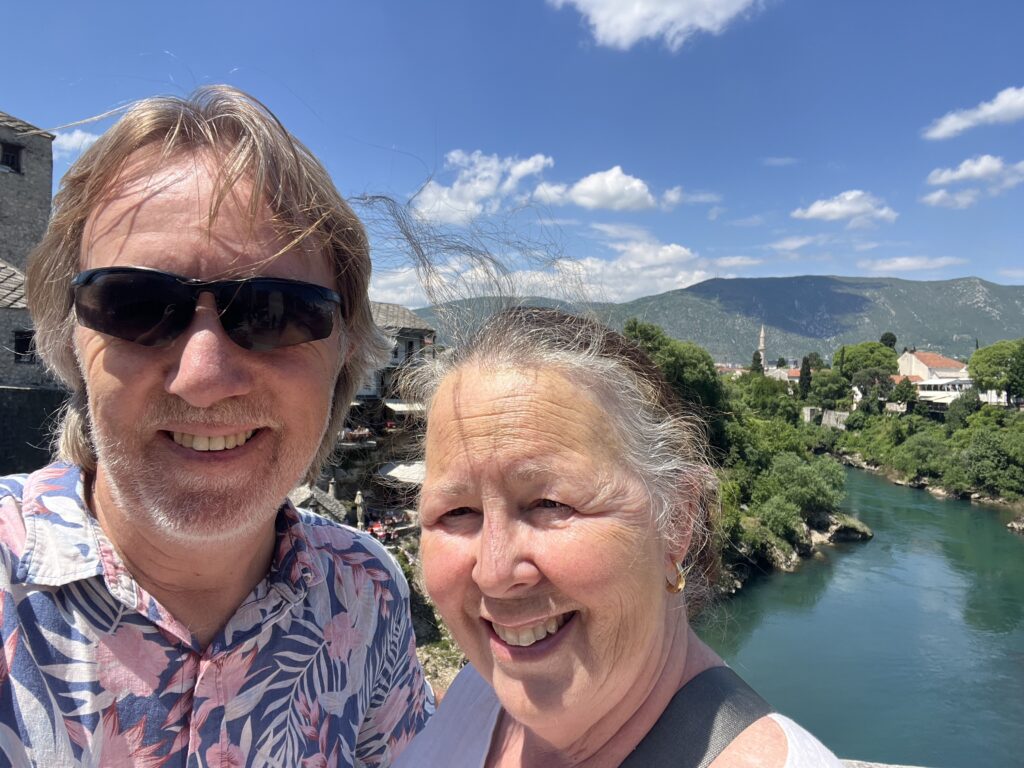
Building damaged during Balkans war – many still visible.Mostar, bridge in the background.Mostar’s famous bridge.Selfie, Mostar.
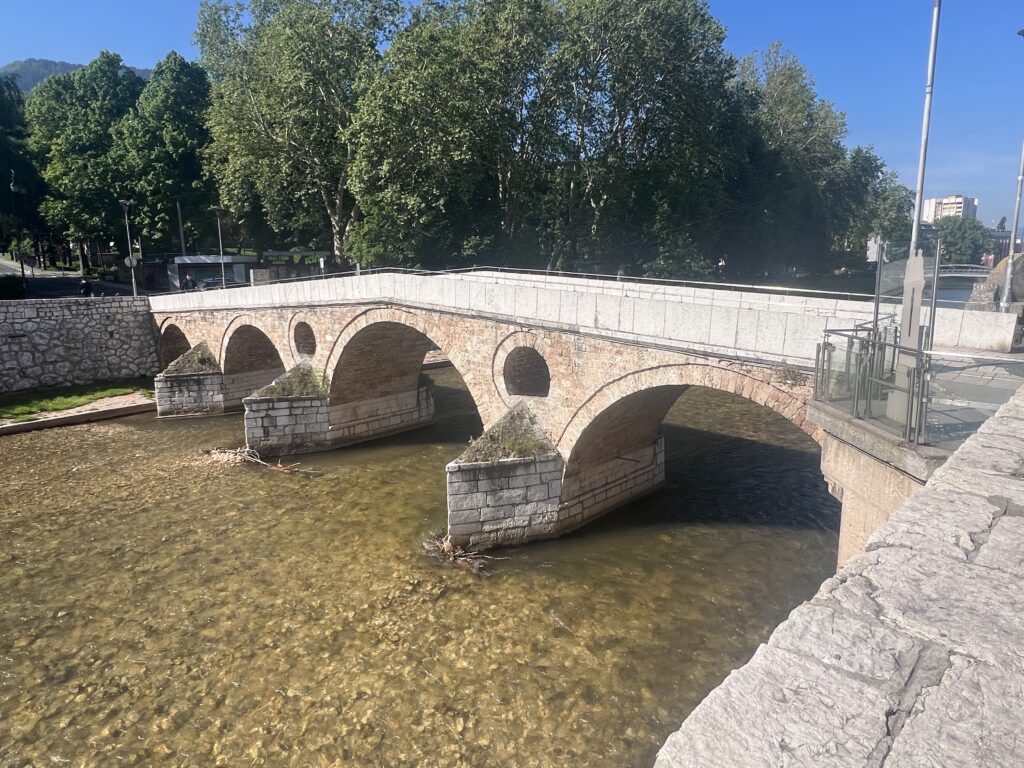
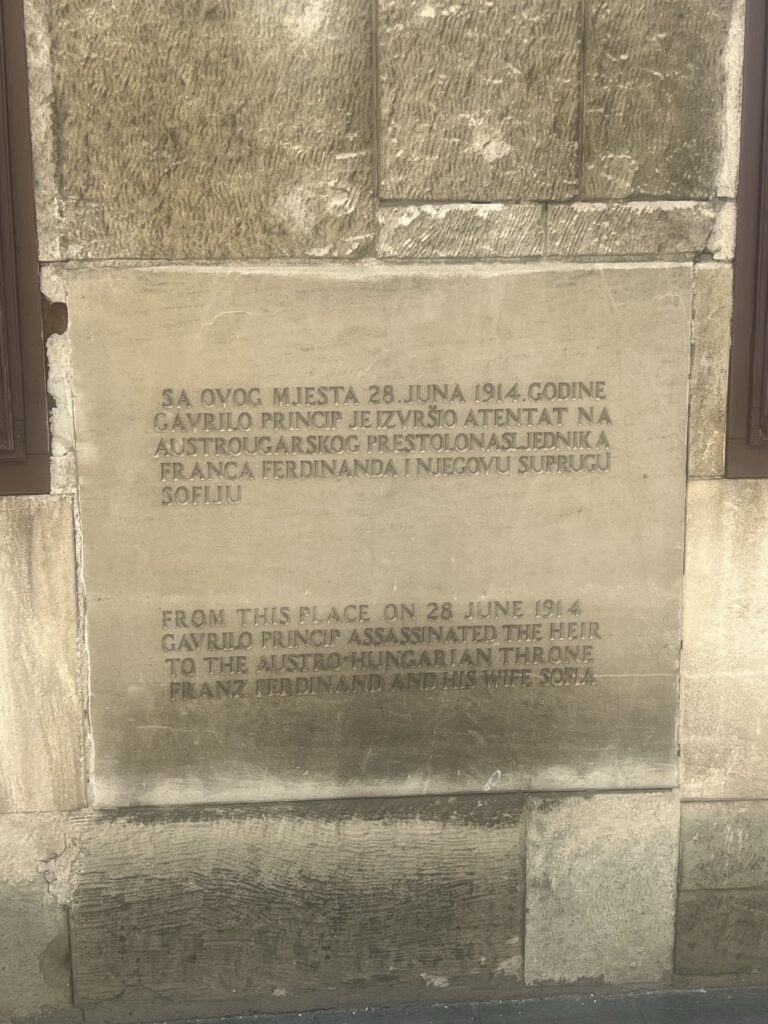
Just a few very scenic hours drive north of Mostar is Sarajevo. Yes, you remember it from the beautiful winter Olympics in 1984, followed less than a decade later by a bloody civil war that led to the loss of many lives and destruction of much of the city. It was, however an event in Sarajevo in 1914, probably more than most people realize that shaped the world as we know/knew it in 20th century. It is often described as the “shot that rang out around the world” – here, in June 1914, a young Serbian nationalist, Gavrilo Princip assassinated Austrian Archduke Franz Ferdinand, and his wife, precipitating events that led to the First World War, and by extension, ultimately to the Second World War . One shot, by one angry guy. It was humbling to stand beside the Roman Bridge on the very spot where the assassination took place and to think about how differently the world might be today had that single event not occurred – and, of course, how many lives were ultimately lost as a result of it.
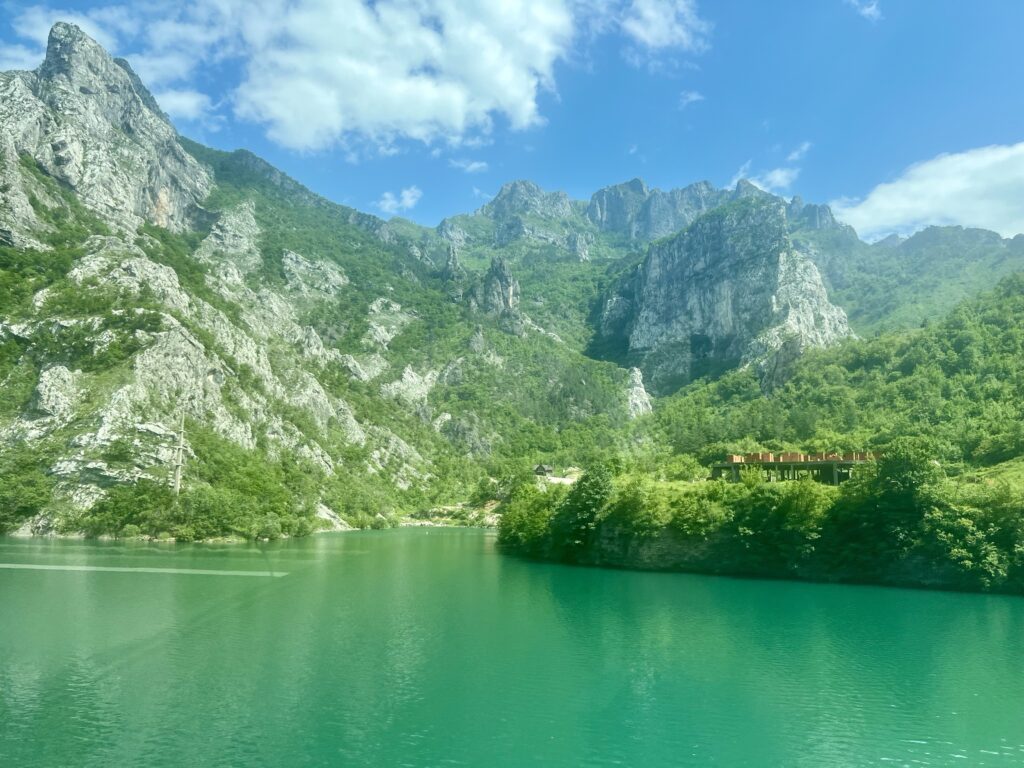
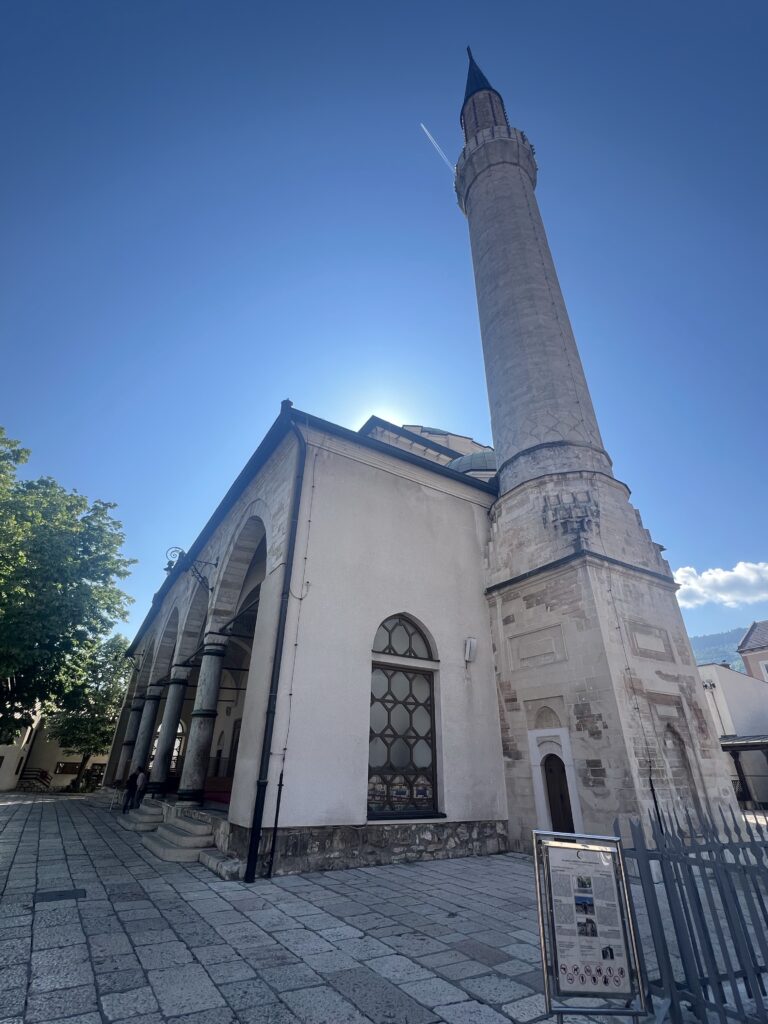
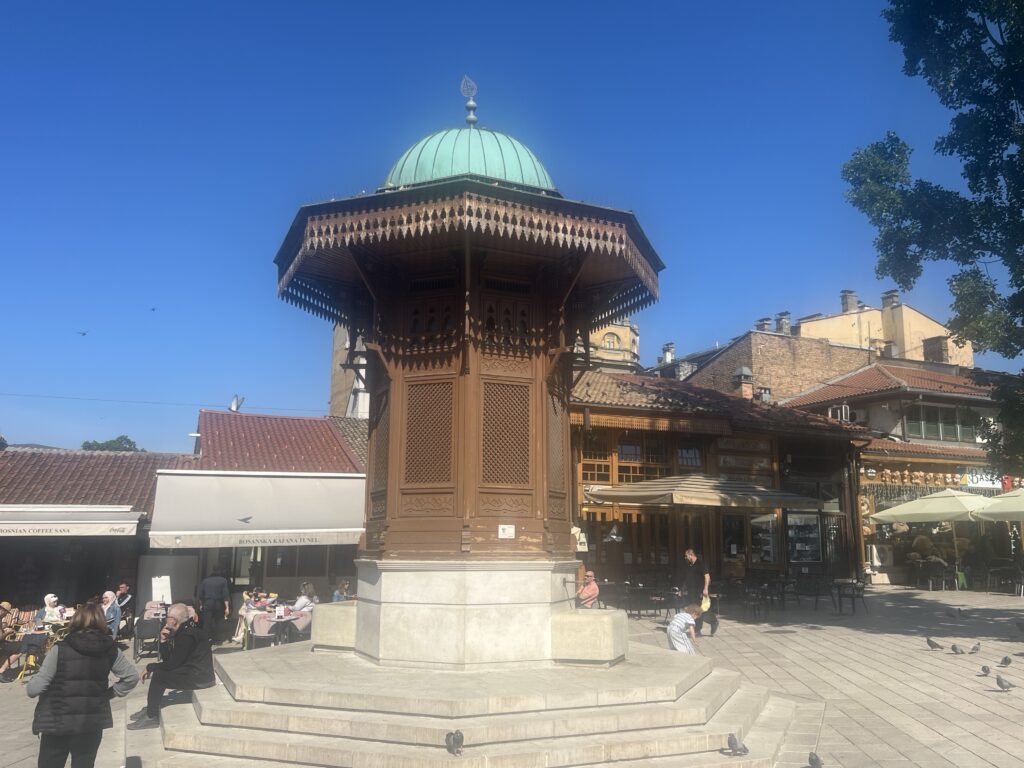
The rivers and lakes en route to Sarajevo were a most vibrant green. The water was crystal clear.Roman ( or Latin ) Bridge, Sarajevo – the very spot where the assassination of the heir to the Austrian throne set the world on course for what became World War 1.Commemorative stone at the bridge.Gazi Husrev-beg mosque, Sarajevo. Built in 1532 by the Ottomans, still largest mosque in Bosnia.Stari Grad ( historic ) Sarajevo. The wooden fountain ( Sebilj) is from the 18th century.
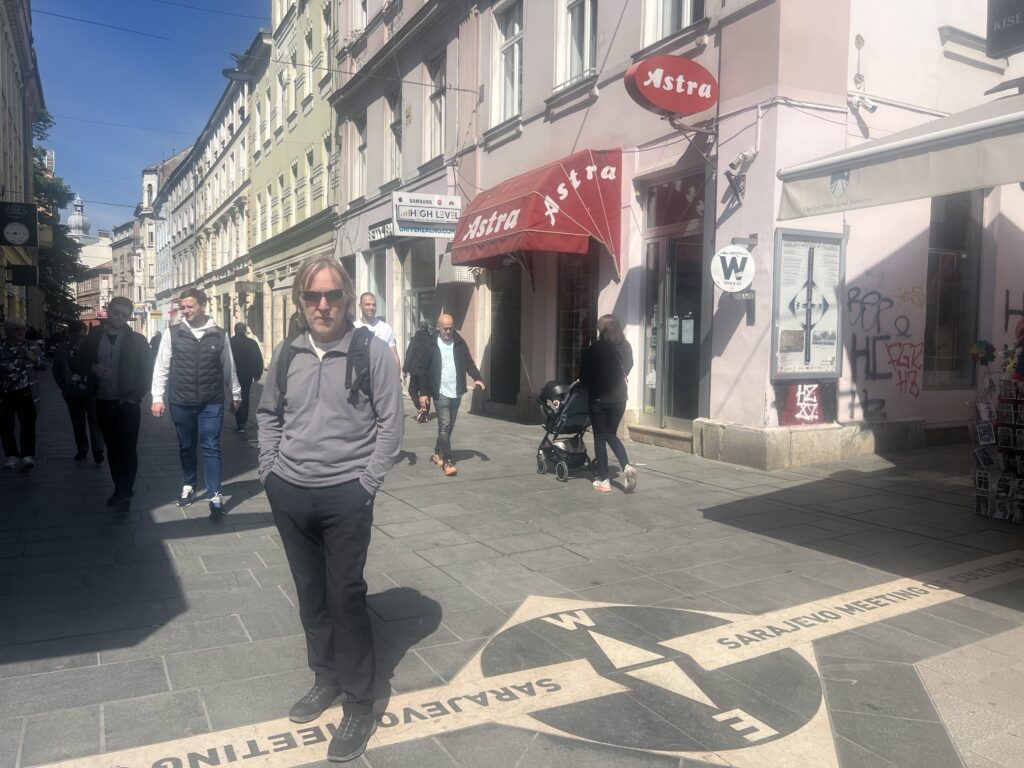
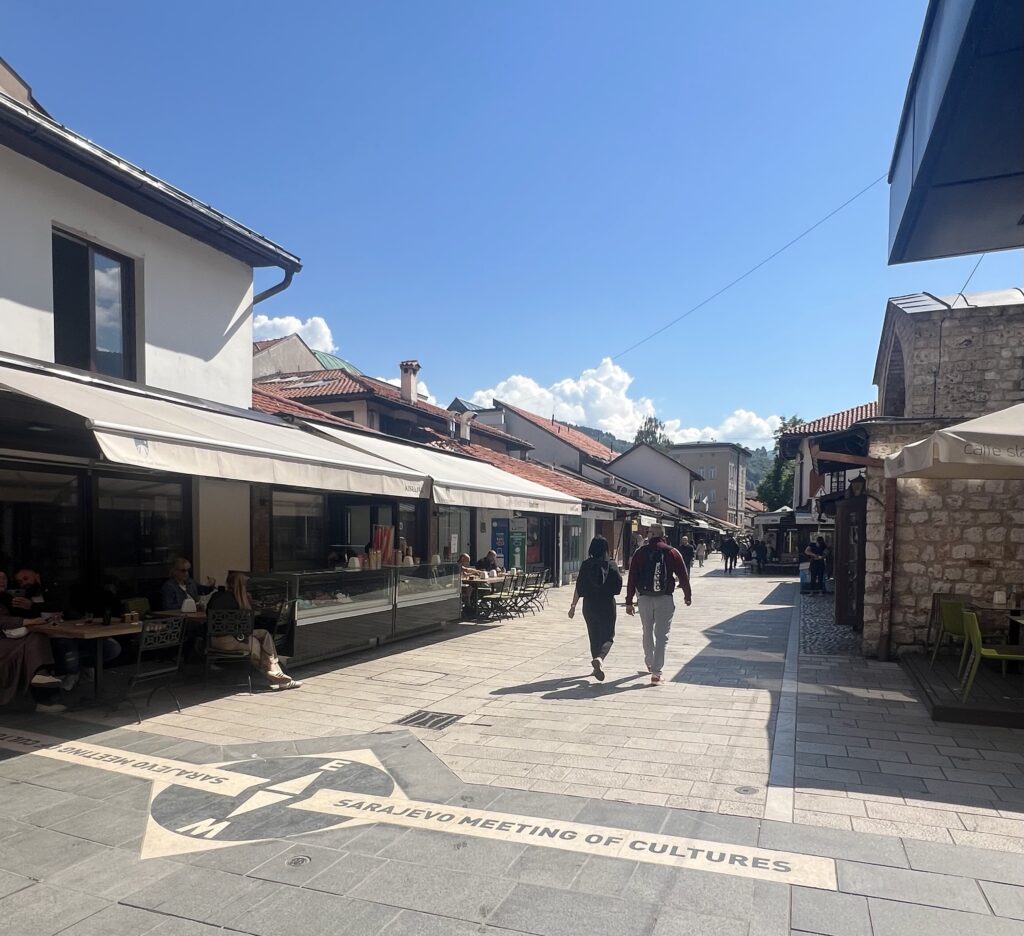
Sarajevo offers much more than just a historic bridge though, and is often described as a meeting place between east and west (given its history). The square, its mosques, its churches, its food – the place just oozes with sights and experiences. Again, great weather helped and we enjoyed both these places in glorious sunshine ( albeit among thousands of other visitors ).
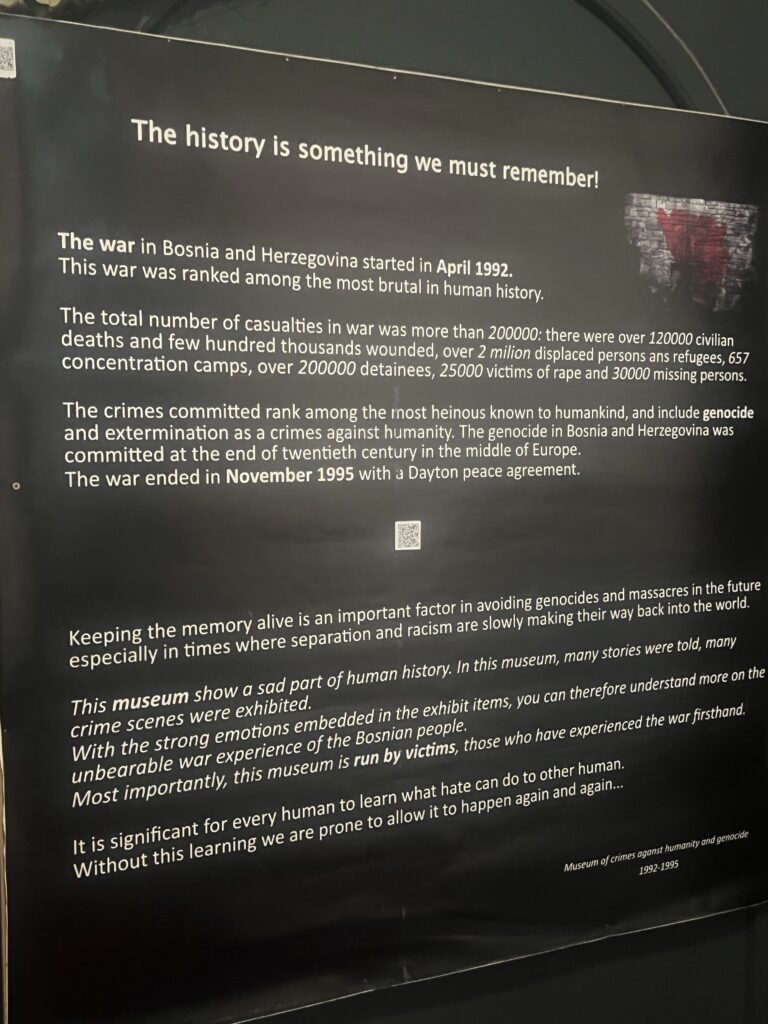
Dividing line between east and west Sarajevo. Behind me is the western ( European) side, Looking east, the Ottoman influenced area.Plenty to remind visitors about the war and it’s impact.
Leaving Sarajevo, we simply took a generally direct route out of Bosnia, briefly across eastern Croatia and on into Hungary. Perhaps appropriate that our next two stops were Budapest and Vienna ( Austria), capitals of the very same Austro-Hungarian empire that collapsed at the at the end of WW1. Princip could not have possibly realized that his single bullet might have had such impact, it ultimately brought down an empire.
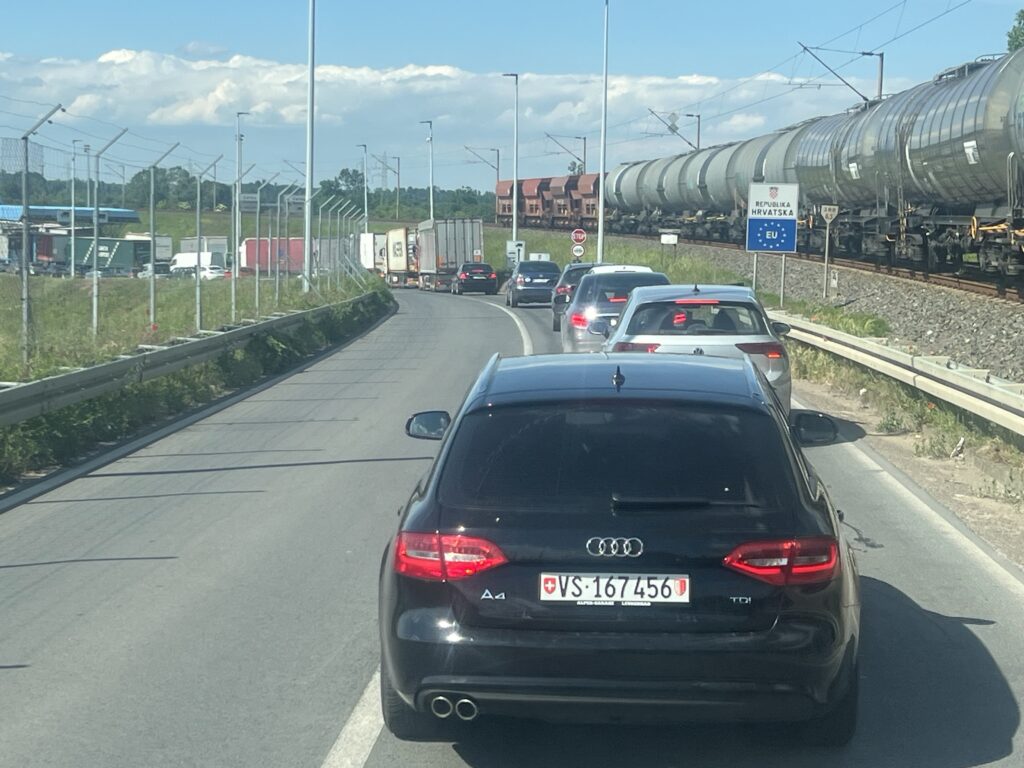
Crossing into Croatia from Bosnia. Long line, long wait and more thorough checks as Croatia is a frontier country in the EU.
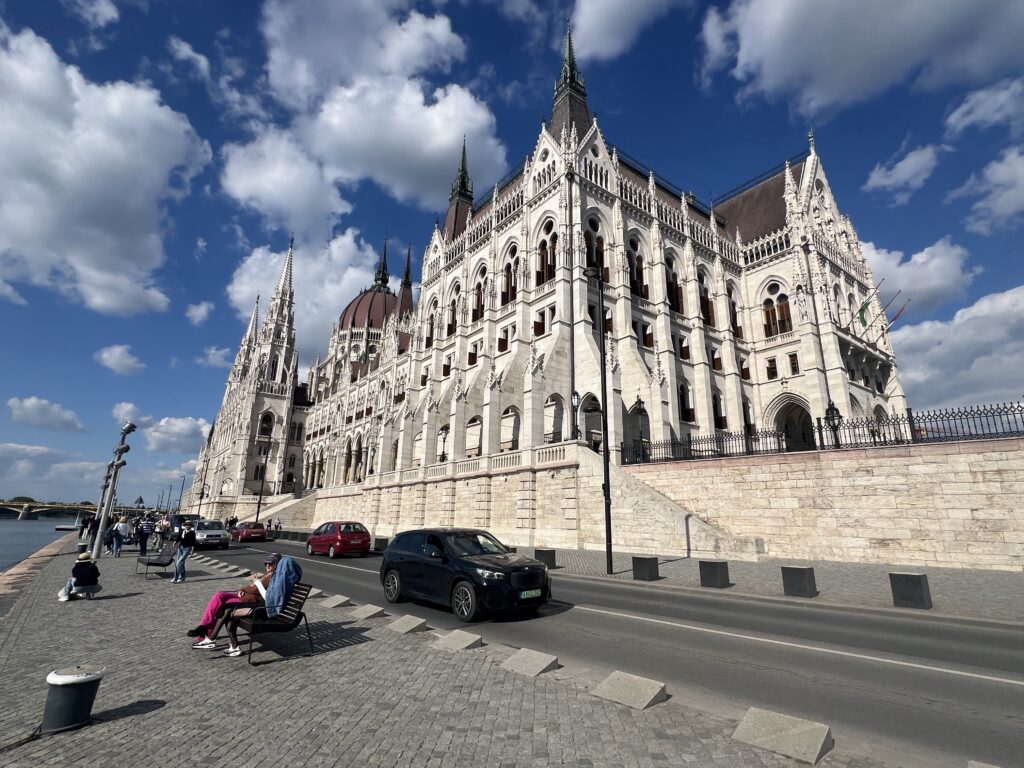
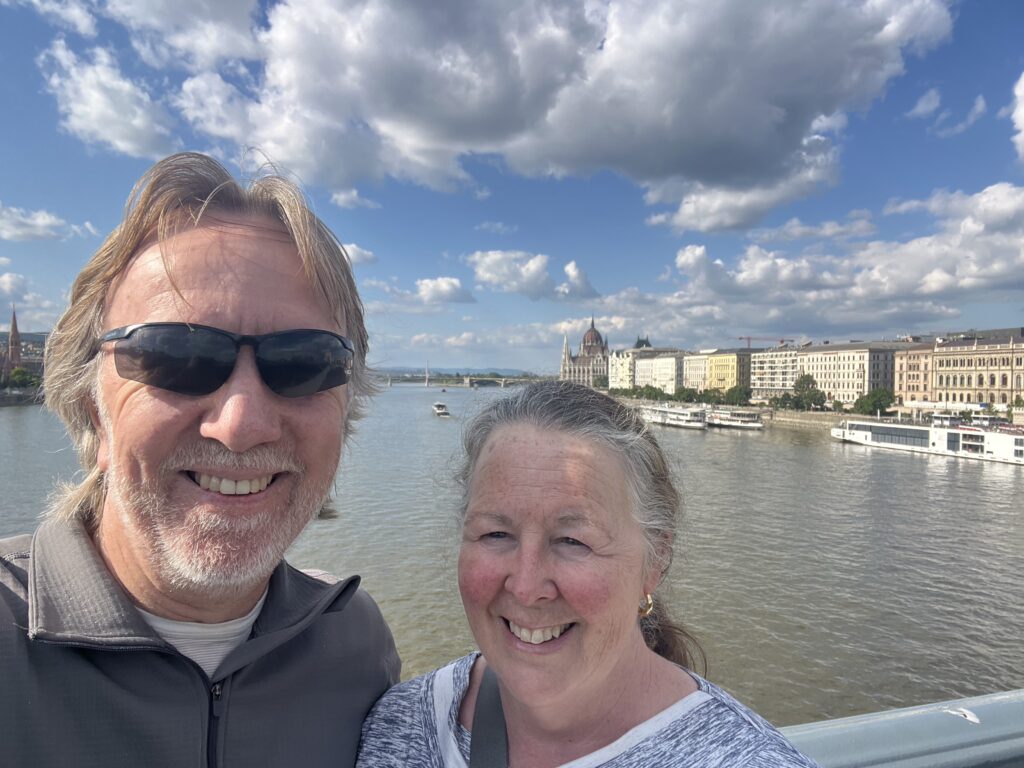
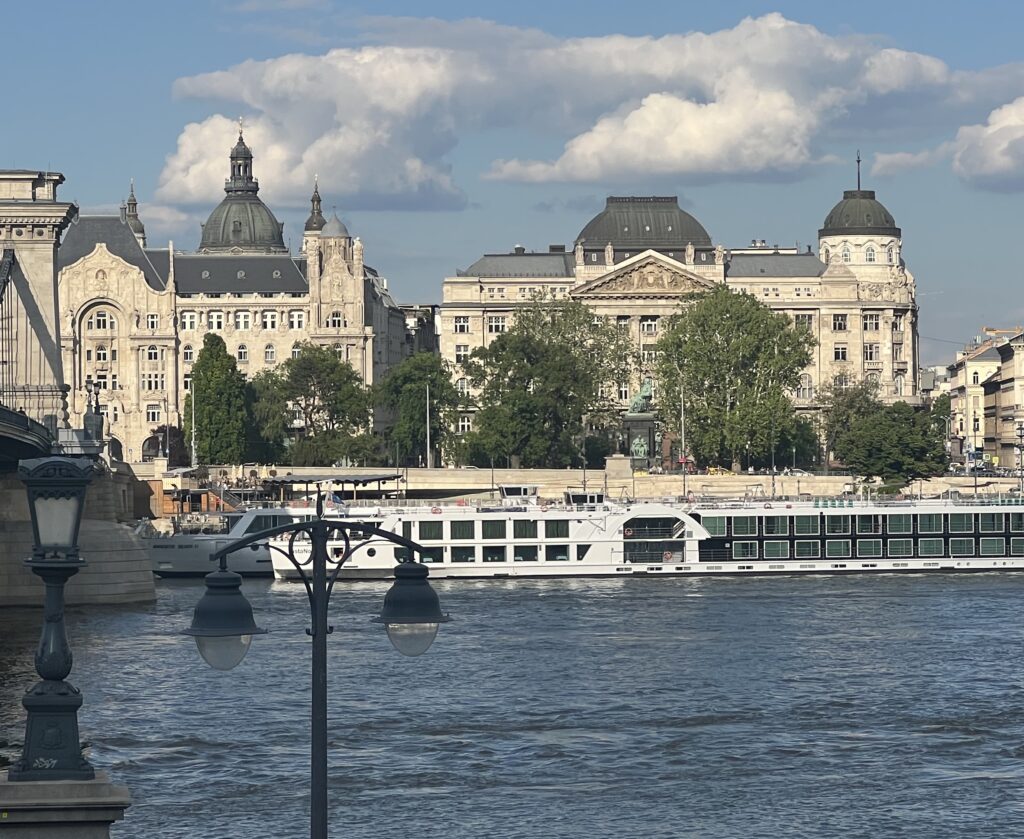
Despite the empire falling its two great cities very much remain – Budapest and Vienna ( each on the Danube ) have to rank among Europe’s most beautiful. One can walk for hours on end ( and we did ) just exploring historic streets, buildings and other sights, and/or savouring their culinary delights. In both places it was almost sensory overload ! Budapest, right on the Danube, was packed with several Danube cruise boats docked so had a tremendous vibe. That, along with the great sights, and the weather as well as the opportunity to reconnect with with a Hungarian couple we crossed paths with on the Pan American trip ( in Peru ) made for a very memorable stay.
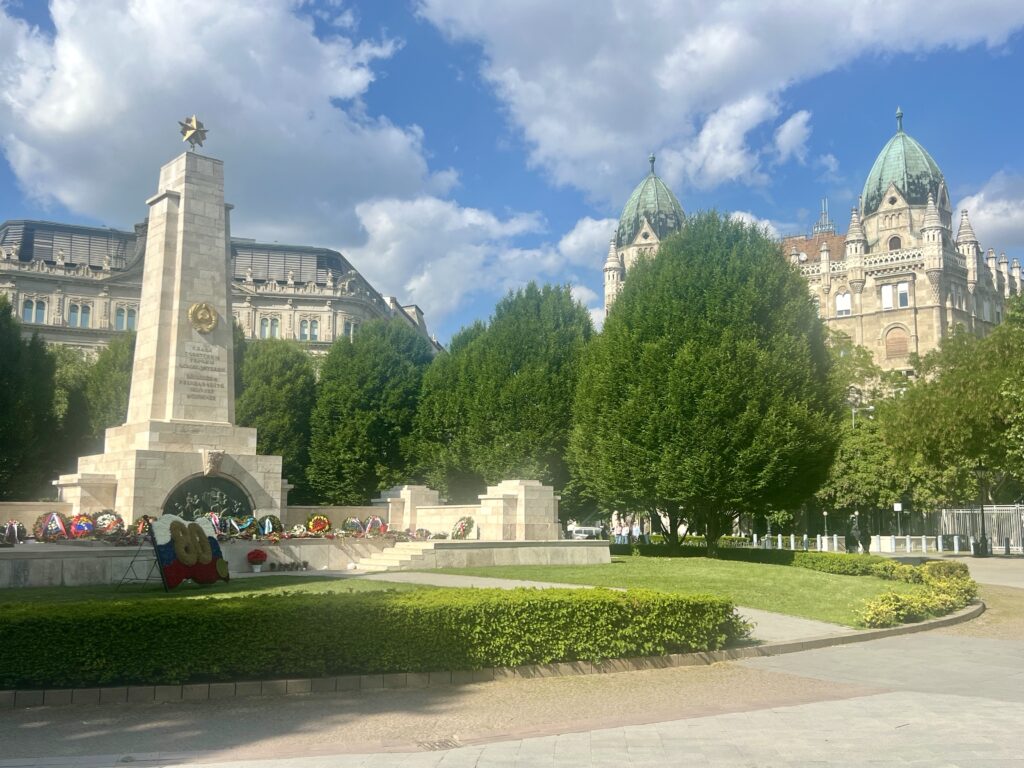
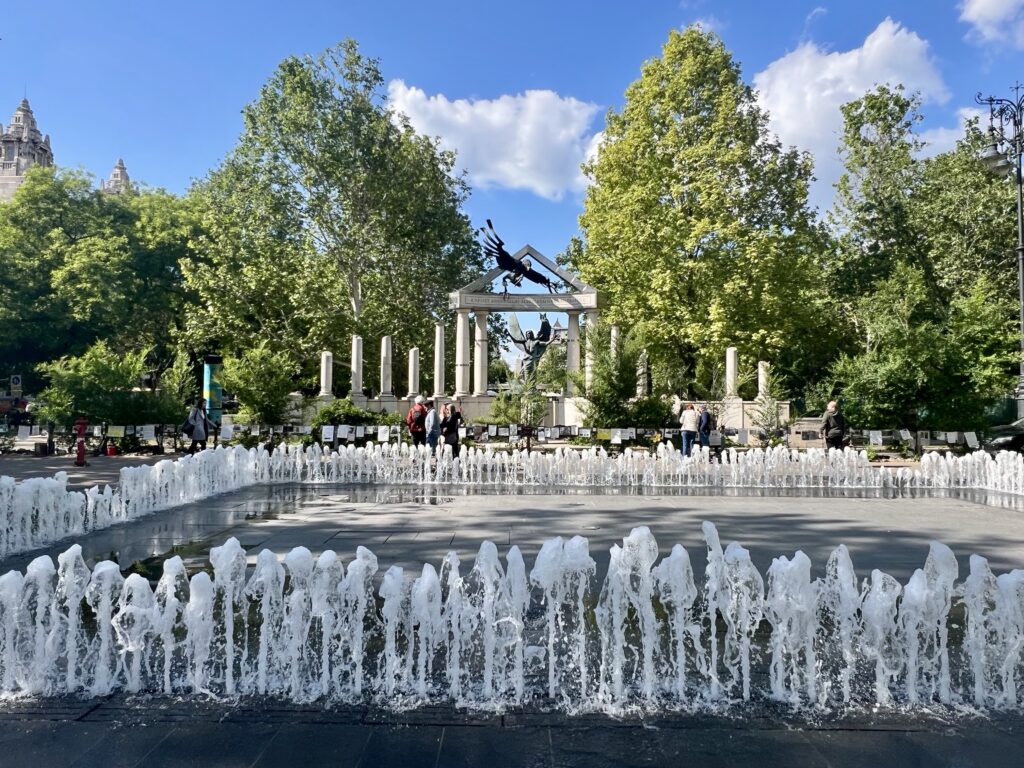
Wonderful to reunite with Balint and Timi, a young Hungarian couple who we crossed paths with in South America ( and almost again in New Zealand ). They live in Budapest.One of many parks in Budapest.And another, with a fountain.Majestic House of Parliament, Budapest. Right on the Danube.Selfie, on a Danube bridge.Multiple Danube River cruise boats were docked in Budapest the day we were there so the city was full of tourists.
Only a four hour drive west of Budapest lies Vienna, steeped in history ( be it musical, artistic, political or economic ) this centre of the old Austrian-Hungarian empire and home of the Habsburg’s could occupy a visitor for weeks. We had a couple of days and checked out some old haunts as well as places we’d not seen before. We took advantage of their super Metro day pass to explore as much as we could in the two days we were there. It’s quite likely we will pass through Vienna again, and we have no problem doing so. It’s just an amazingly beautiful city.
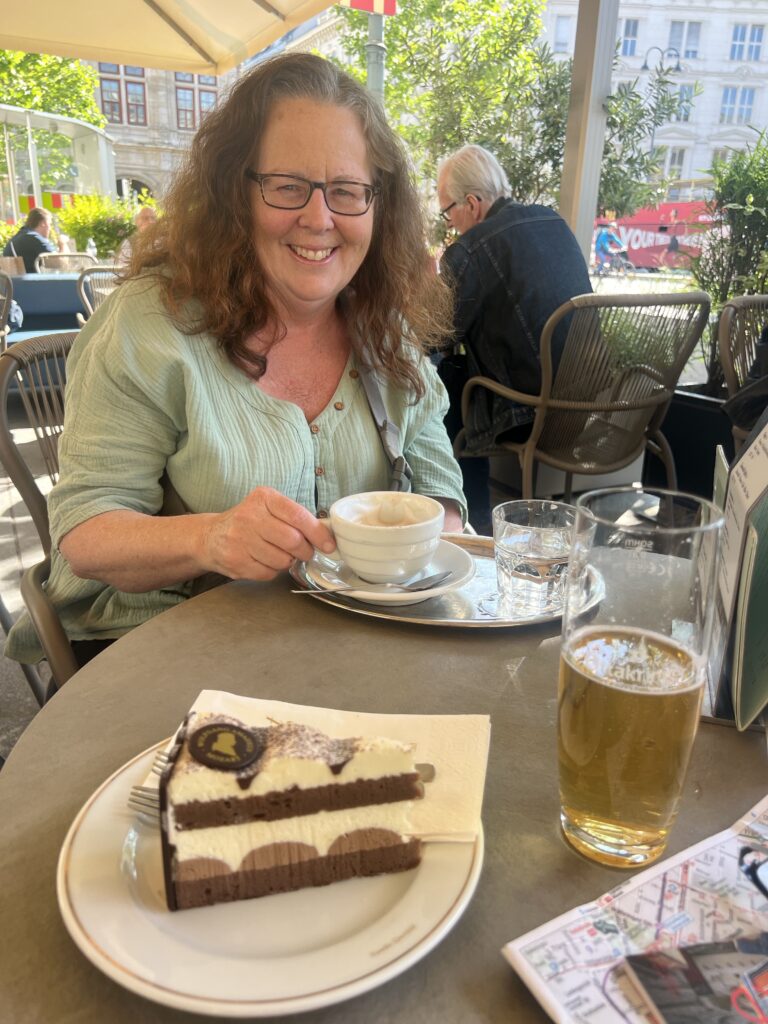
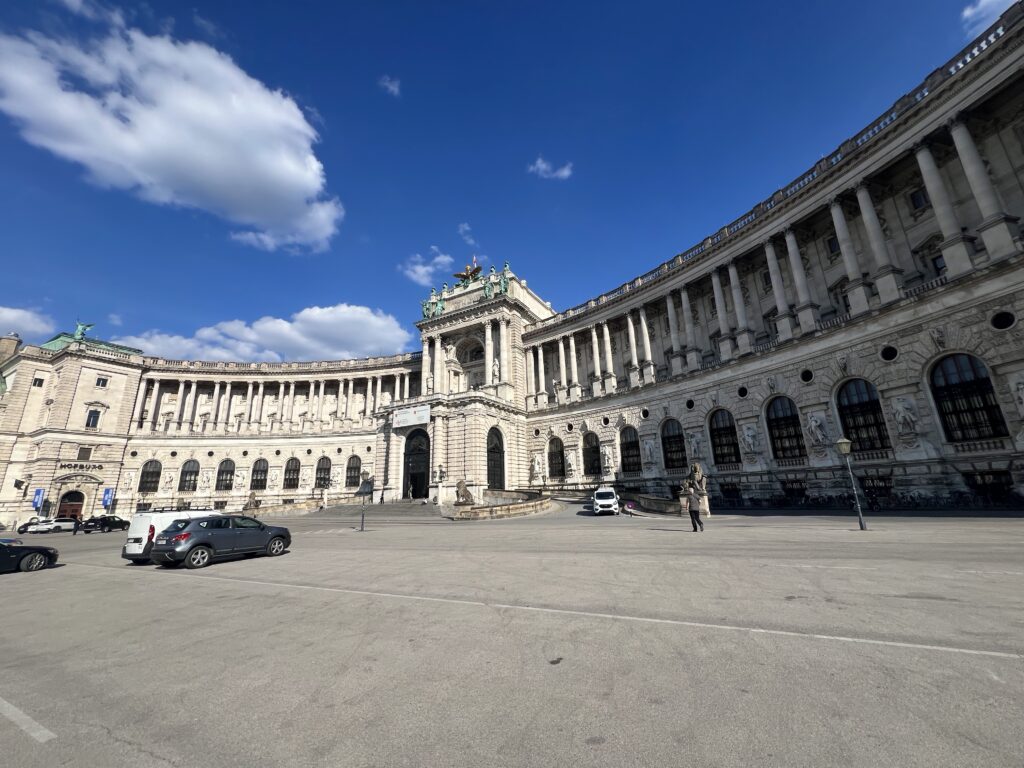
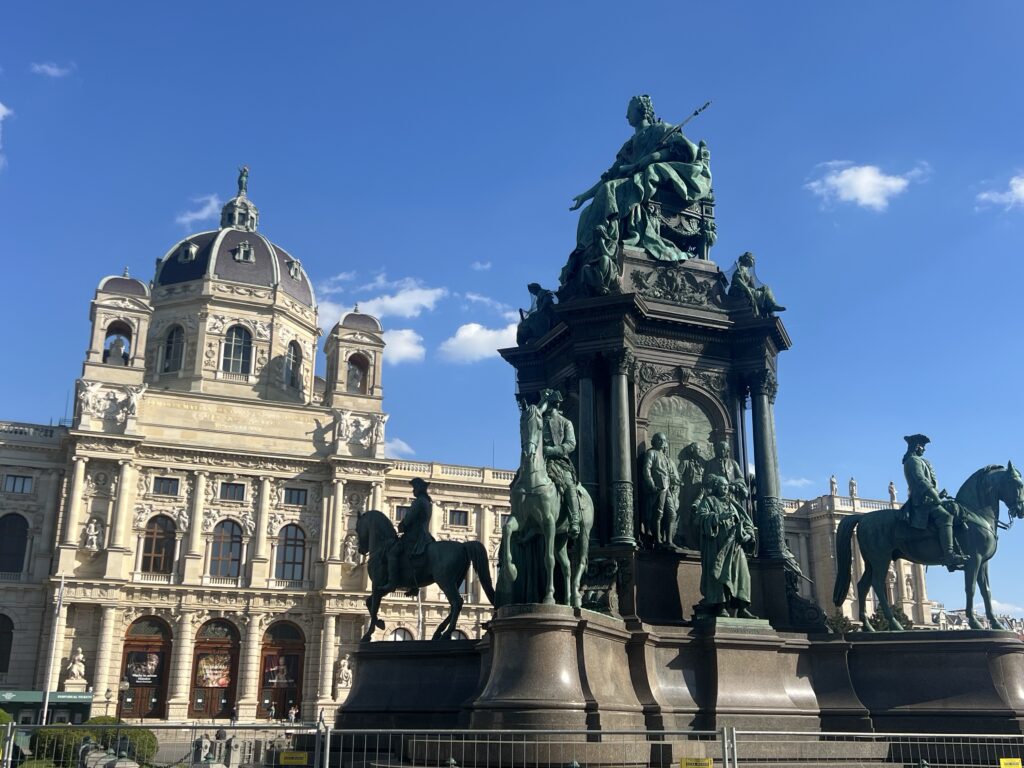
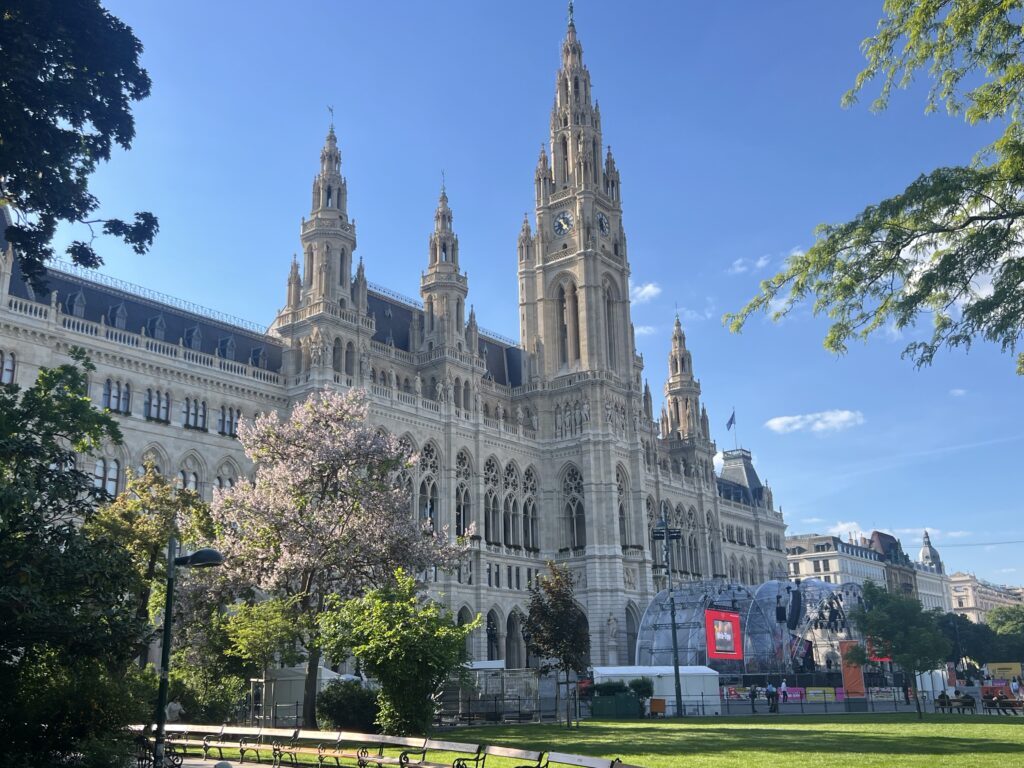
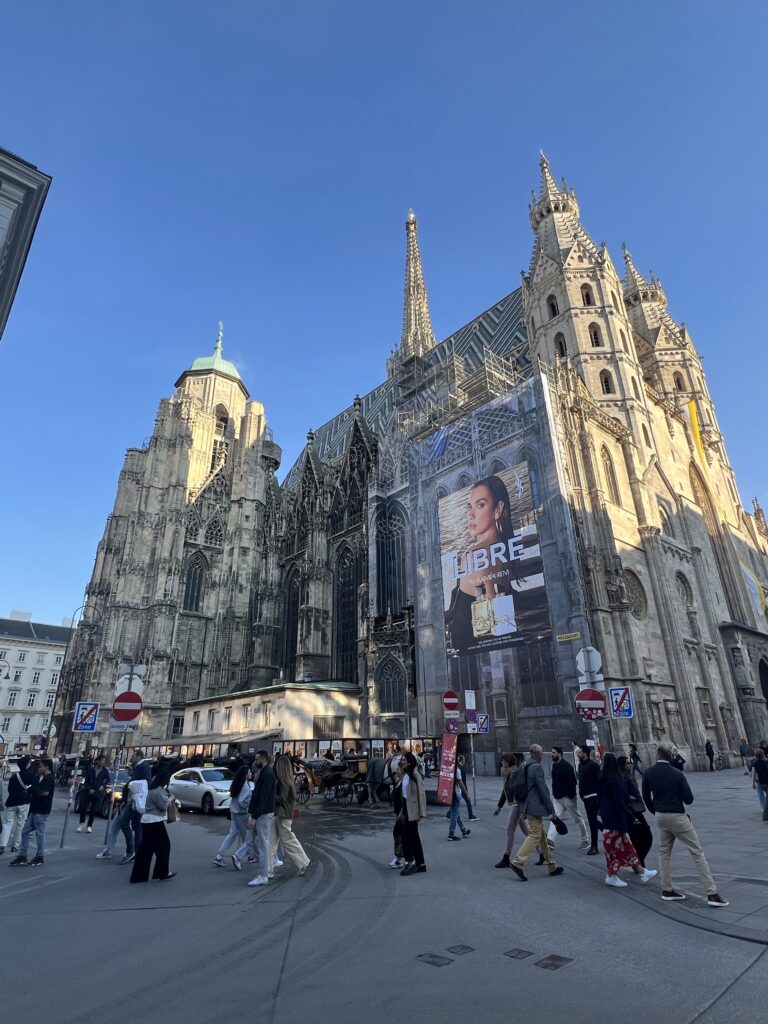
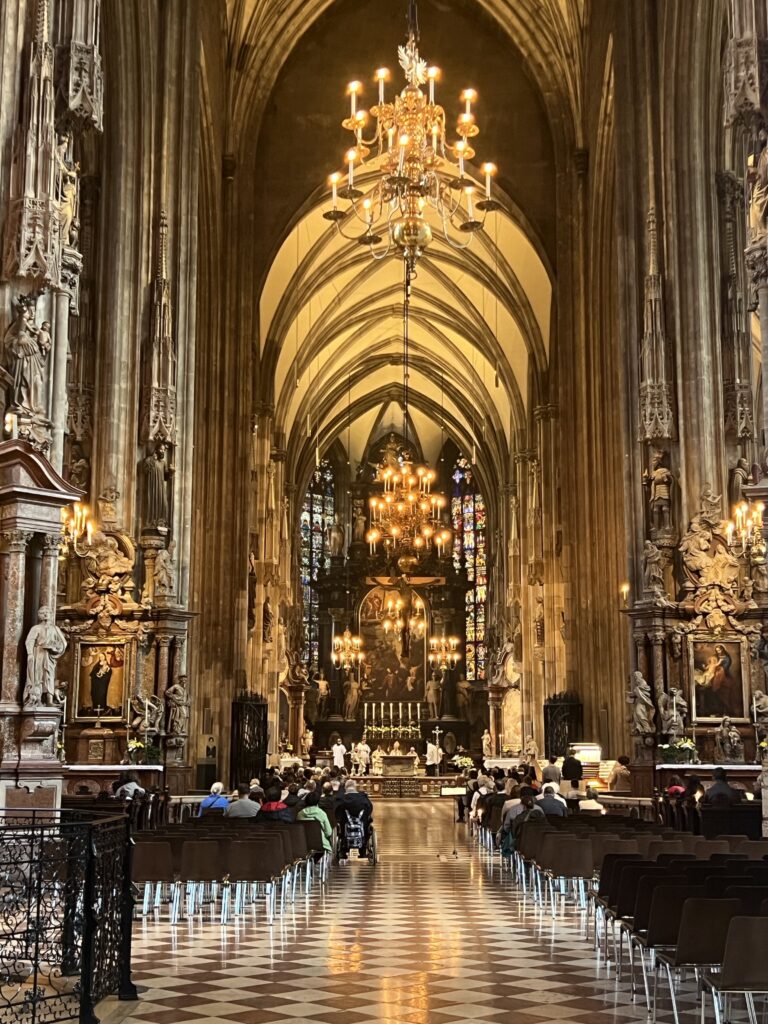
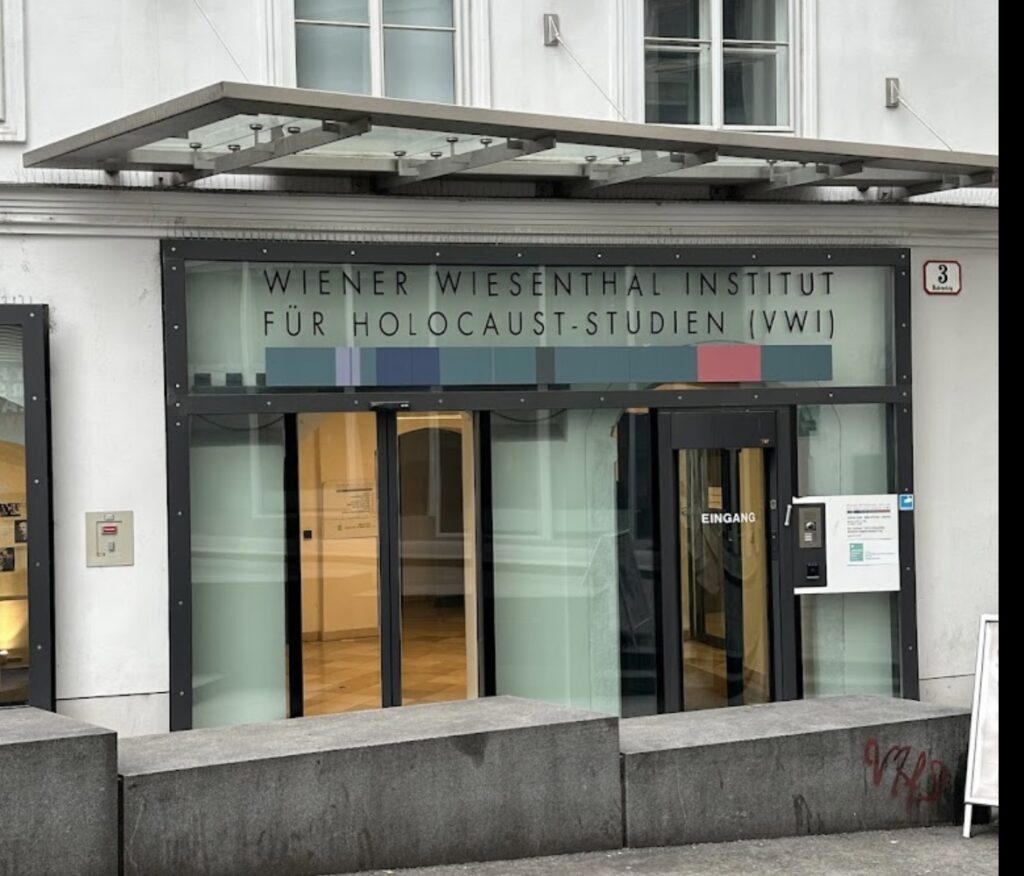
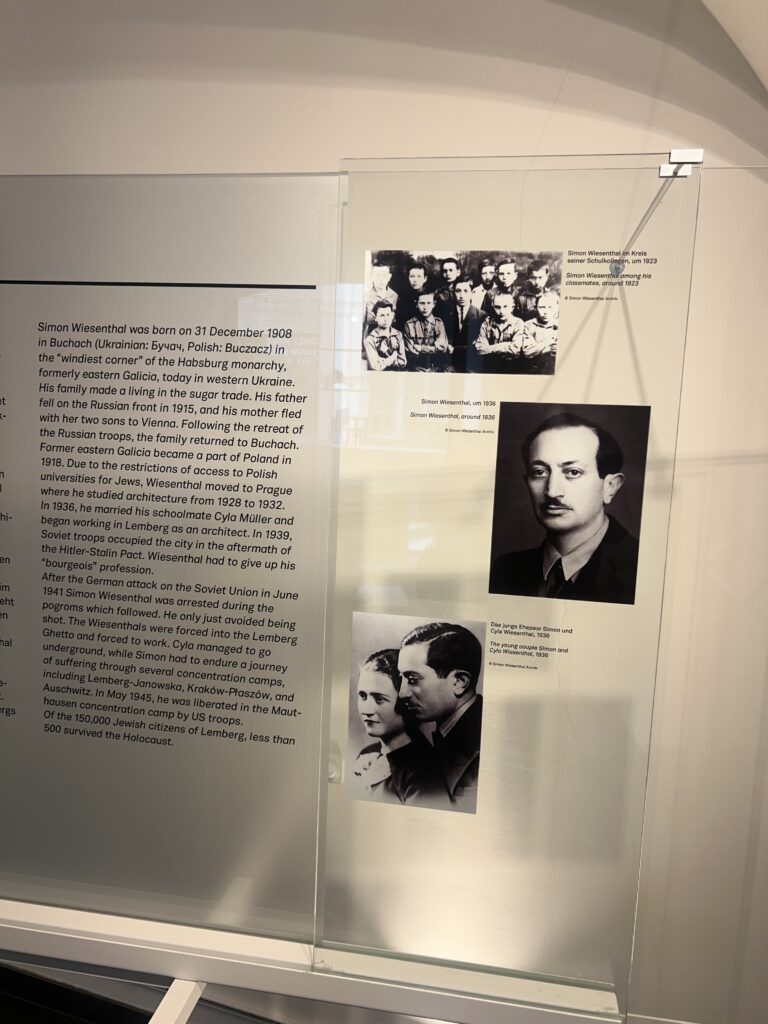
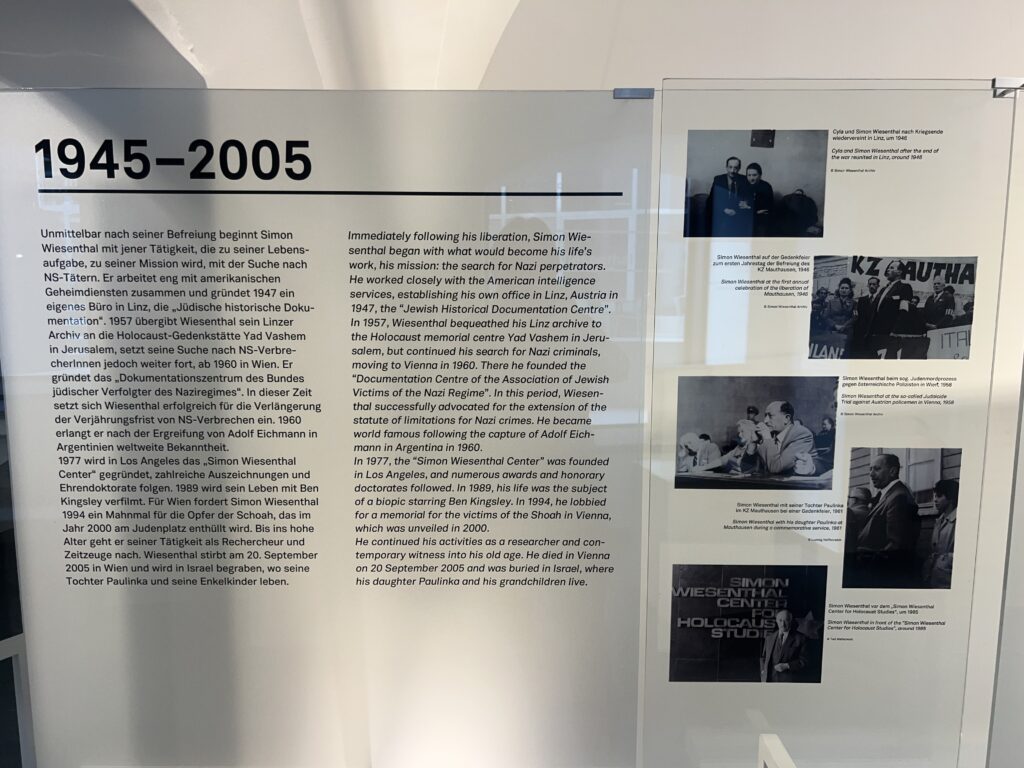
First stop in Vienna, one of their famous downtown cafe’s. The cake was spectacular !Hofburg Palace, Vienna.Maria Theresien Platz, Vienna.Majestic ‘Rathaus’, or town hall, Vienna.An unmistakeable symbol of Vienna, St Stephen’s cathedral.Stunning inside as well.Famed Nazi hunter, Simon Wiesenthal, had his research centre in Vienna and tracked down many infamous Nazi’s. As they are all dead now it’s become a holocaust study centre. It offers a fascinating glimpse into his life and the process by which he tracked down so many of them.A fascinating place to visit. His life story is amazing.Ditto. This was actually a nice break after so many castles and church’s !
Leaving Vienna, we pulled one very long day drive to get across to the small town of Fussen, in Bavaria, Germany. Fussen is the starting point for perhaps Germany‘s most famous road, which we will explore in our last blog before flying home to Canada for a 3 month break.
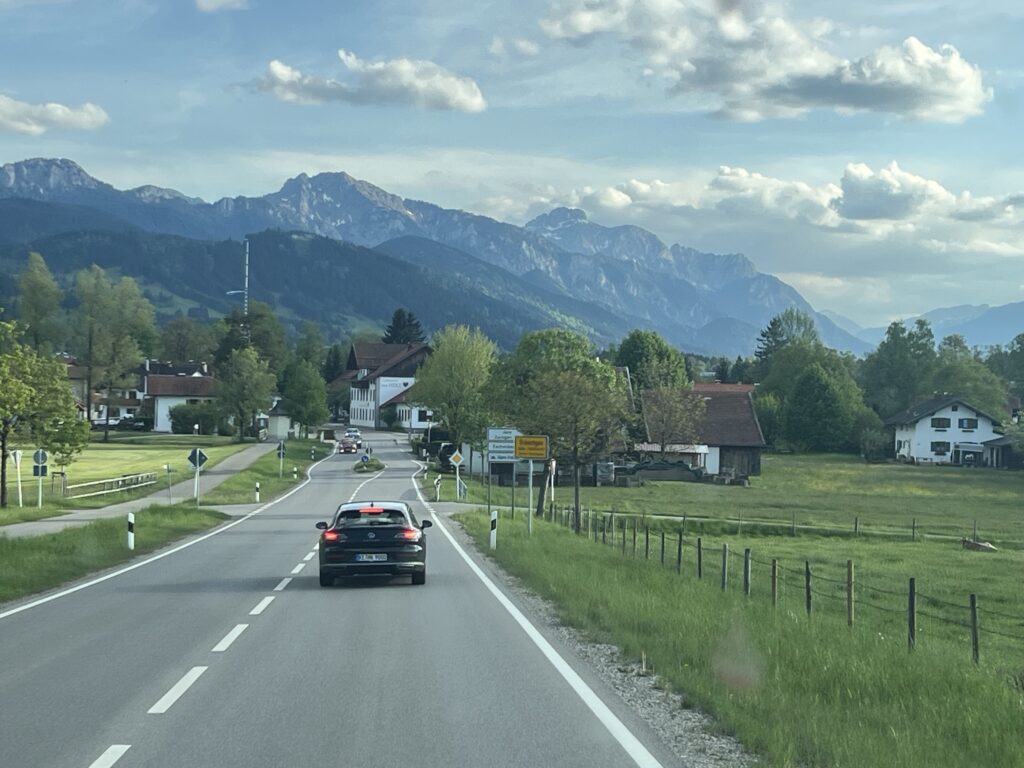
It was a very pretty drive just getting to Fussen from Vienna – the best would follow though.
Our travels in the former Yugoslavia back in 1990 were brief but did take us up through the bigger cities in Serbia so on our route back to northern Europe we sought to drive around it this time. From Romania, that meant swinging southwest down to Bulgaria then heading more or less less directly north through Macedonia and Kosovo before going west to Montenegro and then Bosnia. Perhaps we were given misleading advice but it was also strongly suggested to us that visiting Kosovo might cause problems entering Serbia ( Serbia being one of just a handful of nations that still do not recognize Kosovo as an independent state ). One thing you learn quickly in these parts is to get your politics ( and historical figures ) straight – don’t mention just “Macedonia” to the Greeks ( it’s got to be North Macedonia ! ) and never forget where Alexander the Great came from ( claimed by several countries in the region !).
Map
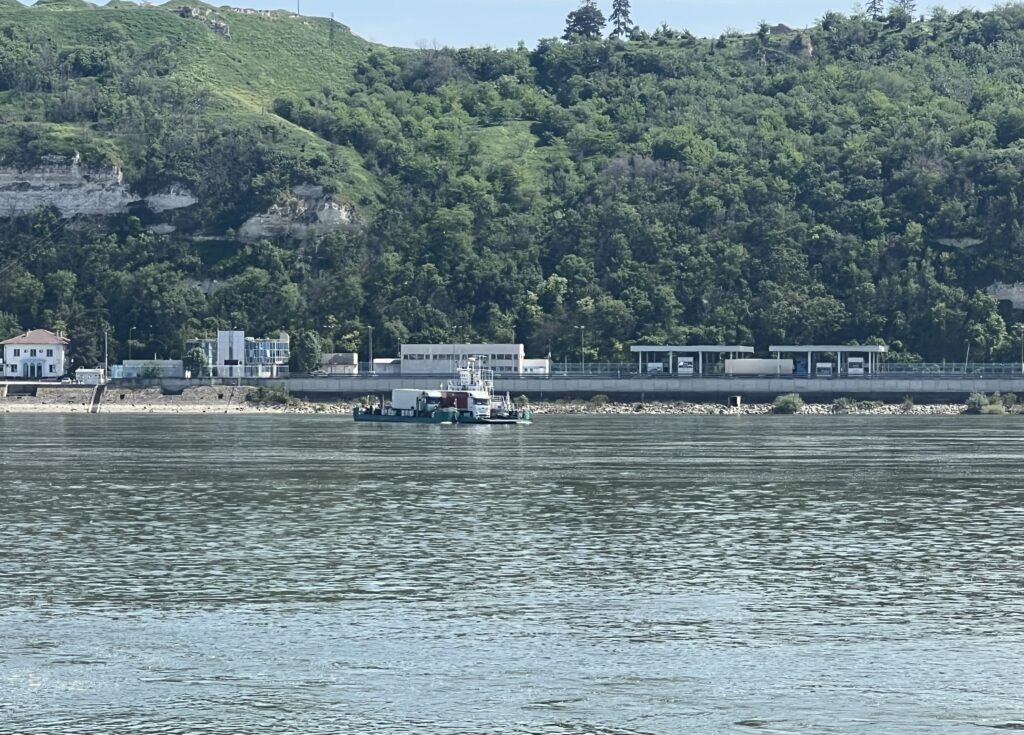
Leaving Romania one drives through pretty countryside to the southwest before crossing the Danube ( by ferry in our case – though I did ask Lois if it might count as that Danube “cruise” she has always wanted. Yes, you know the answer 😊 ). Both Romania and Bulgaria are now in the EU and as such part of the Schengen border control which means there should’ve been no border at all between them. While it was rather perfunctory ( and super friendly ), there was a control in place but we we were only stopped briefly. In northern Europe, no stops at all.
Arriving at the Bulgarian border post ( barge/ferry terminal ). A very warm welcome there !
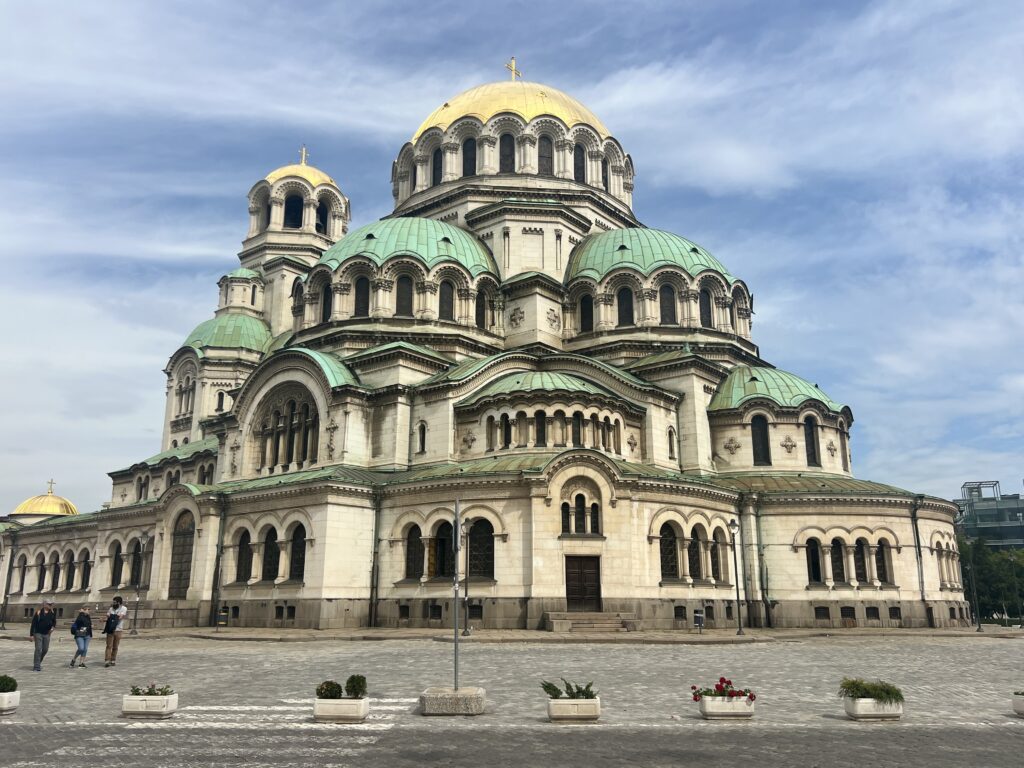
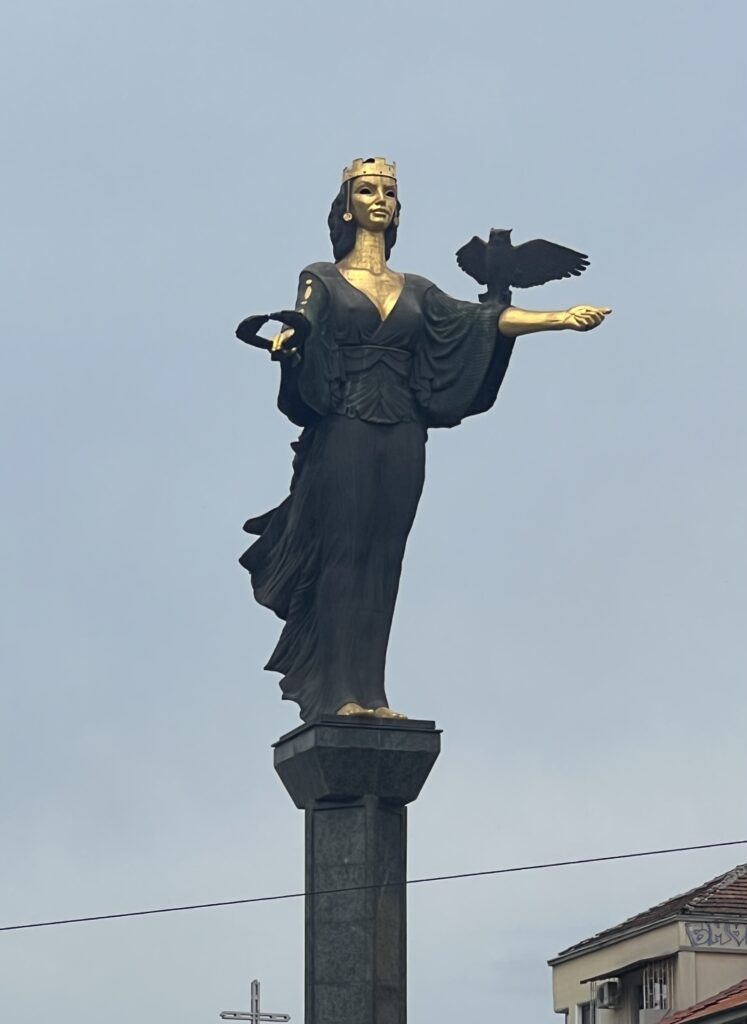
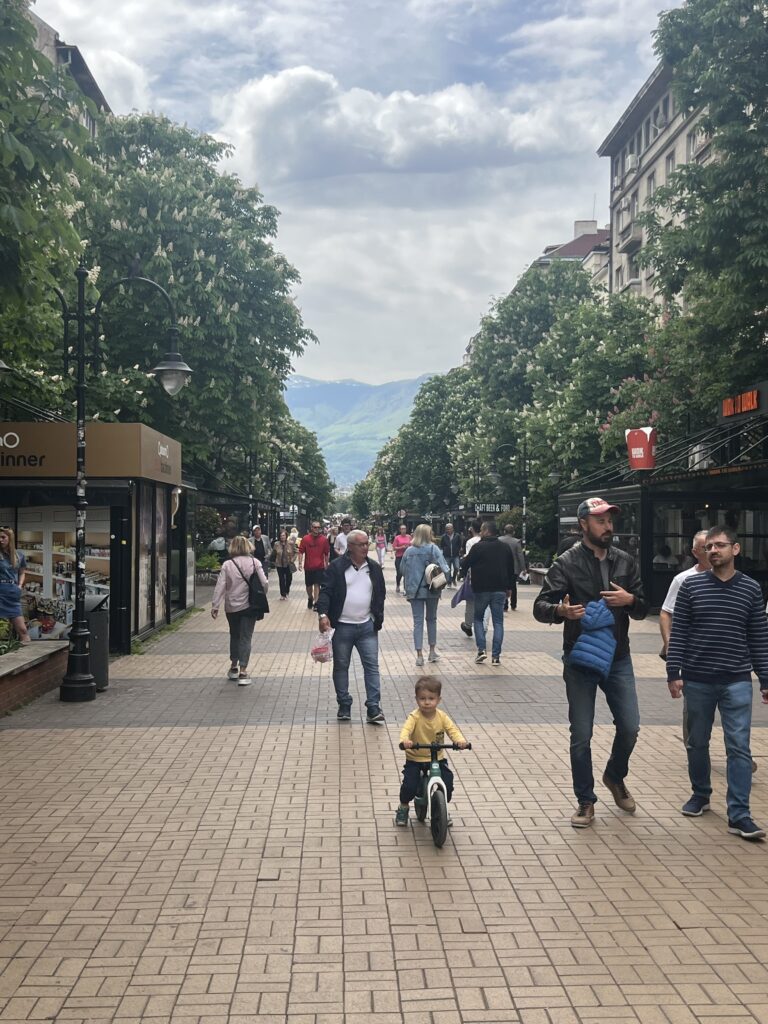
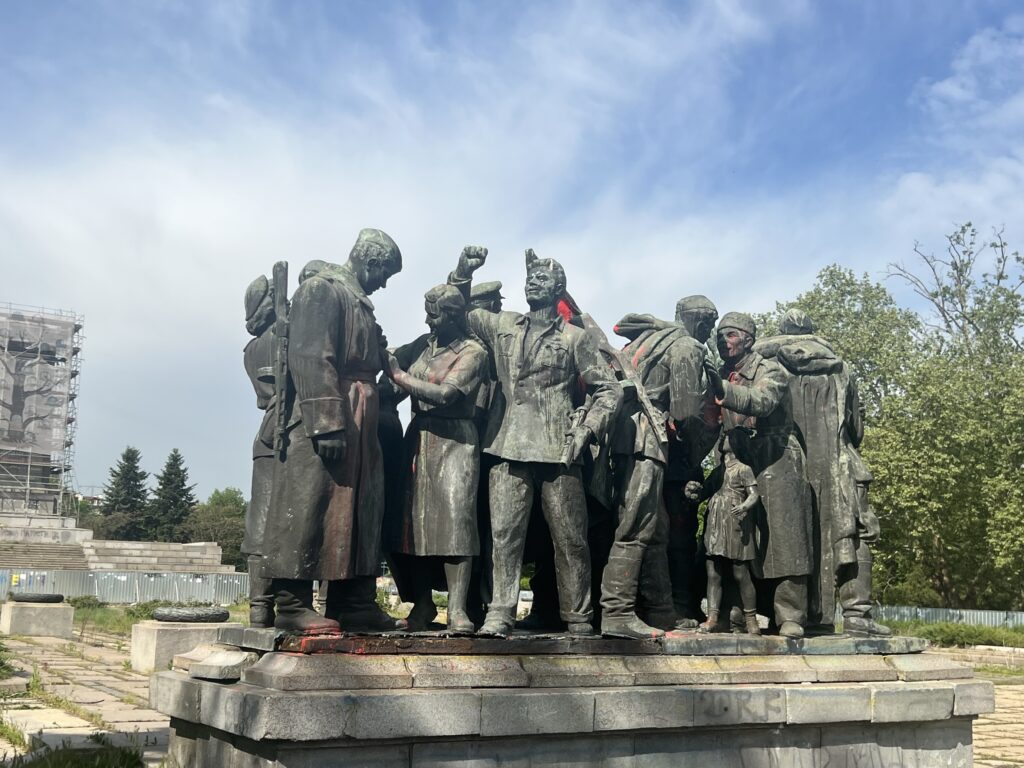
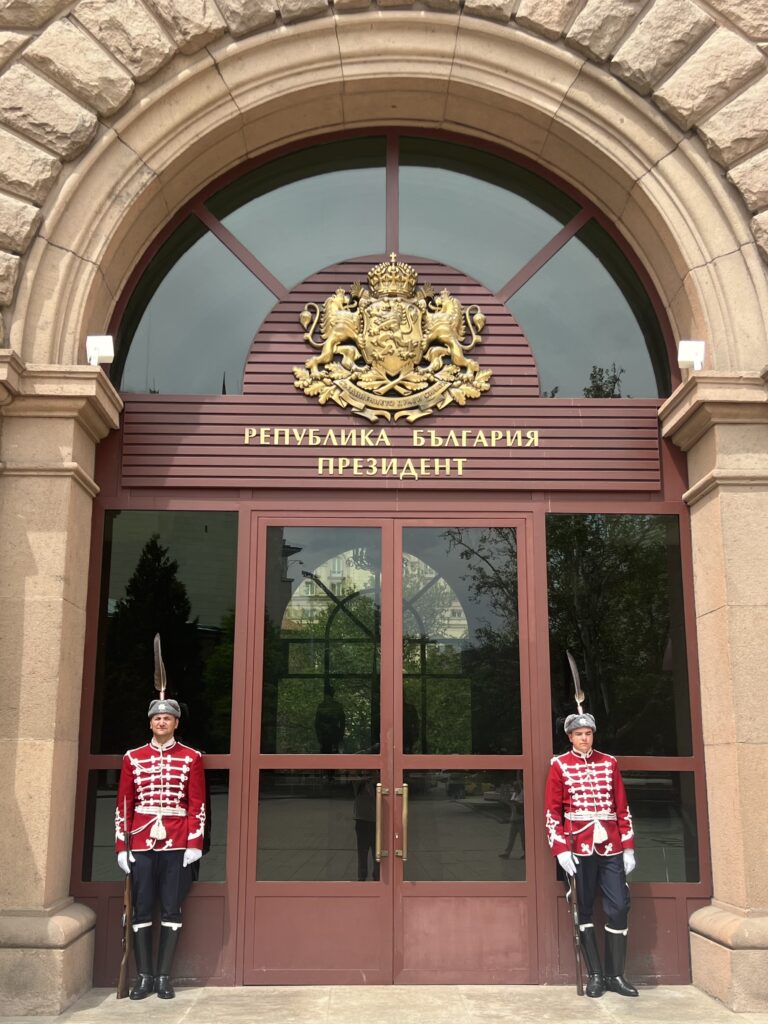
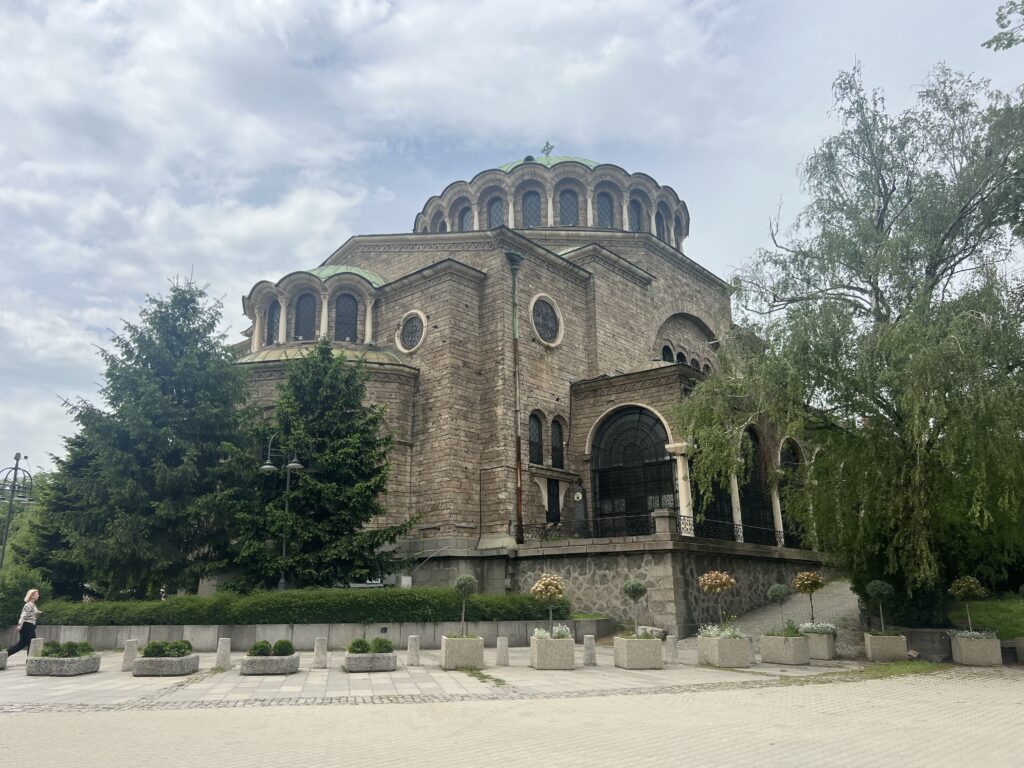
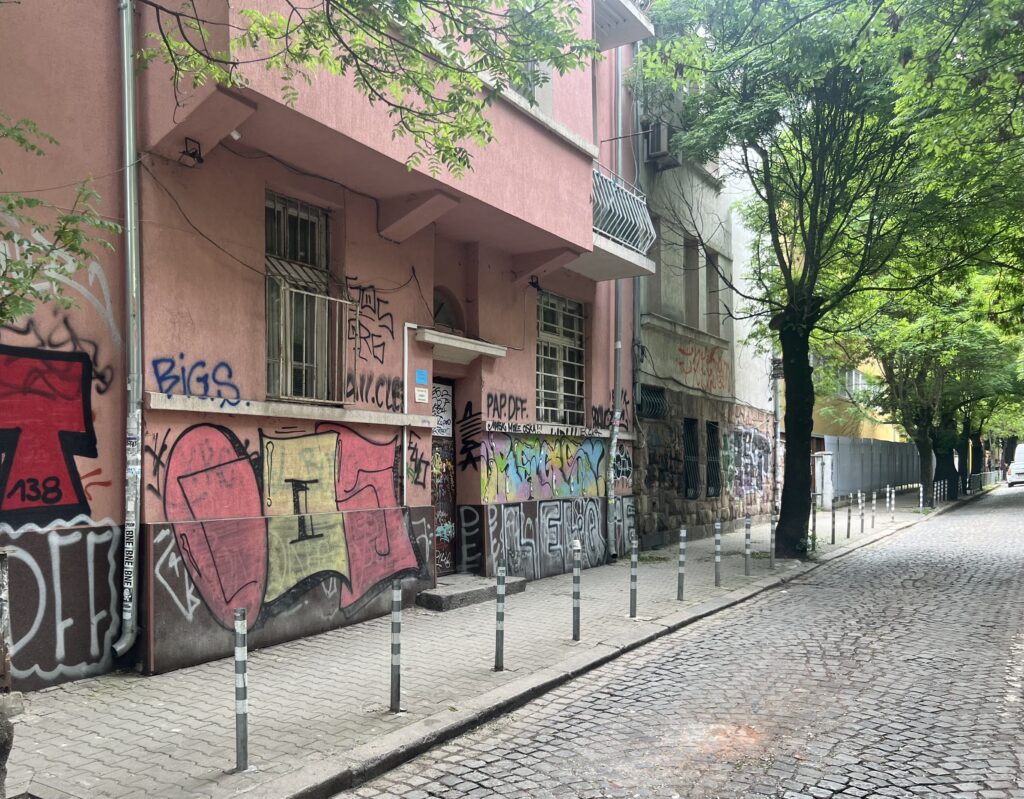
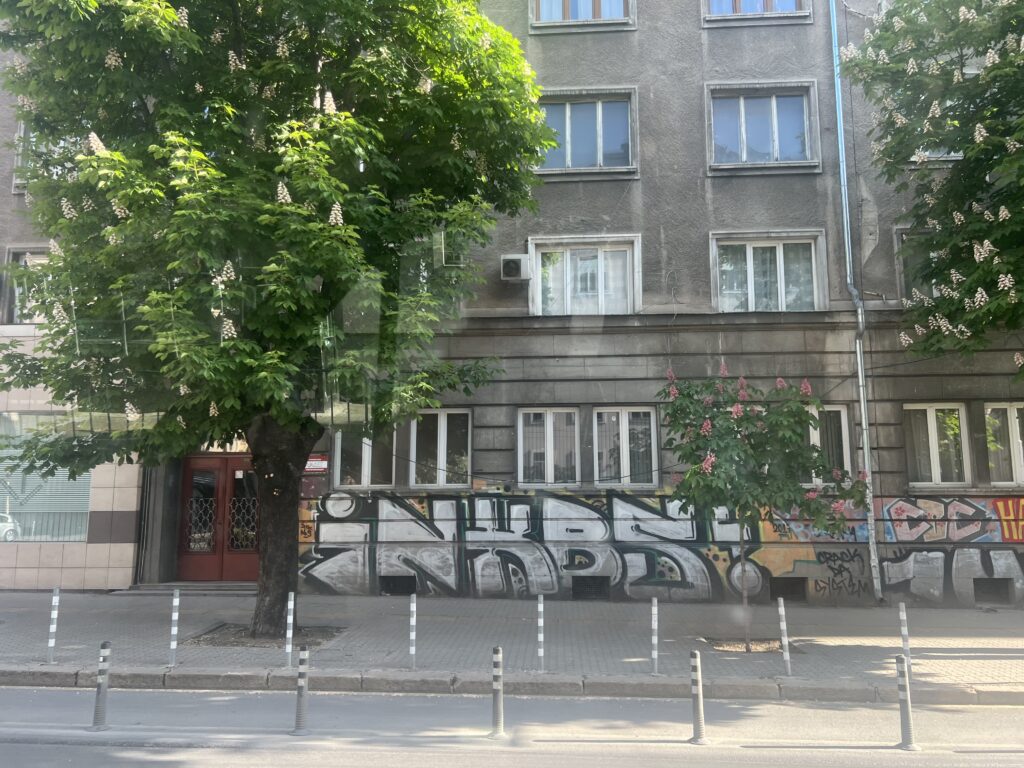
Sofia was to be our only Bulgarian stop and then really only because it fell right in our path, but it was certainly worthwhile for the day we spent there exploring its sights. Like Bucharest, another city with some interesting history, beautiful buildings, upscale neighbourhoods and wide boulevards, but unfortunately also blighted by much litter, horrendous graffiti, and gardens that were simply unattended. It’s not to suggest that you don’t see graffiti in other areas of Europe, you do, but not to the extent you see it here. It was very sad to see such disrespect for historical property.
Impressive St Alexander Nevski cathedral, Sofia.The lady herself, Sofia, after whom the city was named.Typical of Sofia’s leafy pedestrian boulevards.One need not look far for remnants of the communist eraGuards, downtown Sofia buildingAnother historic church in the orthodox style.Walk behind the leafy boulevards and you see this everywhere .It was everywhere, probably the worst we have seen in Europe so far..
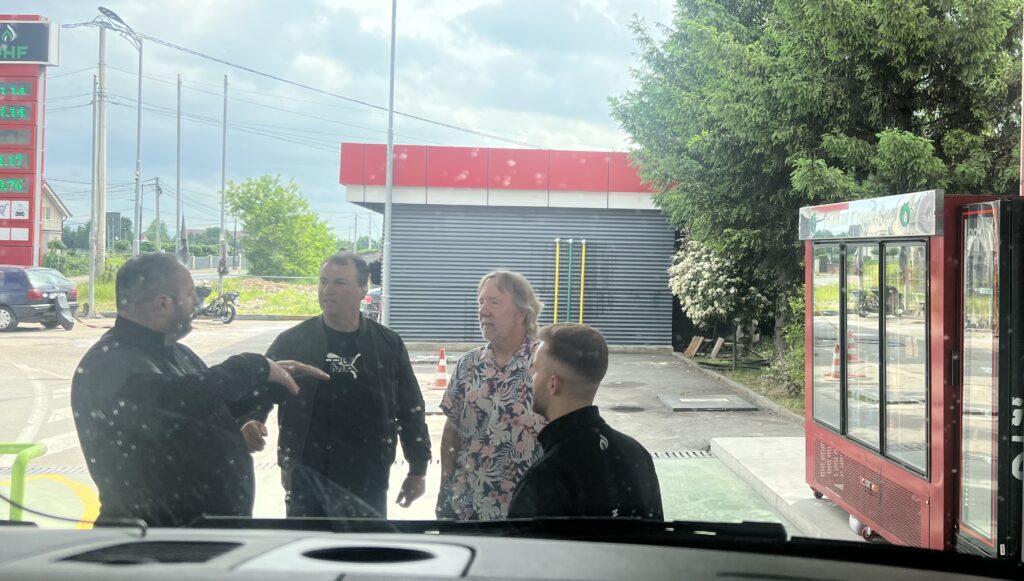
From Sofia it’s only a few hours west to Skopje, the capital of North Macedonia, a country which, along with Kosovo, Bosnia, Montenegro, Croatia and Slovenia peeled off from the former Yugoslavia after the conflicts in the 1990’s. The politics, as a result, can be a little tortuous and while tensions still simmer in places there is not ( as far as we know ) any remaining military conflict. Our passage through both Macedonia and Kosovo was brief, we enjoyed what we saw and the people we met were again, unfailingly helpful and curious ( more than once we were asked what on earth we were doing there !!!! ). I mention friendly again – here is what I mean; leaving Pristina we stopped at a fuel station to get some diesel before crossing to Montenegro. All three employees, on seeing our van and the unusual plates, came out to meet us. One spoke fluent English, so asked about our trip and translated for the other two who seemed absolutely enthralled by what we had done and where we had been. It was actually difficult to leave! One insisted on wiping down our dirty windshield while the other filled the van with diesel and the other talked to us the whole time. Before we could leave, he dragged me to the drink machine and insisted I take two drinks with us courtesy of them – one for Lois and one for myself. Of course I politely refused, thanked him anyway, but that went absolutely nowhere. No way were we leaving before we took a couple of drinks “on the house”, and their best wishes for a safe onward journey. It’s not quite always to that extent but It’s the kind of experience we’ve had from people in this area over and over again, which truly makes for a warm welcome. They have been through such difficult times and now seem happy and content with their independence.
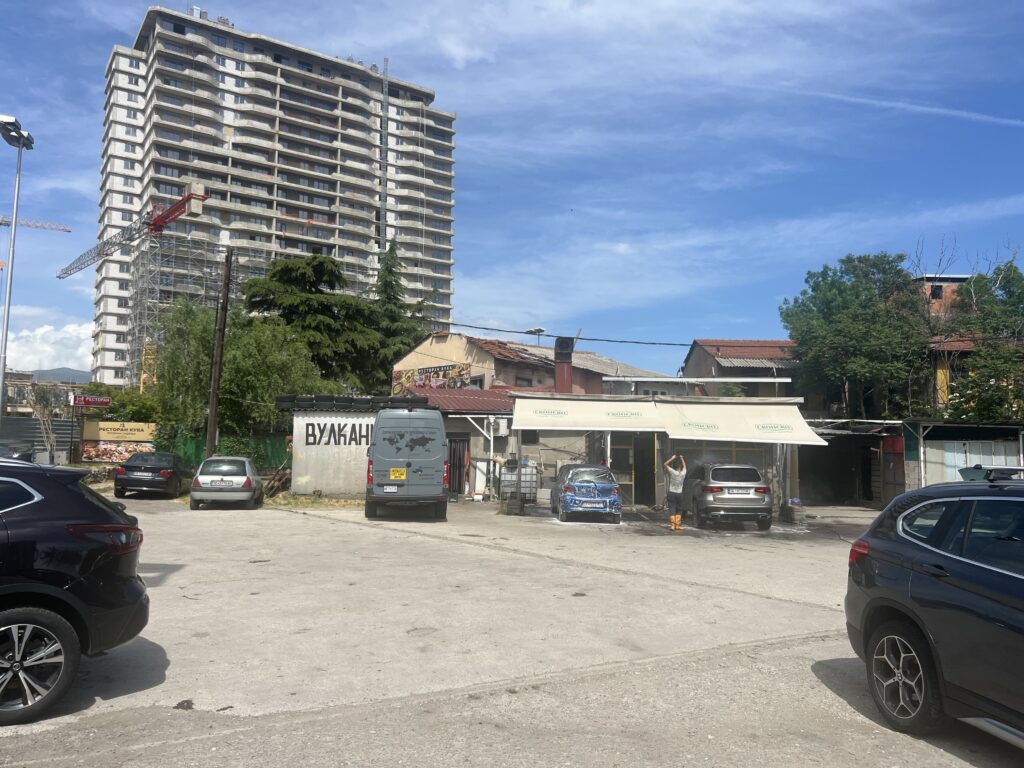
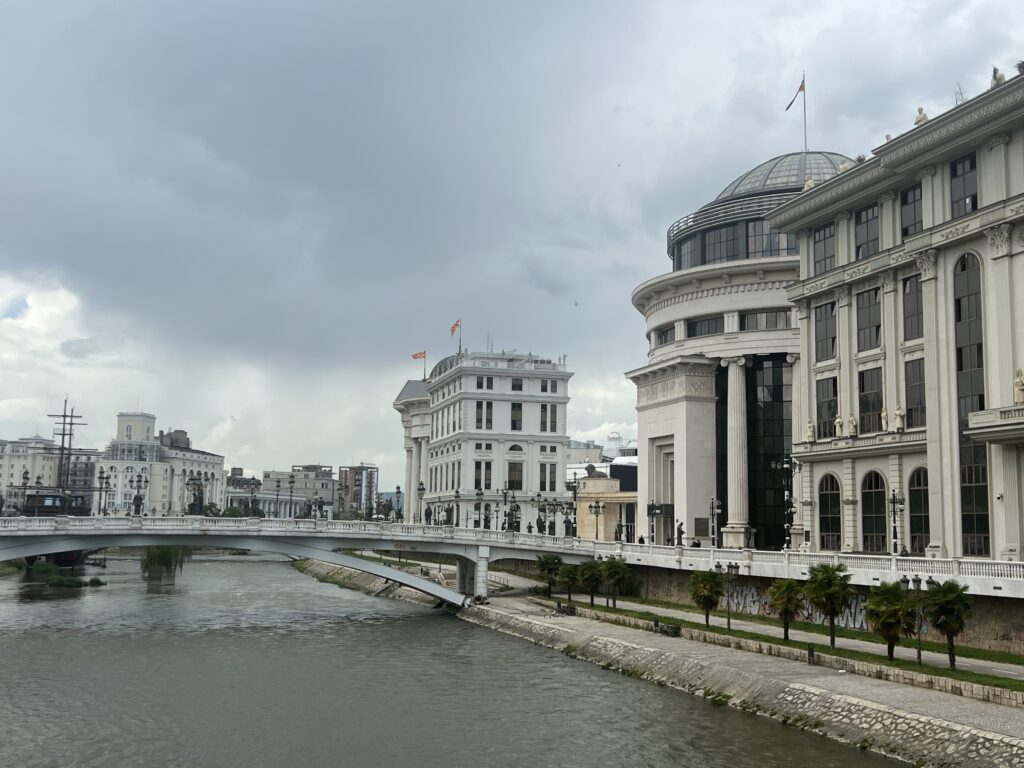
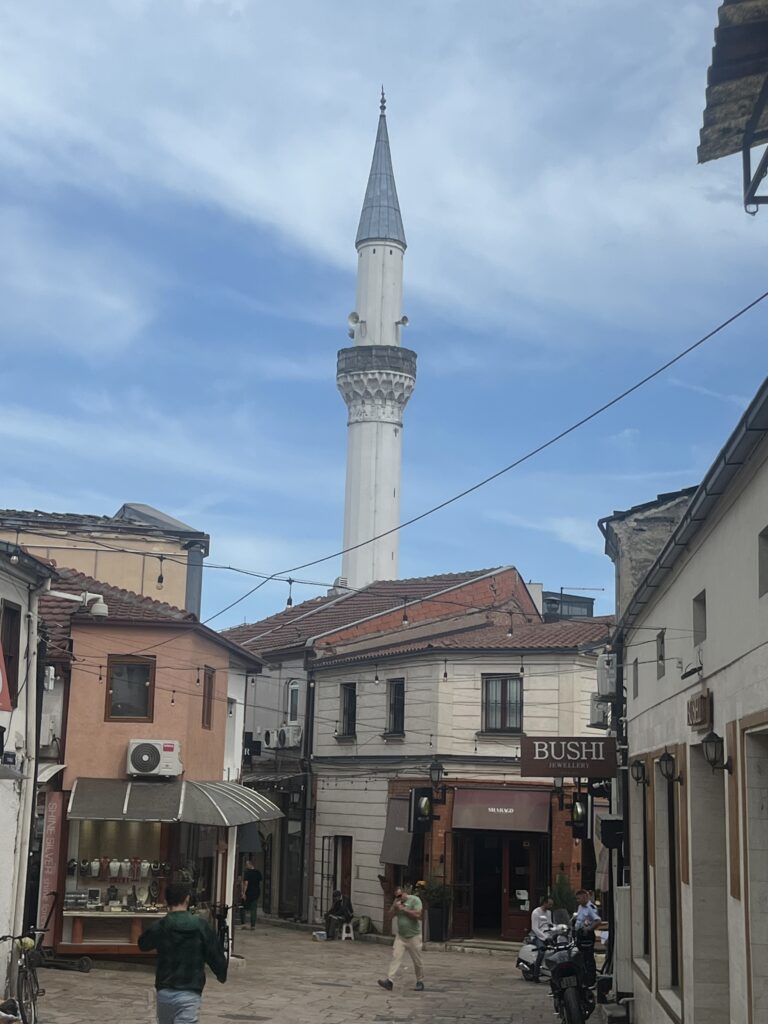
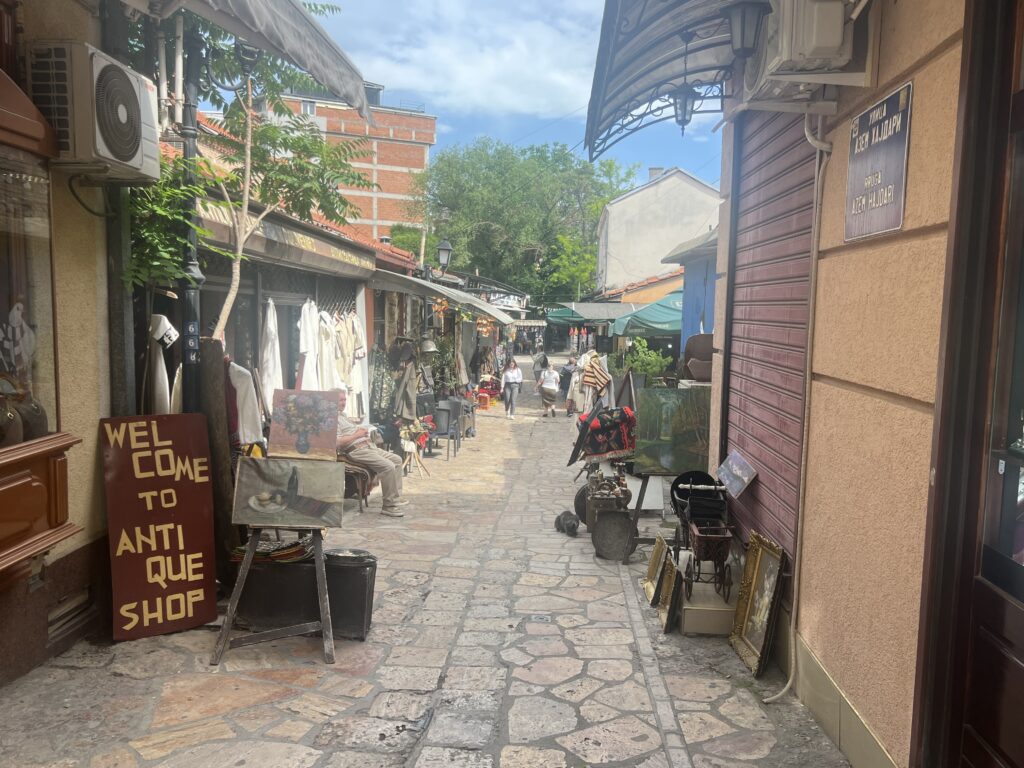
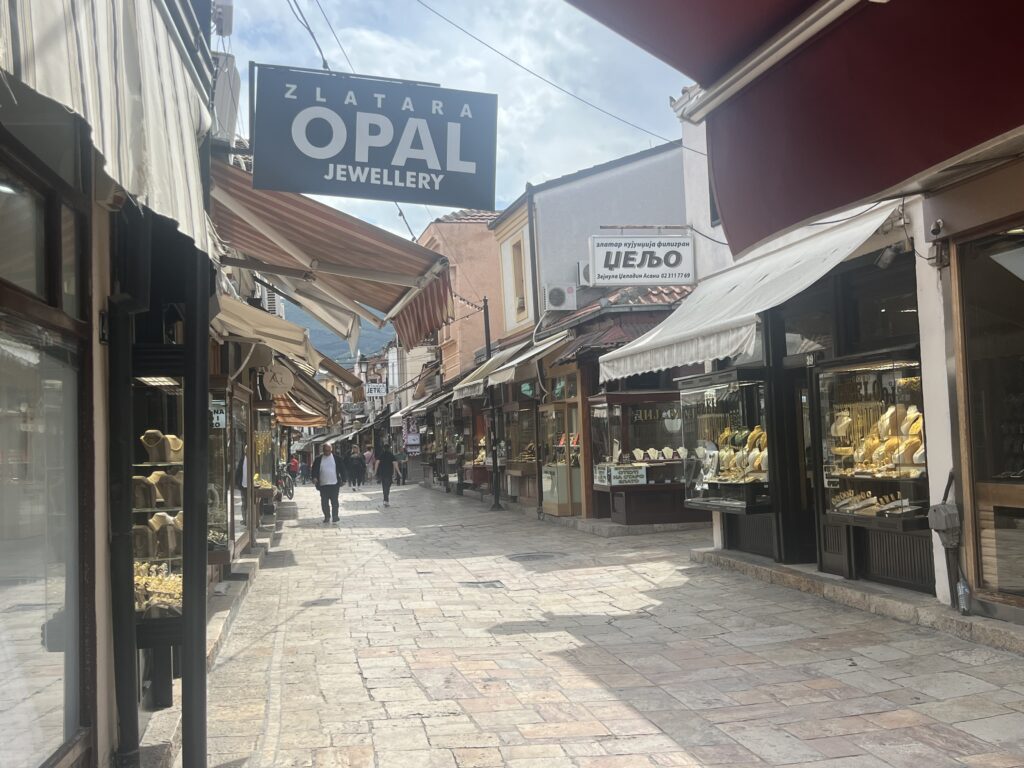
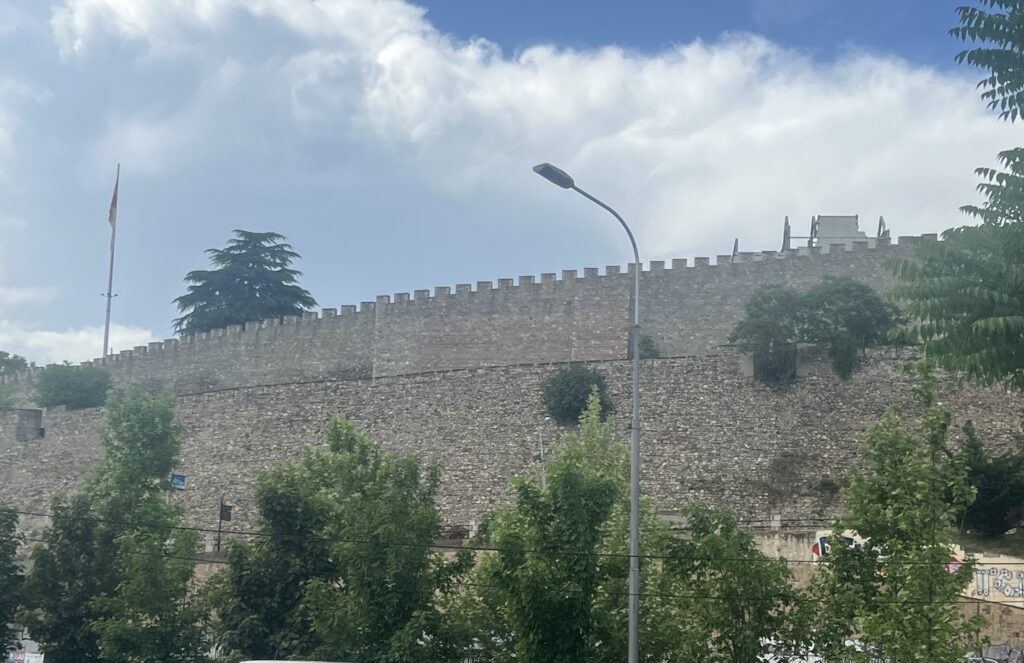
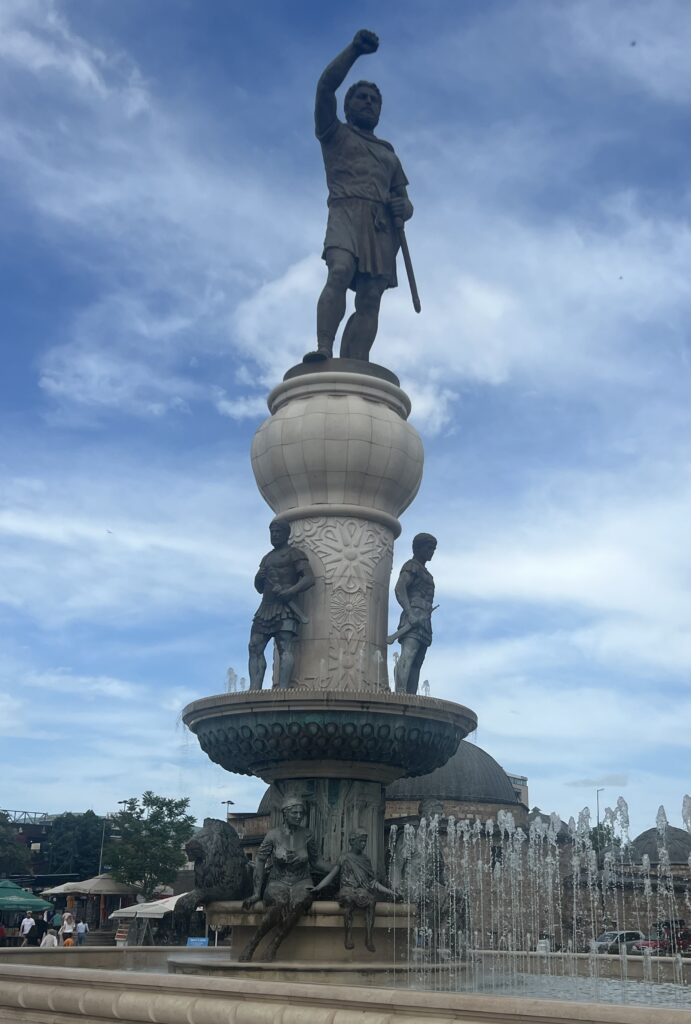
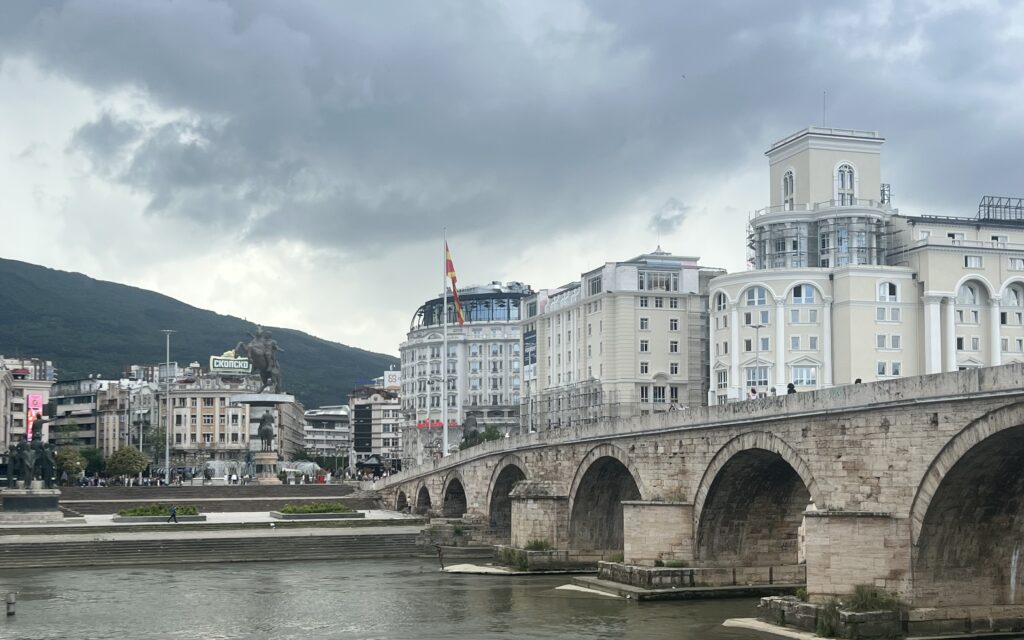
Insurance at the Macedonian border ( expensive here ). As it’s outside the EU our green card is not valid, but it was fast and easy. We had to do this in Kosovo, Montenegro and Bosnia as well.“City camping”, Skopje, Macedonia. Options were limited for bigger vehicles so we stayed here. A secure car wash, fenced and guarded. The owner is a former Macedonian special forces soldier – we felt safe even if it was not the most glamorous of our stays !!Skopje straddles the Vardar River.Old town, bazaar area, SkopjeDittoDittoRemnants of the city walls, SkopjeWarrior statue, Macedonia Square.An imitation of Paris’ Arc de Trionphe, or so it appeared. Macedonia Gate.Iconic Stone Bridge, Skopje. It’s old, built on Roman foundations back in the 1450’s.
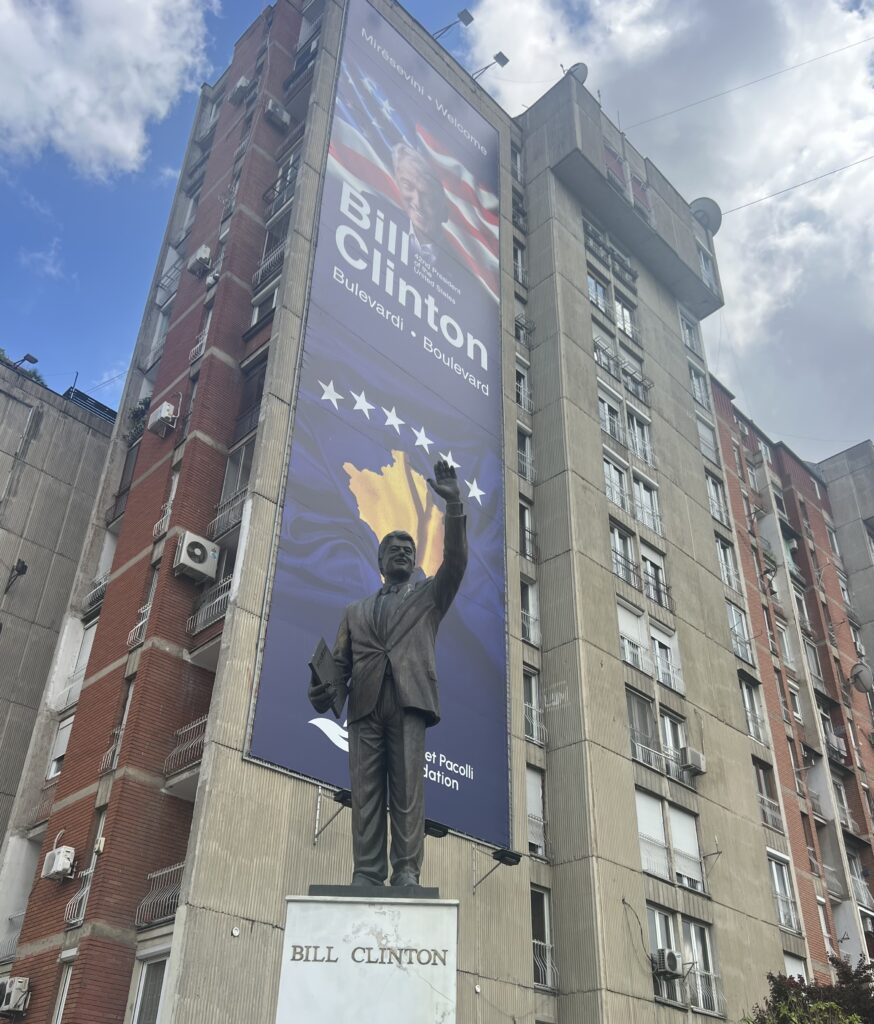
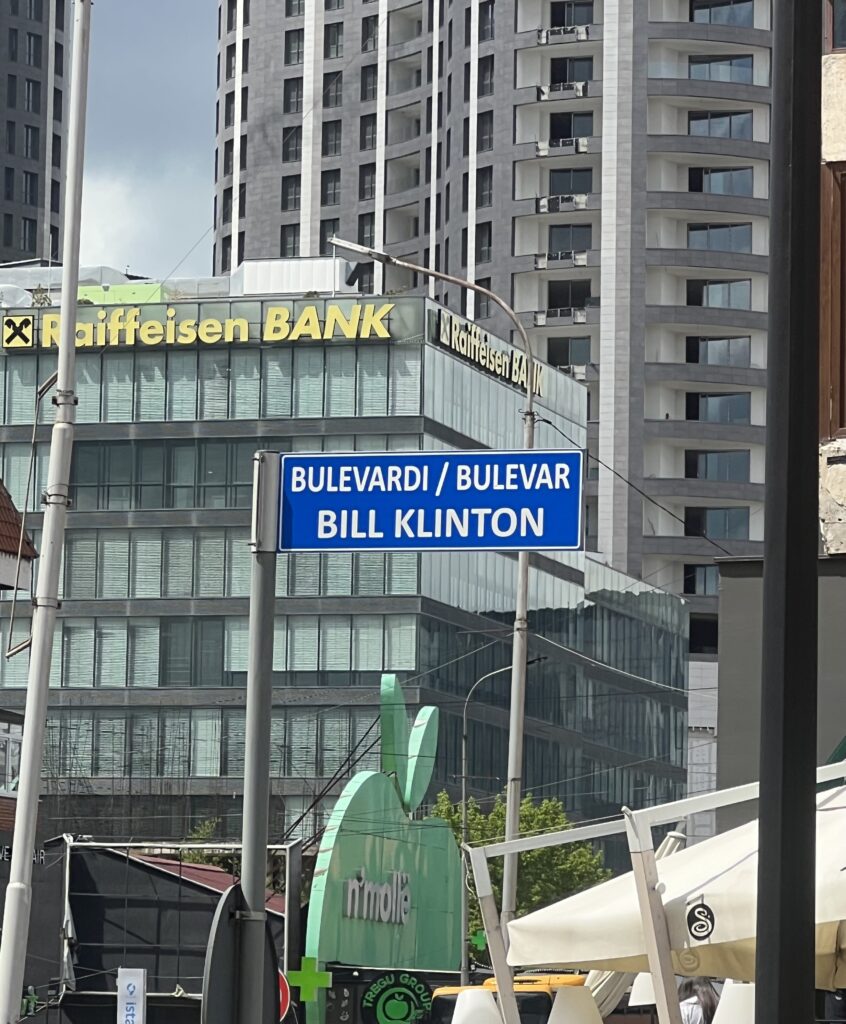
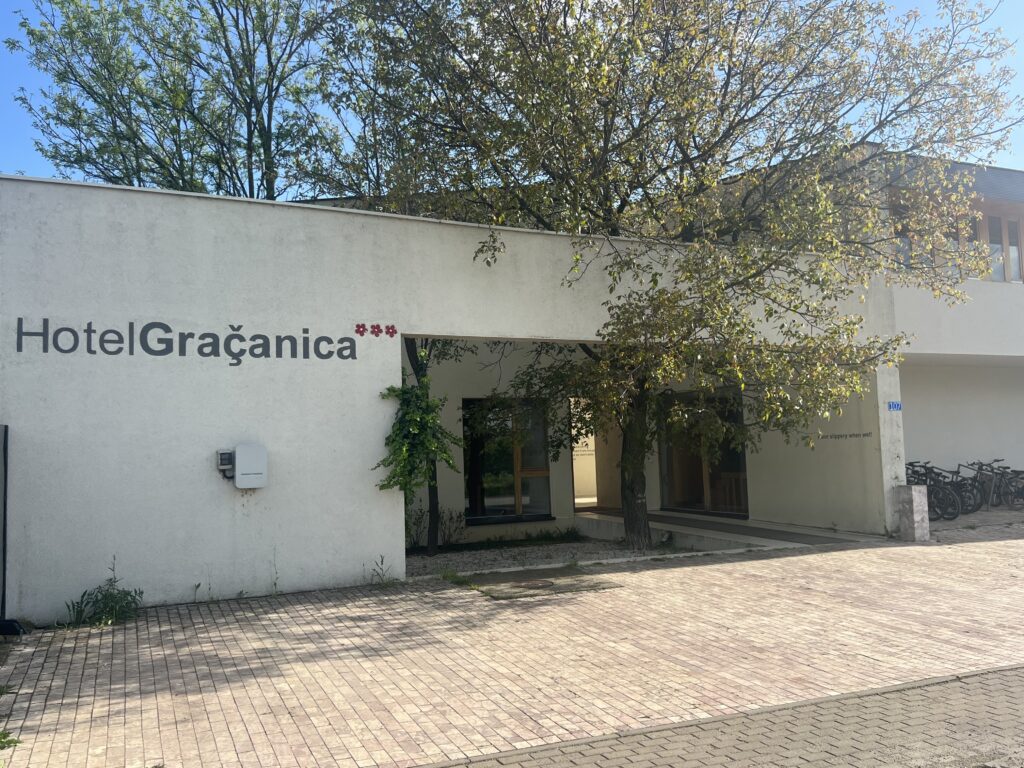
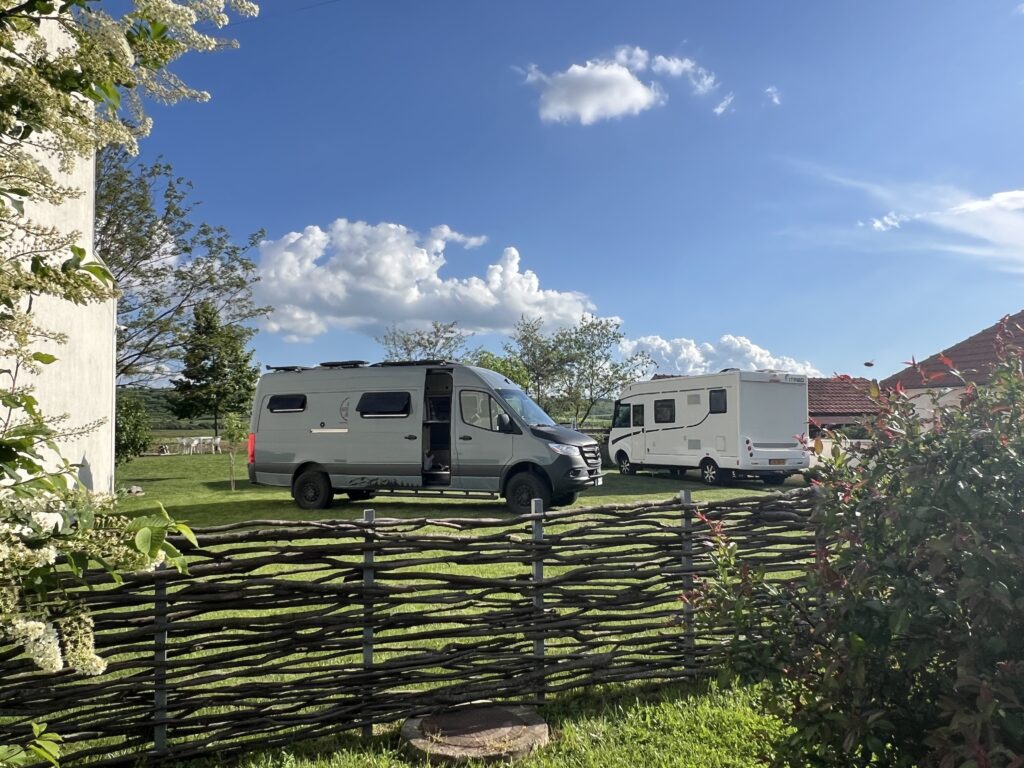
In truth, save for a few sights ( see pics above and below ) there’s not much to bring you to Macedonia or Kosovo and had they not been the only way to get us to Montenegro and Bosnia it’s not likely we would have even visited. It was quite funny, in Pristina, when I asked what the major attraction was – “Biill Clin-ton” came the unexpected answer. Bill Clinton ?Apparently the former president pushed through a vote at some important stage in a UN meeting that helped the Kosovo people in their push for independence. In any case, the guy is absolutely revered in Kosovo with a wide boulevard (named ) and a large statue (built ) in his honour. While Pristina was short on top tier sights, it did offer us a wonderful camp spot, shared with a delightful Dutch couple also travelling in the Balkans – the grounds of the Hotel Gracanica were truly a refuge for us in what was otherwise a rather chaotic city.
They revere Bill Clinton in Kosovo.Not just a statue but a main boulevard named in his honour. Perhaps that’s the Kosovo spelling for “Clinton”.Camped here while in Pristina. A big step up from the previous park-up in Skopje !Hotel Gracanica, the spot everyone camps at in Pristina. Paradise !Last fill up in Pristina, got the royal treatment and even parting gifts !
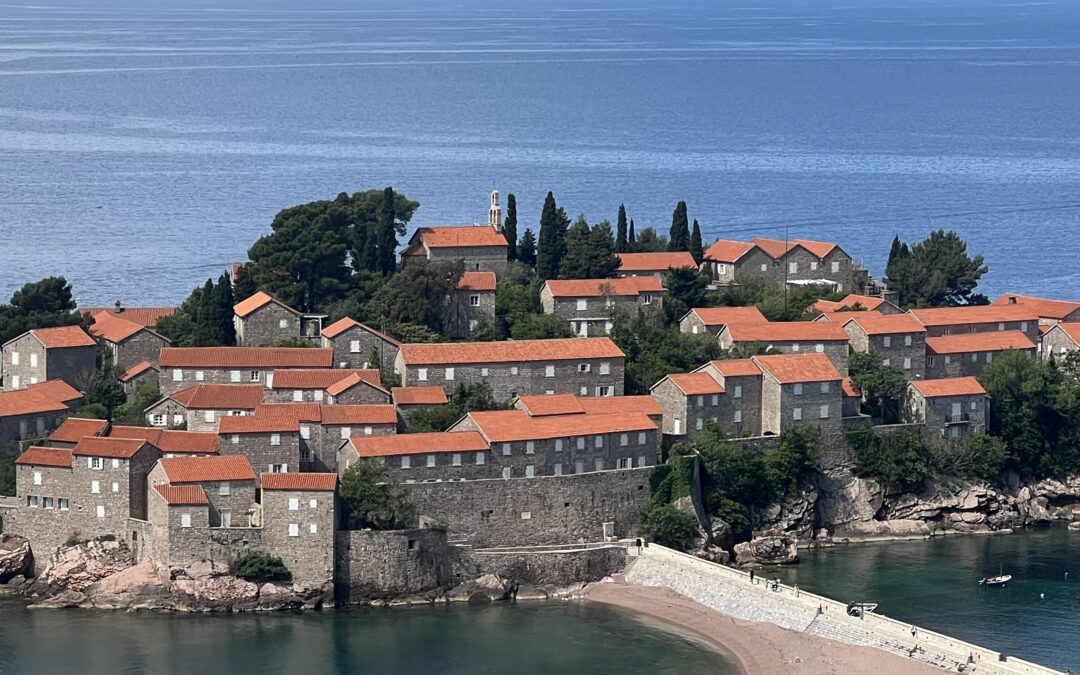
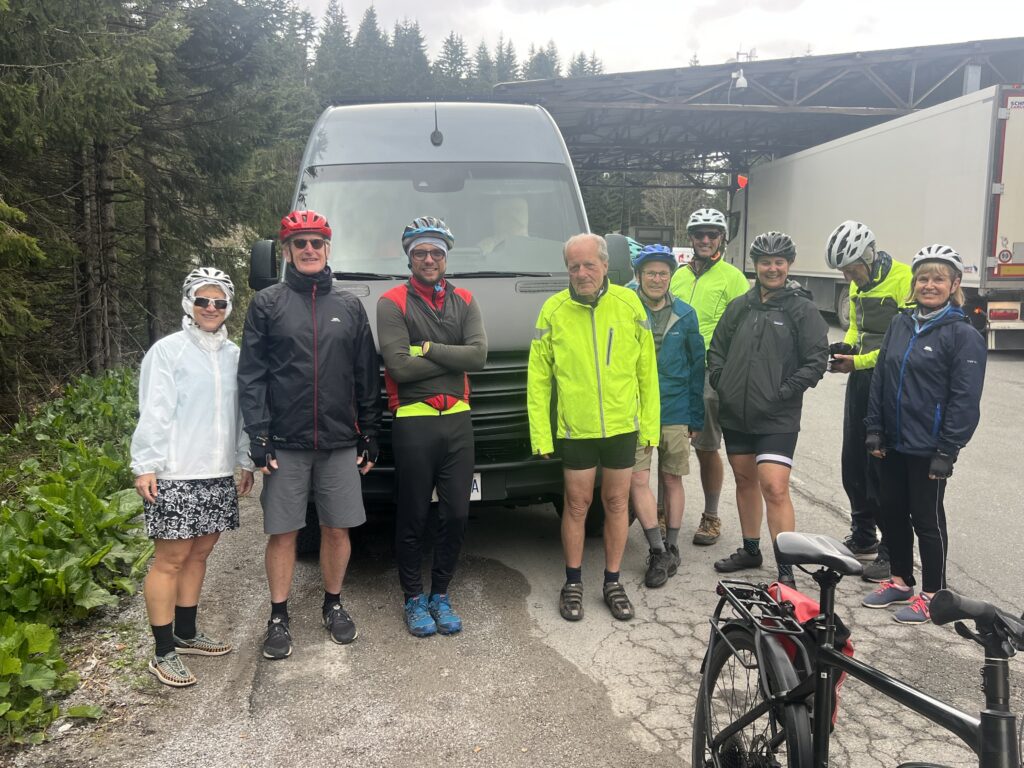
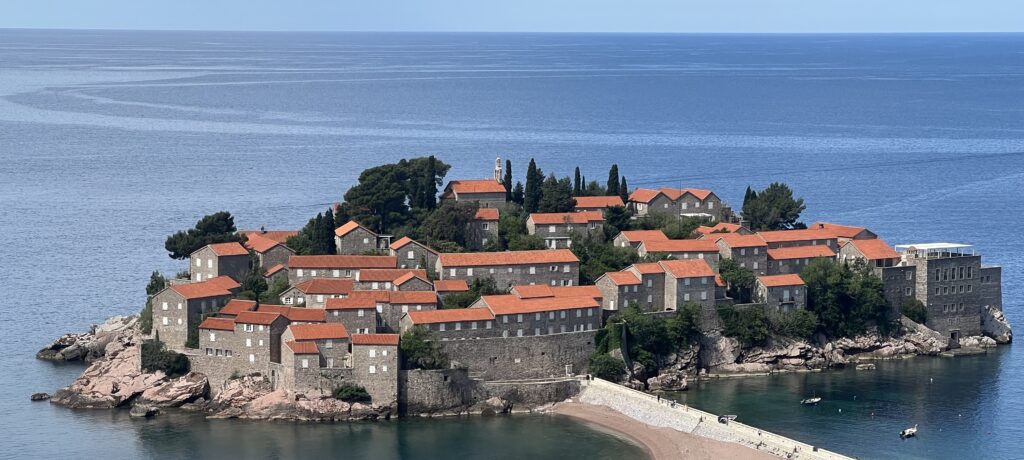
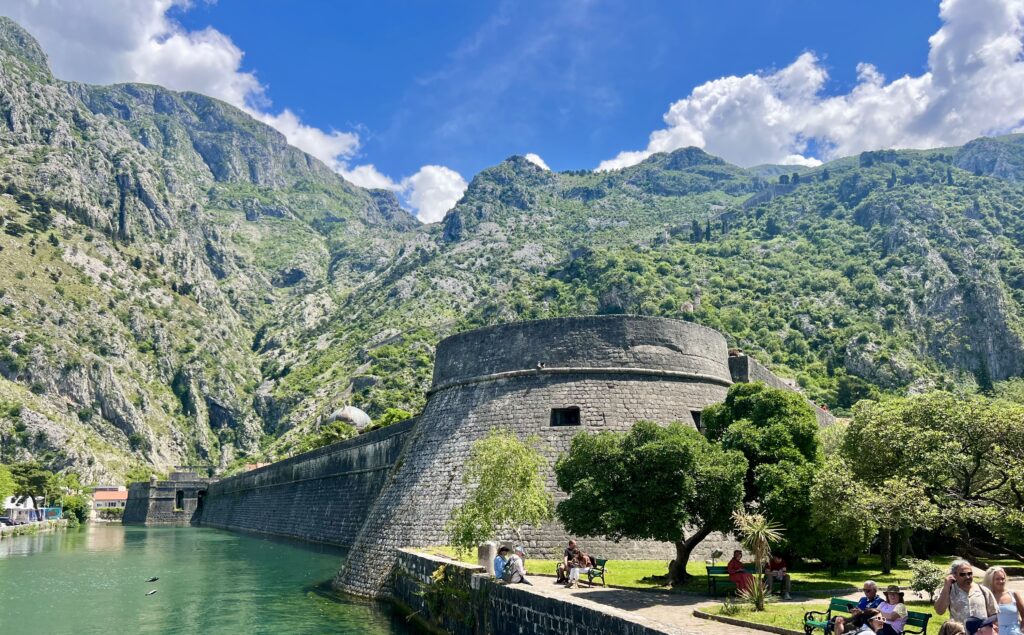
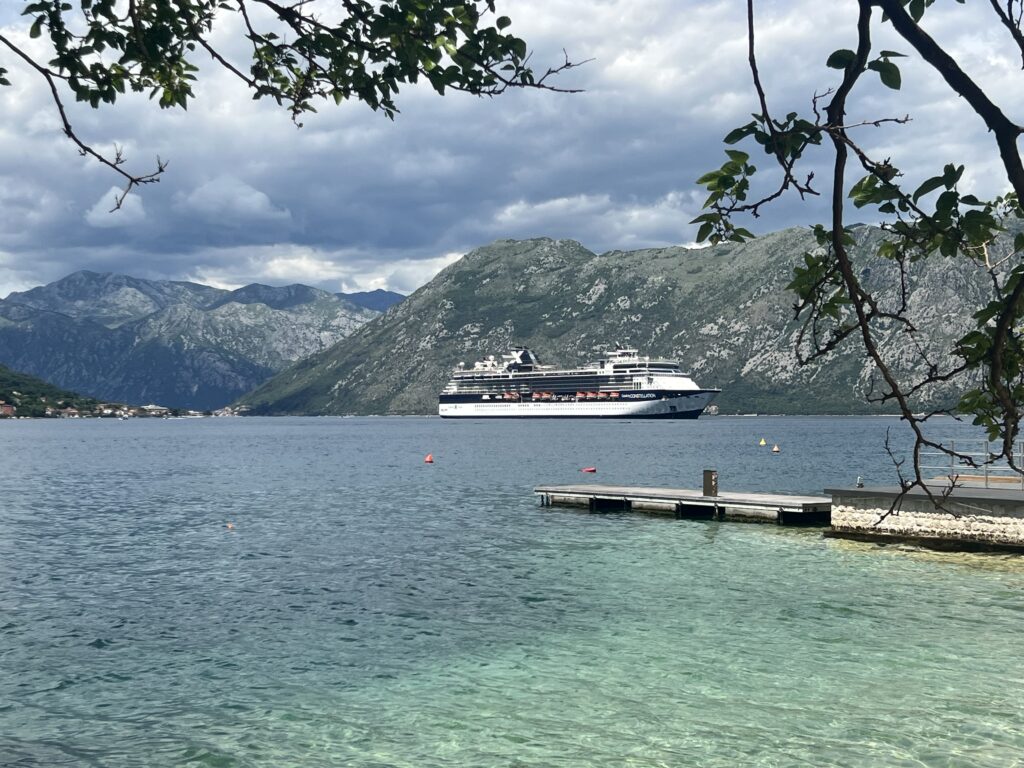
The one country here we were really excited to visit ( to the extent we probably rushed the former two in order to spend more time there ) was Montenegro. Far more like northern Europe than its neighbours, seemingly wealthier and more developed, it is also stunningly beautiful. Its coastline includes the world famous Bay of Kotor ( a cruise ship magnet ) and the hip coastal towns of Budva annd Sveti Stefan. What was especially interesting ( and very scenic ) though was our entry into the country from Kosovo. A steep climb up, over and then down the border range during which time we connected with a group of foreign, ( mostly Canadian ) cyclists. We were all getting stamped in at the border together and the Canadians in the group ( on a 2 week cycling trip through to Albania ) could not resist checking out the van with BC ( Canadian ) plates. Anyway, a fun chat ensued, and some photo ops along with the usual travellers tips. One of the cyclists was actually from Vernon, Lois’s home town ( small world ! ). Even though we plan to return to Montenegro later this summer we still could not resist exploring a bit more now, such was its appeal. The Bay of Kotor, crowded as it was ( a large cruise ship was in ) and postcard-like Sveti Stefan were particular highlights. We both agreed that this is one country we really look forward to revisiting !
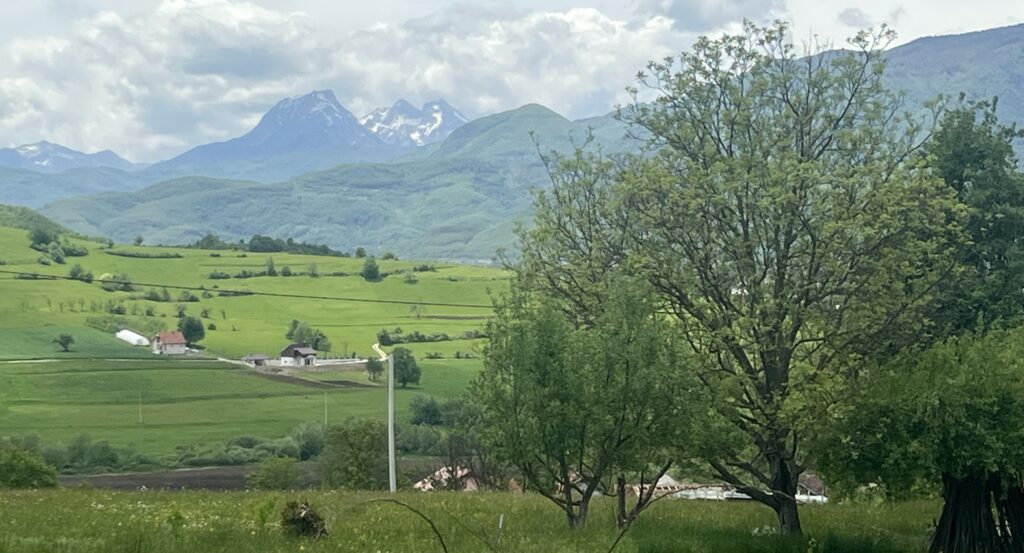
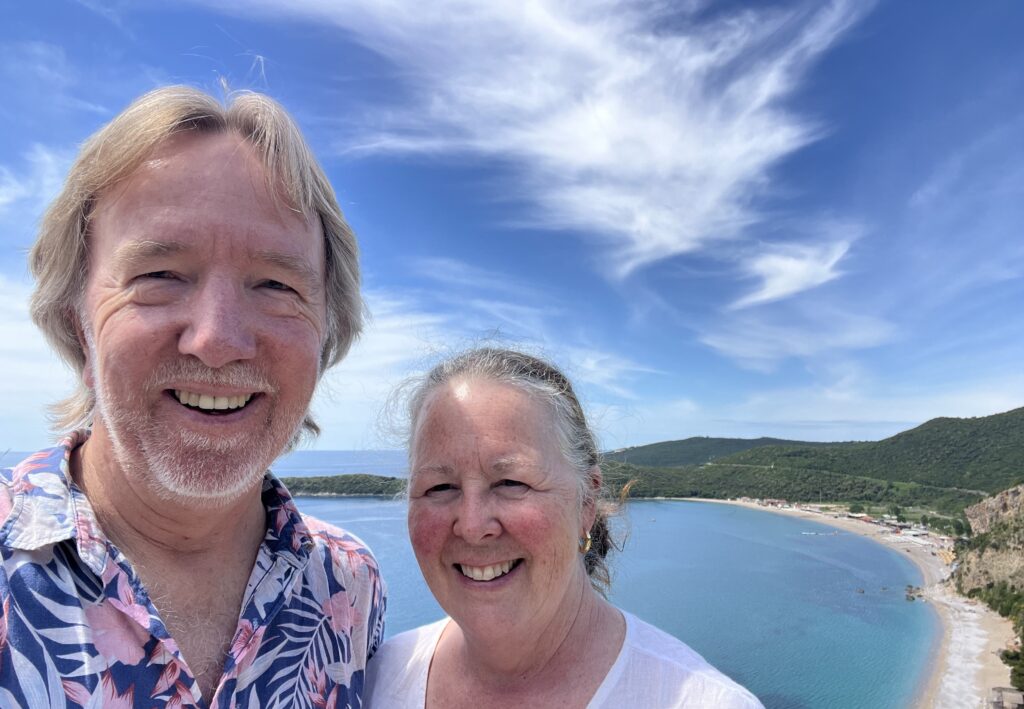
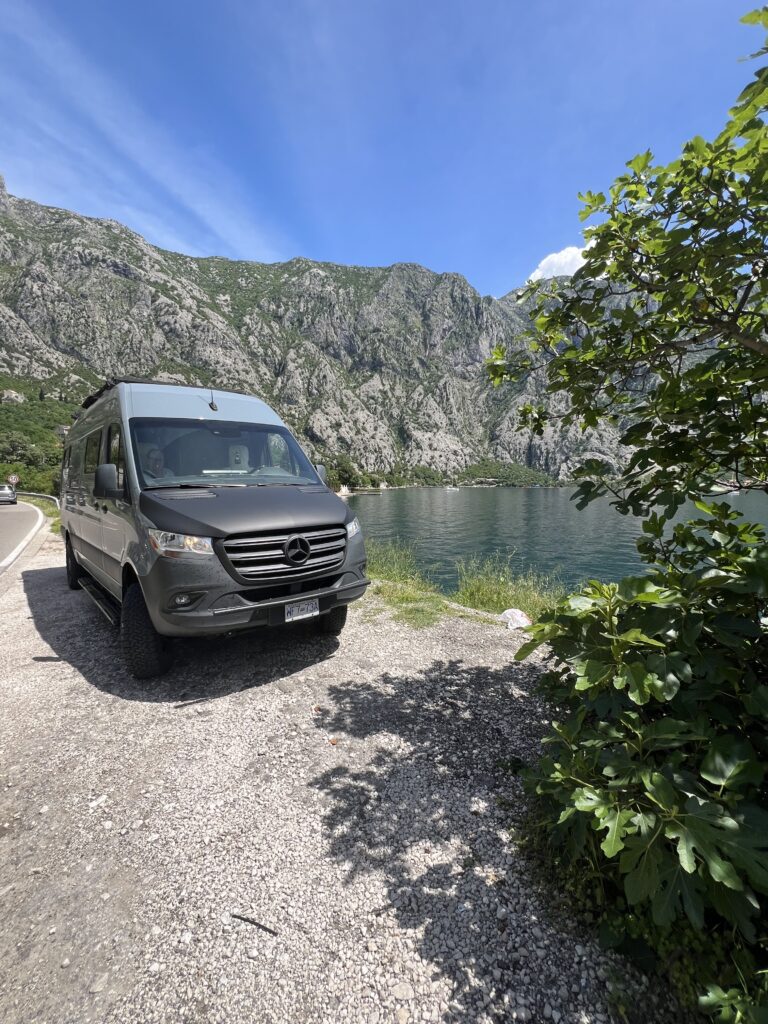
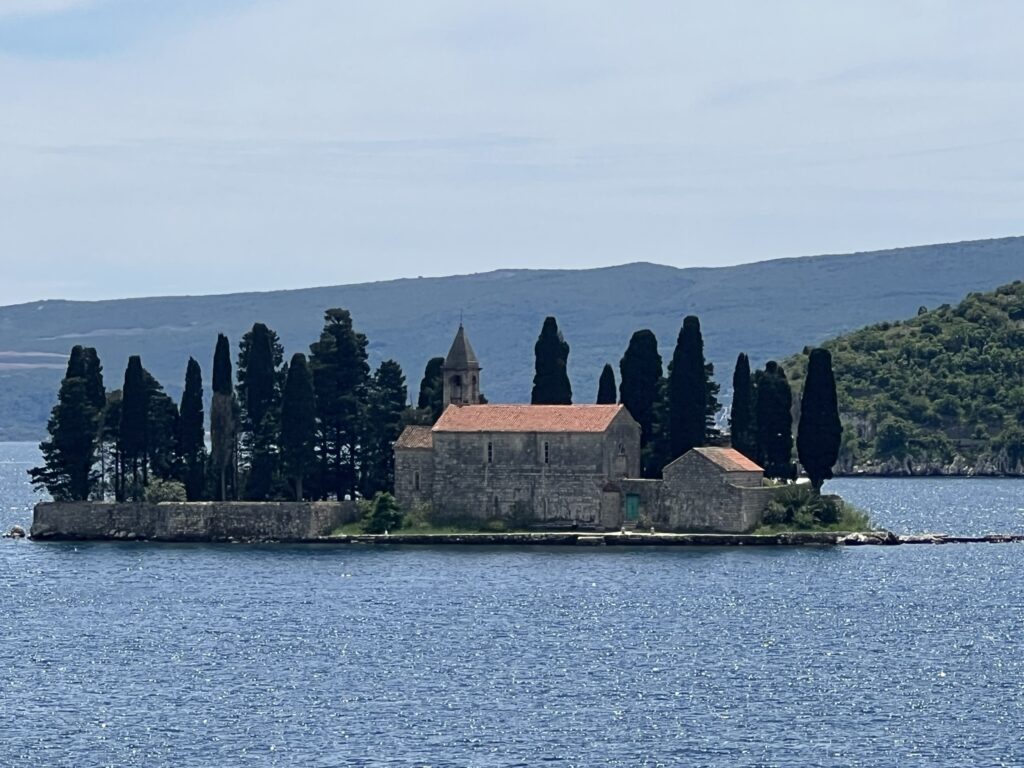
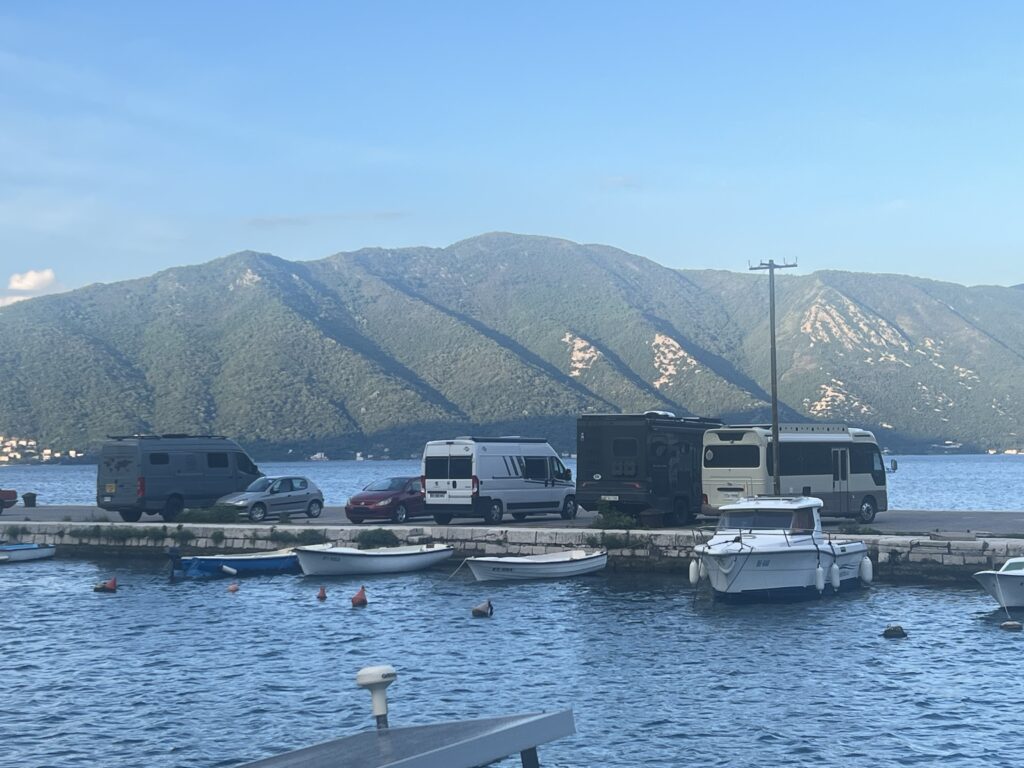
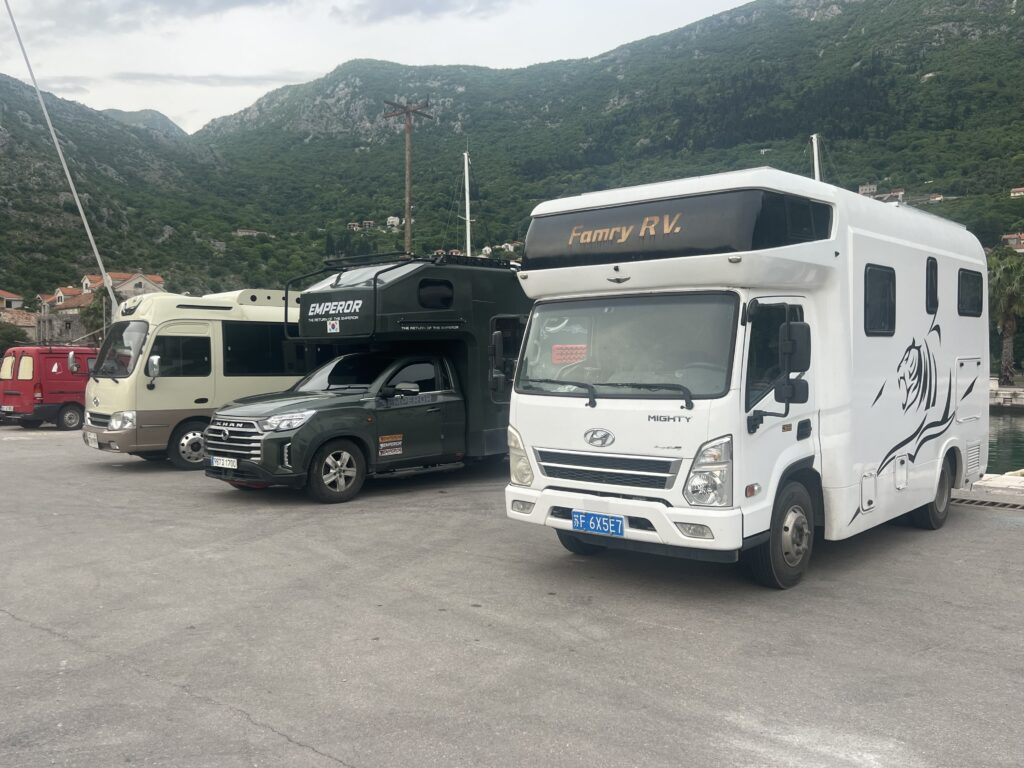
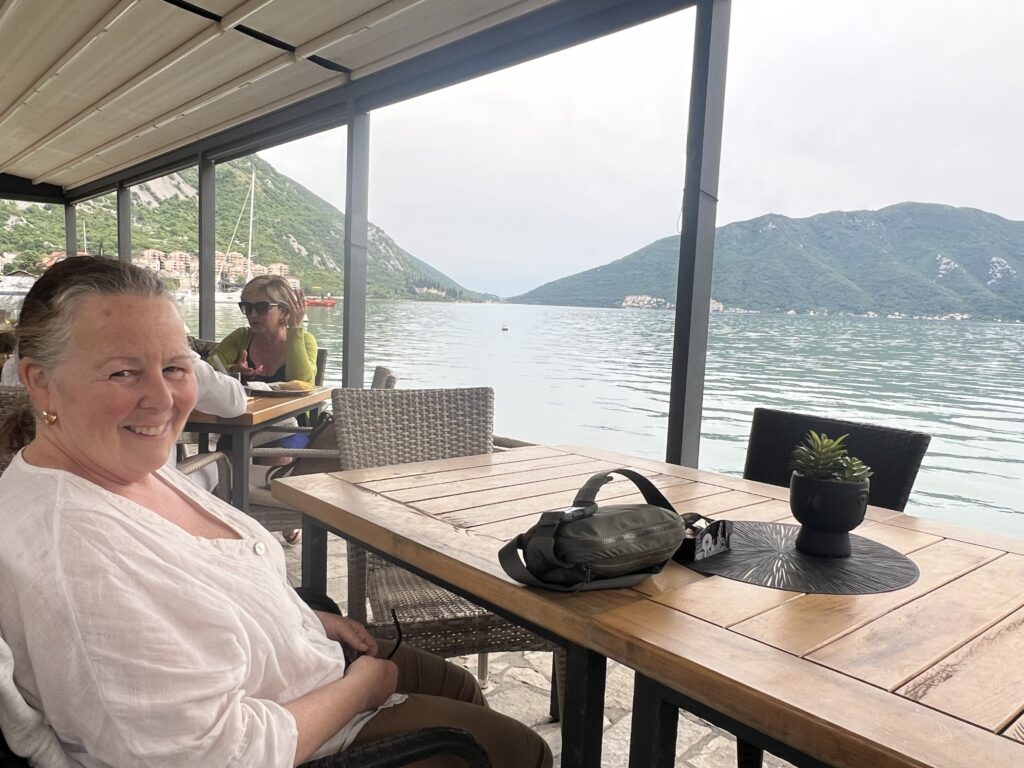
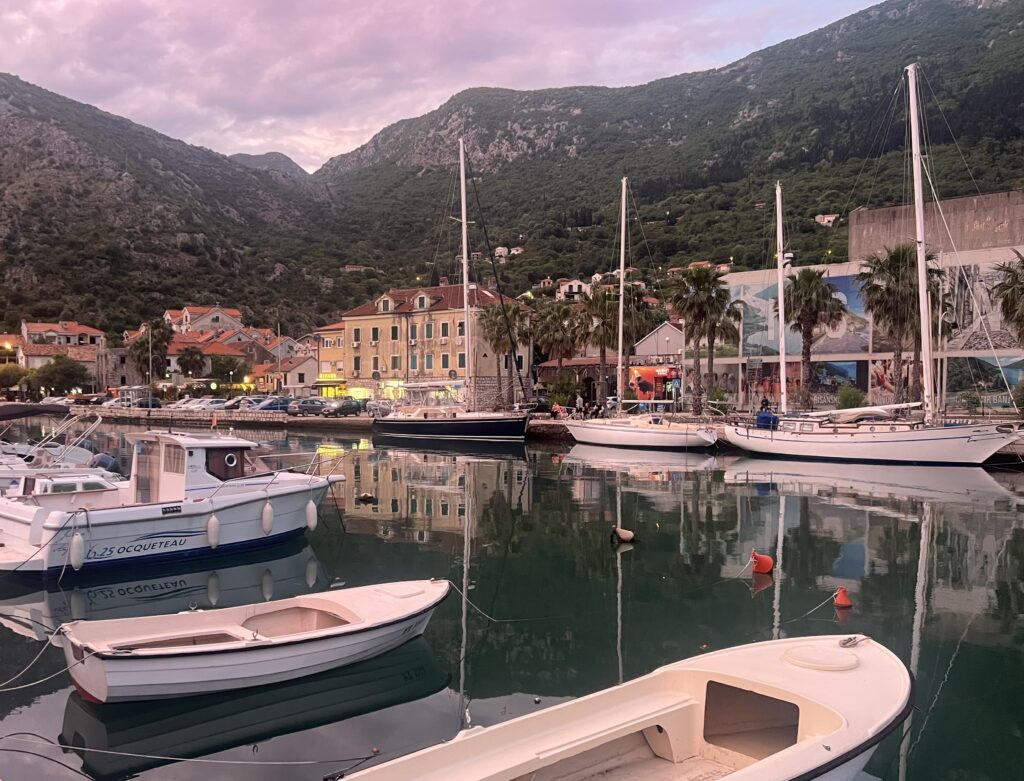
Crossed paths with a bunch of mostly Canadian cyclists on the Montenegro border. They were shocked to see a Canadian van there.Scenery on the way from the Kosovo border to Montenegro.Montenegro coast, iconic Sveti Stefan.Montenegro coast near Budva.Castle walls, Kotor, Montenegro.Cruise ship, Bay of Kotor.Morning tea break driving around the Bay of Kotor.One of many tiny islands in the Bay of Kotor. Part of Our Lady of the Rocks island One of our best park-ups, on the marina, Risan, Bay of Kotor.At the Risan Marina we connected with 3 other overlanders – two from Korea, one from China. All had driven across Russia and Mongolia to reach Europe overland. Hipno’s waterfront restaurant, Risan, Bay of Kotor.Sun setting on Risan marina and village. One of our favourite spots.
The PanAm completed in April, 2022 and with the truck camper sold, we shipped our new Sprinter van to Australia in late 2022. We travelled there through all of 2023 and into 2024 before shipping it up to North East Asia where we travelled for 4 months between Korea and Japan, before shipping it back to North America. It’s our plan to continue exploring the world in 2025.