It’s been a long time since we have visited Greece – 35 years in fact. At that time we crewed across the Mediterranean from Egypt on a yacht, entering the country in Rhodes. Some island hopping towards Athens followed – a wonderful time, great sights and great memories. On this occasion, entering from Albania in the north, the goal was to explore northern Greece, visit Thessaloniki and take in at least one island en route to Istanbul in Turkey.
Greece/Albanian border – fast and easy !
During our last visit the border with Albania was impenetrable – this time it was a breeze, even though it was another “Schengen” frontier to cross. On the Greek side they merely confirmed our vehicle was insured ( it was/is ), processed our passports and waved us in. We followed the coast south for about 10kms, Corfu temptingly lying just offshore, passing a number of beautiful ( near deserted ) beaches on the way.
First Greek beach we saw ( Corfu in the distance ). Water was nice and warm.
Igounemitsa is the first town of any size ( and a major ferry port ) – quaint enough but holding little appeal for us, we traveled on to Ioannina, a bigger city with some worthy Ottoman history, perched on a pretty lake. A nice place to wander around but nothing to hold us there for more than a day we continued on towards Thessaloniki.
Greece has a rather different view of what is “old” than most other countries !Historic Ioannina castle ( on Ioannina Lake )The castle grounds, well preserved in some areas.The castle was used as recently as WW2 – for rather heinous reasons.Distinctly Ottoman-era turrets on castle building.
Greece’s second biggest city, Thessaloniki has an impressive waterfront Corniche, a famous tower, and, among other things, a truly impressive museum of the Byzantine era. We pass on lots of museums – glad we stopped in at this one, a fascinating glimpse into a pivotal period of Greek, Roman and Ottoman history.
Decision time ! We decided to continue east to Thessaloniki.Thessaloniki’s beautiful Corniche was packed on a beautiful Sunday.Downtown Thessaloniki.Thessaloniki’s famous White Tower.Greece’s most revered son – Alexander The Great.The impressive Byzantine museum.DittoDittoDitto.
Continuing east we made two additional stops as we crossed that narrow neck of land that separates Greece from Bulgaria and connects it to Turkey – a rustic, but popular wild camping spot just east of Thessaloniki and 3 delightful days on the island of Thassos ( midway between Thessaloniki and Istanbul ). Two of the three days offered up spectacular weather as we slowly made our way around the island camping, swimming, hiking and enjoying some local specialties. Lucky we were not any later in the season as many of the restaurants and stores were already closed. The upside, of course, was that we, along with what seemed to be only a handful of other campers, have the island just about to ourselves – absolutely delightful !
Beachfront wild camp, east of Thessaloniki.Sunset at above beach.The Greeks have their own “Macedonia” which is why they insist the small country to their north be called “North Macedonia” !Overcast as we arrived on Thassos but it soon improved.Relaxing…..😊Thassos coastline…...and its beaches ( water still warm enough to swim – October ). Regardless of weather, the businesses are quiet by October as the big crowds are no more. Nice for us !Spent two days driving around the island sampling several of its beaches.Golden beach ( here ) was our pick.Thassos port.Restored Roman-era amphitheatre.Sad to leave, but Turkey awaits.
Alas, our next stop lay just a few hours east of us – time to bid Thassos “adieu” and move on to…….Turkey !
Heard rumours of 3 hour delays. No such issue – we were through in less than 30 minutes!
Till next week…
In Case You Wondered:
Q: Your van’s AC electrical is 120v ( standard North American style ), but Europe ( like most of the world ) is 240v. How do you charge your leisure batteries when you “plug in”
A: We have not needed to plug in anywhere yet – with 700w of solar on the roof and a 40amp DC/DC charger we have been able to keep our 500amp LifePo leisure batteries nicely charged simply by driving and/or relying on solar. In addition to our regular inverter/charger, we have an auxiliary (240v input ) 25amp charger ( with European plug ) that we can use to charge our batteries should they ever need topping up (in the event it’s not sunny AND we don’t drive for an extended period). Our system has served us very well so far.
While several times larger than Montenegro, Albania is still very small so getting from north to south does not take long. That said it’s full of amazing little towns, steeped in history and some pretty stunning natural sites. It’s fair to say that we probably found more of these in the south than in the north.
It took us much longer of course, but gives one some idea of distances. That’s top to bottom.
In addition to its beautiful coastal attractions ( they don’t call it the “Albanian Riviera” by accident, two inland towns in particular stand out on the itinerary of most who are exploring Albania – Berat and Gjirokaster. Berat was probably the favourite in terms of it authentic Ottoman-era architecture while Gjirokaster had the more impressive fort of the two. Both were impressive, full of tourists and one could easily enjoy getting lost in the cobble-stoned streets of their respective old towns. We certainly did ! Again and again wherever we went in Albania we were shown the most amazing hospitality, especially so in these two places. The camp hosts were extremely knowledgeable and willing to go to almost any lengths to ensure we had an enjoyable stay, but we found the same at restaurants, stores, gas stations and just anywhere we came into contact with local people. Curious, always, as to where we came from and how we liked Albania you could absolutely see these were incredibly proud folks, so grateful to be free of their recent past ( the 45 lost years ) and delighted to be back on the European travel circuit.
Ottoman-era architecture, Berat.Simple camp site, Berat. With some French folks we just kept bumping into !A pretty backstreet, Berat, old town.Berat old town from the castle.Ottoman-era buildings and houses.Castle ruins, Berat.Orthodox Church cut into mountainside, Berat.Old town gate, Berat.Gjirokastër old town, with view to the castle.Ottoman-era building and houses, Gjirokaster.Gjirokaster castle.Ditto.Ditto.
From Gjirokaster our ours took us south through another national park and it’s rather unusual natural attraction, the “Blue Eye” ( named after its resemblance to a human iris). An almost two kilometre hike in from the entrance brought us to a crystal clear creek where a crowd had gathered – right there, below the observation deck was this most stunningly deep blue circle of water which looked almost surreal.
Path to the “Blue Eye”.Blue Eye.Blue Eye.
From the national park it was not far to the coast where we’d hoped to experience a couple of day on one of Albania’s top beachside towns – Hisame, Saranda and Ksamil among those vying for the distinction of being the best. Here the weather dealt us a bit of unseasonal blow depriving us of the chance to see these places at their best. We explored Saranda and Ksamil and settled on just one day and night a beautiful and somewhat secluded little beach just north of Ksamil. Despite less than ideal swimming conditions ( it being a bit of a cooler day ) the water was really warm making for a nice dip, the last one in the Adriatic for a while anyway.
Secluded beach where we camped north of Ksamil.We camped up high……and enjoyed a lovely sunset – last night in Albania 😟.
With that the Greek border was only about 20kms south so we meandered down that way, this time an easy and quick crossing…😊.
Till next week…
In Case You Wondered:
Q: Has it been easy to get water, dump grey water and empty the cassette toilet everywhere ?
A: Mostly, yes, and bear in mind that we almost NEVER use commercial campgrounds ( we are fully self contained so there is usually just no need ). There’s a variety of places to get water – service stations, public parks, paid filling stations, etc, and so far we’ve found no issue locating cassette toilet style “dump” stations ( though easier in some places than others ). Here is a picture of one of the fancier cassette dump stations ( this one in Norway ):
A cassette toilet “dump station” in Norway. A little fancier than most, but the cassette is simply emptied into the opening on the right side and a tap/faucet on the front is used to rinse out the cassette. This one even has a bowl/sink for washing your hands after ( operated by a push button for better hygiene).
Probably no country on our European journey so far has been more anticipated than Albania. It was new to us, having never visited before, so there was always the allure of the unknown, but more importantly it has been generally less travelled having only been a popular “mainstream” destination in the 2000’s and especially so in recent years. There’s a lot to offer in a small package and first impressions have been generally excellent ( we knew what to expect with the litter and bad roads, so have discounted those things in said impressions ). First a little history.
Still see the occasional memorial/statue from the communist era – here, just near our camp site in Shkoder. A very “Soviet” look !
Anyone in our age demographic will doubtless recall Albania as the “North Korea of Europe”, the most Stalinist state of all, or the “Hermit Kingdom” where the brutally repressive communist regime of dictator, Enver Hoxha ruled with an iron fist from 1946 till his death in 1985 but the regime survived until 1992 when it was finally overthrown by a popular people’s revolution. In the years since it has developed enormously, and while it is still Europe’s poorest, the trappings of an emerging “nouveau riche” class are visible everywhere. Its infrastructure is improving and in just a couple of decades of alignment with the West a new openness has emerged ( it was essentially sealed off from the world for 45 years ). Practically all young people speak English and are eager to engage – so far we’ve been overwhelmed with friendliness and hospitality !
Some interesting color schemes in Albania. Escaping the drab, grey and dour communist era themes in some cases they went a little overboard with “bright”..! An apartment building and nearby mosque in Shkoder.
Happened to arrive on what must have been a busy day ( or we just chose the wrong border crossing ) as it was a long wait to cross from Montenegro – once at the border, though, we were give a very warm “Welcome to Albania” by the border guards. Then by the SIM card guy, then by the insurance guy, altogether making for an extremely smooth introduction to Albania.
Shkodër itself offered a few interesting sights – the Ottoman-era Mesi Bridge, the impressive castle ruins at Rozafa and finally ( but on a rather gruesome note ) the “Site of Witness and Memory Museum” which chronicles just some of the atrocities and persecution methods of the Albanian Secret Police and Military during the 45 year communist era. Pretty shocking stuff.
Ottoman-era Mesi Bridge, near Shkoder.Entry to Rozafa Castle.Rozafa Castle.Ditto.Please excuse the reflections but this was like taking a picture of a mirror! Sign marking the Site of Witness and Memory Museum.Prison cells inside the museum. Small, dark and very musty.Again, an image of a reflective surface but I thought the contents were worth the shoddy picture. Note the kinds of torture the communists inflicted on their own. Ghastly stuff !
Needing something a little more mellow after the aforementioned museum, we made the trek up to Albania’s very impressive Theth National Park. It’s not a long drive, but it is extremely circuitous, very steep, and the roads are mostly very narrow, making for some hair-raising driving. It is a spectacular drive though and Theth itself is an interesting little village with some great hikes and good examples of old Albanian architecture. The weather was a bit cloudy on the way up, but sunshine broke through in the late afternoon, so we set off for at least one of the hikes we intended to do up to the Grunas waterfall. Lucky we found some Albanians to help us find the way as it was not well marked, but the waterfall at the end was quite spectacular, as were the views out to the surrounding mountains. Theth itself sits in a beautiful valley high up in the Albanian Alps – everywhere you look is panoramic. Sadly, the following day was quite overcast with rain threatening, so we were unable to get in any more hikes. Sometimes you just have to take what you can get, glad we did the waterfall at least. Also enjoyed a beautiful night camping by the river, which provided us one of the most peaceful night’s sleep we can remember.
The road to Theth (a good section !).Picturesque Theth Church.Grunas waterfall – the last 200 metres more a climb than a hike but the reward was worth it.Wild camped along with Dutch and German folks right by the river, Theth.Driving down from Theth we pulled over for a coffee break. We were soon joined by the Albanian guys who had helped us on the hike and then a Canadian/Lithuanian couple who’d followed us down the mountain and couldn’t believe they were driving behind a van from BC, Canada. A nice stop !
From the elevated heights of Theth we backtracked to Shkoder and then on down the main highway to Albania’s capital city of Tirana. First stop was the very impressive “House of Leaves” museum ( documenting the history of the former communist regime, and the degree of secret surveillance they employed on citizens ), some Cold War bunker tours ( there were lots of bunkers ! ), a wander through the heart of Tirana and especially Skanderbeg Square where some of their national monuments are located, An extremely interesting day – we learned a ton about Albania.
Communist era propaganda poster, House of Leaves museum, Tirana.For 46 years it was hard to get into Albania ( or to get out ! ) – they did not like hippy types !Cold War era bunker, Tirana.Inside the bunker. Cold, musty, and dark.Et’hem Beg mosque in Tirana survived the religious purge of the Hoxha regime and was beautifully restored after the regime One of Albania’s historic figures, Skanderberg Square.Time for a beer ( and their beer was excellent ! )
With that our time in Tirana was done, incredible to think how much this country has changed in the 33 years since the end of communist era and truly interesting to talk to knowledgeable Albanians about their past, present, and hopes for the future. We’ll continue to explore the south of the country in the coming blog.
Till next week……
In Case You Wondered:
Q: What do you do about washing and drying clothes when you spend so long on the road ?
A: In Western Europe no problem, laundromats are everywhere, but we did find them harder to come by in Eastern Europe and Scandinavia ( and in some cases much more expensive ). We carry enough clothes to go two weeks between washes and that has been a very wise move. The app we use is helpful in locating laundromats or we simply Google search “laundromat near me”.
Montenegro was a place we were quite excited to be returning to. We’d more or less just transited the place on our way up to Amsterdam back in May, so this time we wanted to do a little deeper dive into the country. It’s a very small place, taking only a few hours to drive across, but within that rather short distance, there are a number of worthy attractions.
Arriving in Montenegro from Croatia. A long, slow border crossing as we were leaving the Schengen zone ( Croatia is in it, Montenegro is not ).
Things actually didn’t start so well given that there was a massive lineup on the Croatian – Montenegro border as we were passing through. It took much longer than we thought, and to make matters worse the border insurance office was not open when we crossed. Since our green card insurance only covers those countries in the EU, Montenegro, of course, is excluded. It requires a separate policy, typically purchased at the border. The border officials couldn’t help with getting us insured, but fortunately didn’t prevent us entering the country – we just had to drive for the first 30 or 40 km without any insurance. Extremely careful driving I might add…!
The busy border and insurance issue meant that we were not just arriving at our intended campsite as night fell ( a habit we steadfastly avoid ), but we were also navigating without the aid of any GPS since we now had no data. Our eSIM provider, while declaring our card covered “all of Europe”, failed to mention that it really only meant those countries in the EU. Of course Montenegro is not one. No SIM card providers at the border either…! No navigation aid, no insurance, and driving as night fell – quite a stressful reentry into Montenegro !
Had to drive to Tivat to insure the van so checked it out while there. A beautiful harbour full of high end motor cruisers and big yachts. Another spot where the wealthy come to play.
Things turned much better in the a.m. as they so often do. Our incredibly helpful campground host pointed us to a nearby SIM card provider, which meant we were quickly back online and could travel with the aid of GPS. With the aid of some British folks we met at the campground, we also got the name and address of a border insurance provider inside Montenegro. Drove down to Tivat and took care of that first thing which reduced the stress level considerably. Now, free to explore…!
Main square, Kotor old town.Ditto
If Dubrovnik is the jewel in Croatia’s coastal crown, then Kotor is the Montenegro equivalent. A stunningly beautiful historic old town dating back millennia, it sits at the end of a deep bay surrounded by high mountains. It has a beautiful little beach right by the town, and unusually, a well run campground ( of sorts ) right in the heart of the town and right on the beach. A bit of an oasis you might say for those in vans, we’d heard about it and had hoped we could find a spot. Fortunately, the campground manager made room for us, but of course it was cosy camping Euro-style, something that by now we have come to know and expect.
Remains of Kotor Wall..St. Tryphon’s Cathedral, Kotor.St. Nicholas’s Church, Kotor.St. Luke’s Orthodox Church.Backstreets, Kotor old town.Kotor is very small and everything is conveniently close together. Port, beach, campground and old town just a stone’s throw from each other.Two large cruise ships, which look small in the Bay of Kotor.Just relaxing after a long, windy drive to Kotor.”Cozy” camping Euro style in Kotor. It’s not a campground in the usual sense but simply a gravel car park ( right in Kotor and on the beach ) that allows overnight parking. Montenegro is far more liberal with this than Croatia. Hugely popular with van folks.Known as the friendliest camping/car park manager in Europe. The guy who runs the camp spot in Kotor was amazing !Where else do you get your beach, camp site, downtown location and spectacular views all rolled into one ?
The couple of days there were just delightful – weather was fine, the sights were great and we appreciated having the old town, the beach, and all the amenities literally at our fingertips. That, and being taken care of by the absolute friendliest campsite manager in all Europe….! His reputation absolutely preceded him and his tips and insights just made our stay that much more enjoyable.
Heading down the coast took us to Budva, another popular beachside community, where we managed to spend a couple more days. Another superbly located campsite made sticking around just way too easy. Budva, too, has a very “old” old town so took advantage of its proximity, exploring its charms. Its walls we did walk – €2 vs €40 at Dubrovnik !
Beach near our campground, Budva. Slowly but surely we are getting accustomed to “stony” Adriatic coast beaches !The old town, Budva.Walking the walls, Budva old town.View into Budva old town from the outside walls.View out to the Adriatic, from Budva old town walls.Stumbled on this while searching for a conventional “laundromat”. It did the job well !
With the weather still being very hot down here the decision was made to skip Montenegro’s Durmitor National Park – a decision we hope we don’t regret but it looked very much like a combination of the Dolomites and Plitvice National Park and since we’d spent time in both those, Durmitor seemed like overkill.
Beyond Budva, and once past Sveti Stefan, there’s not much left of Montenegro ( that we’d not seen before ) so prepped ourselves for Albania. A closed section of road on our planned route made that drive a little more “interesting” than we expected but we made it through without mishap. More on that in the following blog.
Sveti Stefan, which we have now passed going up and down the coast. Still screams out for a photo even though it is all closed up…😟. Postcard-like.Leaving Montenegro – a long line up to get into Albania. Took almost 2 hours. People constantly pushing in .Almost there ! Once you to got the end they were fast and friendly at least. Looking forward to Albania !
Till next week…..
In Case You Wondered:
Q: Roaming charges are so high when you travel, how do you manage your communication with folks at home and others ( and the data needed for the blog and IG uploads ) ?
A: We try to kill 2 birds with one stone here. These days everyone is using either local SIM cards purchased in your destination country, or ( more commonly ) “E Sims”, assuming your phone is compatible ( all new ones are ). These can be bought online easily and inexpensively and can cover just countries, regions, or the globe. We’ve been using a JetPac European ESim, but there are countless others, too. One can’t text nor make traditional phone calls ( you don’t get a “number” but you can use WhatsApp, FaceTime etc etc). It works very well. Unlike North America where free WiFi service is ubiquitous, such coverage is not as widespread in all parts of Europe so a local SIM card ( at least ) is definitely recommended.
I quickly got tired of looking for WiFi locations to upload blog content and social media posts so instead I now just buy big data packs each month ( anywhere from 40 to 100gig). Costs about what we pay at home for a monthly phone plan. So far so good.
From Zadar, our route south followed a series of picturesque coastal towns around Split, a detour across to the very popular island of Hvar, a wonderfully secluded little beach camp in Duba, before culminating in that most iconic of all Croatian coastal cities, Dubrovnik. It’s a coastline with a LOT to see ( this did take us a bit more than a week – 10 days in fact ).
Tracking our route through Croatia, essentially hugging its coast and islands, save for a detour inland to Plitvice Lakes NP..
South of Zadar, en route to Split, lie two other Dalmatian coast gems – Primosten and Trogir. We spent more time at historic Trogir, and stayed the night, finding a beautiful park up spot right by a nearby beach. Such gems are exceedingly hard to find in Croatia given its draconian rules on wild camping ( for travellers coming here with a campervan I’ve provided some candid information in the addendum to this blog- worth reviewing before you come! ).
Pretty Primošten- sadly, inaccessible due to parking limitations, but we had much better luck in nearby Trogir.Truffles and olive oil are huge in Croatia – we bought some excellent stuff !In a country where wild camping is notoriously difficult we managed a great seaside spot just outside Trogir.Nice little beach with a restaurant close by, Trogir.Old town, Trogir.Main square, old town, Trogir.Old town walls, TrogirSt. Lawrences’s Cathedral, Trogir
The coast south of Split includes some of the Croatia’s most desirable islands – Brac, Korcula and Hvar just to name a few. They’re all scenic and historic and probably more the domain of the ultra rich but since we were as close as we were ever going to be we decided to put our rig on a ferry and pop on over. Hvar was the choice, and then only because we were closest to it – while the old town is one of the nicest on the coast, it was especially crowded, the roads were incredibly narrow and much of Hvar island, save for the old town in Hvar town itself, is not particularly scenic. Interesting though, to wander the backstreets of the old town and the waterfront marina to check out how the top 0.1% live – there were some incredible motor yachts docked there ( one 70m long ! ). Its impressive old castle affords stunning views over the old town and out to the smaller islands offshore.
Amused ourselves on a beachside swing while waiting for the Hvar ferry.Waiting for Hvar ferry.Arrival in Hvar, on the far south end of the island. We then realized it was over a 1 hour drive on tortuously windy and very narrow roads to reach the town of Hvar itself.Hvar waterfront.Some, including us, arrived on Hvar like this, while others…..….arrived in somewhat more “style” !Fishing boat marina, Hvar.The climb up to the fort.We saw some pretty aggressive signage in Croatia and some incredibly steep fines for infractions ( for parking or for wearing the wrong beach outfit ! )Beautiful view from the Fort, Hvar.
Needless to say, we were not long on Hvar and soon left. Continuing on down the coast, we stumbled upon what for us was a real diamond in the rough. A beautiful little secluded, rustic campground, right on the beach, near the town of Duba, away from the crowds and main road, and with all the facilities we needed. For the most part, there were just six of us camping there and we spent a wonderful few days, relaxing and simply winding down – the beach just metres from our van. This we need to do more often !
Beach camping, Duba.Sunset, Duba.Camping, Duba.
Freshly rested, we prepared for the final coastal assault in Croatia – Dubrovnik. As mentioned, unquestionably its best known coastal landmark and justly so, its famously walled old town attracts visitors from all over the world. For obvious reasons, they’ve struggled with tourism overload so we didn’t even pretend that we were likely to park anywhere nearby. Instead, we parked outside the city and just walked in for the day. It was a stunningly beautiful day as can be seen from the pics below.
Insane crowds in Dubrovnik ( two cruise ships in port that day ).This part of the old town was reasonably sane .Dubrovnik’s old town sits, literally, right on the water.Pretty fishing marina, Dubrovnik.View of the town showing the walls surrounding it.
With Dubrovnik’s sights completed, it was a wrap for Croatia. Only about 30kms further south lies Montenegro, a place we loved before and one we were excited to return to. In our minds Montenegro ( which we passed through on our first 3 months in Europe ), was the point from which we started heading north to Amsterdam. Getting back to Montenegro then, was really just picking up from where we left off in May.
Till next week……
In Case You Wondered:
Q: How do you fill propane/lpg tanks given that fittings are different all over the world ?
A: Fortunately we don’t have this issue as we do not use propane anywhere in the vehicle. We use a diesel heater and an induction cooktop and love both. Propane tanks are a headache to fill on the road and a nightmare when it comes to shipping ( which we discovered in South America – we had a propane tank in our truck camper ). It’s also very flammable. More and more people are foregoing propane. For a camping stove the standard butane cylinders work well, are cheap, disposable, and can be bought everywhere in the world. We carry a couple (as backup only) with a small stove that we have.
If You Take A Van To Croatia
This is a little side note that will be of interest and relevance only to those travelling to Croatia ( and Slovenia ) with a van/RV/motorhome.
We had been warned about Slovenia and Croatia prior to our arrival in these two countries but didn’t believe the stories until until we saw it for ourselves, The hard truth is that these two countries are probably the worst in Europe for travelling with your own rig. They hate people in campervans ( they figure that the Croatian tourism industry is not benefitting sufficiently from them since campers typically don’t stay in hotels, nor eat regularly at expensive restaurants). They make parking very difficult, in some cases, impossible, and always charge punitive premiums for vans versus regular cars, applying differentials that simply defy any logical explanation. There seems to be a national crackdown on parking and any larger vehicles are particular targets. The fines are heavy and it is a “take no prisoner” approach.
Take a look at the picture below as an example. We pulled up behind a German couple on a scenic roadside pull out just south of Split and planned to have lunch there and enjoy the view.. Then we noticed a parking sign just behind us, indicating €2 per hour for a car and, wait for it, I kid you not, €50 per hour for camper vans.!!! Yep, 25 TIMES THE CAR PRICE ! Needless to say we quickly moved on, as did our German friends. This would have been free anywhere else in the world. It was but one example. In many places, campervans were prohibited from parking at all. One Just did not feel very welcome in this country.
A beautiful view !Quite the premium to park our van (€50 per hour !! ).
Costs at attractions were another irritant in Croatia ( and totally out of whack with costs we saw in other countries in Europe). We paid €40 each and €17 to park at Plitvice ( that’s €97, or $US115. By way of comparison ( and to put the cost into an international perspective), you can get an Annual US National Parks pass for $80 which allows you entry to every national park in the United States and includes everyone that is in your vehicle. Invariably no parking charges. That’s considerably less than we paid to get just two of us and our van into Plitvice National Park in Croatia .
We saw this sign ALL OVER Croatia. No campervans, of ANY kind or ANY size. Even small ones that could fit in small car parks. Like I said, sadly the country has a hate on for campervans. Only in Croatia and ( to a lesser extent ) Slovenia, did we experience this. Generally, everywhere in Europe we were welcomed with open arms !
It gets worse – they asked €40 per person just to walk the walls of Dubrovnik ( and understandably got very few takers ). The prices for these types of things in Croatia were just next level and bore no relation to pricing for other comparable attractions in Europe. And yes, lots of folks complained about this as well !
Possibly the greatest tourist rip-off we have ever seen, anywhere ( and we have seen some ! ). Just to go for a walk.
Considering the extortionate fees for the Plitvice Lakes NP visit, the Dubrovnik wall-walk fee and some periodic less-than-friendly attitudes that we encountered, you could say this was just not our favourite place – easily could have been, and should have been….. but wasn’t. Everyone with a camping vehicle that we spoke to said the same thing and no one could figure why the attitude to campervans was so harsh and different to everywhere else in Europe. Hopefully that may change.
The last time we came to “Slovenia” it was part of Yugoslavia and the “Eastern Bloc” ( remember that terminology ? Seems so passé these days. ). Apart from a little Cold War memorial we saw on the way in ( mentioned in the last blog ) there is almost no hint of those days any longer. Indeed, Slovenia ( and Croatia ) look so much like nearby Italy that you’d never know they were once ( however loosely ) under the Soviet embrace. Both now use the Euro, are in the EU and belong to the Schengen border program – as a result, travel within and between them is a breeze.
There were really just a couple of attractions that appealed to us in Slovenia – Lake Bled and then the massive underground caves of Postojna ( Europe’s largest ). Slovenia is small and getting across it from Austria to Croatia required only a couple of days and included both of these great sights. Lake Bled is postcard-like and the Postojna caves are as close as we’ve been to a “Journey to the centre of the earth” experience !
Pretty Slovenian village en route to Lake Bled
Even if you don’t recognizing the name, I’m sure most readers will have seen pictures of Lake Bled. It’s a stunningly beautiful little lake near the town of Bled with a small island at one end on which a beautiful cathedral sits. Overlooking the lake and cathedral is a very impressive castle. It’s a beautiful two hour walk/hike around the lake and at various points excellent photo opportunities emerge for both the cathedral on the island and the castle up above. It was a magnificent day so we had plenty of company, but it’s the kind of place you don’t really notice the crowds. Why we missed this place before I don’t know, but glad we made time to check it out on this occasion.
Lake BledCastle, Lake Bled
The other “biggie” in Slovenia is the huge Postojna cave network. In contrast to Lake Bled, the weather forecast for our Postojna visit was not good, but, given that it’s a cave and of course completely underground, it didn’t really matter at all. A German fellow that was camped with us the night before insisted we should check it out – this turned out to be excellent advice. Again, huge crowds, but well handled by the Slovenians who have been guiding tourists around this place for almost 150 years.
Postojna Caves Ditto
There was one other place the aforementioned German traveller told us about – the beautiful Venetian-era coastal town of Piran so we made sure to travel to that little bit of the Adriatic coast that belongs to Slovenia to check it out. The images looked stunning and he’d gotten us both quite excited to visit – sadly, like in Italy’s Dolomites, parking was literally impossible ( signs everywhere prohibiting campers/trucks and buses ). We would have happily walked in from the outskirts, however the parking out there also prohibited campers, giving us no other real options. This was a very new experience for us – we had faced no such restrictions anywhere else in Europe, though we had been warned that both Slovenia and Croatia ( seemingly alone among the 30 Schengen states ) make it literally impossible to get campervans anywhere near their “crown jewel” attractions. It did not take long to experience it, and not, I must add, a very welcoming experience ( one which stood in stark contrast to our experiences everywhere else on the continent ). Noses firmly out of joint, we moved on, crossing next into Croatia.
Piran – pretty, but was not to be !
While our time here was absolutely fantastic in terms of weather, scenery, nature, historic attractions and STUNNING coastline, the whole “anti-campervan” vibe in Croatia was simply next level. Won’t bore regular readers with the minutiae since it would be irrelevant to to the average tourist however for those travelling with their own wheels it’s something one absolutely needs to consider ( I’ve added a little addendum to next week’s blog to further illustrate what we experienced – you’ve been warned ! ).
First planned stop here was historic Pula on the ( formerly Italian controlled ) Istrian peninsula – a beautiful day made for some excellent sightseeing the highlight being their Roman-era arena ( like, 1st century ! ) – truly, you’d swear you were in Rome at the Coliseum ( not quite as big but much more of this one is preserved ). The whole town is beautiful, so much of it dating back to Roman times ( the Italians really did have a huge influence on this side of the Adriatic and their influence lingers to this day – every sign, and menu is in both Croatian and Italian).
Roman Arena, PulaDittoTemple of Augustus ( dating from 2 BC ), Pula.BackstreetRoman ruins, Pula
From Pula the route was to travel south along the coast checking out towns and islands of note – one is truly spoilt for choice, there being so many options. Circling around Rijeka, the island of Krk is first up. Conveniently connected to the mainland by bridge, we decided it was worth a look and spent a day sightseeing there. The old town Krk was definitely of interest, although the rest of the island didn’t stand out to us in any way.
Walls of the Old Town, KrkA typical roadside bay on the Adriatic coast. We stopped for a swim in this one.
Further down the coast, though, lay one of Croatia’s crown jewels – Plitvice Lakes National Park, and it lived up to its hype in every way – just an amazingly impressive area of lakes and waterfalls, made unique by the way in which the lakes are tiered and flow into one another. A picture perfect day just made an already great natural sight even more impressive. The fact that we managed to get a 12km hike done in the process of seeing it all – bonus !
Plitvice National ParkDittoLine up for ferry on the lake…!….and the “African Queen” era ferry 😳More lakes in Plitvice DittoDitto
From the higher ( and definitely cooler ) elevations inland at Plitvice, our route meandered down to the coast and the historic port city of Zadar. Somewhat like Pula in terms of its historic old town which was vibrant on a very sunny Sunday ( a cruise ship in port ensured the crowds were big ). No problems accessing the town and finding parking ( thankfully ) and enjoyed our time exploring there. As we were sitting on the waterfront promenade there was an unexpected bonus – the Croatian Air Force put on a very impressive aerobatic display ( see attached video ) a delightful way to close out our time in Zadar !
Zadar, 11th century Benedictine Monastery of St. Maria Waterfront promenade, Zadar. Great place for an airbase !Not quite Hvar, or Dubrovnik, but Zadar also attracts a lot of very high end cruising boats.Busy old town, Zadar
In the coming week we’ll continue down the Adriatic ( or “Dalmatian” ) coast- lots to see and the weather forecast looks awesome 😎 !
Till next week…
PS: Last week I was lamenting the volume of traffic on the Paso de Stelvio and thinking we were perhaps a few weeks too early. It would appear not ! Check this out:
Q: How do you insure your van for international travel ?
A: For Canadian registered vehicles, provincial insurance only covers Canada and the US. Beyond that you need to get coverage in the countries or regions you are travelling in. In all our travels, only in Mexico, Japan and Australia were we able to get comprehensive insurance – everywhere else we have been limited to third party coverage, typically sold as “border insurance” when you enter a country. It’s mostly fairly cheap but covers only the minimum that is legally required ( which is often quite low ! ). In Europe, one buys “Green Card” insurance by the month, the first month being more expensive but subsequent months being €108/m. We have used Tourinsure ( from Germany ) and found them very efficient. It’s liability only but has more reasonable limits and covers all countries in the EU ( and thus is quite convenient ). One can get comprehensive cover in Europe but it is VERY expensive. Best insurance is to drive very carefully and hope that any accident is deemed the fault of someone else ( assuming THEY are insured ! ).
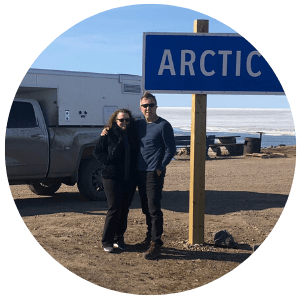
The PanAm completed in April, 2022 and with the truck camper sold, we shipped our new Sprinter van to Australia in late 2022. We travelled there through all of 2023 and into 2024 before shipping it up to North East Asia where we travelled for 4 months between Korea and Japan, before shipping it back to North America. It’s our plan to continue exploring the world in 2025.