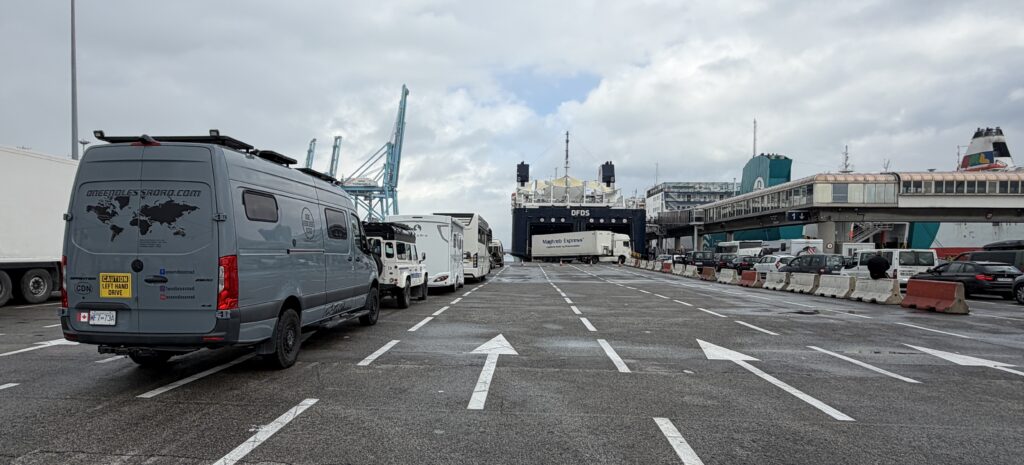
Tickets in hand, the process for getting on the ferry, exiting the EU and crossing the Mediterranean to Tangier was painless. Just 14 kms (9 miles) separates Europe from Africa at this point, yet while physically close there is an enormous, cultural and economic gap between the two continents. We had heard from many people that Morocco has changed much over the four decades since we had last seen it so we were anxious to see for ourselves.
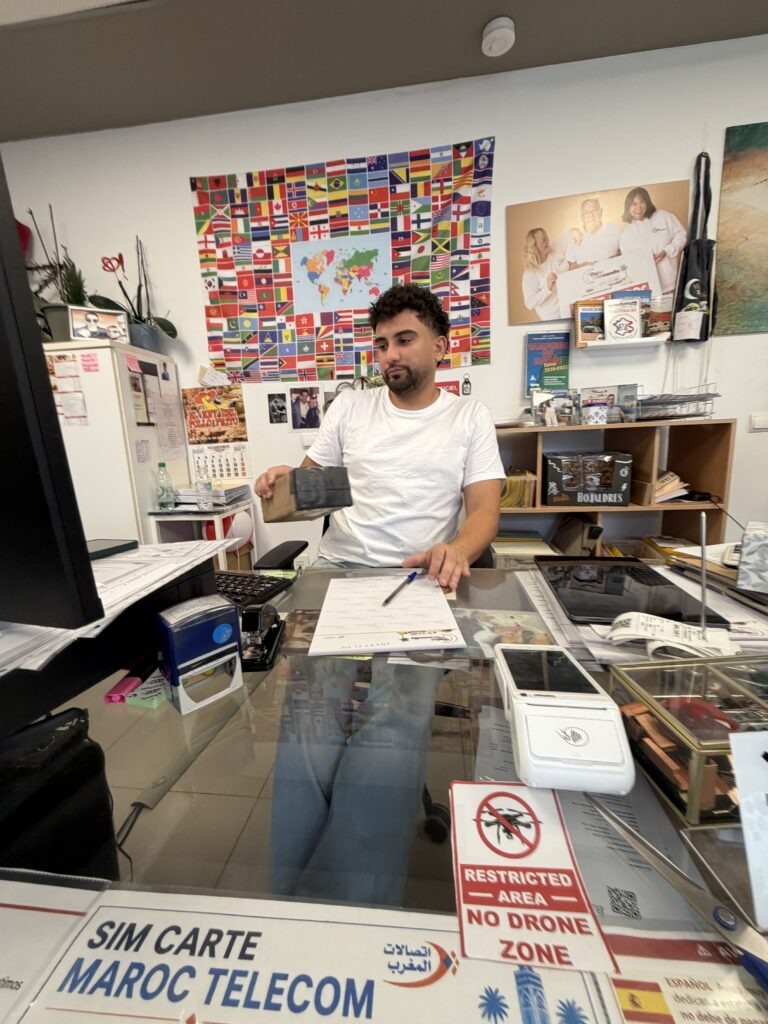
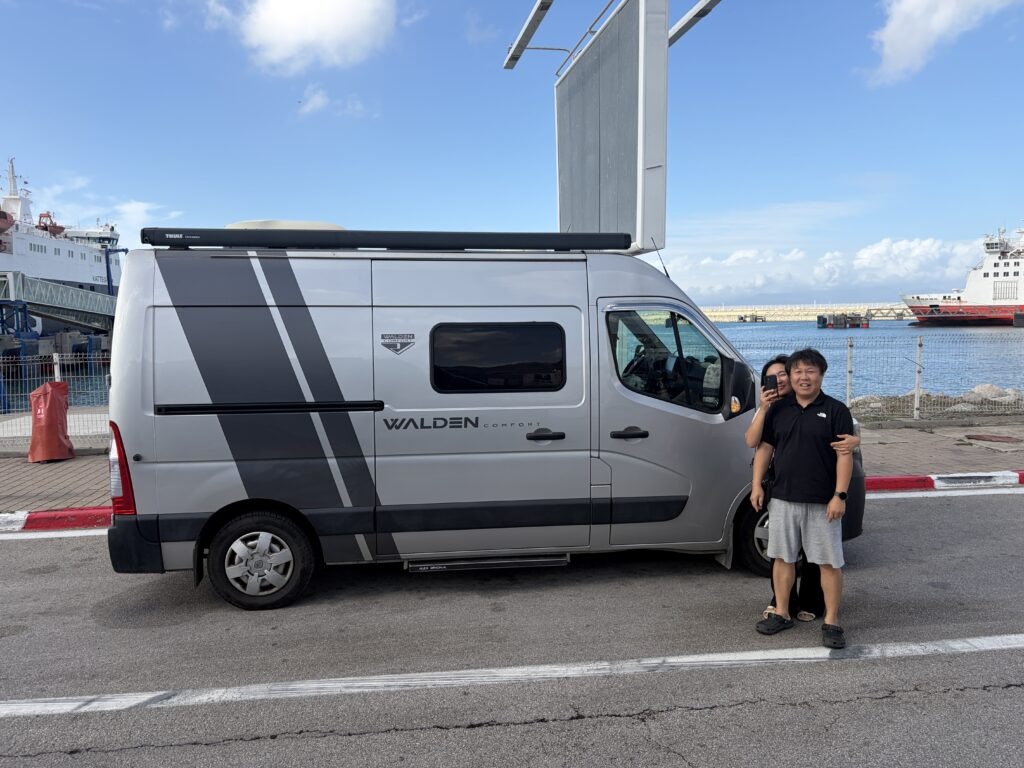
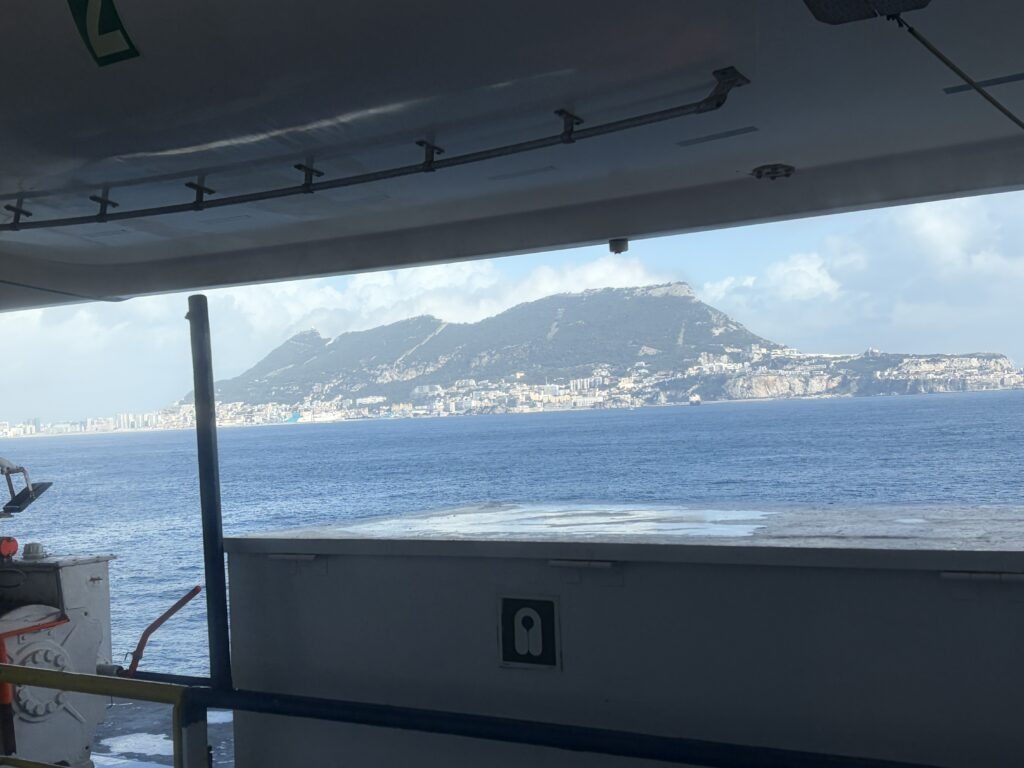
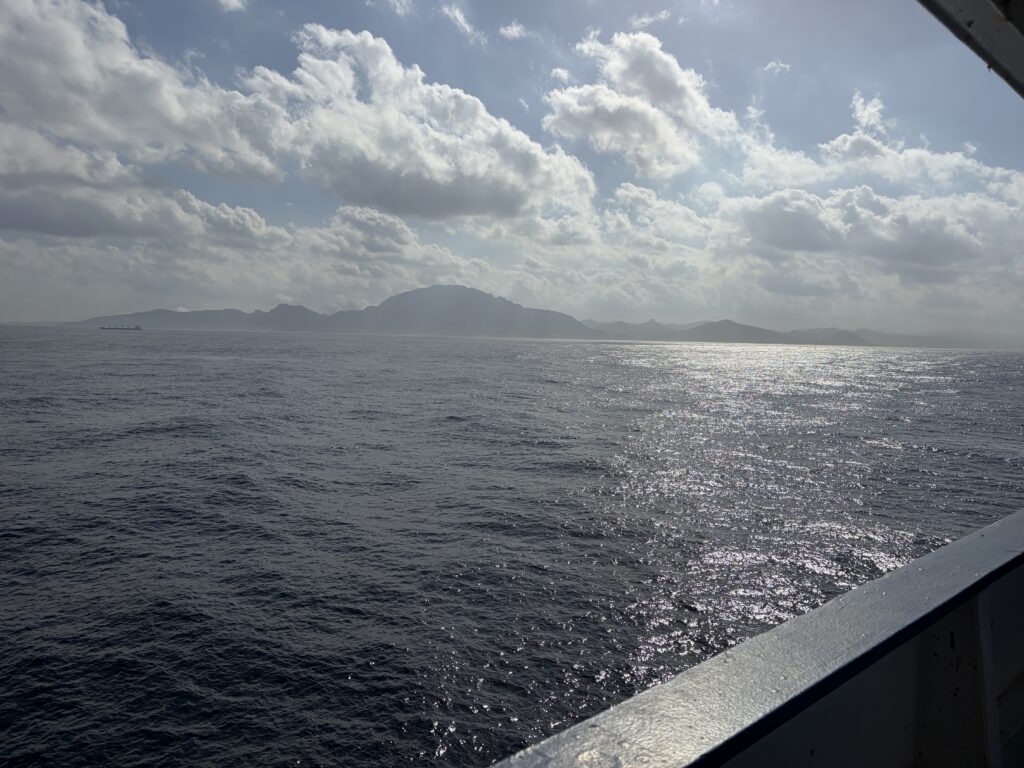
Step one – go see the legendary folks at Viages Normandie in Algeciras to buy ferry passage to Africa. Conveniently, they also store your drone since drones are strictly forbidden in Morocco (and we were later asked TWICE by Moroccan customs if we had one). Phew….!Ferry terminal, Spain. Ferry was delayed, as usual, but otherwise a smooth crossing from Europe to Africa.Noticed this Korean-plated van on the ferry. The couple had driven to Europe from the Russian Far East after shipping from Korea to Vladivostok. One for us for later, perhaps !Last glimpse of Europe, the Rock of Gibraltar………and first glimpse of Africa, the north coast of Morocco.
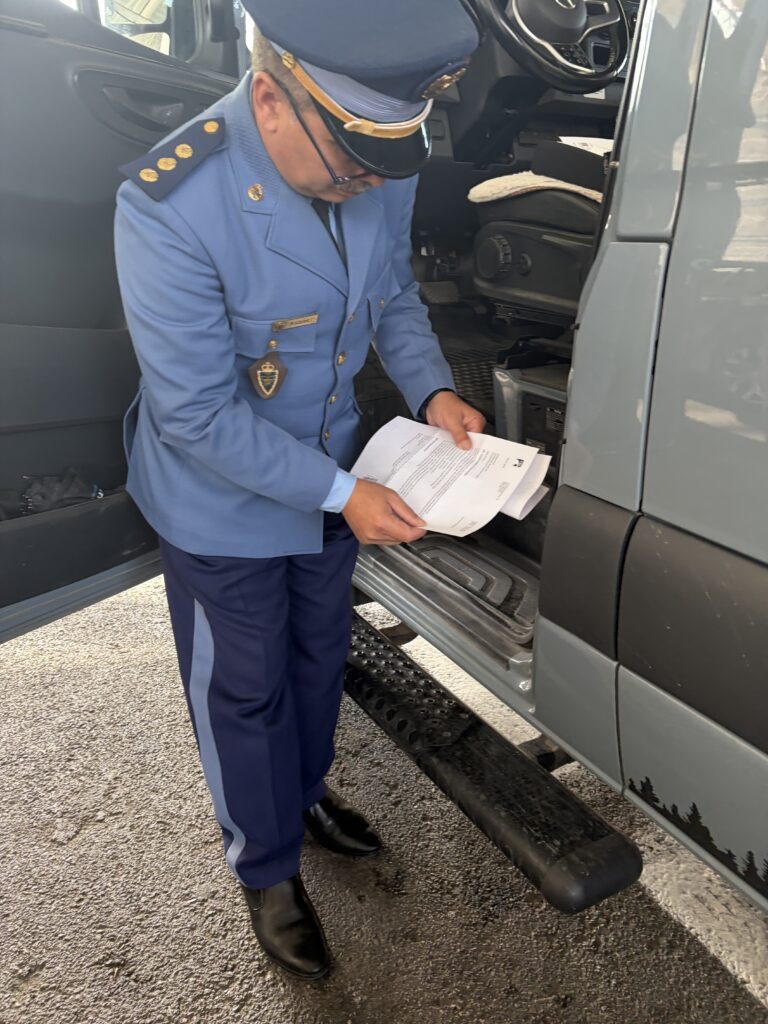
While no fault of the Moroccans, our first experience on the continent was not a good one, with the poor quality and general flimsiness of our British Columbia vehicle registration documents causing us grief yet again when crossing an international border -see image below. At least we are now better prepared when it happens.
To no one’s surprise the Morrocan Custom’s people gave us considerable grief regarding our vehicle registration documents. All the usual questions we get : “It says Insurance here, we need your registration”, and “This looks like a photocopy, we need the original”, and this time “Is there a link to your government’s website where we can validate this?”. It is absolutely beyond frustrating – we were one of the first to get off the ferry and yet last to leave the ferry terminal. Only a desperate plea to have them look at a typical British Columbia vehicle registration document on Google saved the day. Not a great start to Morocco, but no fault of the Moroccans.
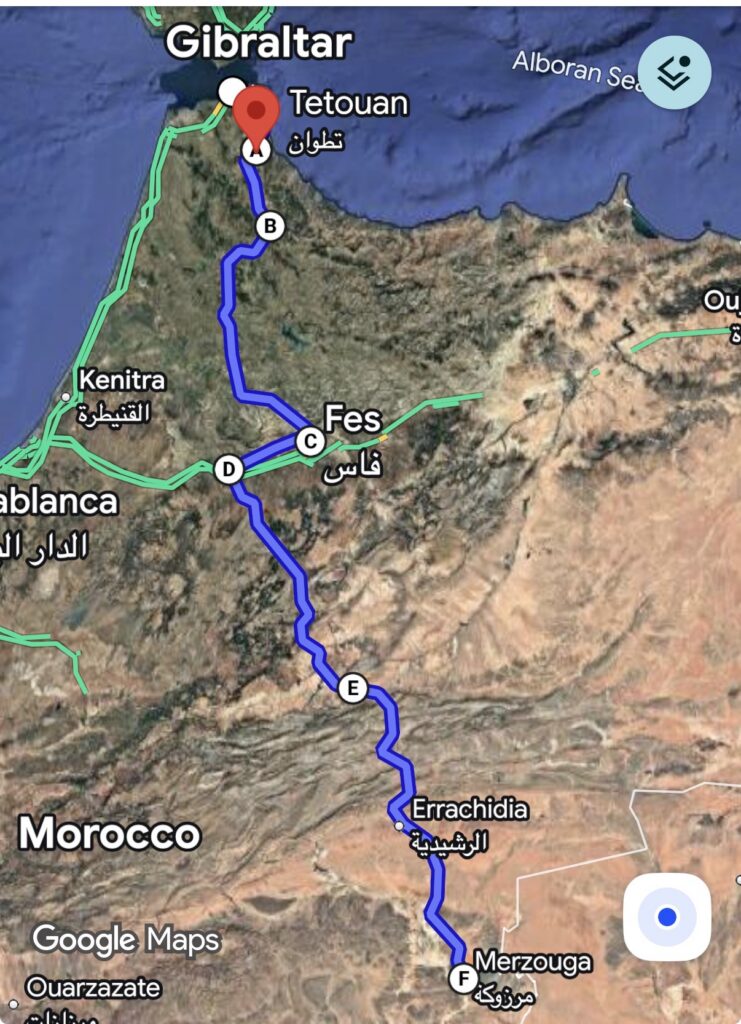
Our plan was to follow a general clockwise route around Morocco heading first to the White City Of Tetouan, before stopping in at Chefchaouen, Fes and Meknes, before reaching the edge of the Sahara desert at Merzouga.
The route south.
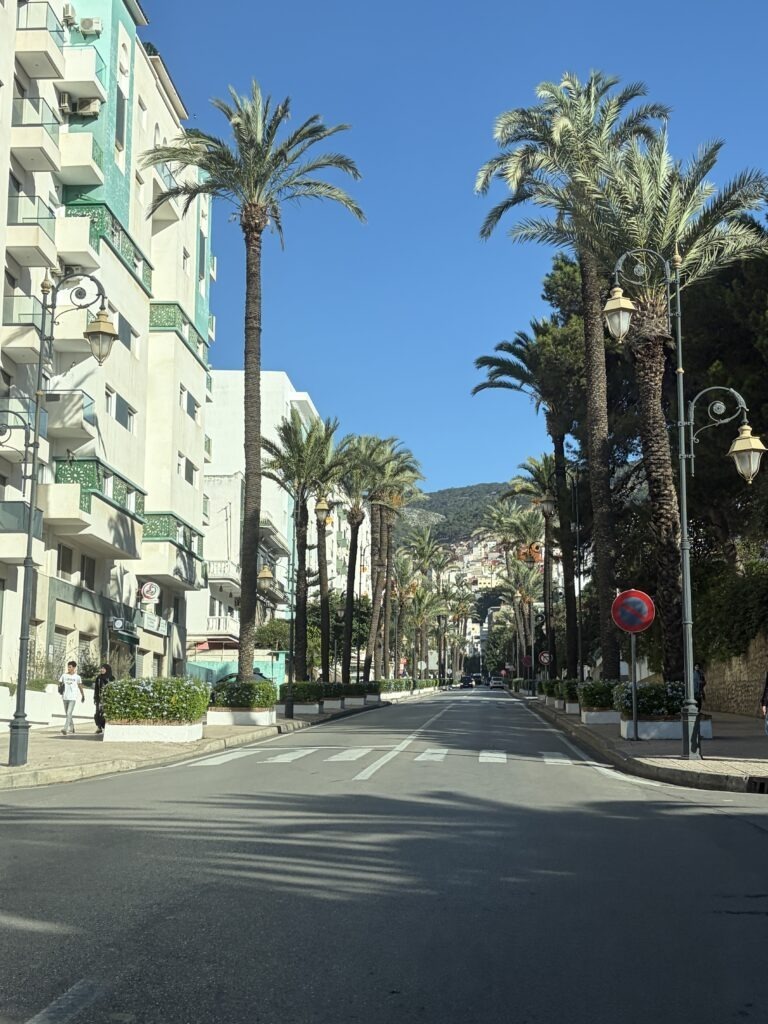
Tetouan was a very pleasant surprise, as was the beautiful highway that took us there from the Port of Tangier Med. The absence of a formal campsite in town meant that we had to wildcamp it on the edge of the city, along with a Dutch couple who found themselves in the same predicament. A noisy first night, not too much sleep !
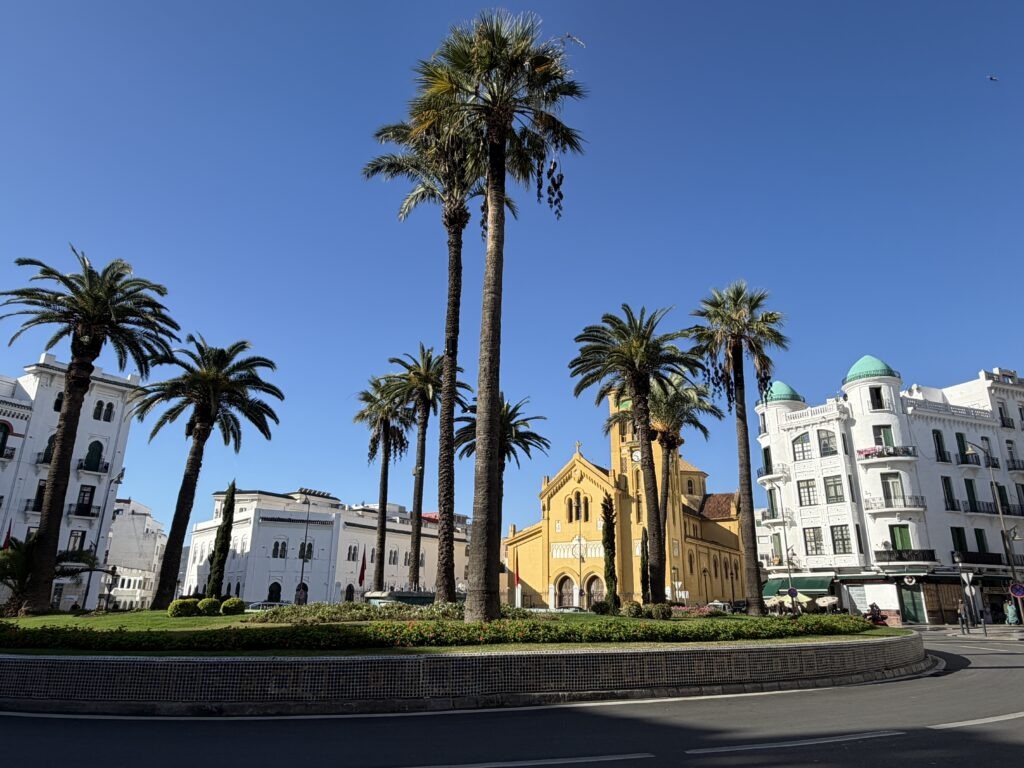
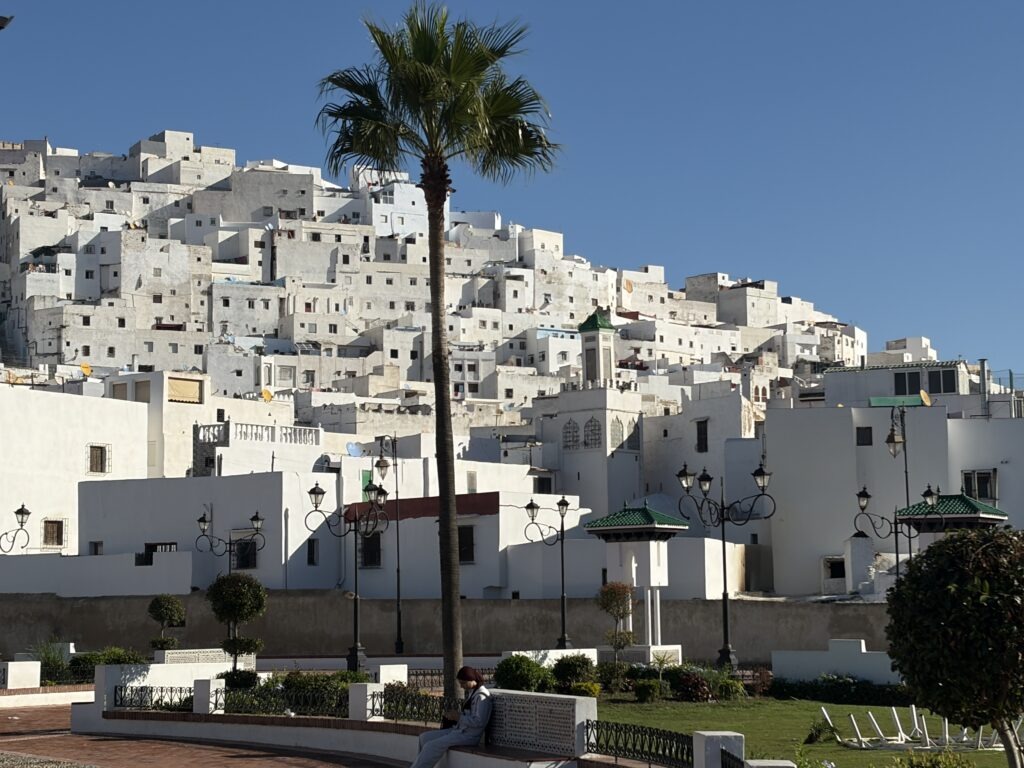
Tetouan was the first place we visited, and stayed overnight. It was extremely clean, and pretty, known as the “white city” for obvious reasons.Tetouan, main square. The mix of Andalusian and Moorish architecture defines the town. When set against a clear blue sky it made for a great first impression in the country.No wonder it’s known as the “white city” !
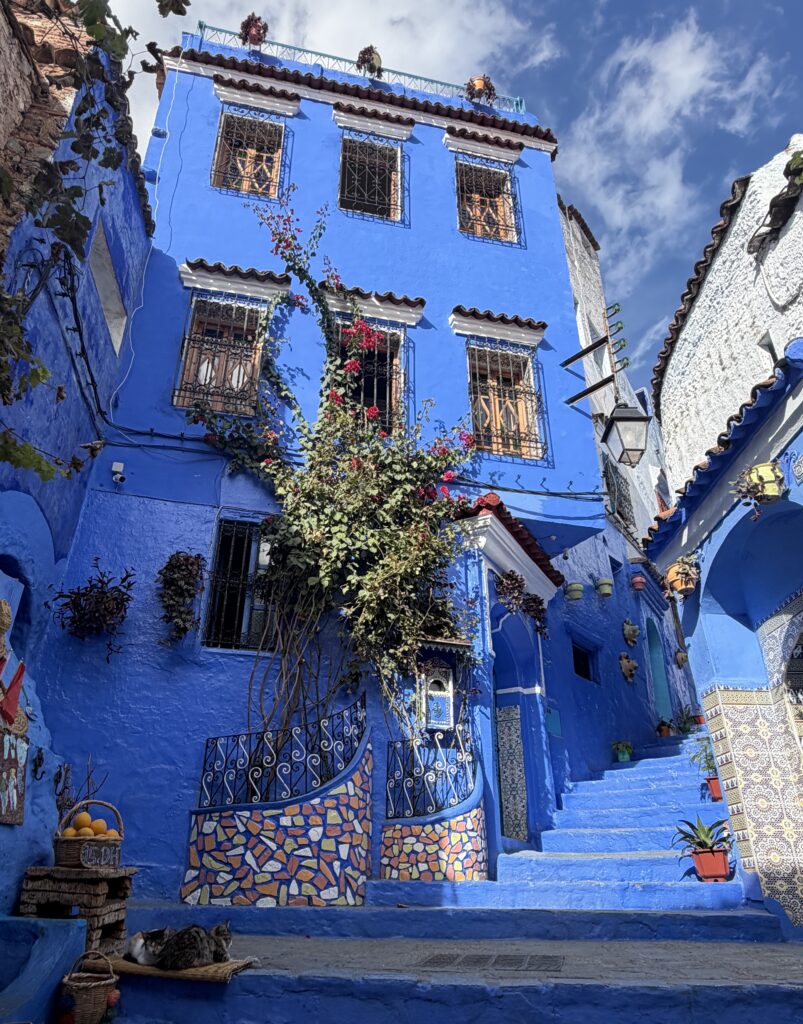
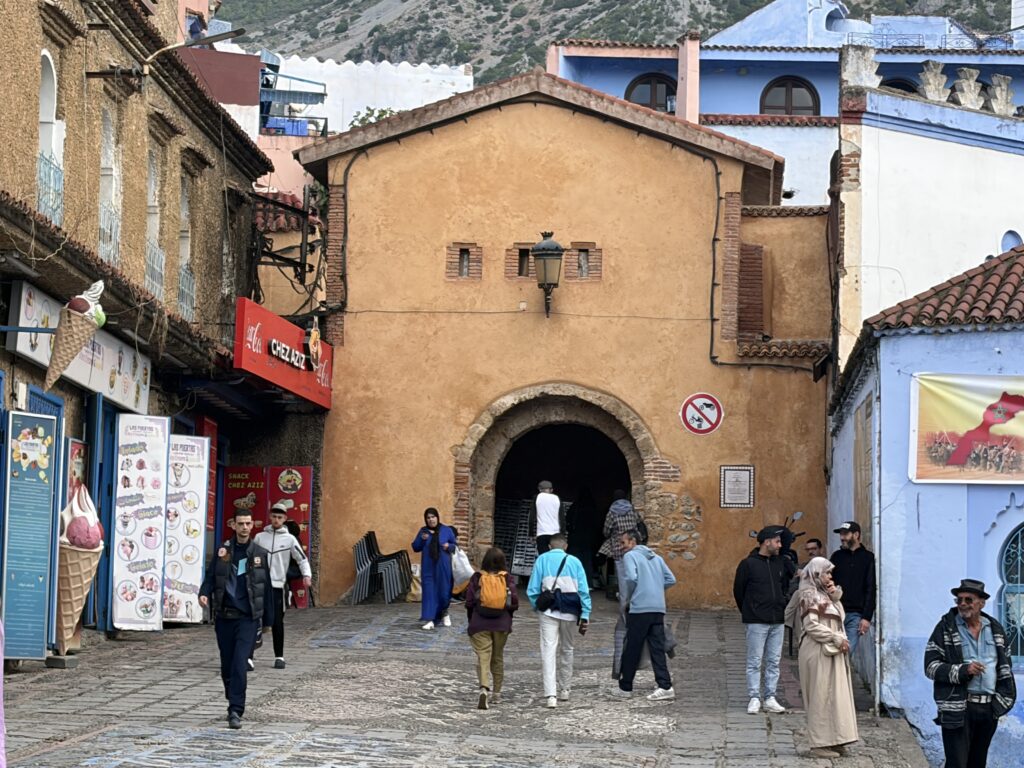
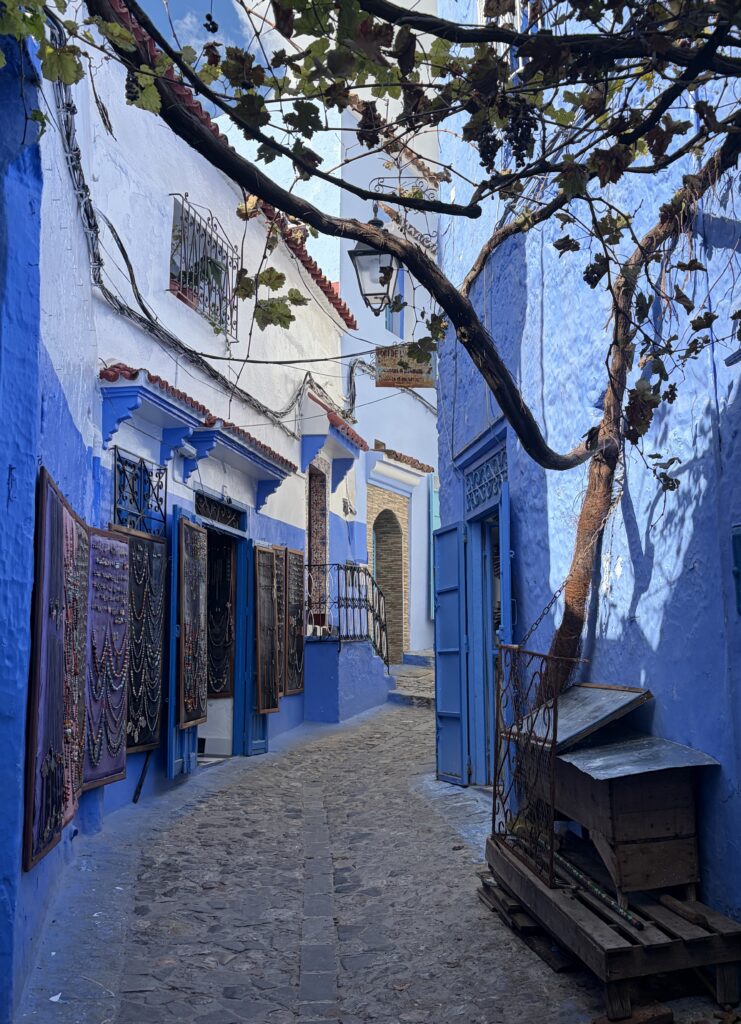
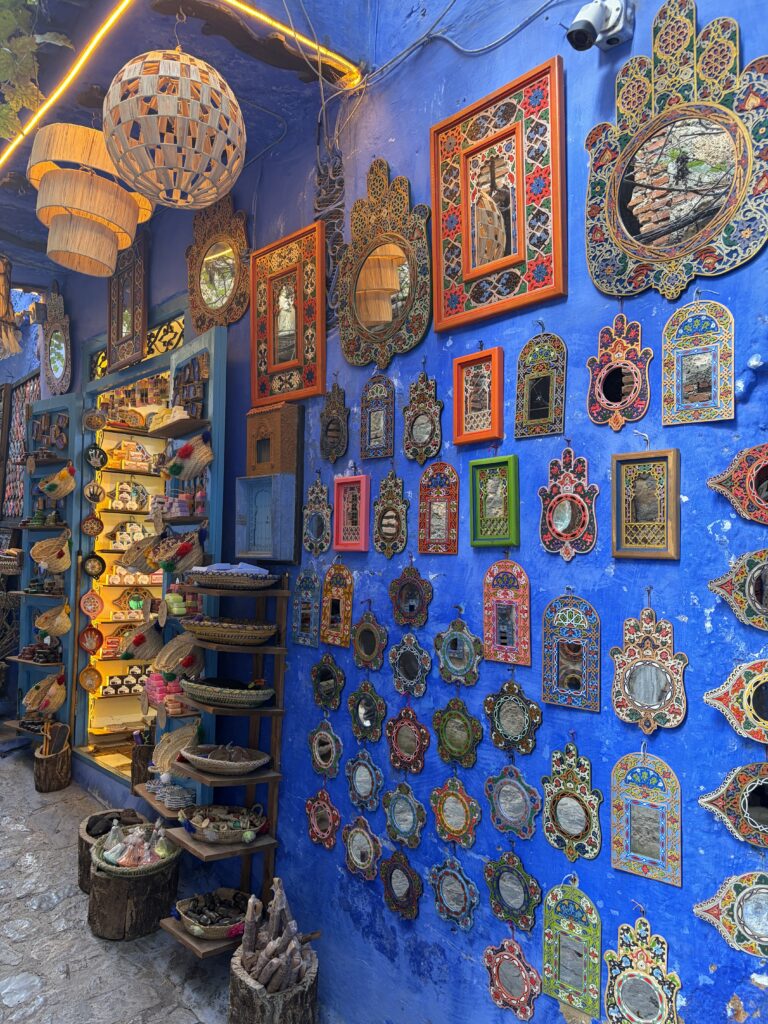
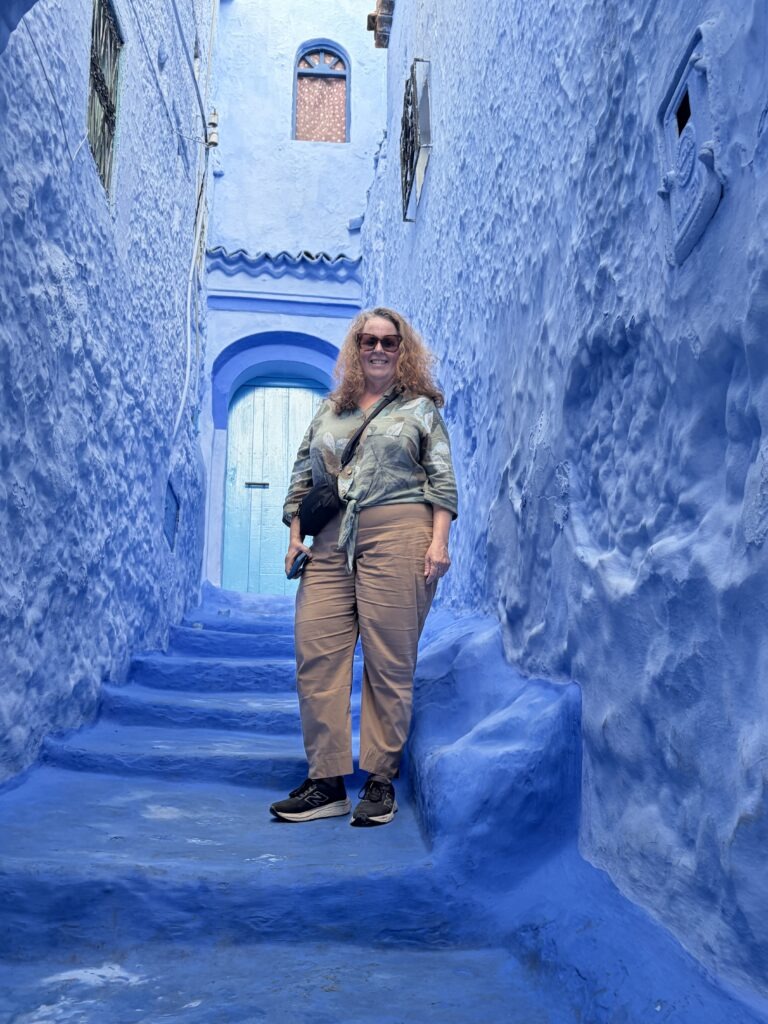
Chefchaouen is just a little further south, and unquestionably the main attraction in this part of the country. Accounts vary as to how the city got it blue coloring, but it certainly is blue and folks come from all over to check it out. It’s an interesting place to walk around and explore but it was very crowded during our stay. Too many Instagram reels about this place I’m afraid…!
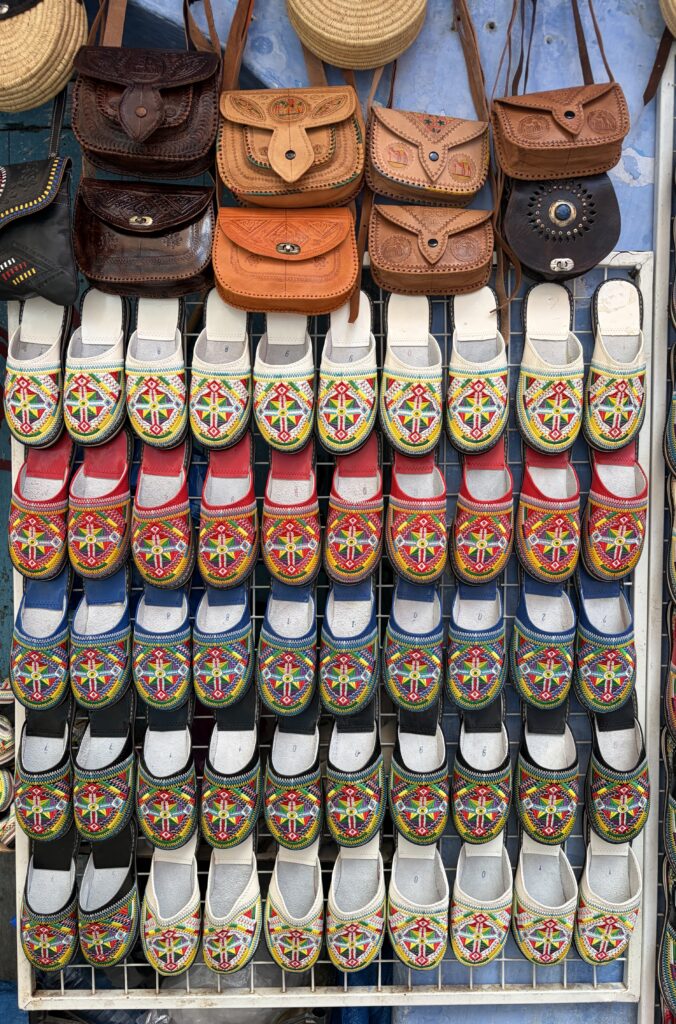
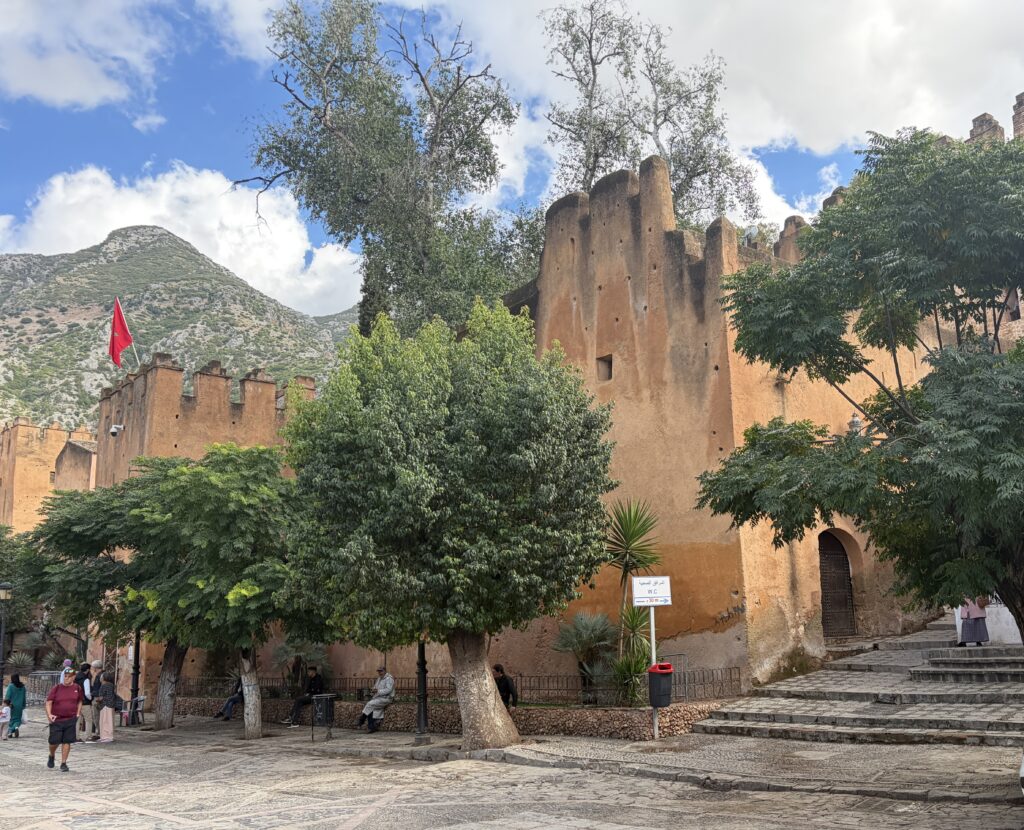
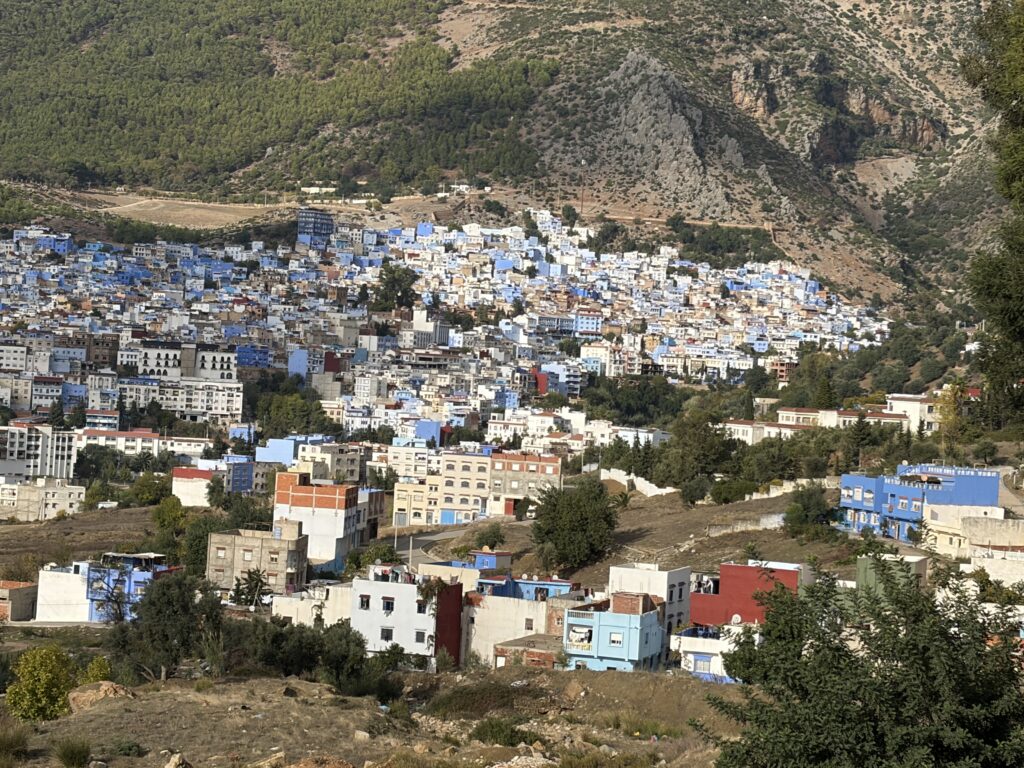
Residential area, Chefchaouen.Medina entrance, Chefchaouen.Colourful shoe display, Chefchaouen market.15th century Chefchaouen kasbah ( fortress ).“Chef” is not called the blue pearl of Morocco by accident. Various theories exist as to how it started including refugee traditions, and practical purposes but modern tourism tastes ensure that Chef stays very blue !Market, Chefchaouen.A favourite tourist stop.They were lined up for this shot.Chefchaouen from the hills above.
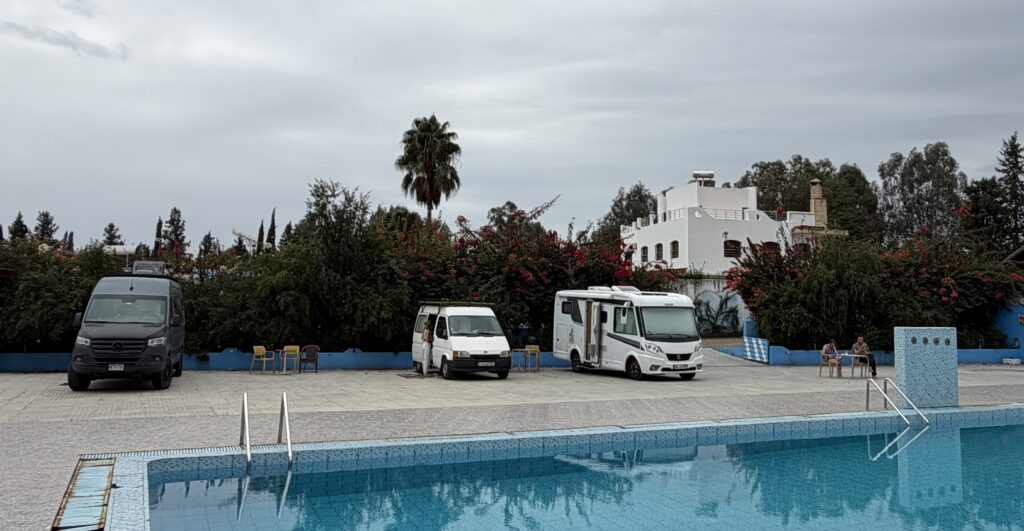
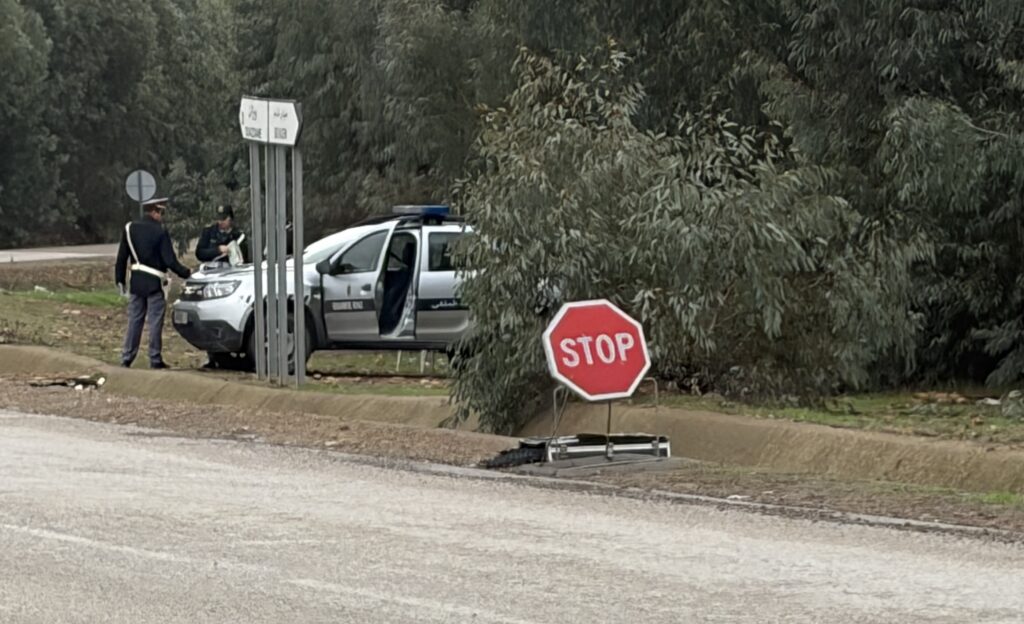
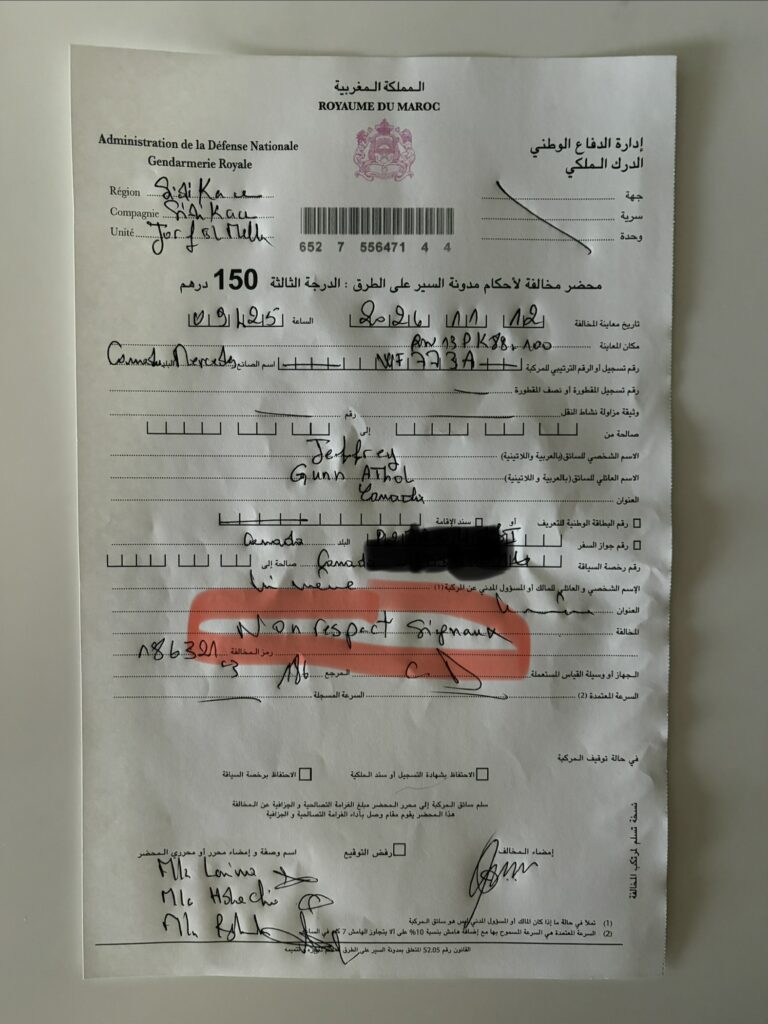
A farm camp and then a kind of cool pool camp at the legendary overland stopover, Hotel Rif, made for an interesting couple of experiences as we wound our way south towards Fes, a journey unexpectedly interrupted by a rendezvous with the Moroccan constabulary. Apparently, I had misinterpreted a hand signal from a police officer when passing through a checkpoint, so I was fined 150 Dirham ( $22 ) for “disrespecting a signal” 😟.’
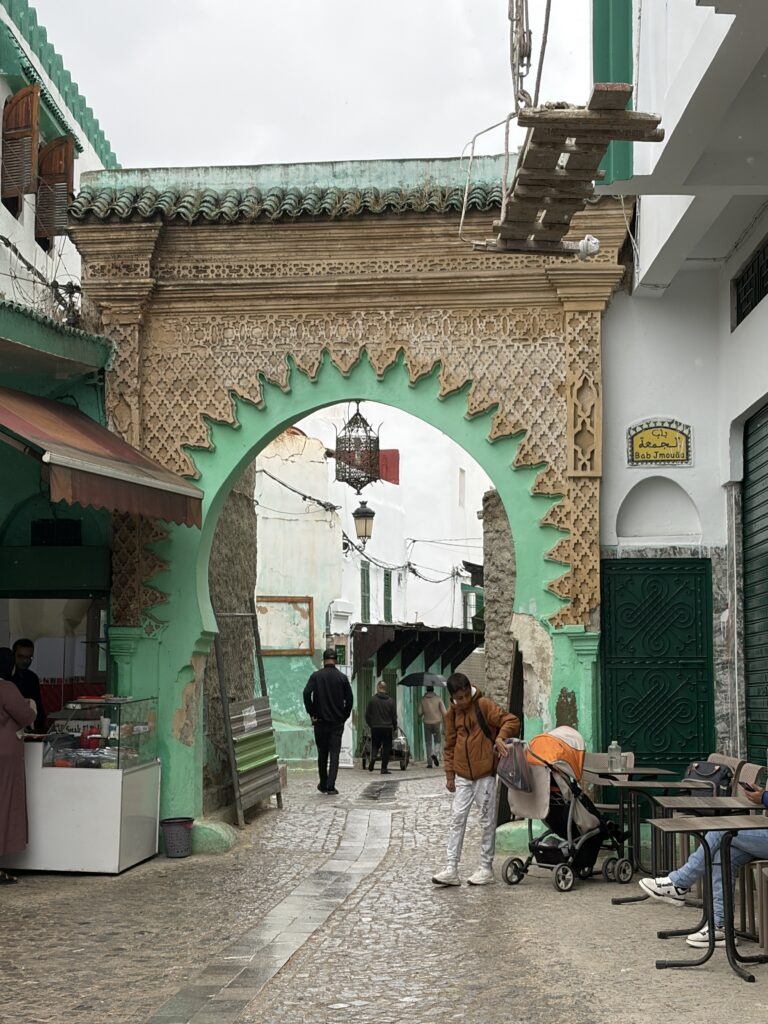
Our second night in Morocco, a farm stay, highly recommended on Park4Night. Super nice hosts made us feel very welcome, although the noise of late night partygoers in Tetouan the night before was replaced by an early morning wake up call from the crowing rooster and dogs barking all night here. Peace and quiet may be elusive in Morocco !Apparently Ouezzane is “famous” for its mint-coloured Medina entrance. Since it was en route to Fes we decided it was worth a look. It wasn’t !Third night, camped pool-side at the well-known “Hotel Rif” near Ouezzane. Much better sleep !Have already had our first introduction to the Moroccan Gendarmerie. I was fined 150 dinar ( about $15USD ) for “not respecting a signal”. I had fully stopped at the STOP sign but then misinterpreted the (confusing) hand signal that followed (he meant ‘pull over’, but it looked like ‘proceed’ to me). I appealed for leniency, it being just day 2 in the country – he said it was supposed to be a 400 dinar fine, and he “already was being lenient!”. Note to self – learn Moroccan hand signals !My first Moroccan “souvenir” !
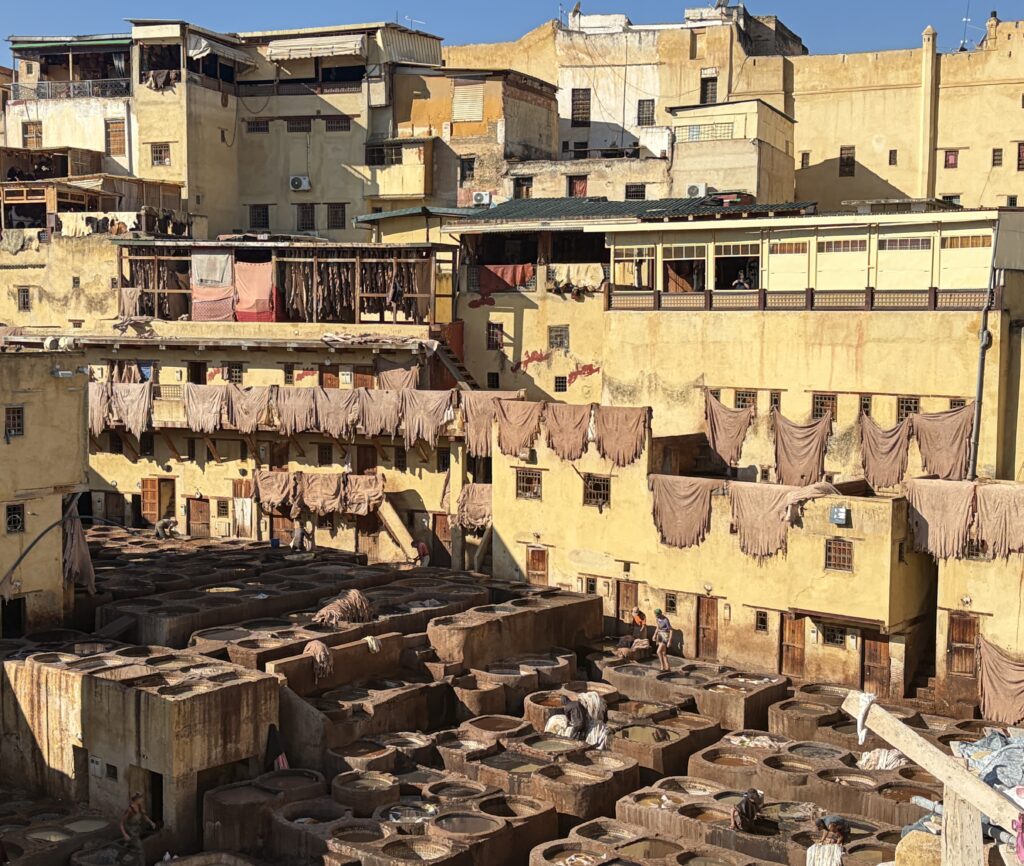
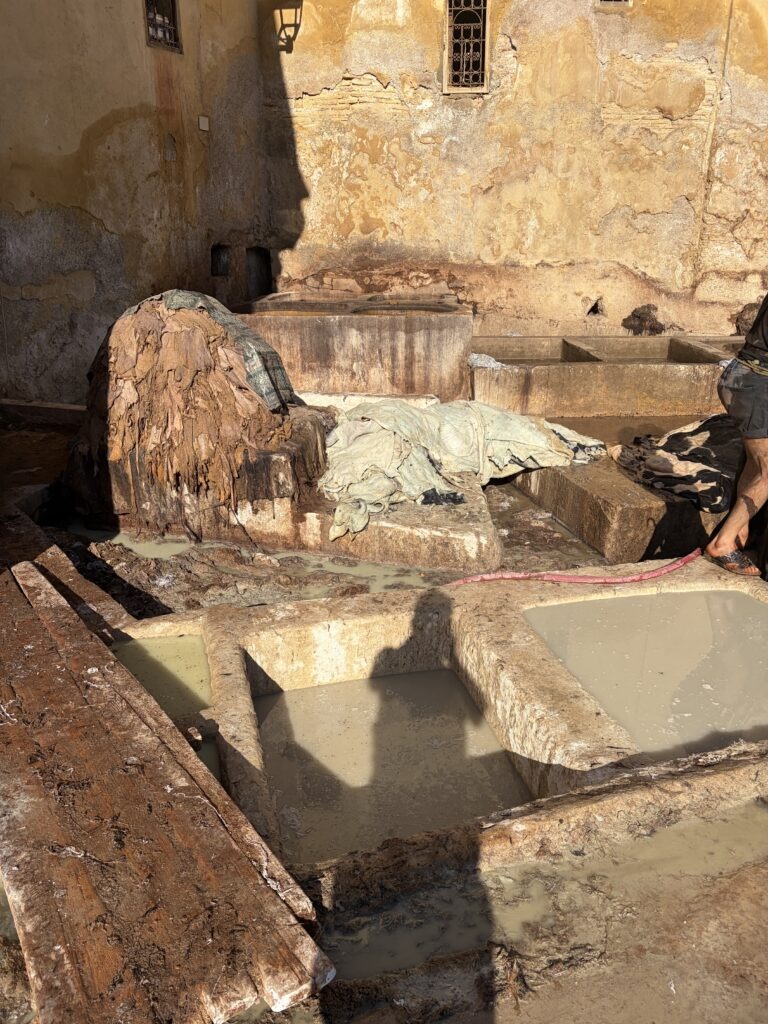
Fes, one of Morocco’s historic capitals, is probably one of the most popular cities in the country and a pitstop for most tourists. We enjoyed our stay here, helped by the fact that we had a very centrally located park up and could walk to all the attractions. An overarching memory of our first trip to Morocco was the smell from the famous Fes tannery – it hasnt changed !
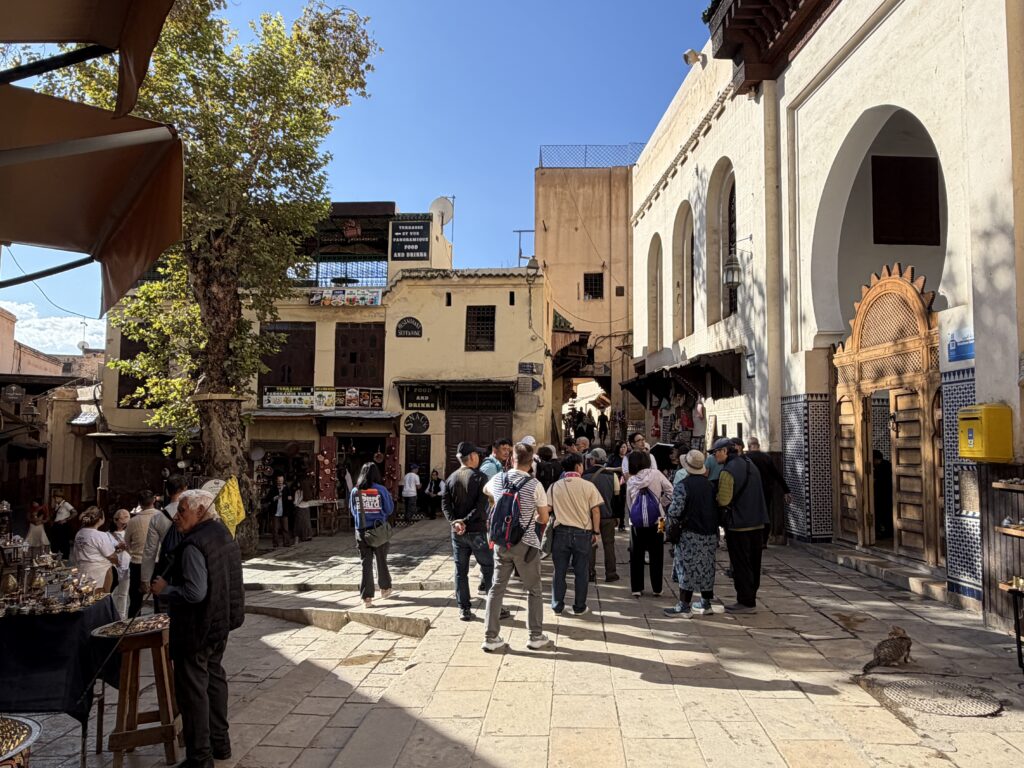
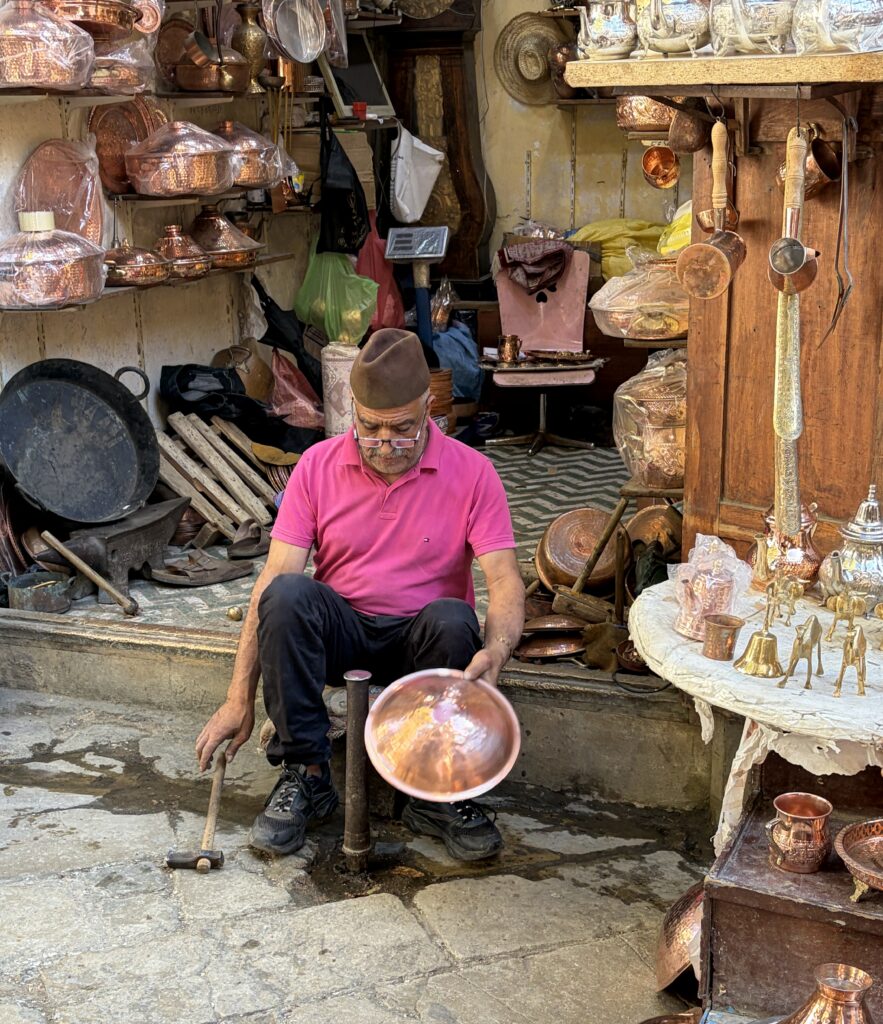
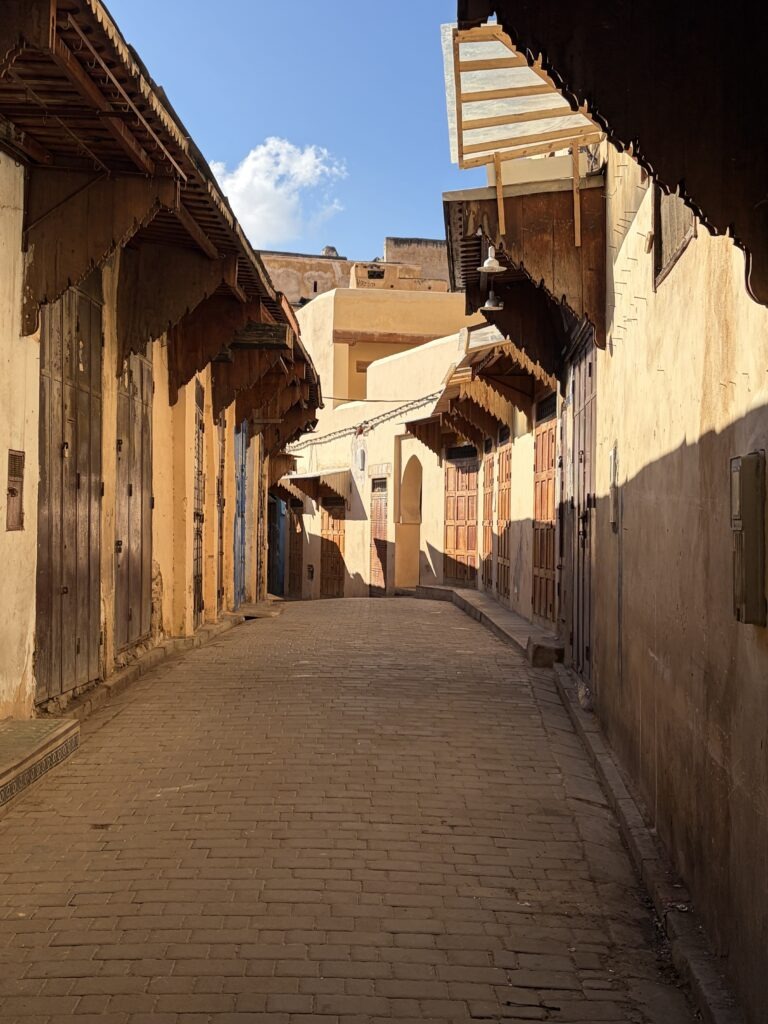
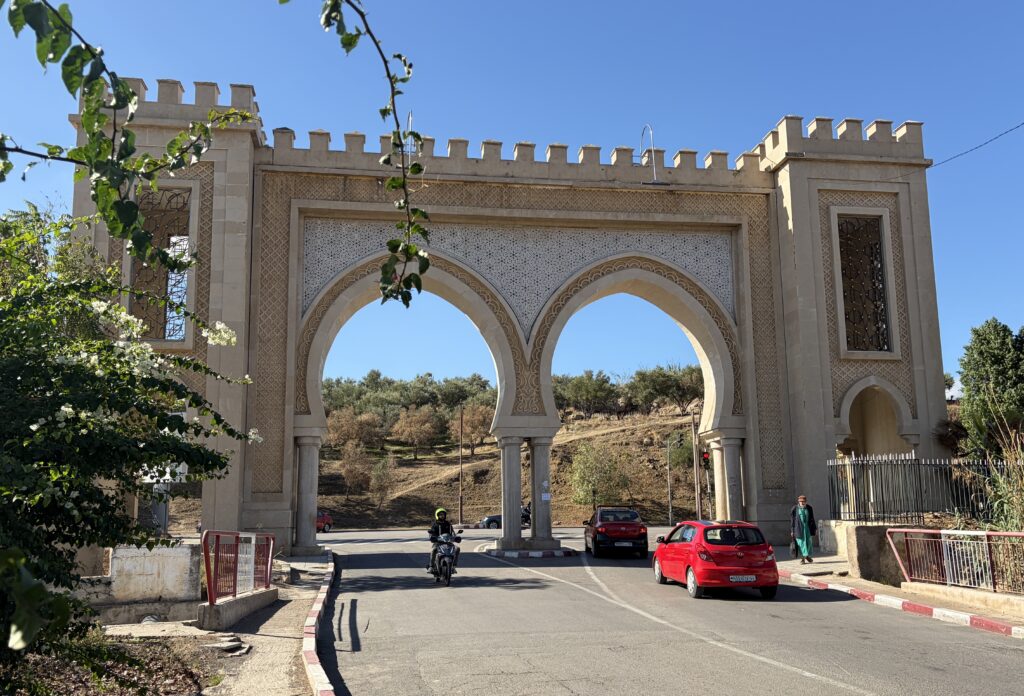
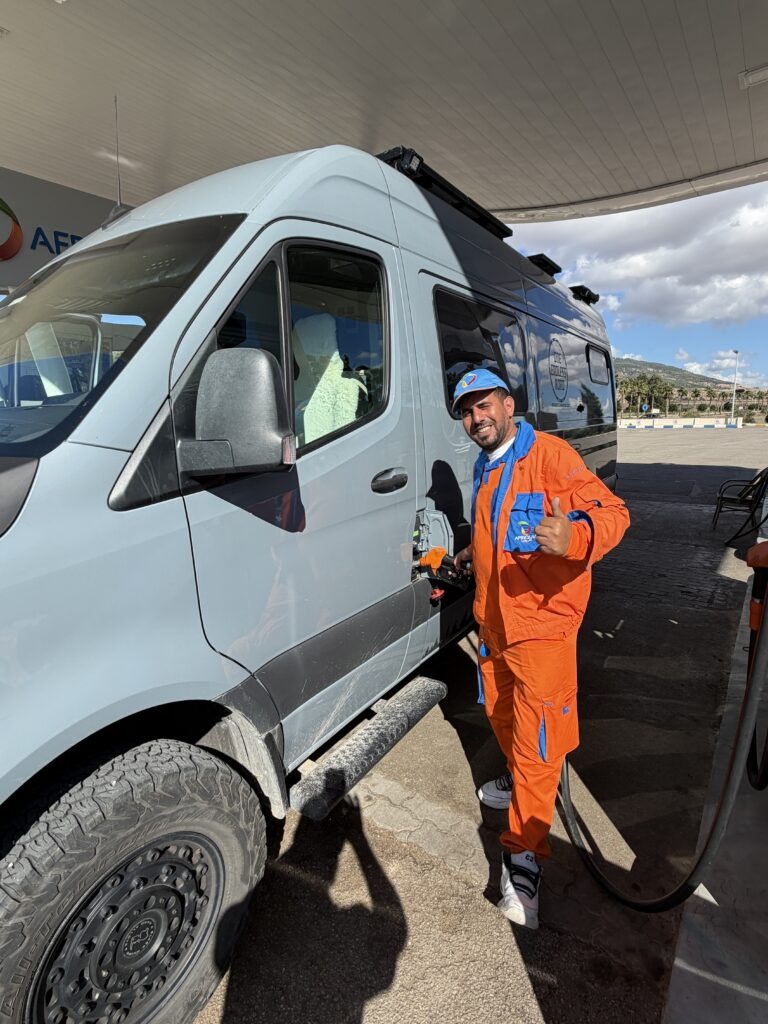
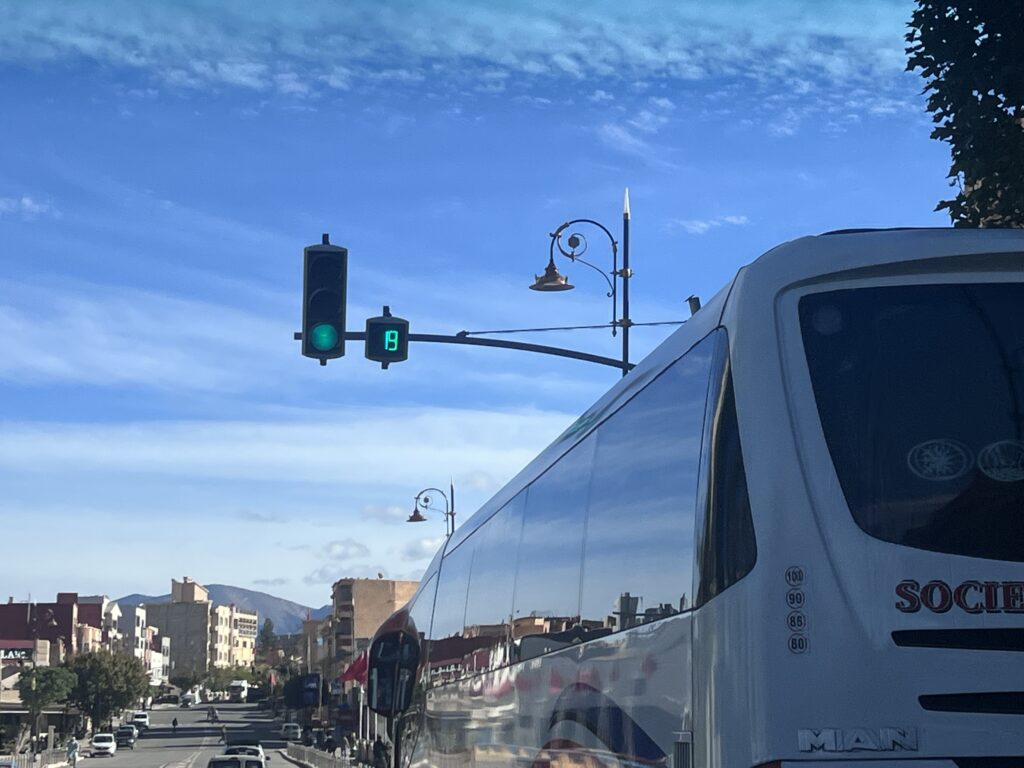
Fes’s oldest and most well-known tannery. Our strongest recollection when we first saw this 41 years ago was the smell. It hasn’t changed !Tannery, close up (nose held firmly closed !).Famous Seffarine Place, Fes medina.Brass-ware artisan, Seffarine Place, Fes.A rare quiet moment in the medina, Fes.Bab Jdid, Fes, near which we camped.One of our many “likes” in Morocco is that there is always a guy to pump your fuel. Always friendly and usually very intrigued to see a vehicle form Canada.Another Morocco “like”. You often get a “countdown” at traffic lights. Why don’t we do this ?
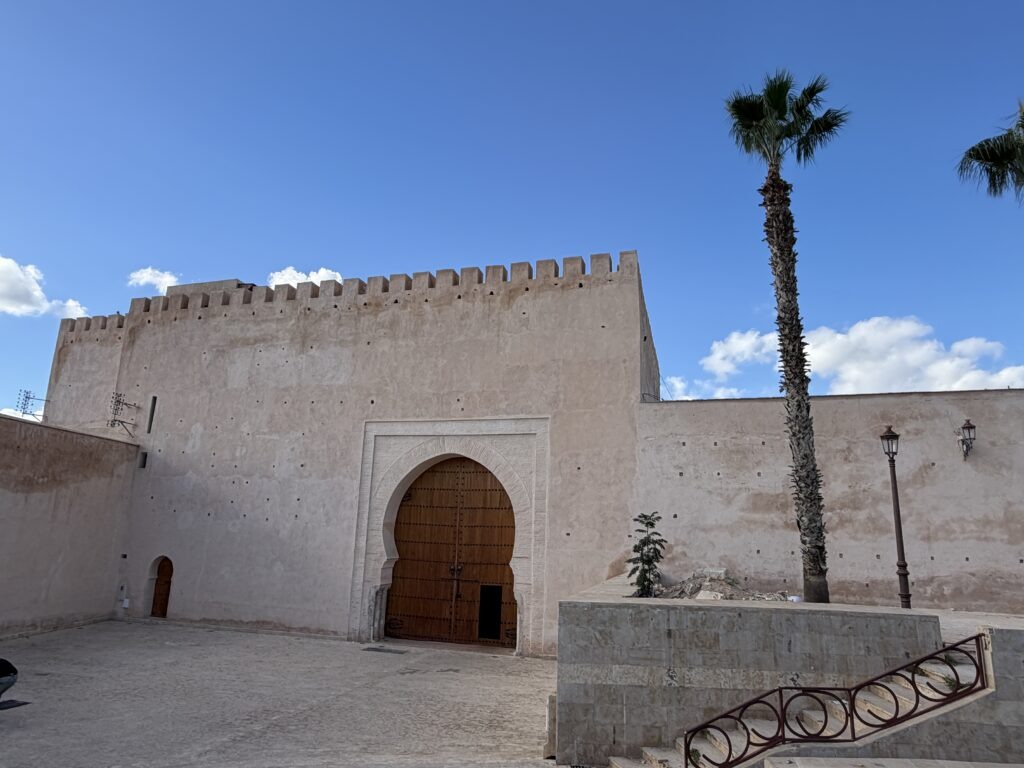
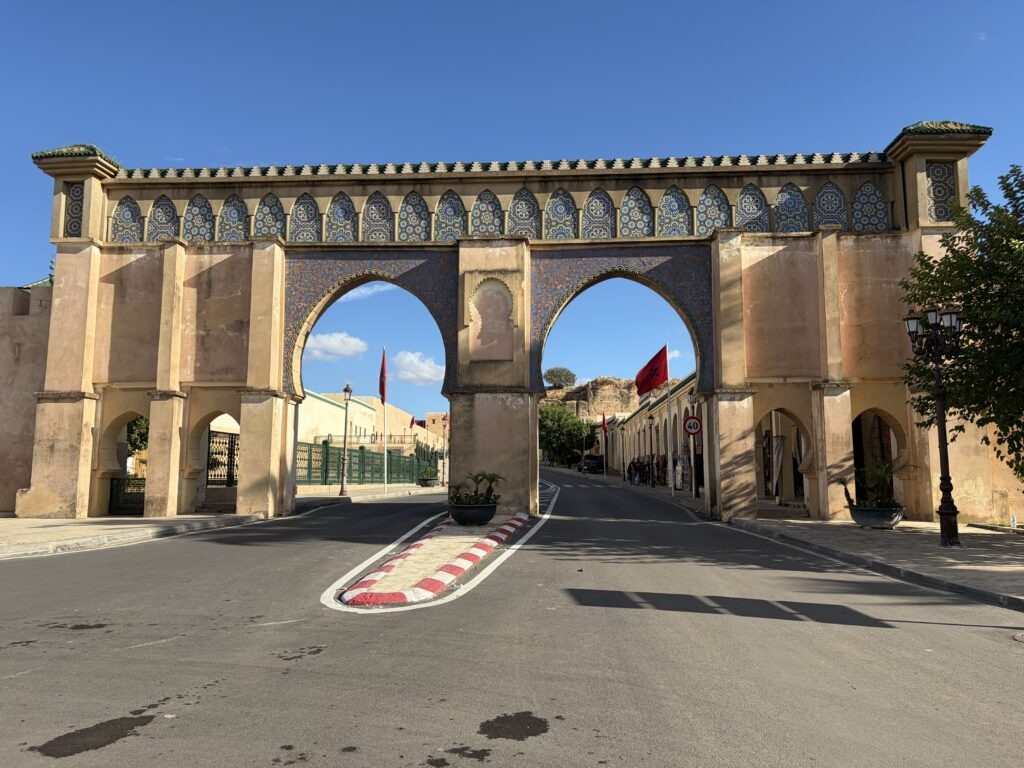
Only because Meknes was so very close to Fes, and directly on our path onwards, did we stop by and check it out. A cleaner, and more orderly city than Fes, but lacking its cachet. Memorable perhaps more for some very interesting other travellers we met there than any of the unique sites of the city itself. Sometimes that’s the way it is !
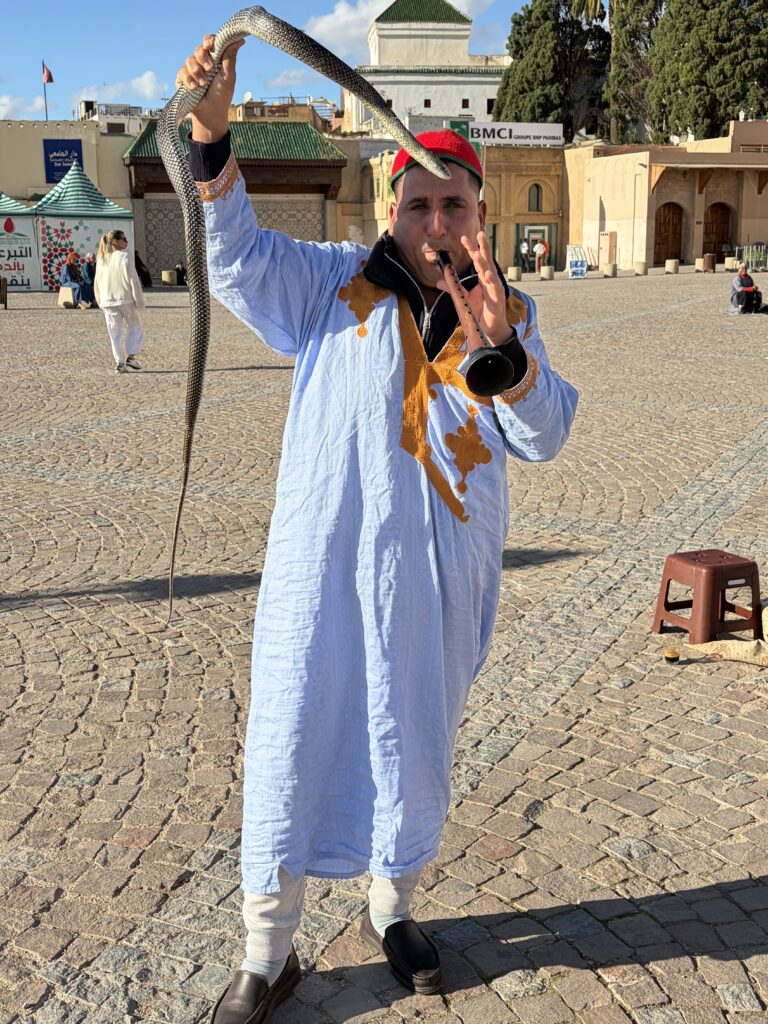
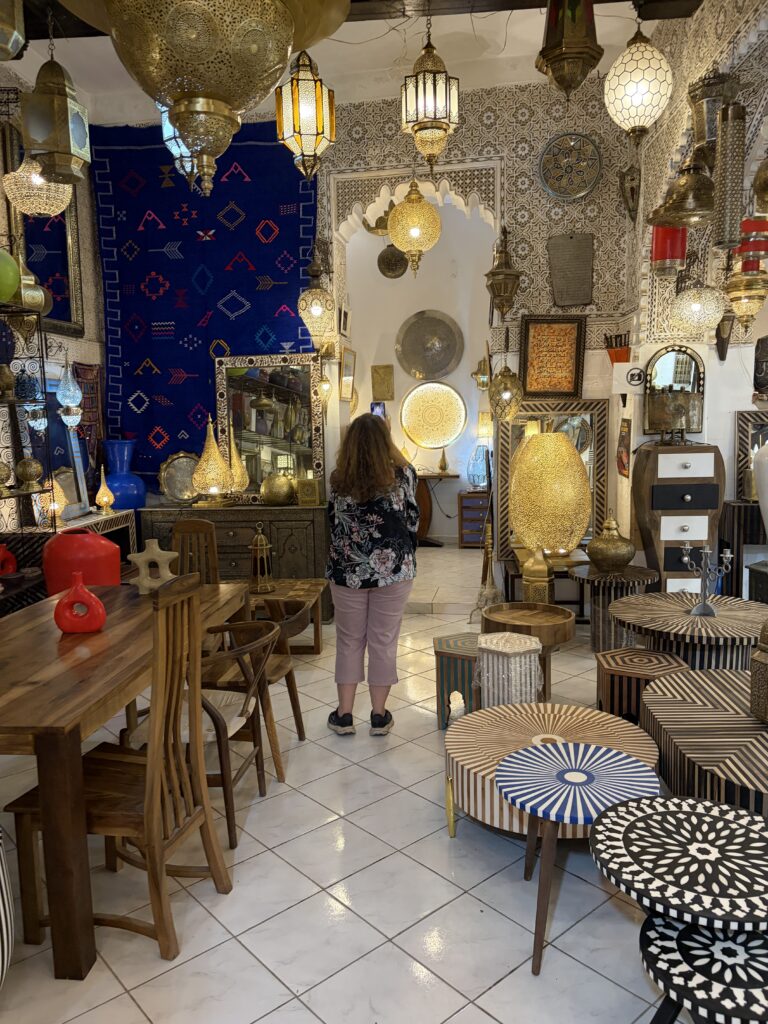
Meknes,Meknes, You can’t avoid all the touts. Got roped into watching this snake charmer (literally, a real snake charmer !). Of course, “You watch, you pay” ! )We typically avoid shops like this anywhere near a market but this one in Meknes had some especially beautiful pieces and an owner who gave us a short history of Meknes and the people of Morocco…!
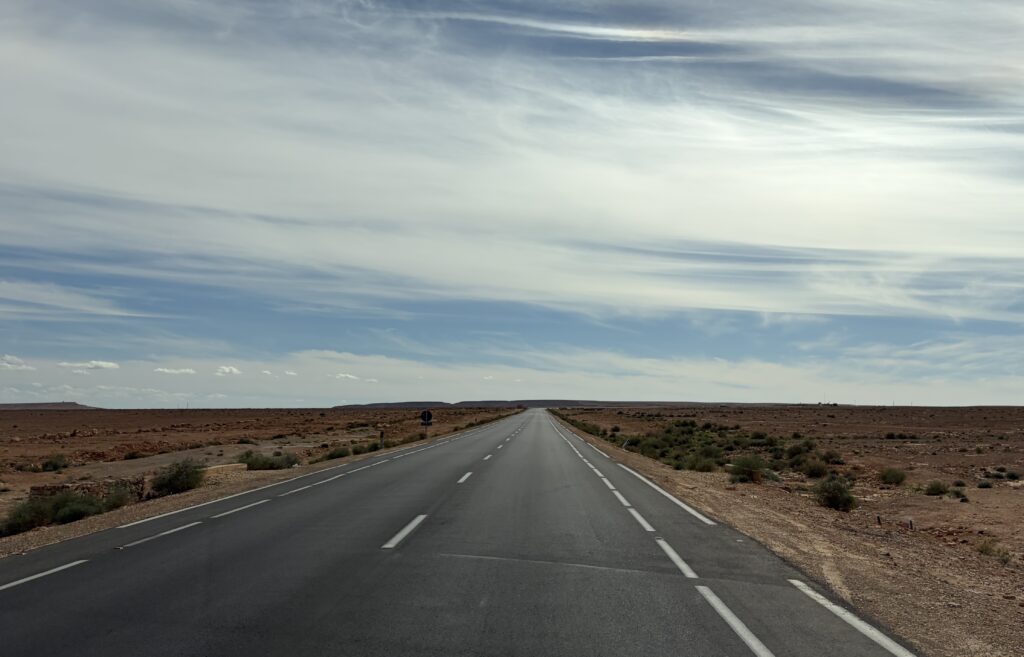
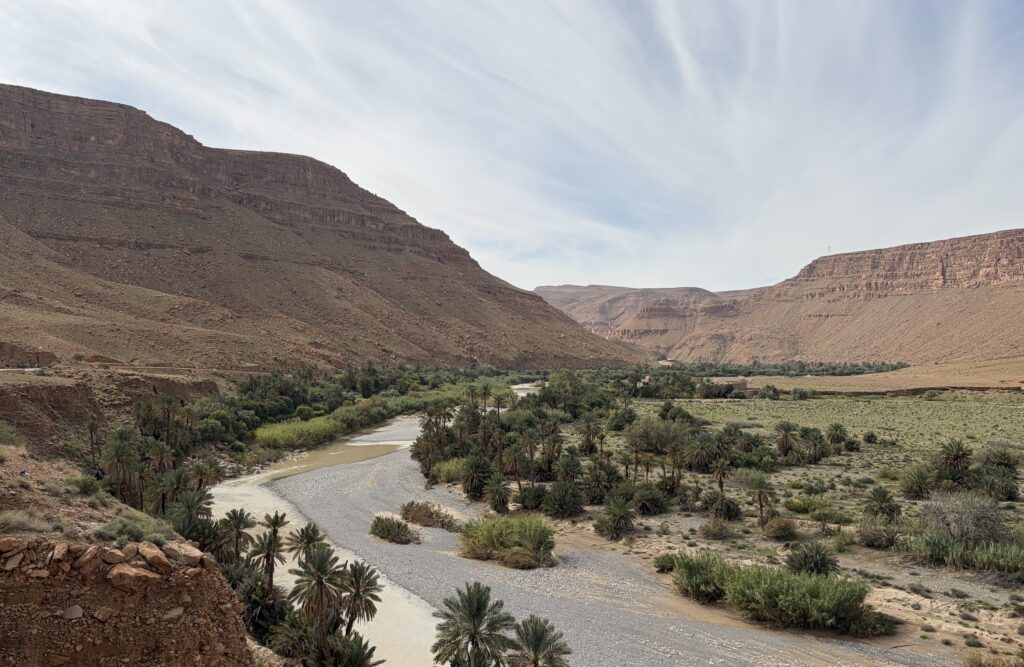
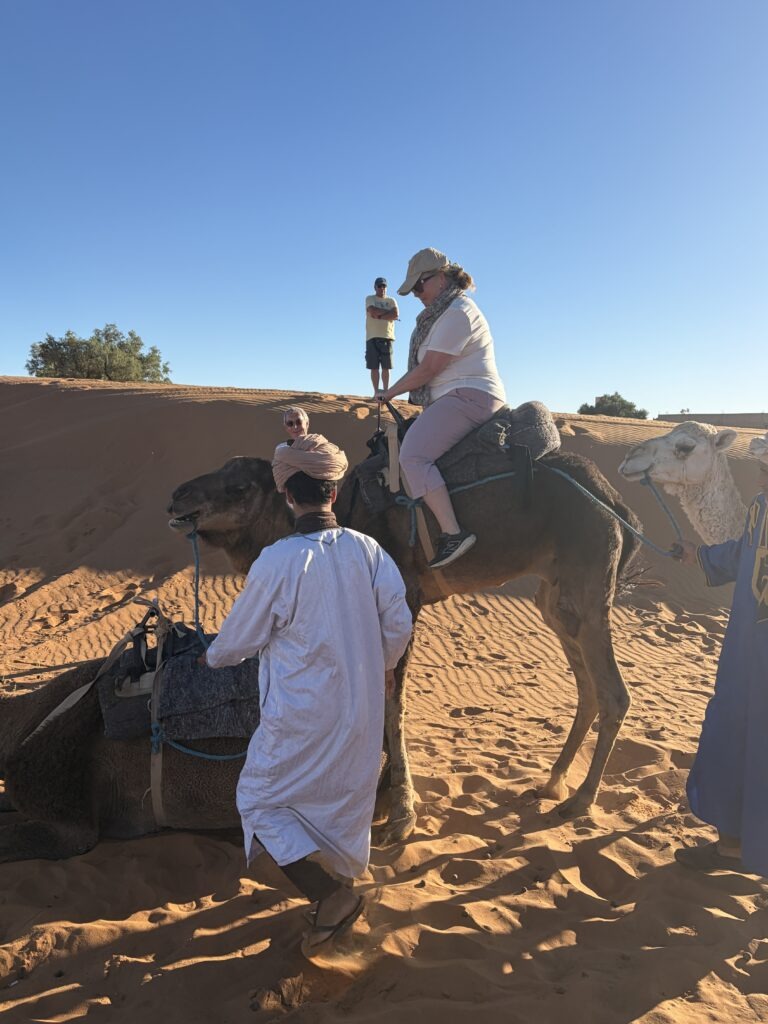
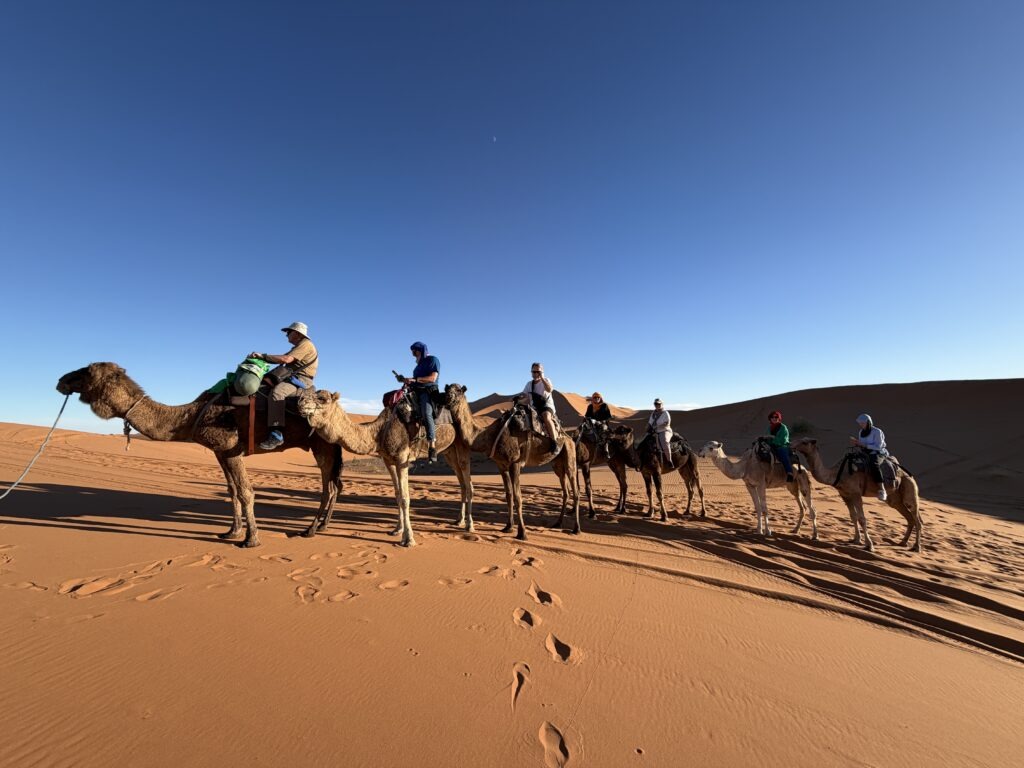
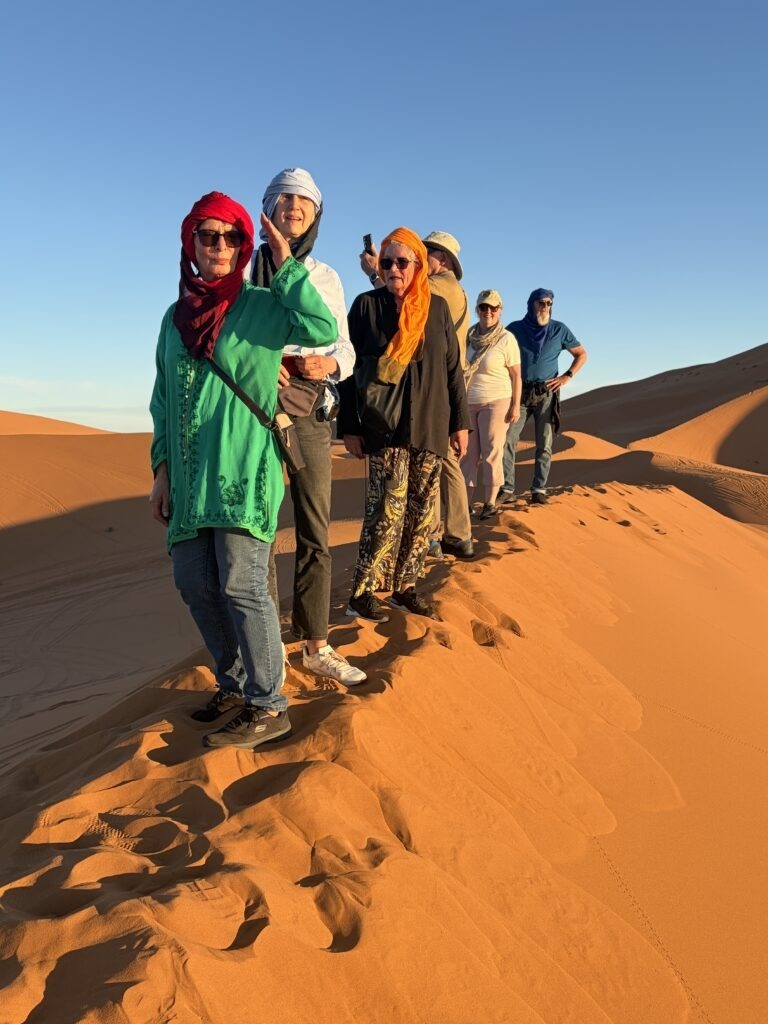
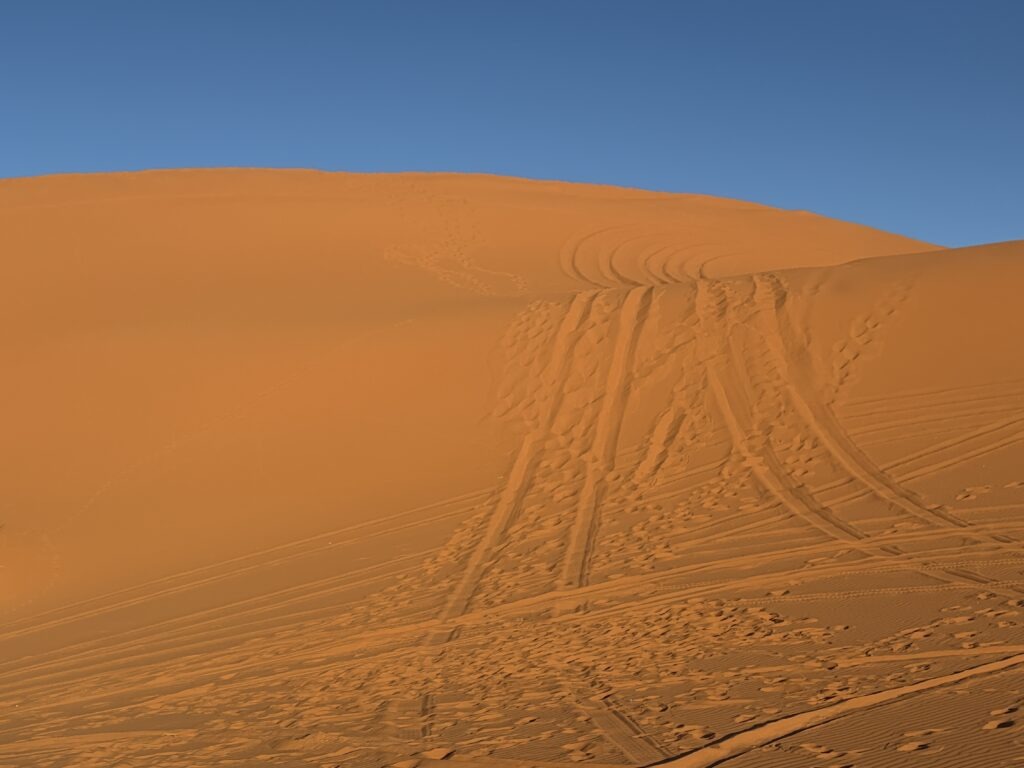
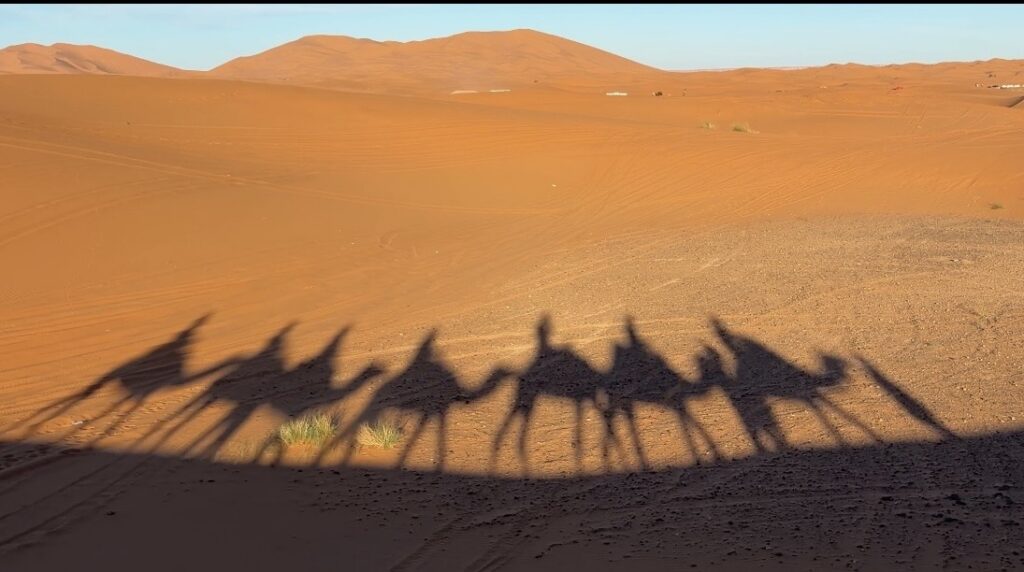
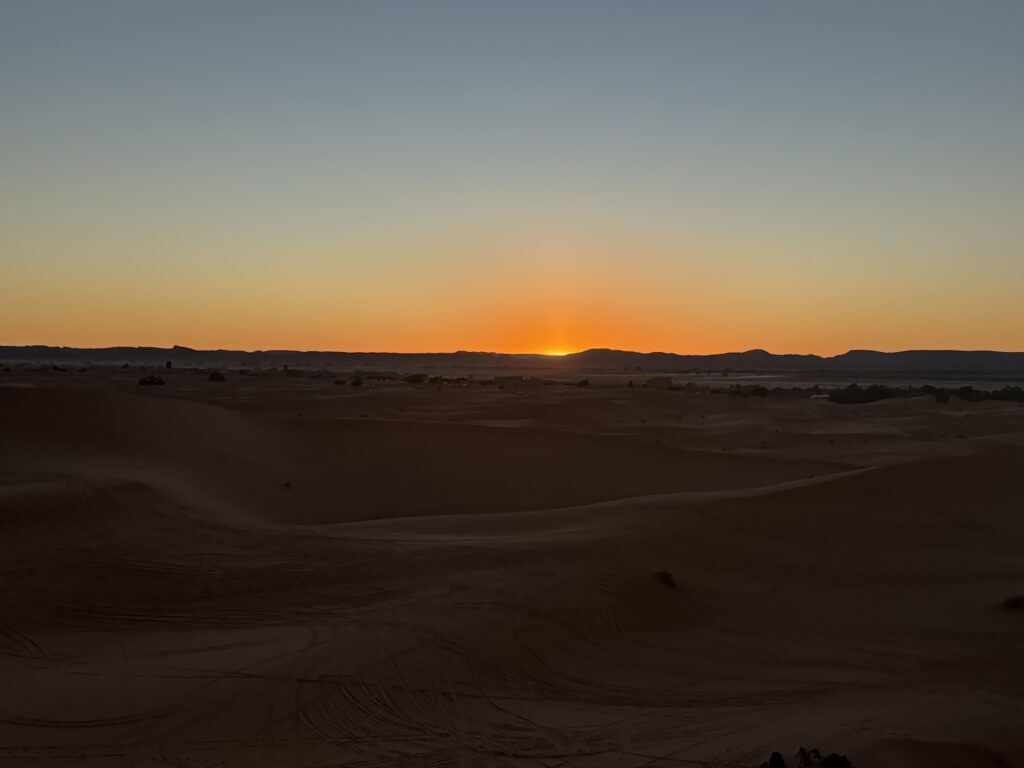
The long haul south to Merzouga, broken only by a stop in Midelt, got us to the edge of the Sahara desert, much further into Morocco than we’d ever been before. Morocco‘s major gateway for desert activities, Merzouga is also nice and warm at this time of year even though northern Morocco is cooling down. Our days were spent relaxing, wandering the market while picking up some excellent tips from fellow travellers about several of the onwards cities that we planned to visit. The highlight though was our camel trek into the desert for an amazing Saharan sunset. We had both forgotten how uncomfortable camels are to ride and how difficult it is to do any photography or videography while sitting on top of one. That said we managed a few images (below) that tell the tale of our time in Merzouga.
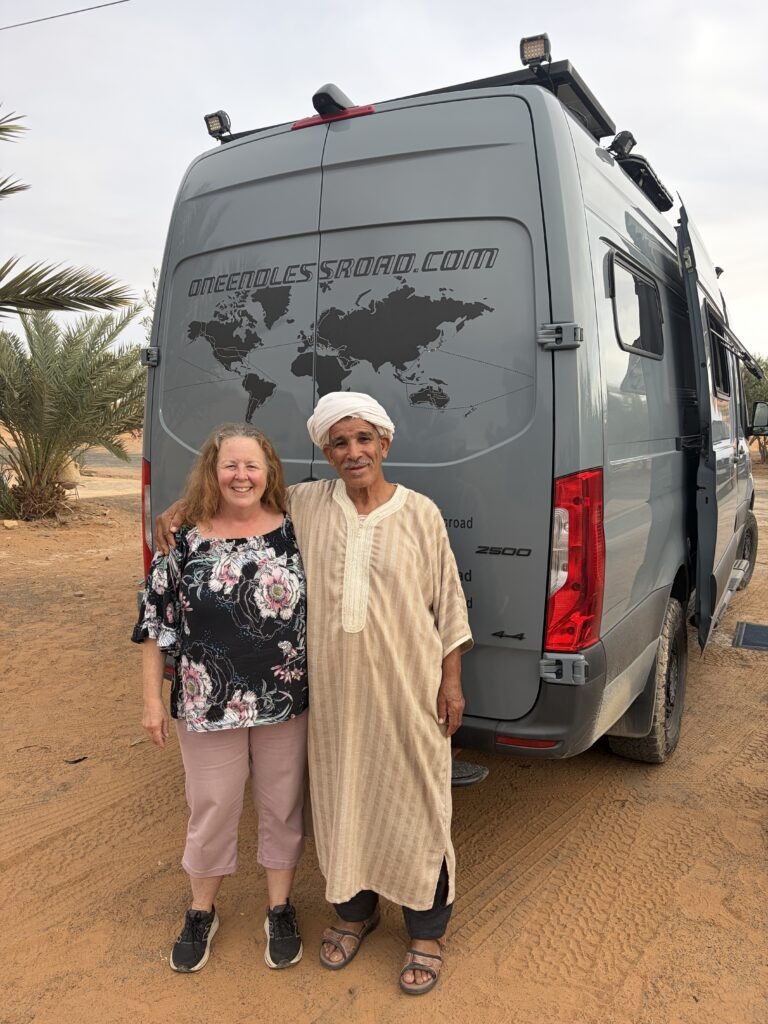
Wide open spaces on the road to Merzouga.Oasis, Ziz river gorge.Merzouga, perched on the edge of the Sahara near the Algerian border, has been a desert travel crossroads for centuries. Now international tourists fill the town.Lois with our host at La Libertad camp, Merzouga.Getting on and off a camel is tougher than you might think !All set, ready to hit the desert for a Sahara sunset experience.Our group, mostly from Germany.The late afternoon sun made for striking colour contrasts.Hard to hold the camera still on a camel, so not as crisp and sharp an image as I’d like but the idea was there !Sunset…
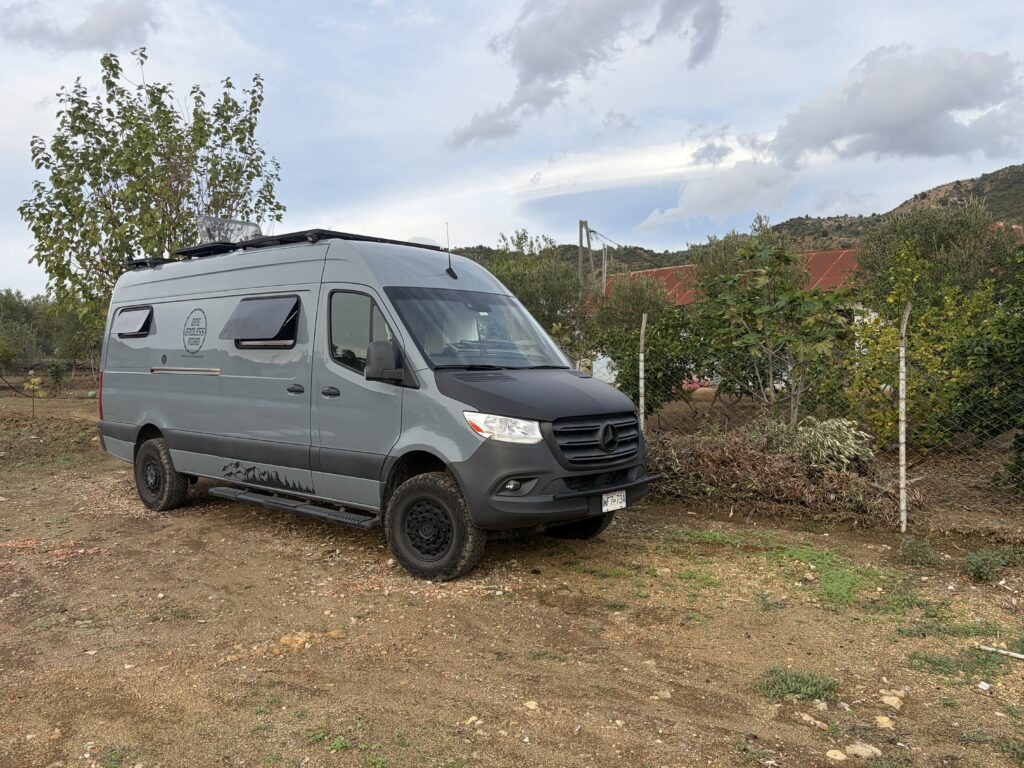
The PanAm completed in April, 2022 and with the truck camper sold, we shipped our new Sprinter van to Australia in late 2022. We travelled there through all of 2023 and into 2024 before shipping it up to North East Asia where we travelled for 4 months between Korea and Japan, before shipping it back to North America. It’s our plan to continue exploring the world in 2025.